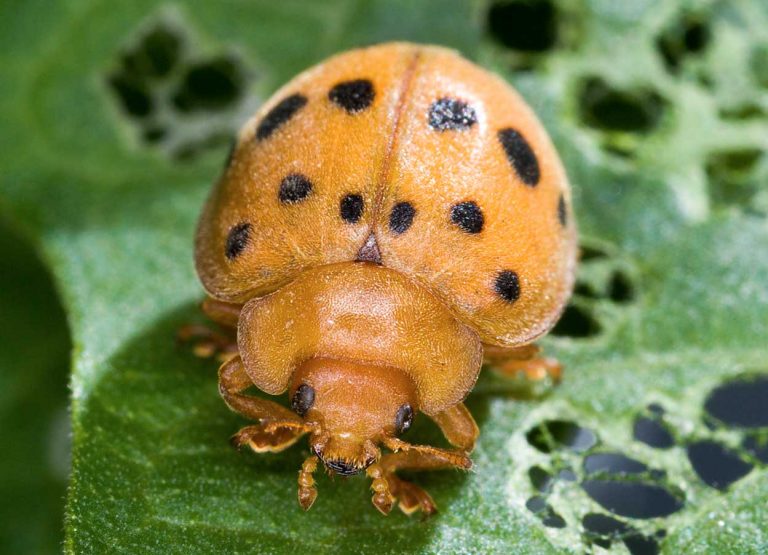
Carrion Beetle

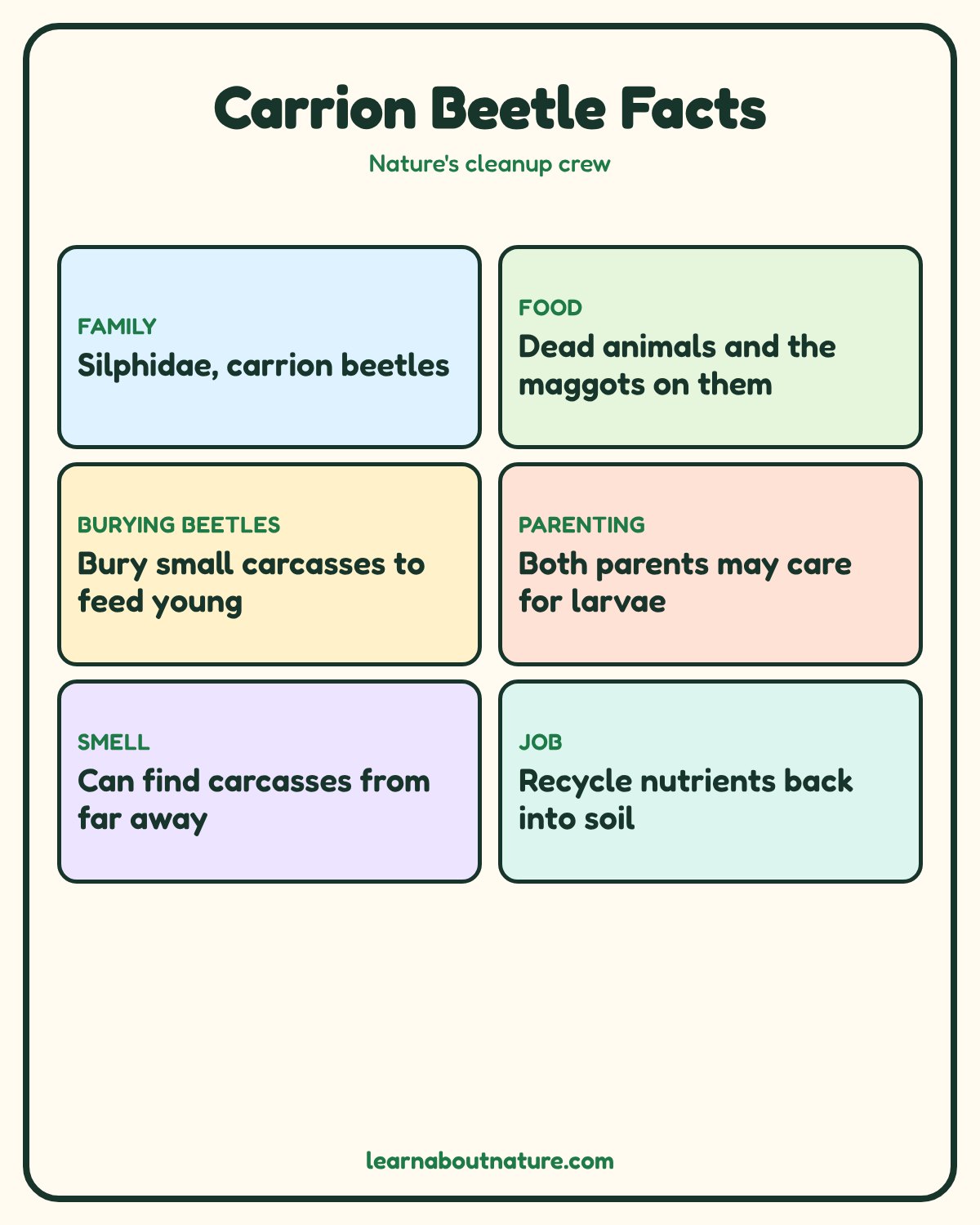
Carrion beetles are beetles that feed on dead animals, which are known as carrion. They belong to the family Silphidae, and the group includes the famous burying beetles, which bury small dead animals to feed their young. By cleaning up dead animals, these beetles are some of nature’s most important recyclers.
Carrion beetle Quick Facts
| Common name | Carrion beetle |
| Scientific name | Silphidae |
| Kingdom | Animalia |
| Phylum | Arthropoda |
| Class | Insecta |
| Order | Coleoptera |
| Type | Insect (beetle family) |
| Diet | Dead animals (carrion), fly maggots; a few eat plants or fungi |
| Habitat | Forests, grasslands, fields and beaches |
| Native range | Worldwide, especially temperate Northern Hemisphere |
| Size | About 7-35 mm long |
| Colours | Black, often with orange, red or yellow markings |
| Special feature | Burying beetles bury carcasses and feed their young |
There are only about 200 species of carrion beetles in the world. Most of them live in cooler, temperate parts of the Northern Hemisphere. About 30 species are found in North America north of Mexico.
Two Main Groups
Scientists divide the carrion beetle family into two subfamilies:
- Burying beetles (Nicrophorinae): Also called sexton beetles, these beetles bury small carcasses and care for their young. Most belong to the genus Nicrophorus.
- Large carrion beetles (Silphinae): These beetles feed on larger carcasses where they lie. They lay eggs nearby, and their larvae look after themselves.
Carrion beetles are sometimes confused with ground beetles (family Carabidae), but the two families are not closely related. Ground beetles are mostly hunters of live prey.
What Carrion Beetles Look Like
Most carrion beetles are between about 7 and 35 mm long. Many are black, often with bright orange, red or yellow markings. Others are dull black or brown. Their bodies tend to be flattened, which helps them crawl under carcasses, and the tips of their antennae are often club-shaped and sensitive to smell.
The American burying beetle (Nicrophorus americanus) is the largest burying beetle in North America. Adults are usually 25 to 35 mm long. They are shiny black, with bright orange-red patches on their wing covers, an orange-red shield behind the head and orange tips on their antennae.
Carrion beetle larvae are flattened and segmented, with tough plates on their backs, a bit like tiny armored bugs.
Habitat
Carrion beetles live in forests, grasslands, fields and even beaches, wherever dead animals can be found. Many species are most active at night and are attracted to lights.
Different species have different tastes. Many go for the carcasses of mammals and birds, while a few feed on rotting plants, fungi, dung or snails. Most carrion beetles can fly well and use their keen sense of smell to find a fresh carcass from a long way off. When burying beetles fly, they hold their wing covers upright, and some look and sound a bit like bumblebees in the air.
Feeding Behavior
Carrion beetles arrive quickly at a dead animal, drawn by the smell. Adults feed on the carcass and also on the fly maggots living there, then mate and lay their eggs on or near the food.
Many carrion beetles carry tiny hitchhiking mites. When the beetle lands on a carcass, the mites hop off and eat fly eggs and young maggots. This helps the beetles, because there is less competition for the food.
Not every carrion beetle eats only dead animals. A few species feed on rotting plants, fruit or fungi, and some even eat living plants. Like dung beetles, they help clear away waste and return nutrients to the soil.
Reproduction and Parenting
Burying beetles have some of the most remarkable family lives of any insects. When a male and female find a small dead animal, such as a mouse or a bird, they work together to dig the soil out from underneath it until it sinks into the ground. Then they cover it up, which hides it from flies and other scavengers.
Next, the beetles strip off the fur or feathers, roll the carcass into a ball and coat it with special secretions that slow down rotting. The female lays her eggs in the soil nearby.
When the larvae hatch, they crawl to the carcass. Both parents stay to guard them and feed them partly digested food from their mouths, much like baby birds being fed. This kind of parental care is rare among insects.
If a carcass is very large, several beetles may share it and raise their young together.
Life Cycle
Carrion beetles go through complete metamorphosis: egg, larva, pupa and adult. Their larvae go through three growth stages, called instars, before they pupate in the soil.
Burying beetles grow up fast, often in just a few weeks, thanks to the rich food their parents provide. Large carrion beetles in the Silphinae group usually take longer, since their larvae must find food on their own.
History
Carrion beetles are an ancient group. Fossils show that their ancestors were already around during the Jurassic period, when dinosaurs walked the Earth.
Why Carrion Beetles Matter
Carrion beetles are very useful. By eating and burying dead animals, they help keep the environment clean and recycle nutrients back into the soil.
They are also helpful to forensic scientists. Because different insects arrive at a body in a fairly predictable order, the beetles and their larvae can help experts work out how long an animal or person has been dead.
Conservation
The American burying beetle once lived in at least 35 US states and parts of Canada. Today it survives in only a few areas, including parts of Oklahoma, Arkansas, Nebraska, Kansas, South Dakota and an island off Rhode Island. It is protected under the US Endangered Species Act. Scientists think habitat loss and fewer animals of the right size to bury may have caused its decline.
As a Pest
A few carrion beetles feed on living plants. For example, the beet carrion beetle can damage young sugar beet and spinach plants. But most carrion beetles are harmless to people and very helpful to the environment.
Carrion beetle FAQs
What do carrion beetles eat?
Most eat dead animals and the fly maggots living on them. A few species eat rotting plants, fungi or even living plants.
Why do burying beetles bury dead animals?
Burying a small carcass hides it from flies and other scavengers. The beetles then use it as food for their larvae, which both parents guard and feed.
Are carrion beetles dangerous to people?
No. Carrion beetles do not bite people or spread disease to them. They are helpful recyclers that clean up dead animals.
Is the American burying beetle endangered?
Yes, it is protected under the US Endangered Species Act. It has disappeared from most of its former range and now lives in only a few areas.
How do carrion beetles help scientists?
Forensic scientists study which insects arrive at a body and when. Carrion beetles and their larvae can help them estimate how long an animal or person has been dead.

Randi Jones is the owner and founder of the Nature Gift Store, an online retailer specializing in nature-themed gifts, educational science projects, live animal nature kits and real butterfly artwork. A biology graduate who fell in love with insects, she founded the company in 2001 to make active learning about nature fun, accessible and engaging for children and adults. Her store offers real butterfly frames, home and garden decor and educational live animal kits, including ant farms, worm farms, tadpoles, ladybugs and hermit crabs, and she runs a bug museum in Washington featuring live animals like Eddie the Iguana alongside other reptiles and insects. Randi wrote most of the guides on this site. They first appeared on her long-running nature sites, including Monarch-Butterfly.com, Ladybug-Life-Cycle.com, Frog-Life-Cycle.com, Dragonfly-Site.com and Butterfly Pictures, which have now been brought together here at Learn About Nature.