About Squirrels

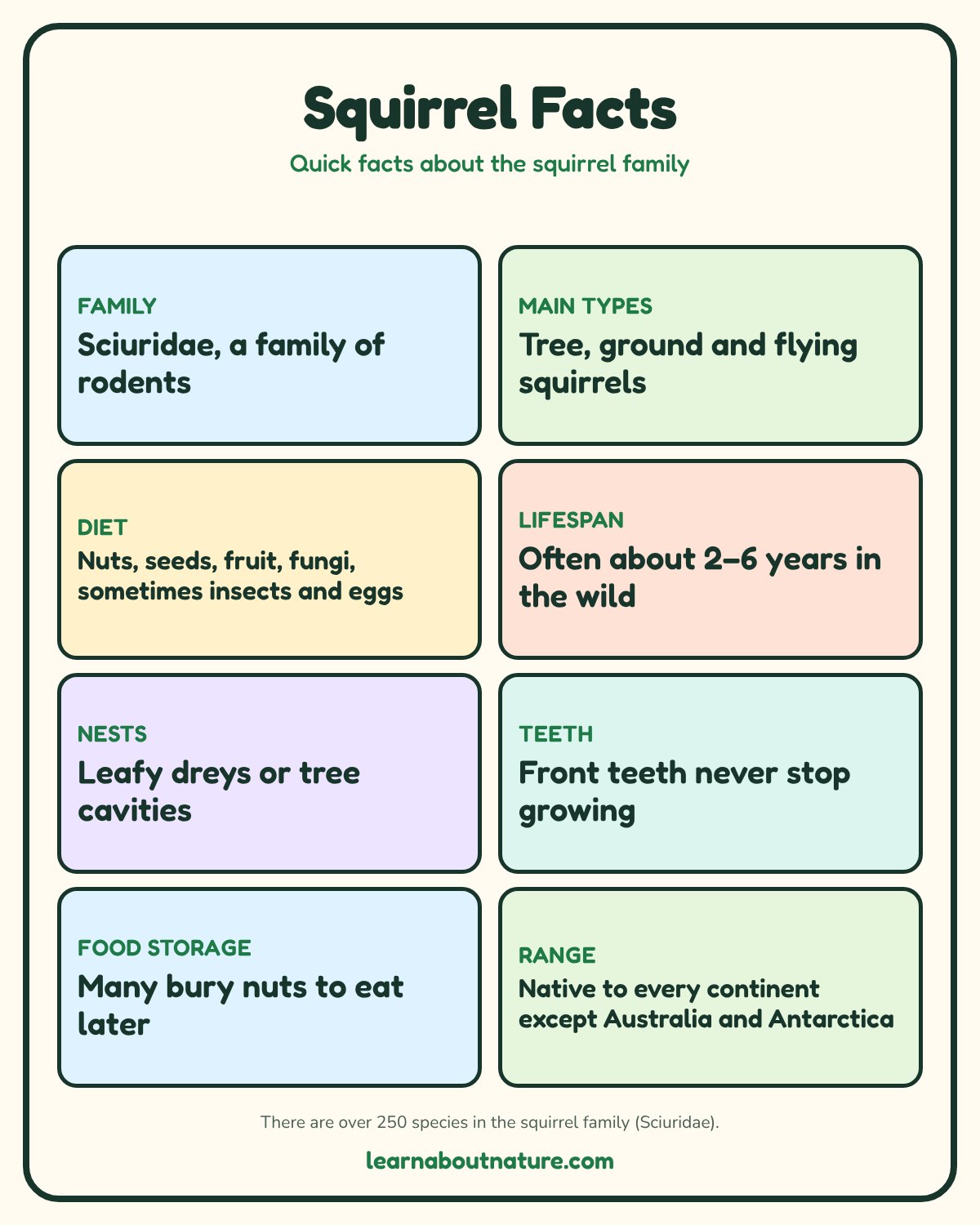
What have you heard about squirrels? They are familiar to almost everyone, and it’s not a big surprise. According to National Geographic, more than 200 squirrel species live all over the world, except for Australia.
Squirrel Quick Facts
| Common name | Squirrel |
| Scientific name | Sciuridae |
| Kingdom | Animalia |
| Phylum | Chordata |
| Class | Mammalia |
| Order | Rodentia |
| Type | Rodent family with over 200 species |
| Diet | Omnivore: nuts, seeds, fruit, insects, eggs |
| Native range | Every continent except Australia and Antarctica |
| Weight | 50 g (chipmunks) to 8 kg (marmots) |
| Special feature | Buries food and fakes burials to fool thieves |
For some people, squirrels are cute and entertaining. They are often in cartoons or fairytales, and that’s why many kids love these cute creatures. But there are many people for whom they are pretty annoying. But it doesn’t matter what you think about squirrels, the reality is that we have to live with them, and that means we should know more about their behavior.
Let’s take a closer look at some exciting and helpful facts about squirrels to learn more about these interesting creatures.

Is a Squirrel a Rodent?
Yes. Squirrels are rodents in the family Sciuridae, part of the order Rodentia alongside mice, rats and beavers. Like all rodents, they have four large front incisors that never stop growing, which they keep worn down by gnawing nuts and bark. The family also includes chipmunks, marmots and prairie dogs.
Flying squirrels
Can squirrels fly? Actually, no, squirrels can’t fly, so you might ask, why are they called “flying squirrels”? In fact, it would be more appropriate if we called them “gliding” squirrels, but it is what it is.
Flying squirrels are small tree squirrels that can glide. They stretch out their legs and use a fold of skin between their legs to form a “parachute.” That’s what helps them glide from one tree to another and makes us think that they can fly. Why do they need to glide? When a flying squirrel wants to travel from one to another tree, it finds a high branch and jumps.
These clever creatures usually live in deciduous and coniferous forests. They just find a comfortable place for them to live, like snags, woodpecker holes, and abandoned nests of other animals.
Interestingly, these cute animals use the same principle for gliding as base jumpers or skydivers. Wingsuits used by skydivers work in a similar way. They replicated the flying squirrel’s gliding abilities and turned it into a sport. A special suit that skydivers use to mimic the flying squirrel.
Grey Squirrels
Most likely, you already know about grey squirrels since they are one of the most familiar mammals. If you like walking in gardens and parks, don’t be afraid to meet this cutie. Also, if you notice that your bird food is gone, don’t be sure that it took it! Since grey squirrels are frequent visitors to gardens with bird feeding places,
They love to eat hazelnuts, but they like to crack them even more than what’s inside. Grey squirrels make nests using twigs, leaves, and strips of bark. The nest is called a “drey” and you might be able to see it barely high up in the tree.
Red Squirrels
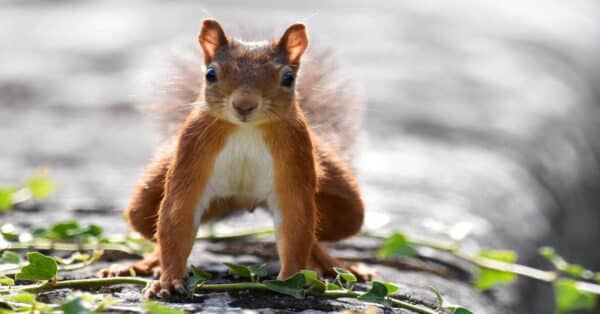
After our grey friend, you should get to know this attractive little mammal with a red coat and a very fluffy tail. They like to live in coniferous or broad-leaved woods and are usually most active during the morning or late afternoon.
Although red squirrels love running and jumping in the trees, they sometimes visit the ground, too. This makes it easier for them to search for food. They love to eat the seeds, nuts, and berries, but sometimes they steal bird eggs or even chicks.
It is interesting to note that they are very good at searching for food and can find buried food even when there is more than one foot of snow on top of it. Moreover, despite their striking resemblance, grey and red squirrels can’t breed together.
If you enjoyed reading about these mischievous creatures, we have some bad news for you: many red squirrels do not survive to their first birthday due to disease, starvation, or other unlucky circumstances.

Fox Squirrels
This species may look much more familiar to you than others. It has a brownish-gray coat with orange undertones. It is also the largest tree squirrel in North America!
You can commonly find them throughout the eastern United States, Canada, and Mexico. You might ask, what makes it special compared to other species? They don’t really like trees! These rodents scurry up and down their trunks to escape predators and spend the majority of their time on the ground looking for fallen nuts.
Much of their diet consists of acorns and other seeds, but they are omnivores, meaning they also eat meat. They feed on acorns, seeds, nuts, berries, fruits, etc. Similar to red squirrels, sometimes they feed on bird eggs.
Ground Squirrels
Ground squirrels are notorious for standing tall on their hind legs to detect potential threats. With so many genera and species of ground squirrel, they vary significantly in size.
Marmots are the heaviest squirrels, weighing up to 8 kg. In contrast, chipmunks weigh as little as 50 g. As their name suggests, most ground squirrels live on the ground, often burrowing underneath it.
Ground squirrels are omnivores and eat a variety of items found in their grassy environments. They communicate with each other through various vocalizations and scent markings. They also use their tails as a signaling device, twitching them when uneasy to alert other squirrels of potential danger.
Interesting Facts About Squirrels
When we talk about squirrels, things get very interesting, since they have many special habits. For example, when a squirrel feels that it is in danger, it stops moving, then runs to a nearby tree or circles the trunk tightly and presses against the bark tightly.
The squirrel is a very trusting animal and is one of the very few wild animal species willing to eat from a human hand. That’s the reason why many people love to feed them, and they are called squirrel feeders.
It is well known that these intelligent creatures perform elaborate bogus food burial displays to deceive onlookers. In fake burials, other squirrels and birds are tricked into thinking there is food stored to fool possible thieves.
What Do Squirrels Eat?
We mentioned a few species of squirrels, including red squirrels, ground squirrels, grey squirrels, fox squirrels, and flying squirrels, but there are many more out there! And as diverse as these creatures are, they have different tastes in food as well.
What do squirrels eat? Well, squirrels just happen to eat a lot of things. Here is a short list of foods that squirrels enjoy.
Vegetables
Squirrels eat a variety of vegetables, and gardeners know this all too well. Delicious veggies such as tomatoes, radishes, corn, and so on are their favorites! So if you have a garden full of those, be careful, this uninvited visitor might disappear in one night.
Cereals
Many backyard squirrel feeders feed cereal to squirrels. The list of cereals you can use as squirrel feeders is long, including Chex, Cheerios, Cap’n Crunch, shredded wheat, cornflakes, and so on.
Mother Nature may not have intended for squirrels to consume unnaturally sugary cereals, but squirrels have a devil-may-care attitude toward what they put in their stomachs.
Explore next



Cheese
Humans, while enjoying food, leave all sorts of treats and snacks behind when eating outdoors. Squirrels have developed a keen taste for cheese. Why not? since they have a pretty good appetite. Squirrels aren’t picky about cheese, either.
Sure, they’ll even eat your cheesy leftovers if they’re available! Squirrels aren’t picky about how a good piece of cheese can give a squirrel an extra bit of fat for later!
Nuts
Squirrels are absolutely crazy about nuts. Even though most of the time they are annoying people, the squirrel’s activity can be good for the tree species, as squirrels help spread seeds far and wide, helping to ensure the chances of certain tree species’ growth and survival.
Squirrels may naturally prefer nuts to other foods. Nuts are consumed by squirrels and stored in caches for later consumption.
Birdseed
Many families have bird seed available in their yards for birds, but even when birds are present, a squirrel will not hesitate to get in on the birdseed action and will stuff their bellies with this readily available snack that humans are all too happy to share.
Insects
One of their favorite snacks is insects! For example, caterpillars, larvae, winged bugs, grasshoppers, injured butterflies, crickets, and so on. A squirrel will resort to eating small insects to satisfy its need for protein. Well, these little creatures are very serious when it comes to food.
Eggs
Sometimes squirrels start stealing eggs from other animals or may even visit your chicken coop. There is more! When necessary, they get even more brutal. Squirrels will not hesitate to eat hatchlings, young chicks, and baby birds.
Scraps and Waste
Next time you take out the garbage or leave the leftovers from your picnic in the garbage can, you might keep in mind that a hungry squirrel might be rooting around in there later. Oh, and don’t get scared if it’s already there while you try to put your garbage away!
Bottom Line
These cute little animals are part of our lives since we have to meet them almost every day, but we have no idea how intelligent these creatures are. Even though most of the time they ruin our gardens and steal our food, they have skills and habits that even highly developed humans can take an example of, so next time you see a squirrel, don’t forget to take a closer look at them.
Types of Squirrels at a Glance
Scientists group the 200-plus squirrel species into three broad types by the way they live. Most squirrels you see in parks are tree squirrels, but many members of the family spend their lives on or under the ground.
| Type | Where it lives | Examples | Key traits |
|---|---|---|---|
| Tree squirrels | Woods, parks and gardens | Grey, red, fox and black squirrels | Bushy tail for balance, build dreys, active by day |
| Ground squirrels | Grassland, prairie, mountains, desert | Chipmunks, marmots, prairie dogs, ground squirrels | Dig burrows, many hibernate, often live in colonies |
| Flying squirrels | Forests | Northern and southern flying squirrels | Glide on a skin flap, active at night, large eyes |
Tree squirrels do not hibernate. In winter they stay in their dreys or tree holes during bad weather and come out to dig up stored food. Many ground squirrels, chipmunks and marmots do hibernate or spend long periods in a deep sleep underground, living off body fat or food stored in their burrows.
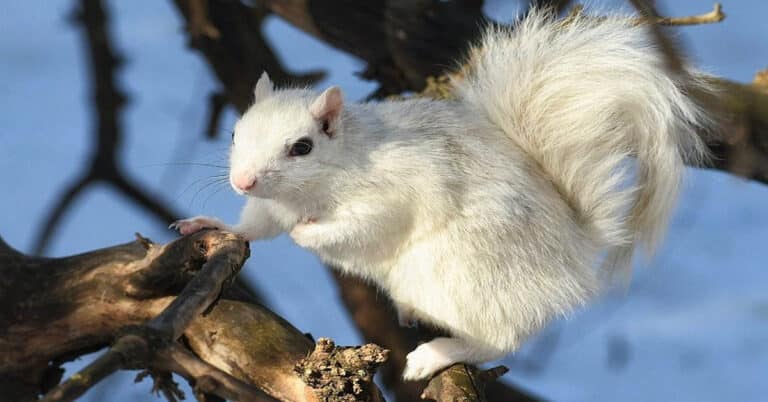
Black squirrels are not a separate species. They are usually grey or fox squirrels with a gene that produces dark fur, and they are common in parts of Canada and the northern United States. White squirrels are also colour forms, either leucistic, with dark eyes, or true albinos, with pink eyes. Telling squirrel types apart is easiest by looking at size, tail shape, ear tufts and whether the animal climbs or digs.
Squirrel Size, Lifespan and Babies
Squirrels vary a lot in size, from tiny African pygmy squirrels to marmots the size of a cat. Common tree squirrels fall in the middle.
| Squirrel | Typical weight | Wild lifespan |
|---|---|---|
| Eastern grey squirrel | 400–700 g | Usually 2–6 years |
| Red squirrel (Eurasian) | 250–350 g | Usually 3–6 years |
| Fox squirrel | 500–1,000 g | Usually up to about 8 years |
| Eastern chipmunk | 70–140 g | Usually 2–3 years |
Most squirrels die young in the wild, from predators, cars, disease or hunger, so few reach their full possible age. In captivity some live well over ten years.
Tree squirrels usually have one or two litters a year. A litter is commonly two to four babies, called kits or kittens. They are born blind and hairless, open their eyes after about four to five weeks, and leave the nest at around ten to twelve weeks old.
Size also changes through the year. Many squirrels put on weight in autumn as they feed heavily on nuts and seeds, and lose it again over winter. Hibernating ground squirrels can lose a third or more of their body weight before spring. Pregnant and nursing females also need far more food than usual, which is one reason squirrels are so busy at bird feeders in spring.
Squirrel Behaviour: How They Store Food and Stay Safe
Squirrels are famous for storing food, but they do it in two different ways. Grey and fox squirrels are scatter hoarders: they bury nuts one at a time in hundreds of separate spots. Red squirrels in North America are often larder hoarders, piling cones into one big store called a midden.
Squirrels find their buried nuts using a mix of memory and smell. They do not recover every one, and the forgotten nuts can sprout into new trees. This makes squirrels important tree planters, especially for oaks.
- Alarm calls: squirrels chatter, bark and flick their tails to warn others of hawks, cats or foxes.
- Head-first descent: they can turn their back feet around so they can climb down a tree head first.
- Zig-zag running: when chased, they run in sudden zig-zags, which makes them hard to catch.
- Gnawing: because their front teeth never stop growing, squirrels must chew constantly, which is why they sometimes damage wires and wood.
Squirrels also build more than one home. A single grey squirrel may use several dreys and tree holes, switching between them to avoid fleas and predators. In winter, squirrels sometimes share a nest to keep warm, even if they ignore each other the rest of the year.
How to Keep Squirrels Out of Bird Feeders and Gardens
Squirrels are clever, persistent and excellent jumpers, so stopping them takes a few tricks working together. A squirrel can jump around 2 to 3 metres sideways and about 1.5 metres straight up, which helps decide where to put feeders.
- Place feeders on a smooth metal pole at least 3 metres from fences, trees and roofs.
- Fit a cone or tube baffle on the pole below the feeder.
- Use squirrel-proof feeders with weight-activated perches or metal cages.
- Offer foods squirrels like less, such as nyjer seed or safflower.
- Sweep up spilled seed, which attracts squirrels to the area.
- Protect bulbs by laying chicken wire over the soil after planting.
- Cover ripening fruit and vegetables with netting.
Some people give squirrels their own feeding station away from the bird feeders, which can keep them busy. If you do feed squirrels, offer unsalted nuts in their shells, seeds or pieces of fruit and vegetables, rather than bread, sweets or salty snacks, which are bad for them. Never try to catch or handle a wild squirrel, as they can bite and scratch.
Squirrel FAQs
Can squirrels really fly?
No. Flying squirrels glide. They stretch out their legs and use a fold of skin between them like a parachute to sail from tree to tree.
What do squirrels eat?
Squirrels eat nuts, seeds, fruit, vegetables and fungi, and also insects and sometimes bird eggs or chicks. Nuts are their favourite, and they bury them to eat later.
What is a squirrel’s nest called?
A squirrel’s nest is called a drey. Grey squirrels build it from twigs, leaves and strips of bark high up in a tree.
How many kinds of squirrels are there?
More than 200 species live all over the world except Australia. They include tree squirrels, ground squirrels, flying squirrels, chipmunks and marmots.
Why do squirrels pretend to bury food?
Squirrels sometimes make fake burials to trick onlookers, such as other squirrels and birds, so that thieves are fooled and cannot steal their real food stash.

Randi Jones is the owner and founder of the Nature Gift Store, an online retailer specializing in nature-themed gifts, educational science projects, live animal nature kits and real butterfly artwork. A biology graduate who fell in love with insects, she founded the company in 2001 to make active learning about nature fun, accessible and engaging for children and adults. Her store offers real butterfly frames, home and garden decor and educational live animal kits, including ant farms, worm farms, tadpoles, ladybugs and hermit crabs, and she runs a bug museum in Washington featuring live animals like Eddie the Iguana alongside other reptiles and insects. Randi wrote most of the guides on this site. They first appeared on her long-running nature sites, including Monarch-Butterfly.com, Ladybug-Life-Cycle.com, Frog-Life-Cycle.com, Dragonfly-Site.com and Butterfly Pictures, which have now been brought together here at Learn About Nature.