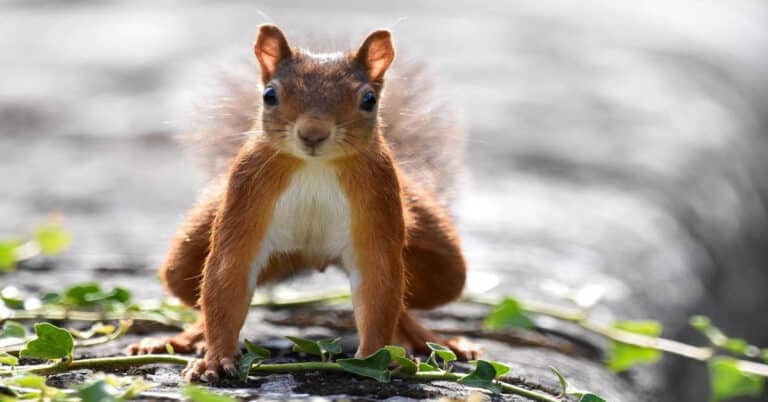
Fun Facts About Squirrels

Squirrels (Sciuridae)

| Kingdom: | Animalia |
| Phylum: | Chordata |
| Class: | Mammalia |
| Order: | Rodentia |
| Suborder: | Sciuromorpha |
| Family: | Sciuridae |
Do you remember those cute chipmunk cartoons Chip and Dale?
Yes, our cute squirrel friends are in fact part of a huge family of Squirrels (Sciuridae) which also makes them cousins of prairie dogs, the woodchucks, the amazing flying squirrel, and both tree and ground squirrels. The Squirrels are pretty widespread too because their kin can be seen all over the trees, parks, and woodlands across the globe—the Americas, Asia, Europe and Africa.
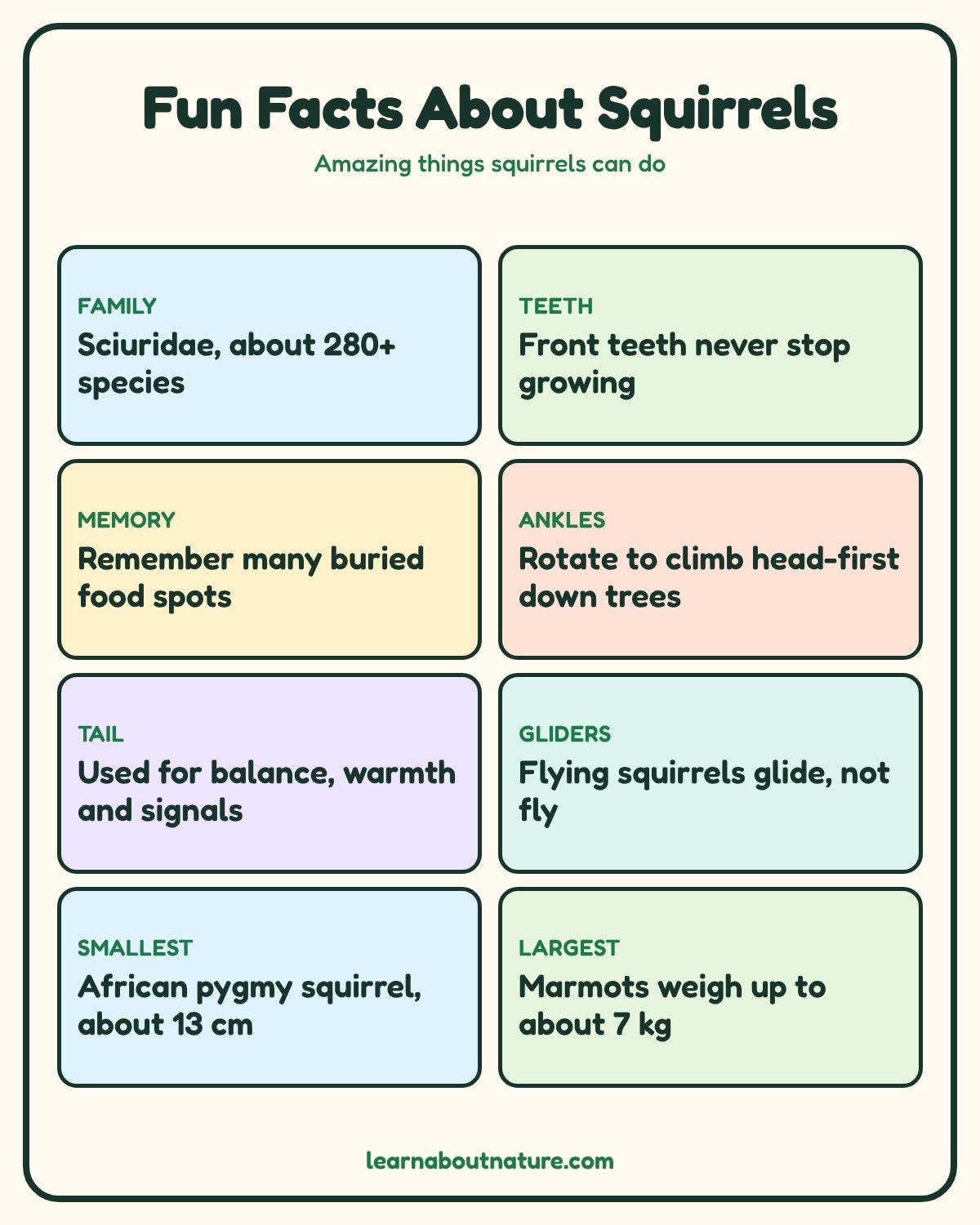
Food
Aside from the famous love of nuts, the facts are these furry friends of ours can also dine on small insects, roots, tree bark, leaves, and acorns. It can be noted that when you give a certain type of squirrel tree bark for him to chew, the little guy would just flatly ignore it. Don’t feel bad because some Squirrel species do not have stomachs that break down cellulose (the chemical that makes the tree hard).
Squirrels will typically gather and save a lot of their food all year round but this is definitely true when it comes to the autumn time. When you see them collecting all their nuts just before winter it is because they are getting ready for winter and they want to make sure that they have enough food to last them. After they have buried all of their food and when winter comes and goes, the squirrel will go look for the food they buried!
Appearance
Did you know that their name was credited from the old Greek word Skiouros? The ancient Greek naturalists find their brushy tails remarkable as the meaning of Skiouros is “shadow tail”. Even though they are generally depicted onscreen as adorable brown chestnut lovers with large fluffy tails, the Squirrel family’s looks are rather divergent. Some are decidedly dark like the Eastern Gray Squirrel while others sport white stripes on the back like the Indian Palm Squirrel. In fact, there are about 280 different kinds of Squirrels worldwide.
Now that’s a cool squirrel fact!
One famous relative of theirs, the flying squirrel has a special stretchy skin called the patagium that extends and helps the animal glide through the air. When it takes its jump, scientists report that it could daringly take the plunge from 150 feet—such an amazing feat for a little guy!
Did you know that there is a Squirrel just a few inches bigger than a typical teacup? The one who holds the record of being the smallest in the Sciuridae family is the African pygmy squirrel—which reaches its full height at about 10 centimeters only! How about the longest? Perhaps, the most giant-looking Squirrel is the Alpine Marmot which could size up to a whopping 73 centimeters.
But what makes them a family if there are at least one or two similarities among them?
Yes, you are right. It’s their chunky front teeth. Unlike our human teeth, did you know that the Squirrel’s incisors grow throughout their lives? Albeit not as prominent as the former, these furry rodents also have keen eyesight that is from their huge, glassy eyes. To easily help their way up a tree, they also have long nails and claws.
One of the reasons why they remain cute to human eyes is their fur—which is quite silky and soft to the touch.
Explore next


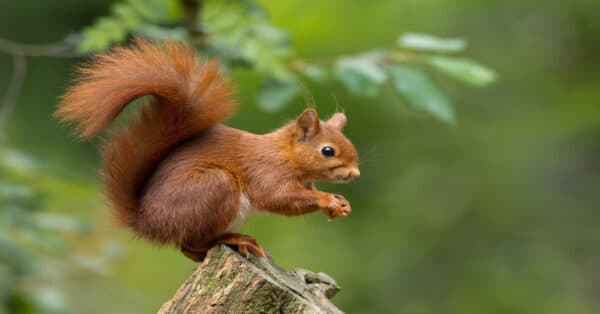

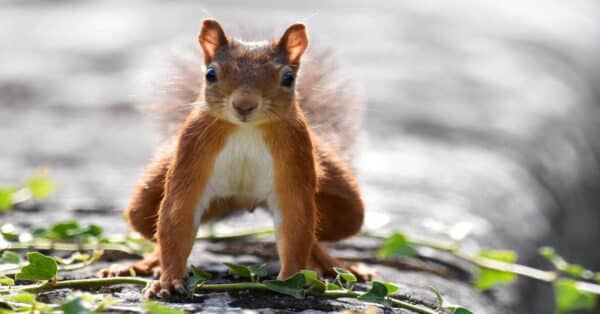
Birth
Did you know that despite having perfect vision as adults, baby squirrels are blind at birth? Many mother squirrels can have two to eight babies at once. These young ones must also depend on their caring mother for food and drink (mostly milk) for about a couple of months. After that, these individuals grow mature and can fully hunt for food themselves.
Baby squirrels are called kittens and kittens are born only twice a year. Once in the springtime and once at the end of the summer.
Behavior

When some Squirrels live in groups, they exhibit camaraderie. This altruistic (unselfish trait) usually comes off when they feel that there is danger approaching. They produce warning calls to alert their fellow rodents from lurking predators. The one who initiates the calls—yes, this good guy—is likely to be the one to leave last. Hence, his life is put in more danger.
Generally, all squirrels live in trees, basically in the holes of trunks or even in the treetop in abandoned crow’s nests. Squirrels will usually start looking for a nest when they start to mate, which is when they are about a year old.
Squirrels FAQs
Do squirrels hibernate?
Tree squirrels such as grey and red squirrels do not hibernate. They stay active through winter, resting in their nests during very cold weather and relying on food they have stored. Some ground squirrels and marmots, however, do hibernate for several months.
What are baby squirrels called?
Baby squirrels are called kits or kittens, and a group born together is a litter. They are born blind and hairless and rely on their mother’s milk for around two months. Many tree squirrels have one or two litters a year, often in early spring and again in summer.
How many types of squirrels are there?
There are around 280 species in the squirrel family, Sciuridae. The family includes tree squirrels, ground squirrels, chipmunks, marmots, prairie dogs and flying squirrels. Squirrels are native to the Americas, Europe, Asia and Africa, but not to Australia or Antarctica.
Can flying squirrels really fly?
No. Flying squirrels glide rather than fly. They have a furry flap of skin called a patagium stretched between their front and back legs. When they leap from a tree and spread their limbs, the patagium works like a parachute, letting them glide long distances between trees.
Do squirrels’ teeth keep growing?
Yes. Like all rodents, squirrels have four front incisors that grow throughout their lives. Constant gnawing on nuts, bark and other hard foods wears them down and keeps them at a useful length. This is why squirrels are always chewing.

Randi Jones is the owner and founder of the Nature Gift Store, an online retailer specializing in nature-themed gifts, educational science projects, live animal nature kits and real butterfly artwork. A biology graduate who fell in love with insects, she founded the company in 2001 to make active learning about nature fun, accessible and engaging for children and adults. Her store offers real butterfly frames, home and garden decor and educational live animal kits, including ant farms, worm farms, tadpoles, ladybugs and hermit crabs, and she runs a bug museum in Washington featuring live animals like Eddie the Iguana alongside other reptiles and insects. Randi wrote most of the guides on this site. They first appeared on her long-running nature sites, including Monarch-Butterfly.com, Ladybug-Life-Cycle.com, Frog-Life-Cycle.com, Dragonfly-Site.com and Butterfly Pictures, which have now been brought together here at Learn About Nature.