Turtle Anatomy: Parts of a Turtle and Its Shell Explained
Quick answer: The main parts of a turtle are its shell, made of a domed top called the carapace and a flat bottom called the plastron, the scutes covering the shell, a head with a toothless beak, four legs (or flippers in sea turtles) with claws, and a short tail.
A turtle’s shell is not a house it can climb out of. It is part of the skeleton, built from the turtle’s own ribs and backbone and covered with tough plates. Everything else about a turtle, from how it breathes to how it hides, is shaped by that shell.
This guide labels the outside parts of a turtle, explains what each part does, and then looks inside. We cover pond turtles, tortoises and sea turtles, and point out where they differ.
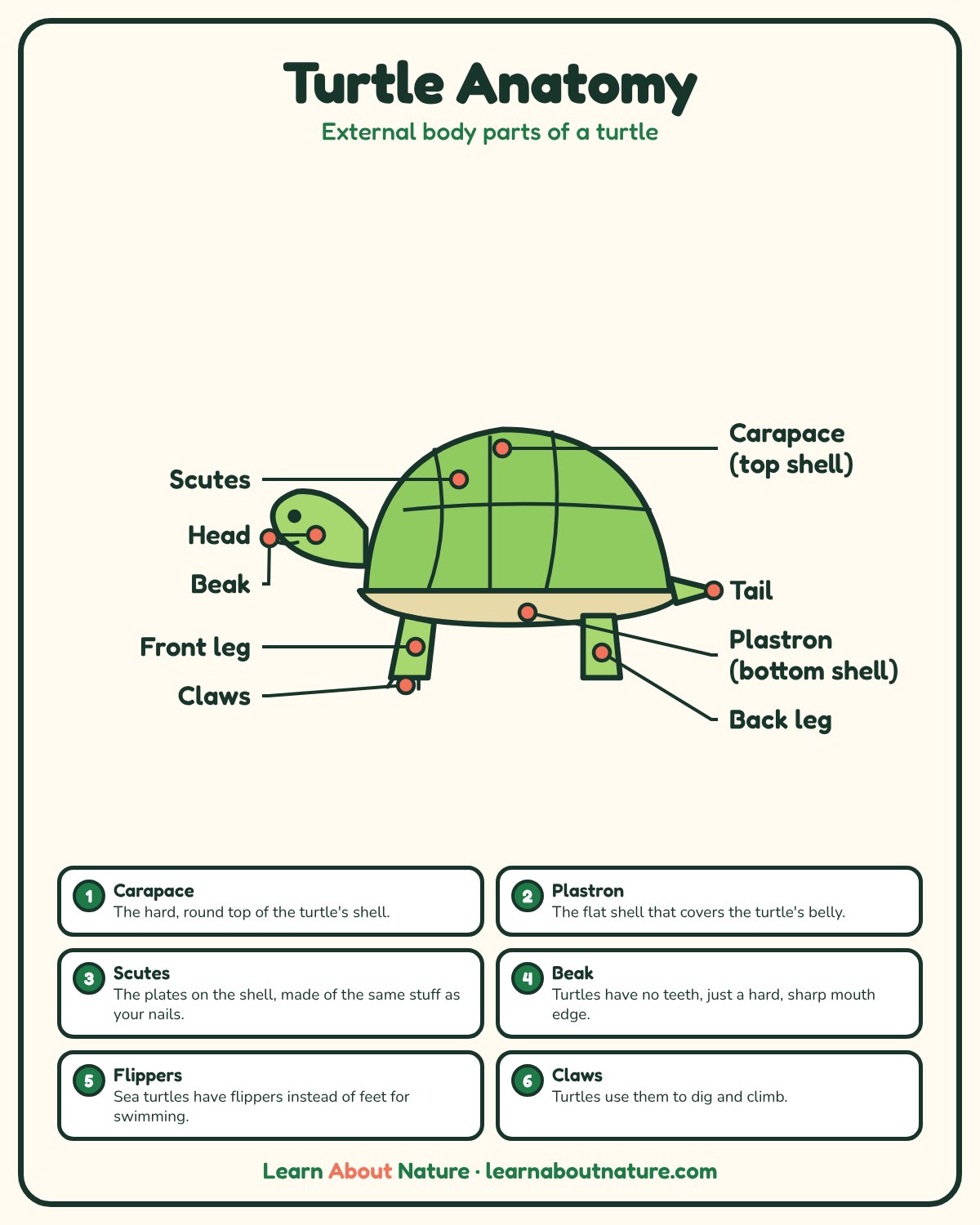
Teachers and students: you’re welcome to use this diagram in lessons and projects with credit to Learn About Nature.
Free printable: Download the Turtle Anatomy labeling worksheet (PDF) – label the parts using the word bank. Answer key included.
Parts of a Turtle and What They Do
| Part | What it does |
|---|---|
| Carapace | Top shell; protects the back and organs and is part of the skeleton |
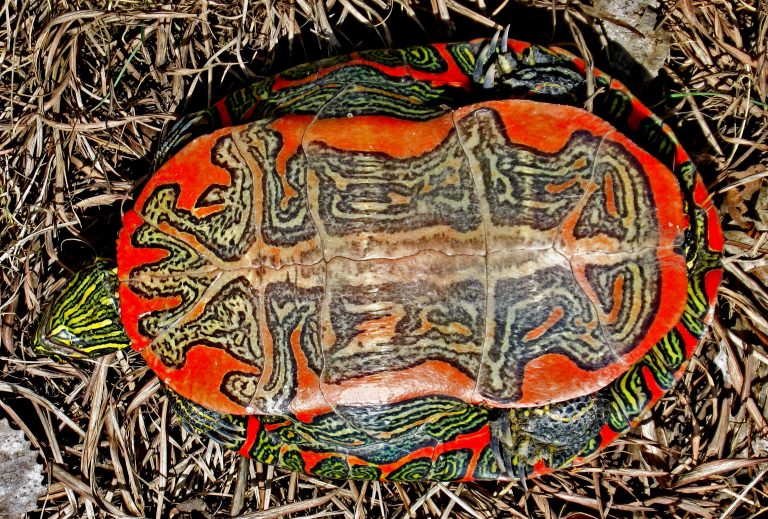
| Plastron | Bottom shell; protects the belly |
| Scutes | Keratin plates that cover and strengthen the shell |
| Bridge | Joins the top and bottom shell along each side |
| Head | Holds the brain, eyes, nostrils and mouth; can often pull into the shell |
| Beak | Toothless keratin jaw edge for cutting and crushing food |
| Eye | Finds food and spots danger |
| Legs or flippers | Walk, dig, paddle or swim depending on the species |
| Claws | Dig, climb and grip |
| Tail | Helps balance; often longer in males |
| Lungs | Breathe air; sit just under the carapace |
| Salt glands (sea turtles) | Remove extra salt from seawater the turtle swallows |
The Turtle Body Plan
All turtles, including tortoises and sea turtles, belong to the reptile group Testudines. They have a head and neck at the front, four limbs, a short tail and a body sealed inside a bony box.
The shell has two halves. The carapace is the top, and the plastron is the bottom. In most turtles the two are joined along each side by a bony bridge, leaving openings at the front for the head and front legs and at the back for the hind legs and tail.
External Anatomy: The Shell
The seams between scutes do not line up with the seams between the bones beneath. This overlapping pattern, like bricks in a wall, makes the shell stronger. Many water turtles shed old scutes one at a time, while land tortoises add new keratin at the base of each scute instead.
- Carapace: The upper shell. According to Britannica, it includes 10 trunk vertebrae and their ribs, fused to flat bony plates that form in the skin. That is why a turtle can never leave its shell.
- Plastron: The lower shell protecting the belly. Its front bones include parts of the shoulder girdle. Box turtles have a hinge across the plastron that lets them shut the shell almost completely.
- Scutes: The plates you see on the outside of the shell. They are made of keratin, like your fingernails. A typical carapace has 5 vertebral scutes down the middle, 4 pairs of costal scutes on the sides and 12 pairs of marginal scutes around the rim.
- Bridge: The bony side wall that joins the carapace and plastron between the front and back legs.
External Anatomy: Head, Beak, Limbs and Tail
- Head and neck: Most turtles pull the head straight back in an S-shaped bend of the neck. Side-necked turtles fold the neck sideways under the edge of the shell instead.
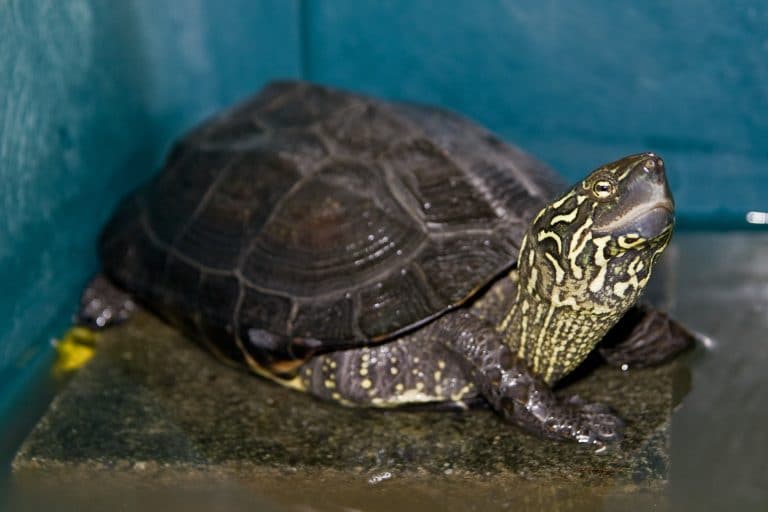
- Beak: No living turtle has teeth. A sharp keratin sheath on the upper and lower jaws, often called a beak, cuts and crushes food. Its shape fits the diet: hawksbill sea turtles have a narrow, hooked beak, and green sea turtles have finely serrated jaws for grazing plants.
- Eyes: Set on the sides of the head. Turtles have eyelids and many see colors well.
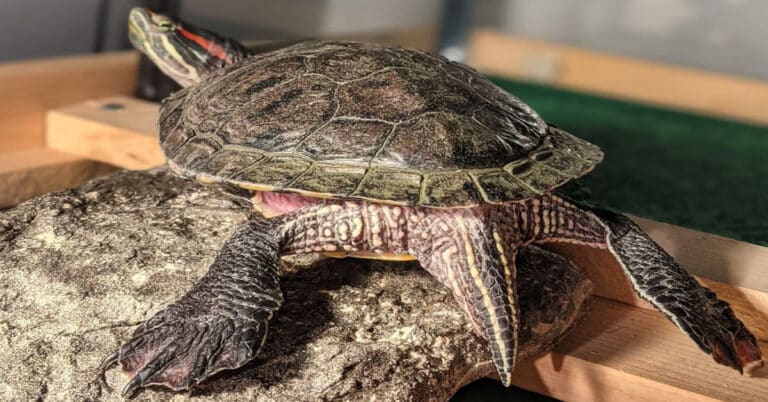
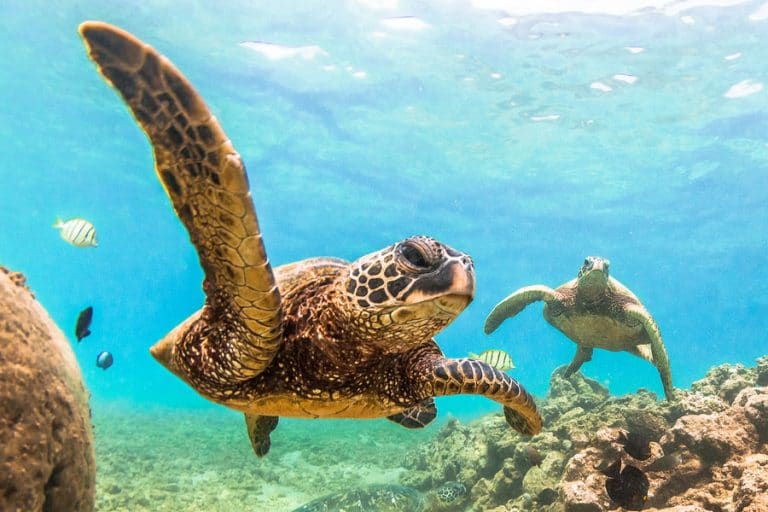
- Legs and feet: Tortoises have thick, column-like legs for walking on land. Pond turtles have webbed feet for paddling. Sea turtles have long front flippers for swimming and smaller rear flippers for steering.
- Claws: Most turtles have claws for digging, climbing and gripping. Sea turtles usually have just one or two claws on each flipper.
- Tail: Short and often pointed. In many species, males have longer, thicker tails than females.
Internal Anatomy: What Is Inside a Turtle?
Under the carapace sit the lungs, pressed up against the top of the shell. Below them are the heart, liver, stomach and intestines. Like most reptiles, a turtle has a three-chambered heart.
The shoulder and hip bones of a turtle sit inside the rib cage, which is the opposite of almost every other animal with a backbone. The shell is living bone with blood vessels and nerves, so turtles can feel touch on their shells.
Because the ribs are locked into the shell, a turtle cannot expand its chest to breathe the way we do. It uses muscles near the leg openings to change the space inside the shell and pull air in and push it out.
Turtle Senses
Turtles have good eyesight and a strong sense of smell, which they use to find food and mates. They have no outer ears, but a thin layer of skin on each side of the head covers the inner ear and picks up low-pitched sounds and vibrations.
Sea turtles can also sense Earth’s magnetic field, which helps them find their way across oceans and back to nesting beaches.
How a Turtle Moves, Feeds and Breathes
Land tortoises plod slowly on sturdy legs, while sea turtles fly through the water with their front flippers. Pond turtles do a bit of both, crawling on logs and paddling with webbed feet.
Turtles breathe air, even sea turtles. Smithsonian Ocean reports that resting sea turtles can hold their breath for several hours, their heart rate slowing to as little as one beat every nine minutes. SeaWorld notes that some hibernating freshwater turtles absorb small amounts of oxygen through their skin and cloaca while underwater.
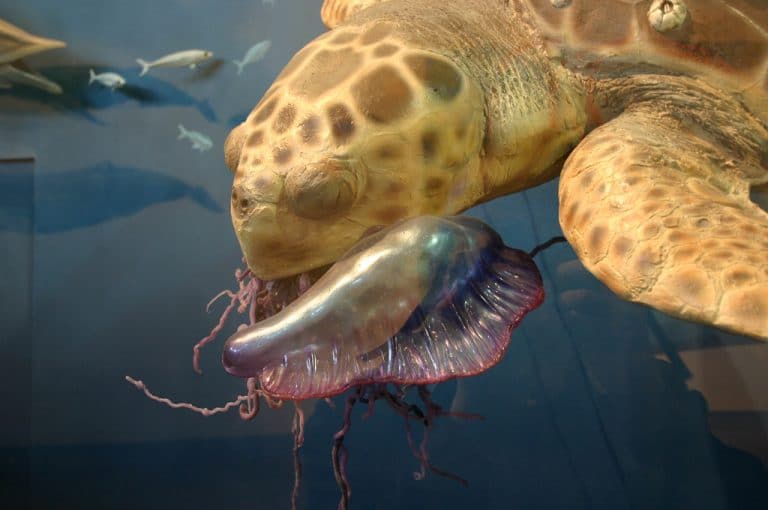
Diets vary. Tortoises mostly eat plants, snapping turtles eat fish and other animals, and leatherback sea turtles feed mainly on jellyfish.
Turtles, Tortoises and Sea Turtles Compared
Tortoises live on land and usually have high, domed shells and stumpy legs. Sea turtles cannot pull their heads or flippers into their shells; their flat, streamlined shells are built for speed instead.
The leatherback is the odd one out. It has no hard scutes. Its shell is a layer of tough, leathery skin over small bones, with seven ridges running from front to back.
Fun Facts About Turtle Anatomy
- A turtle’s shell grows with the turtle and is never shed as a whole.
- Softshell turtles have a flat, flexible shell covered in skin instead of hard scutes.
- Sea turtles have salt glands near the eyes that release extra salt, so they look like they are crying on the beach.
- Britannica notes the leatherback’s carapace can be more than 1.5 meters (5 feet) long.
Turtle Anatomy for Kids
- Carapace: the hard, round top of the turtle’s shell.
- Plastron: the flat shell that covers the turtle’s belly.
- Scutes: the plates on the shell, made of the same stuff as your nails.
- Beak: turtles have no teeth, just a hard, sharp mouth edge.
- Flippers: sea turtles have flippers instead of feet for swimming.
- Claws: turtles use them to dig and climb.
- Tail: a short tail pokes out of the back of the shell.
Key words: carapace – the top part of a turtle’s shell; plastron – the bottom part of a turtle’s shell; scute – a hard plate made of keratin that covers the shell; keratin – a tough material that makes up nails, hair, horns and turtle scutes; tortoise – a turtle that lives only on land; flipper – a flat, paddle-shaped limb used for swimming.
Try this: Draw a turtle shell on paper and color the 5 vertebral scutes, the side scutes and the edge scutes in different colors, then compare your drawing with a photo of a real turtle.
Related Guides
- Snake Anatomy
- Alligator life cycle
- Turtle life cycle
- Sea turtle life cycle
- Snake life cycle
- Lizard life cycle
- All animal & plant anatomy diagrams
- Animal & plant life cycles
Turtle Anatomy FAQs
Can a turtle come out of its shell?
No. A turtle’s shell is part of its skeleton. The top shell is fused to the turtle’s backbone and ribs, so the animal cannot climb out of it. The shell grows as the turtle grows, and removing it would kill the turtle.
What is the top and bottom of a turtle shell called?
The top of the shell is the carapace, and the bottom is the plastron. In most turtles they are joined on each side by a bony bridge. Both halves are covered by keratin plates called scutes.
Do turtles have teeth?
No living turtle has teeth. Instead, turtles have a beak made of keratin, a hard, sharp covering on the upper and lower jaws. The shape of the beak matches what the turtle eats, from hooked beaks to jagged plant-cutting edges.
Can turtles feel through their shells?
Yes. The shell is living bone with nerves and blood vessels running through it, covered by thin scutes. Turtles can feel touch and pressure on their shells, so a shell should be handled gently, just like the rest of the animal.
Why can’t sea turtles hide in their shells?
Sea turtles have flat, streamlined shells and large flippers built for long-distance swimming. Their heads and flippers are fixed outside the shell. Being able to pull them in would need a bulkier body that would slow the turtle down in water.
Sources: Turtle: Form and function | Britannica; Turtle shell | Wikipedia; Sea Turtles | Smithsonian Ocean; Sea Turtle Adaptations | SeaWorld

Nato is a content writer and researcher with a background in psychology who’s eager to explore the wonders of nature. As a travel enthusiast and animal lover, she hopes to inspire others to discover and cherish the beauty and importance of the natural world. She also writes about the history of candy and snacks for Snack History and about food and healthy eating for The Fitchen.