Eastern Painted Turtles
Scientific Classification
| Kingdom: | Animalia |
| Phylum: | Chordata |
| Subphylum: | Vertebrata |
| Class: | Reptilia |
| Order: | Testudines |
| Family: | Emydidae |
| Subfamily: | Deirochelyinae |
| Genus: | Chrysemys |
| Species: | C. picta |
| Binomial name: | Chrysemys picta |
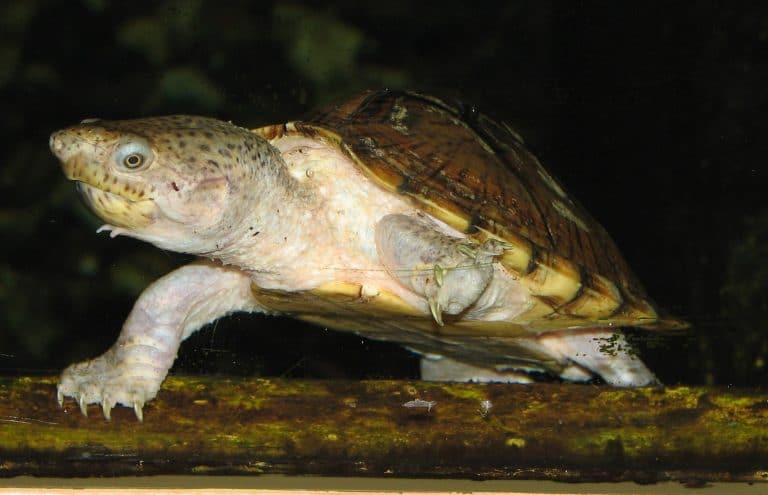
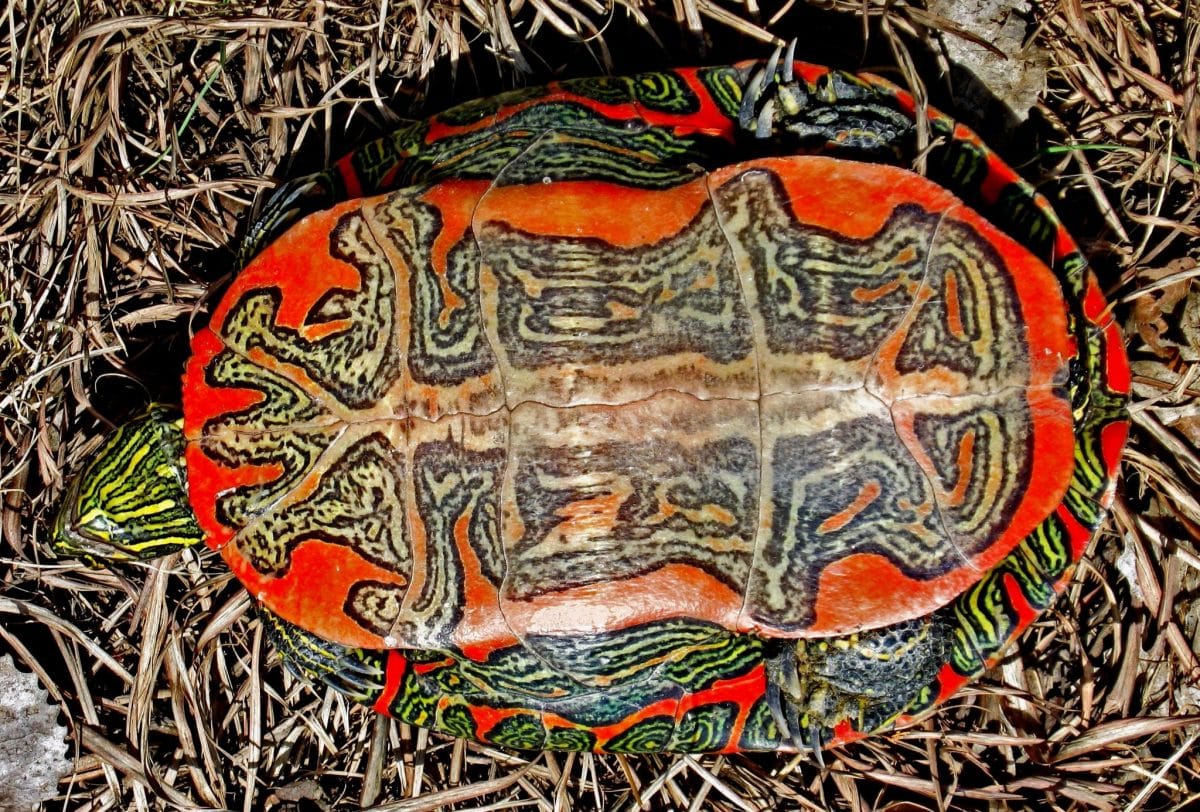
This article is about the North American Turtle, Chrysemys picta, or the painted turtle that inhabits North America and has increased its population greatly. You can find them in semi-still fresh waters, ranging from the Atlantic to the Pacific Ocean and from Louisiana and Southern Canada to Northern Mexico. This eastern painted turtle belongs to the elite species of the Chrysems genus, a member of the pond-living turtle family, Emydidae. Research of the fossils has revealed that these turtles painted turtles existed over 15 million years ago.
Anatomy
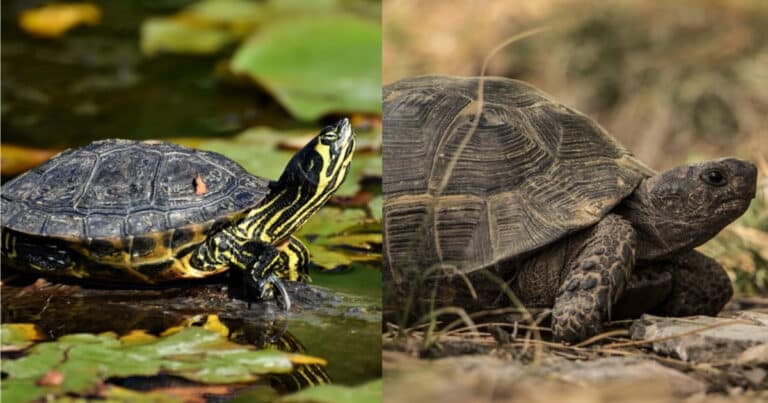
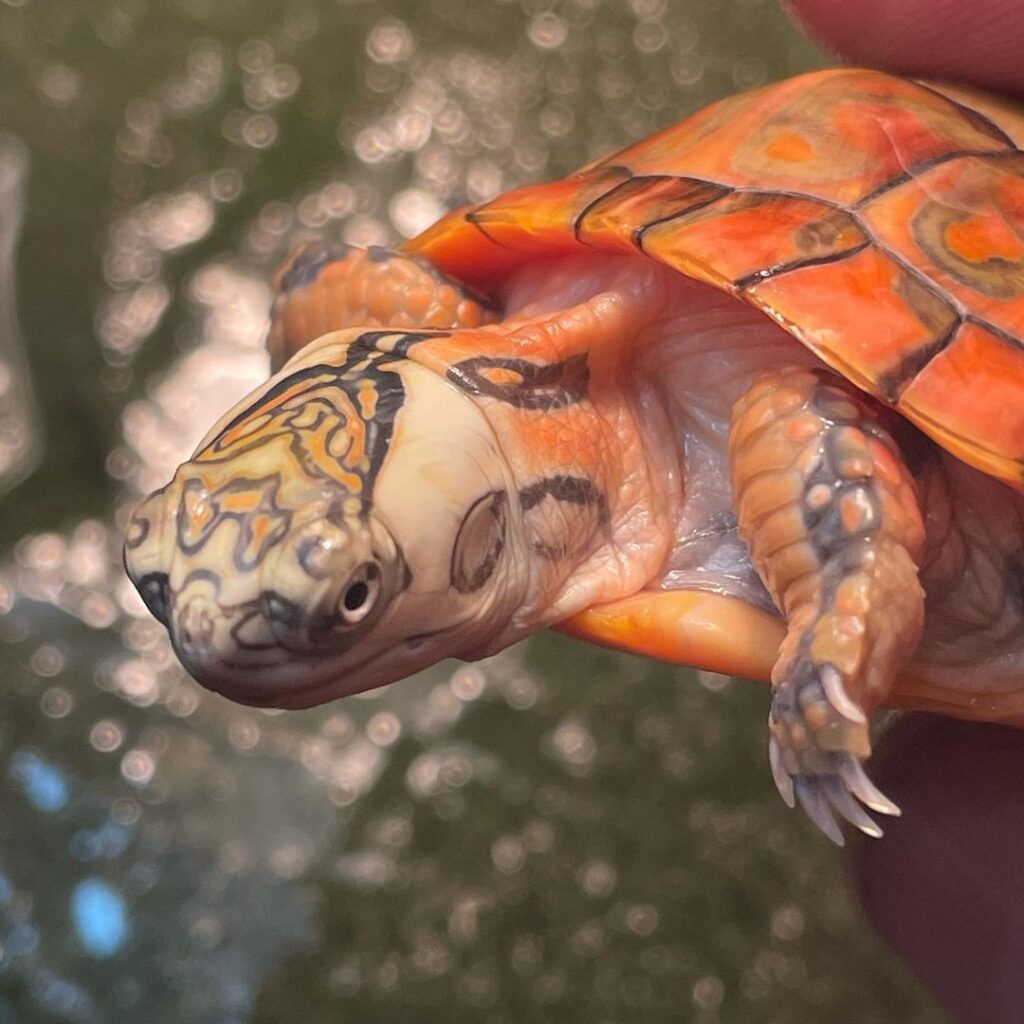
This turtle is 4-6 inches long, has a smooth shell with light-colored stripes that run across its back (formed by the straight line of the big scutes on its back). There are streaks of yellowish and reddish lines on its neck and head. Behind each of its eyes it has a pair of yellow colored spots – females attain a length of around 6-8”, where as the males grow up to a length of 4-6”.
Habitat
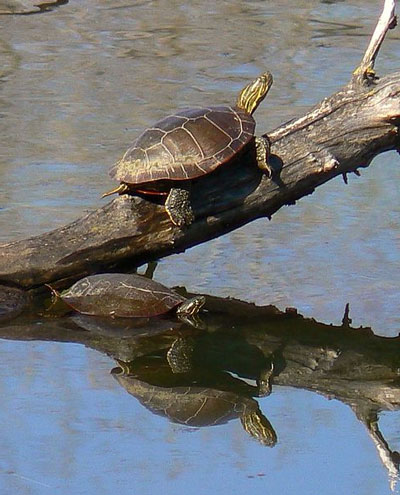
The eastern painted turtle inhabits Wetland regions with plenty of plants as well as places to bask, like the shallow ponds, streams that move slowly, lake shores, bogs, ponds, and marshes. Frequently we find them basking on big numbers of rocks and logs immersed partially in water.
As a Pet
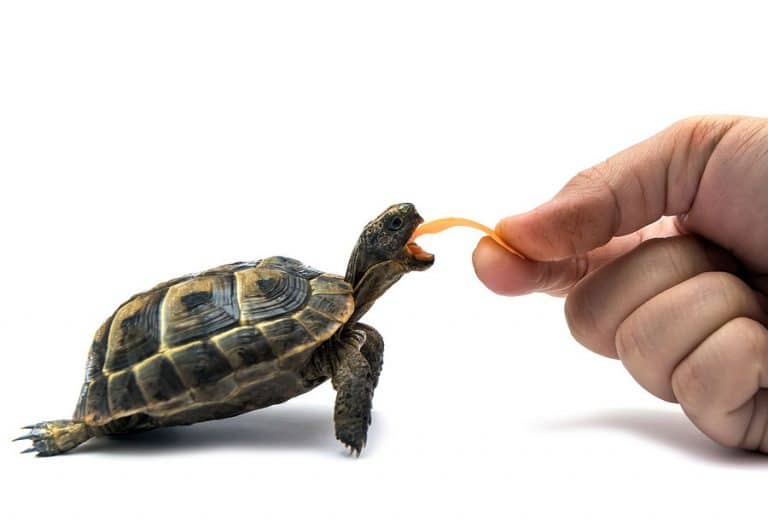
Eastern painted turtles are good for small tanks or you can rear them in larger groups. Once they grow to over 3 inches in size, then they are excellent for outside ponds. These painted turtles are purely omnivorous; mostly they consume water plants, fish, worms crustaceans, pellets, insects, meat as well as romaine lettuce. They are quick in learning feeding habits and move towards your hands and remain fairly lively. These turtles are the best variety for pet keepers both experienced and novices.
Temperature
- Air temperature: Low to average 80s
- Basking temperature: Low to 90s to high 80s
- Water Temperature: Low to mid 70s
Breeding
They normally nest adjacent to the border of water in loamy or sandy soil in open spaces. They lay 5–8 eggs in shallow, dug out holes. They may lay about 6 – 7 clutches per year. Their hibernation is either in the muddy bottoms or submerged logs. The size of the female determines the number of eggs in each clutch; the eastern painted turtles are capable of laying 1–23 eggs at a time with a temperature range of between 71.6° – 89.6°F. The incubation period lasts for 65 – 80 days.
When the incubation temperature ranges from 71.6° – 80.6°F male turtles emerge.
Females are born when temperature is 86° – 89.6°F.
A combination of male and female emerge when the incubation temperature ranges between 80° – 86°F.
Feeding
Feed your Eastern Painted turtles with commercially available pellets or fleshy food like earthworms or fish once in a day for the initial six months of their life. This is enough to reduce their appetite, but do not overfeed your turtle. After they are six months old, feed your turtles on alternate days with leafy greens or Romaine lettuce as per their preference. As time passes, keep adjusting their feed content in tune with their growth, the level of their activity and their food intake. When you overfeed them, they grow very quickly, resulting their shell deforming (pyramiding) and causes hazards to their kidneys and liver.
Housing and Facilities
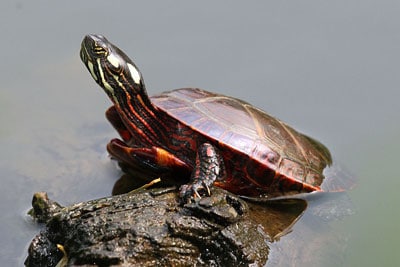
As these turtles bask fervently, provide them with a basking platform. Provide UVB lighting, as well as a heat lamp on top of the basking spot. Sustain the day temperature around 85° – 90°F at the basking spot, and for their calcium needs, provide a UVB lighting. If at all the temperature drops below the suggested range provide a submersible heater. Since they are good swimmers, facilitate them with a deep enclosure filled with water so that they do not escape while in captivity. Providing aquatic substrate is optional; provide any one of the following substrates like medium-to-fine sized gravel, river rock, sand or even an empty bottom.
Eastern painted turtles keep up a good social relationship with the species of the similar province and other painted turtles. Extra males, of other species cause problems like aggressiveness even in very big tanks. Sliders possess sturdy jaws and are likely to kill small turtles; it is better adding turtles of suitable size.
Conservation threats
Degradation, loss of habitat, on road mortality, gathering and increase in the predators like (e.g. Raccoons) contribute to their decline.

Having discovered a fondness for insects while pursuing her degree in Biology, Randi Jones was quite bugged to know that people usually dismissed these little creatures as “creepy-crawlies”.