What do Sea Turtles Eat?
The species it belongs to determines a sea turtle’s diet Some omnivorous turtles eat all types of plants and animals, whereas the leatherback and the hawksbill are peculiar, surviving mainly on jellyfish (leatherbacks) and sponges (hawksbills).
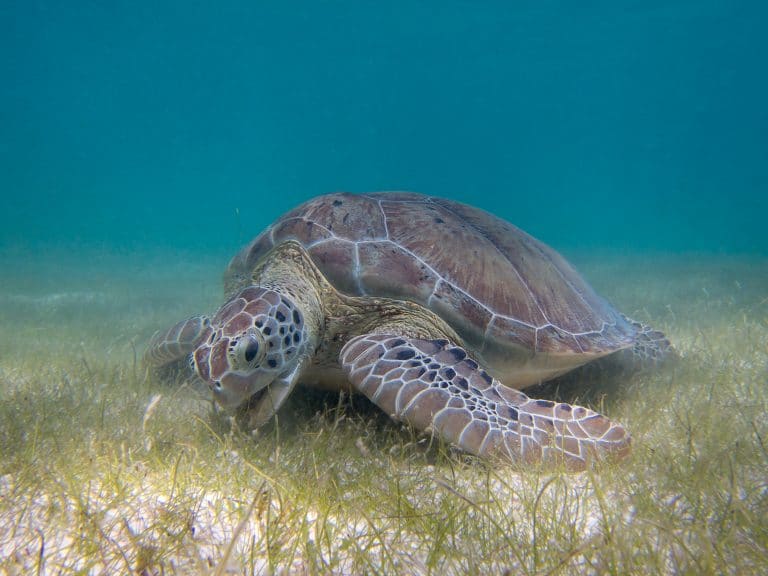
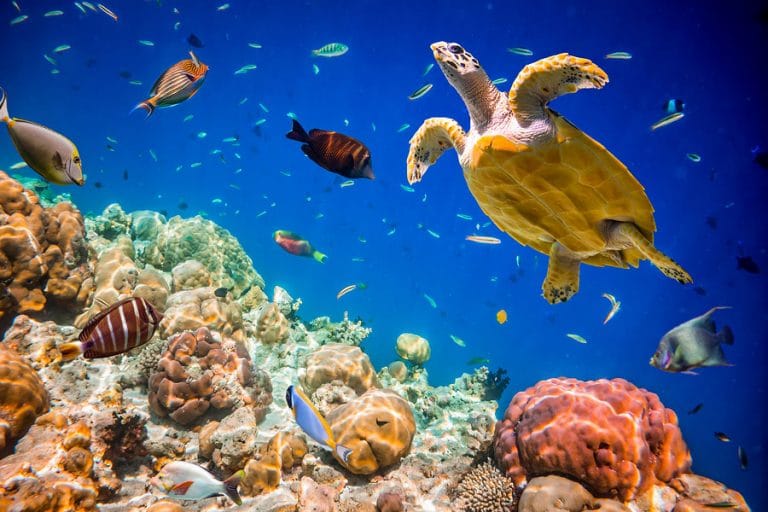
Hawksbills mainly reside in the close vicinity of coral reefs; it is here where they find their principal food, sponges. The Greens rummage in the midst of seagrass beds and areas adjacent to the seashore. Leatherbacks are profound divers, they live in the open ocean where they feed mainly on jellyfish and many invertebrates with soft bodies that you see floating in the sea.
Jaws And Mouth
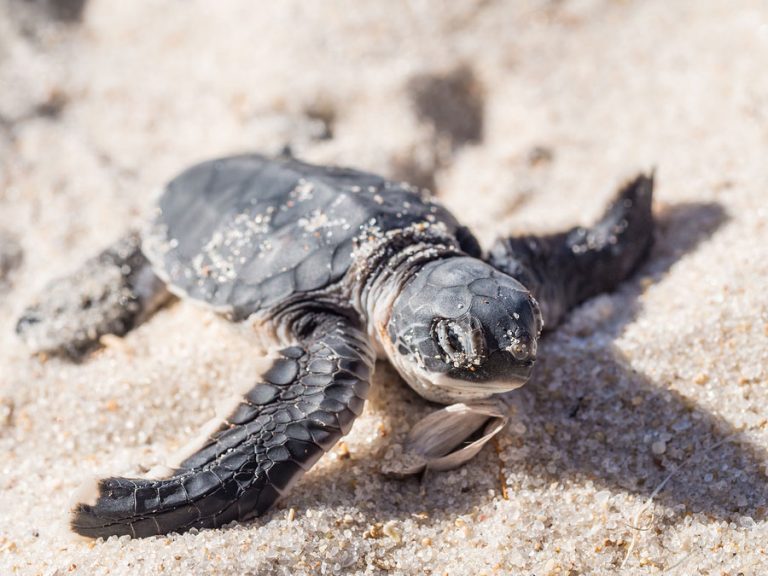
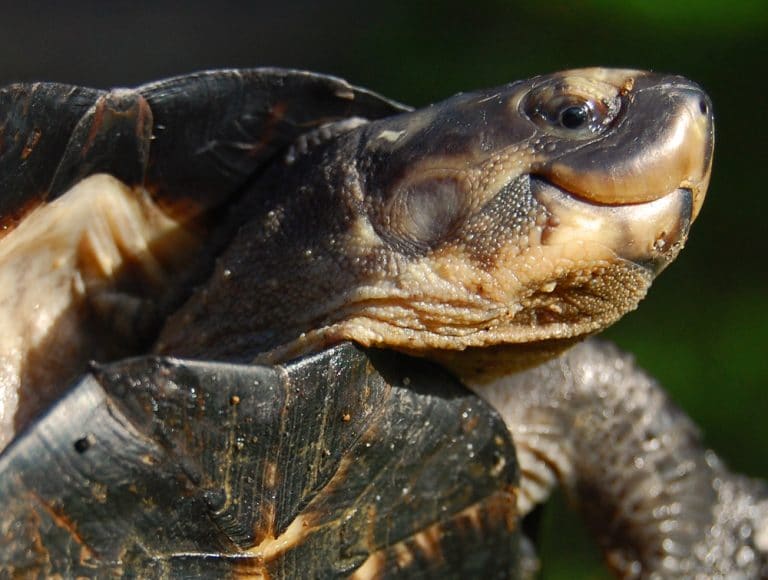
The jaws and mouths of sea turtles have a different design to suit their peculiar diet. The beak of the Green sea turtles has delicate serrated edges, similar to saw teeth; this assists them in tearing scrape algae and sea grasses from hard surfaces. Leather backs have on their jaws, sharp-pointed cusp which helps them to penetrate and hold on to the jellyfish. Besides, they possess in their throat and mouth, sharp spines curving downwards, called papillae that help them to move the prey down to their stomach. Baby turtles have a diet that is different from the adults. They feed on different types of food stuff which includes crustaceans and pelagic molluscs (such as larval crabs), fish, eggs, hydrozoans (in the jelly and coral family), jellies and seaweeds. Green hatchlings, different from the herbivore adult; in addition, eat different prey like small turtles.
The Adult Sea Turtle Diet
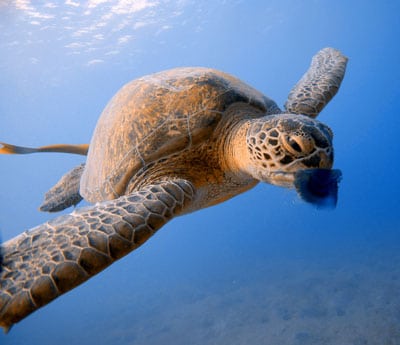
Green: baby turtles are omnivores, however Adults are herbivores. Their diet comprises chiefly of seagrass, algae and seaweeds. The beaks of the Greens have fine serrations (saw Like), this enables them to help scrape the algae from the rocks and to tear seaweeds and grasses
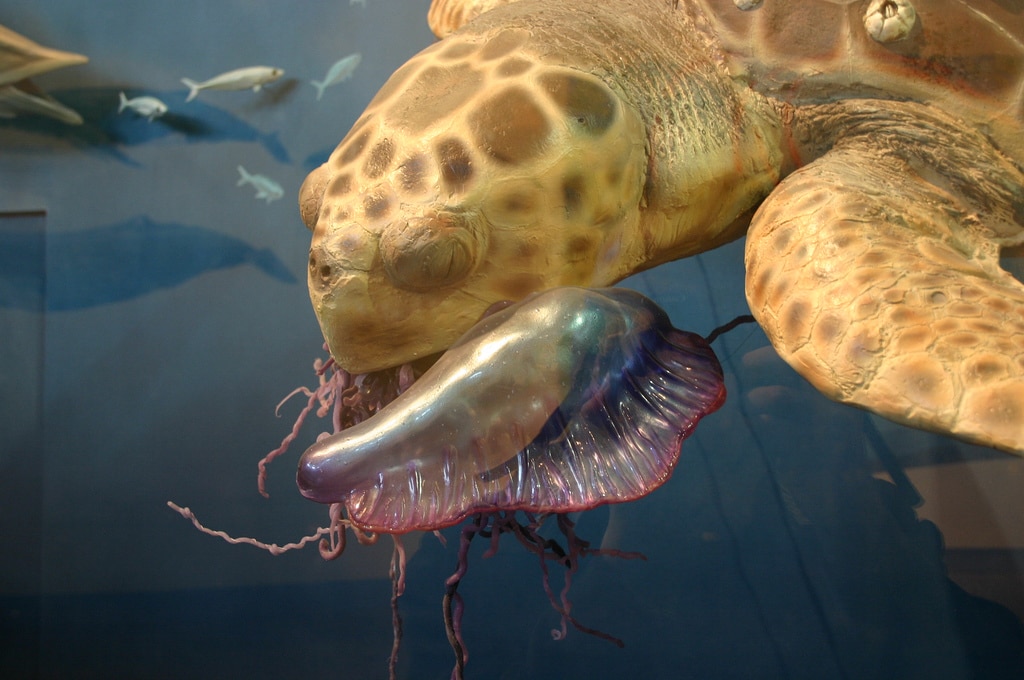
- Leatherback: At times you can classify them as as gelatinous (consuming gelatinous prey), because they mainly feed on jelly fish and the like. They possess two cusps that are sharp and pointed, one on the lower and one on the upper jaw. This enables them to pierce jellies and other soft-bodied organisms..
- Adult Loggerhead: are carnivorous; they feed on whelks, crabs, horseshoe crabs and conchs. Baby loggerheads are omnivores, they prey consists of both animals and plants. Loggerheads have strong jaws in a big head, and they use it to crush prey with hard shells.
- Hawksbill: Their peculiar diet consists to a great extent of sponges and therefore referred to as spongivores. Their beak is like a bird, narrow and sharp. This enables them to get to the reefs and within the crevices.
- Olive Ridley: These are omnivores, they feed on kinds of animals and plants that includes shrimp, urchins, crabs, algae, lobsters, fish and jellies.
- Kemp’s Ridley: They are carnivores; they eat jellies, crabs, shrimps, fish and many types of mollusks, but the crab is their favorite dish.
- Flatback: They are omnivorous, and feed on jellies, shrimps, sea cucumbers, crabs, soft corals, fish, mollusks and seaweeds.
Have you heard?
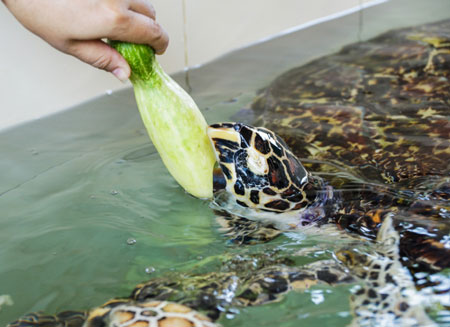
- The fitness of coral reefs is mainly maintained by the Green sea turtle which is herbivorous. If they did not eat the algae, the corals would overgrow and die, because the algae out-competes them
- Leatherback’ s chief food is jelly; plastic bags floating on water, which resembles jellies, attracts them and they die.
- “Turtle grass” is the common name for Thalassia testudinum, a seagrass, because in certain places like Caribbean green sea turtles consume it more or less completely.
- Certain sea turtles perform remarkable journeys in search of food. People have tracked the leatherback crossing the whole Pacific Ocean, starting from the Asian continent to the west coast of the US surviving on the swamps of jellyfish away from the coasts.
- The sponges have within them Toxins and spicules (grass-like spines), to which the hawksbillis are immune, as such there is less demand for this type of food. They are choosy in selecting the sponges they feed on; giving extraordinary sponges chances to grow on the reef.
Having discovered a fondness for insects while pursuing her degree in Biology, Randi Jones was quite bugged to know that people usually dismissed these little creatures as “creepy-crawlies”.