Cow Stomach: The Four Chambers and How Cows Digest Grass
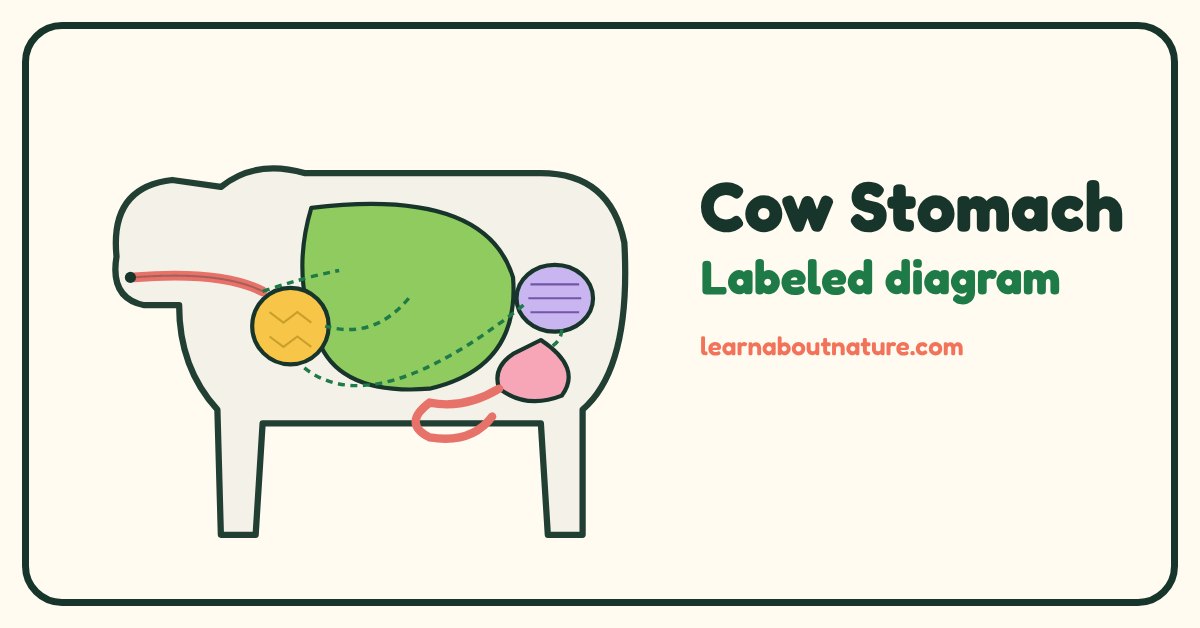
Quick answer: A cow has one stomach divided into four chambers: the rumen, reticulum, omasum and abomasum. Food goes from the mouth down the esophagus to the rumen and reticulum, where microbes ferment it and the cow brings it back up to chew as cud. It then passes through the omasum and abomasum to the small intestine.
People often say that cows have four stomachs. In fact, a cow has one large stomach divided into four parts, or chambers. Each chamber has a different job, and together they let a cow live on grass and hay, foods that people cannot digest at all.
The secret is teamwork. Trillions of tiny microbes live inside a cow’s stomach and break down tough plant fibers for it. This guide follows a mouthful of grass on its journey through the cow stomach, step by step.
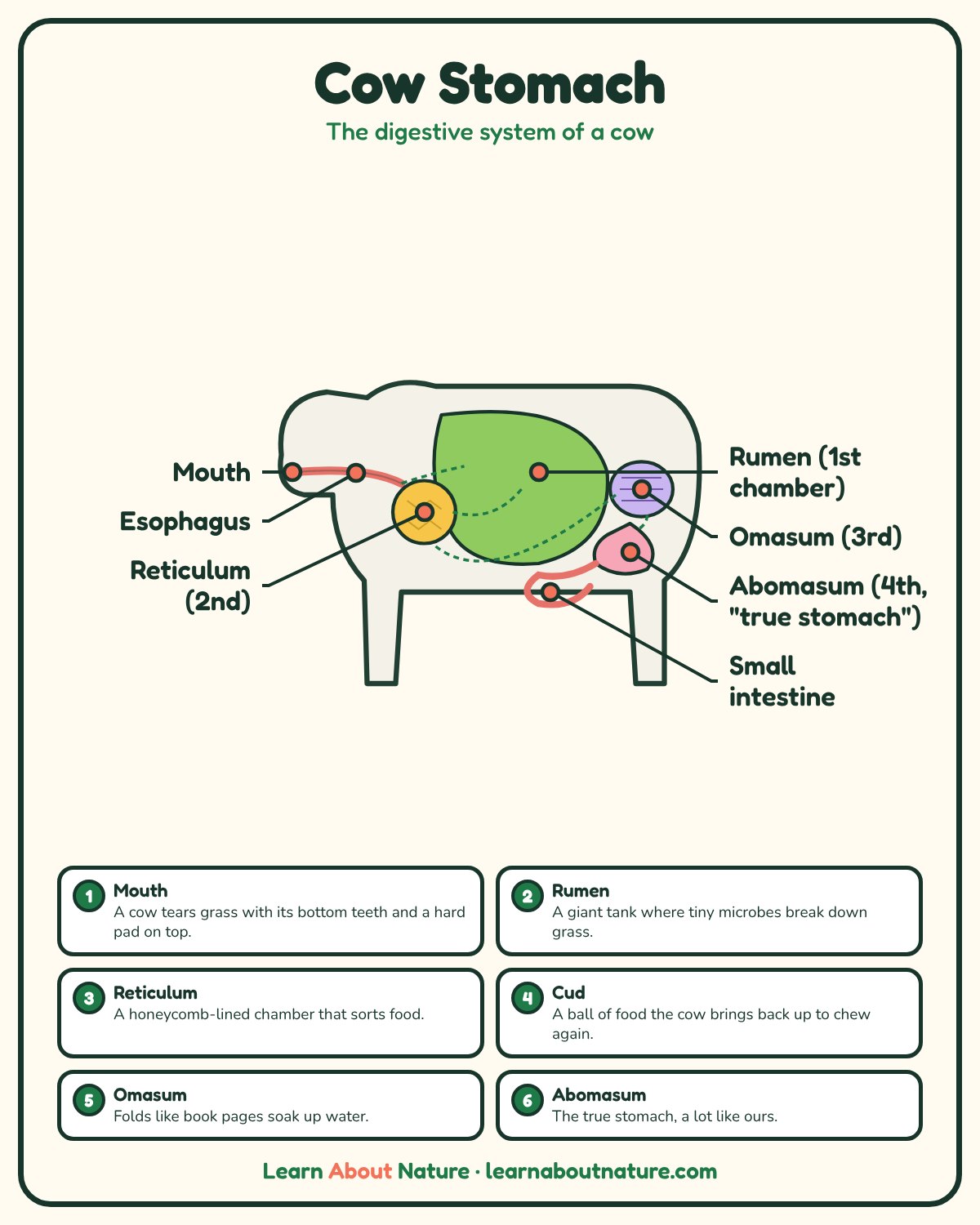
Teachers and students: you’re welcome to use this diagram in lessons and projects with credit to Learn About Nature.
Free printable: Download the Cow Stomach labeling worksheet (PDF) – label the parts using the word bank. Answer key included.
Parts of a Cow Stomach and What They Do
| Part | What it does |
|---|---|
| Mouth and dental pad | Tear off grass; chew food and cud |
| Salivary glands | Make saliva that moistens food and balances rumen acid |
| Esophagus | Carries food to the stomach and cud back up to the mouth |
| Rumen | Largest chamber; microbes ferment plant fiber |
| Reticulum | Honeycomb chamber; sorts food and helps form cud |
| Omasum | Folded chamber; absorbs water and some nutrients |
| Abomasum | True stomach; digests food with acid and enzymes |
| Esophageal groove | In young calves, sends milk straight to the abomasum |
| Small intestine | Finishes digestion and absorbs nutrients |
| Cecum and large intestine | Ferment leftover fiber and absorb water |
Why Cows Need a Special Stomach
Grass and hay are full of cellulose, the tough material that makes plant cell walls. Animals, including cows and people, do not make the enzymes needed to break cellulose down. Many microbes can, though.
Cows are ruminants, animals with a stomach built to hold microbes and give them time to work. Other ruminants include sheep, goats, deer, giraffes and bison. In an adult cow, the first two chambers, the rumen and reticulum, make up most of the stomach’s space, about 84 percent of its volume. The omasum makes up about 12 percent and the abomasum about 4 percent.
Step 1: Mouth, Teeth and Saliva
A cow has no upper front teeth. Instead, it has a hard, toothless dental pad at the front of its upper jaw. A cow wraps its long tongue around a clump of grass, pinches it between its bottom front teeth and the dental pad, and tears it off. While grazing, a cow can take from about 25,000 to more than 40,000 bites a day.
At first, the cow chews its food only a little before swallowing. Its mouth makes large amounts of saliva, about 50 quarts or more a day in an adult cow. Saliva helps the food slide down and contains a natural antacid that keeps conditions in the rumen just right for microbes.
The food then travels down the esophagus, a long tube in the neck, to the stomach.
Chamber 1: The Rumen
The rumen is the biggest chamber by far. In a full-grown cow it can hold from about 25 to 40 gallons, depending on the cow’s size. It fills most of the left side of the cow’s belly.
The rumen works like a giant fermentation tank. It has no oxygen inside and stays warm and moist. Bacteria, protozoa and fungi live there in enormous numbers. They break down plant fibers and starch and turn them into substances called volatile fatty acids. The cow absorbs these acids through the rumen wall, and they supply about half to two-thirds of its energy.
The rumen wall is covered in tiny finger-like bumps called papillae that help absorb food. Its muscles contract one or two times a minute in a healthy cow, mixing the contents. Food can stay in the rumen for up to about 48 hours.
The cow and its microbes help each other. The cow gives the microbes a warm, safe home and a steady supply of food. In return, the microbes turn grass that the cow could never digest on its own into energy and protein it can use. This kind of partnership is called symbiosis.
Chamber 2: The Reticulum
The reticulum sits at the front of the rumen and is so closely joined to it that scientists often call the two together the reticulorumen. It holds about 5 gallons in a mature cow.
The inside of the reticulum has a pattern of ridges that looks like a honeycomb. It sorts the food: small, well-digested particles move on toward the omasum, while larger pieces are sent back for more work. Heavy objects a cow swallows by accident, such as pieces of wire, tend to settle here, which is why farmers try to keep such objects out of feed and pastures.
Chewing the Cud
When a cow is resting, it brings a soft ball of food, called a bolus or cud, back up from the reticulorumen into its mouth. It chews the cud slowly and thoroughly, mixes it with more saliva and swallows it again. This process is called rumination.
Chewing the cud breaks plant fibers into smaller pieces so microbes can reach more of their surface. Dairy cows spend almost 8 hours a day ruminating and may chew around 30,000 times a day. A cow lying quietly in a field, jaws moving from side to side, is usually chewing its cud.
Cud chewing is a sign that the rumen is working normally, so farmers and veterinarians often watch how much time cows spend ruminating.
Chamber 3: The Omasum
From the reticulum, finely ground food passes into the omasum. This round chamber is packed with many thin folds of tissue that look like the pages of a book, so it is sometimes called the “many plies” or the “book stomach.” In a mature cow it can hold up to about 15 gallons.
The folds give the omasum a huge surface area. As food squeezes between them, the omasum absorbs water and some nutrients and helps grind the particles even smaller.
Chamber 4: The Abomasum
The last chamber, the abomasum, is called the true stomach because it works much like a human stomach. Its walls make strong acid and digestive enzymes, and the contents are very acidic.
Here the cow digests food that has come through the first three chambers, including the microbes themselves. Huge numbers of microbes wash out of the rumen with the food every day, and they are an important source of protein for the cow.
After the Stomach: The Intestines
From the abomasum, food moves into the small intestine, a narrow tube that can be up to about 150 feet long in an adult cow, roughly 20 times the length of its body. Enzymes finish digesting proteins, fats and sugars, and nutrients pass into the blood.
What is left then moves into the cecum and large intestine, where more microbes ferment leftover fiber and water is absorbed. Finally, waste leaves the body as manure.
Calves, Gas and Other Facts
A newborn calf drinks milk, which does not need fermenting. At birth the abomasum is the largest part of its stomach. When a calf suckles, a fold of tissue called the esophageal groove closes into a channel that sends milk straight past the rumen to the abomasum. As the calf starts eating grass, hay and grain, its rumen grows quickly, and by about 3 months old it works much like an adult’s.
Fermentation in the rumen also makes gases, mostly carbon dioxide and methane. A cow releases these gases mainly by belching. Methane is a greenhouse gas, and scientists are studying feeds and other methods that could reduce how much cattle produce.
- A cow’s rumen can make about 30 to 50 quarts of gas an hour.
- Cattle spend roughly one-third of their day grazing and about one-third ruminating.
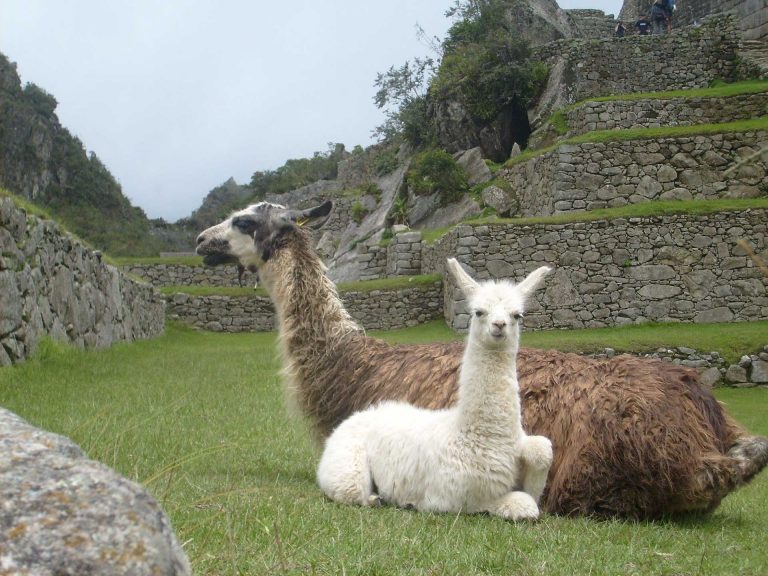
- Sheep, goats and deer have the same four-chambered stomach design as cows. Camels and llamas also chew cud but have a stomach with three chambers.
Cow Stomach for Kids
- Mouth: a cow tears grass with its bottom teeth and a hard pad on top.
- Rumen: a giant tank where tiny microbes break down grass.
- Reticulum: a honeycomb-lined chamber that sorts food.
- Cud: a ball of food the cow brings back up to chew again.
- Omasum: folds like book pages soak up water.
- Abomasum: the true stomach, a lot like ours.
- Small intestine: a very long tube that takes in nutrients.
Key words: ruminant – a hoofed animal with a chambered stomach that chews cud, such as a cow, sheep or goat; rumen – the largest chamber of a cow’s stomach, where microbes ferment food; cud – partly digested food that a cow brings back up to chew again; rumination – bringing up food and chewing it a second time; microbes – living things too small to see without a microscope, such as bacteria; fermentation – a process in which microbes break down food without oxygen.
Try this: Draw a cow outline and trace the path of a mouthful of grass with arrows through the mouth, esophagus, rumen, reticulum, back to the mouth as cud, then the omasum, abomasum and intestines. Label what happens at each stop.
Related Guides
- Cow life cycle
- Dog Anatomy
- Cat Anatomy
- Rabbit life cycle
- Wolf life cycle
- Fox life cycle
- All labeled anatomy diagrams
Cow Stomach FAQs
Do cows have four stomachs?
Not exactly. A cow has one stomach with four chambers: the rumen, reticulum, omasum and abomasum. Each chamber does a different job, from fermenting grass with microbes to absorbing water to digesting food with acid, so people often describe them as four stomachs.
What are the four parts of a cow’s stomach?
The four parts are the rumen, the largest chamber, where microbes ferment plant fiber; the reticulum, a honeycomb-lined chamber that sorts food; the omasum, which has many folds that absorb water; and the abomasum, the true stomach, which digests food with acid and enzymes much like a human stomach.
Why do cows chew their cud?
Cows swallow grass after only a little chewing. Later, they bring it back up as cud and chew it again. This breaks plant fibers into tiny pieces that rumen microbes can digest more easily, and the extra saliva helps keep the rumen at the right acidity. Dairy cows ruminate for almost 8 hours a day.
How big is a cow’s rumen?
In a full-grown cow, the rumen can hold roughly 25 to 40 gallons, depending on the size of the animal. Together with the reticulum, it makes up about 84 percent of the volume of the whole stomach.
Which part of a cow’s stomach is like ours?
The abomasum, the fourth chamber, is called the true stomach because it works much like a human stomach. Its lining makes acid and digestive enzymes that break down food, including the microbes that wash out of the rumen. In newborn calves, the abomasum is the largest chamber.
Sources: Understanding the Ruminant Animal Digestive System – Mississippi State University Extension; The Ruminant Digestive System – University of Minnesota Extension; Why Do Cattle Chew Their Cud? – University of Kentucky Animal and Food Sciences; Why Do Cattle Produce Methane, and What Can We Do About It? – CLEAR Center, UC Davis

Nato is a content writer and researcher with a background in psychology who’s eager to explore the wonders of nature. As a travel enthusiast and animal lover, she hopes to inspire others to discover and cherish the beauty and importance of the natural world. She also writes about the history of candy and snacks for Snack History and about food and healthy eating for The Fitchen.