Pigs

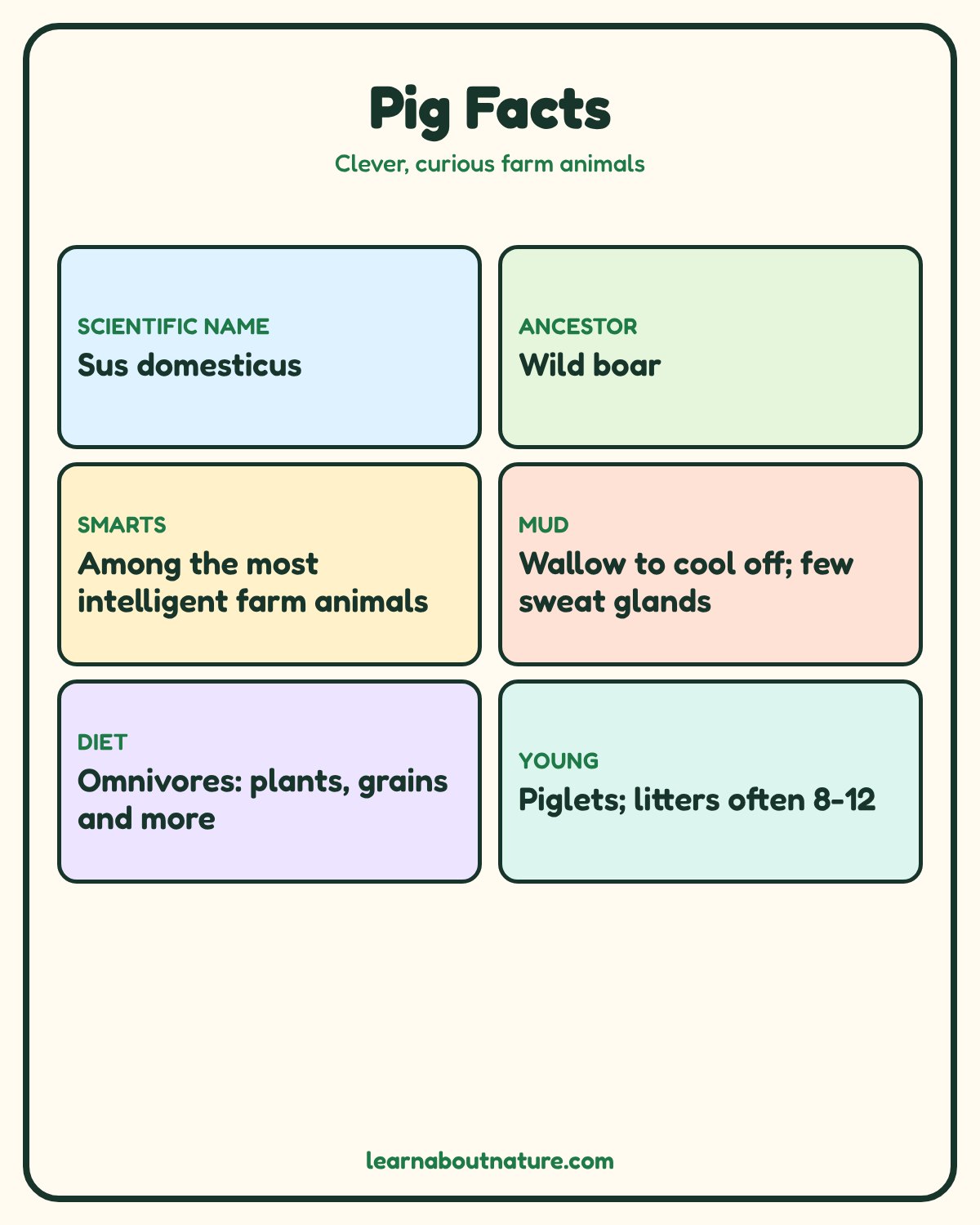
The domestic pig (Sus domesticus or Sus scrofa domesticus), also called a hog or swine, is a large, even-toed hoofed mammal descended from the wild boar. Pigs are raised mainly for their meat, which is called pork. Their bones and bristles are also used to make commercial products. Some breeds, such as the potbellied pig, are kept as pets.
Domestic pig Quick Facts
| Common name | Domestic pig |
| Scientific name | Sus scrofa domesticus |
| Kingdom | Animalia |
| Phylum | Chordata |
| Class | Mammalia |
| Order | Artiodactyla |
| Family | Suidae |
| Genus | Sus |
| Type | Even-toed ungulate (livestock) |
| Diet | Omnivore |
| Size | 0.9-1.8 m long |
| Weight | 50-350 kg |
| Lifespan | 15-20 years if not raised for meat |
| Special feature | Strong snout for digging; excellent sense of smell |
Description
A pig’s body can be 0.9 to 1.8 m long, and it can weigh around 50 to 350 kg. Its head is long and pointed. The long snout is its most famous feature. It is made strong by a disk of cartilage and a special bone at the tip, and the pig uses it to dig in the soil for food. A pig has 44 teeth, with back teeth for crushing food. Males have large canine teeth that grow into tusks and are kept sharp by grinding against each other. Each foot has four hoofed toes. Pigs walk on the two large middle toes, and the two smaller outer toes help support them on soft ground. Domestic pigs have skin covered with sparse hair.
Behavior
In many ways, pigs behave more like humans and dogs than like sheep or cattle. Pigs like to stay close to each other and touch, but they do not usually form large herds. They love to eat and, if allowed, will eat for hours. They can also sleep for long periods. Pigs are omnivores and can eat much of the same food as dogs and humans, while wild pigs eat roots, grasses, flowers, leaves and fruit, along with small animals. Domestic pigs are very intelligent, and some can be trained to do tricks and tasks.
Nest Building
Pigs are unusual among hoofed animals because they build beds and nests. They use their snouts to dig hollows or wallows in the soil, and a mother pig builds a special nest before giving birth. She digs a hollow about the size of her body, then carries grass, twigs and leaves in her mouth to fill it. She piles these into a mound, using her feet to arrange the finer material in the middle. When the mound is high enough, she adds larger branches, up to about 2 m long, on top. Then she slowly works her way into the mound to make a hollow inside it. Unlike most other hoofed animals, which give birth standing up, pigs give birth lying down.
Mating
Domestic pigs can breed at any time of year. Before mating, the boar courts the sow in several ways, such as offering her bits of food, rubbing her with his snout and gently nuzzling her. Mating is then quick and noisy. Sows usually have litters of 8 to 12 piglets, and with good care and plenty of food and water, litters can be even bigger. Sows are caring mothers that protect their piglets well. A sow with young piglets may bite or seriously hurt people who come too close, although sows are not usually aggressive at other times. Piglets grow very fast and reach a good size within 4 to 5 months. If they are not raised for meat, domestic pigs can live 15 to 20 years.
Farming

Pig farming means raising and breeding domestic pigs, and it is a branch of animal husbandry. Pigs are raised mainly for pork. Farms range from large, intensive commercial units to extensive and free-range systems. In some places, pigs are allowed to roam freely around a village or town, or are kept in a simple shelter or a pen next to the farmer’s house. In the past, people usually kept a few pigs in a small shelter near their home. Pigs were raised for meat and were also useful for eating up household food waste. In some places, pigs still help get rid of large amounts of food waste.
These traditional ways of keeping pigs are still common in many parts of the world. In developed countries, thousands of pigs are often raised together in climate-controlled buildings on commercial farms. Worldwide, around a billion pigs are slaughtered each year, more than 100 million of them in the United States. Most are raised for meat, but their fat, skin and other parts are also used to make things such as cosmetics, clothing, processed food ingredients and medical products.
Special Abilities
Domestic pigs still have most of the abilities of their wild relatives. Their excellent sense of smell is the most impressive. There is even a story about a farmer who used a pig’s sense of smell to find his lost child. A calm pig can be trained to dig up and sniff out things in the soil, such as roots, tubers and edible mushrooms; in Europe, pigs have long been used to find truffles. Pigs are very good at finding food and are known to be unusually intelligent.
As Food

Meat from pigs is called pork, and it is one of the most widely eaten meats in the world. It can be cooked fresh or preserved. Curing makes the meat last longer. Examples of preserved pork include smoked pork, bacon, gammon, sausage and ham. Pork is especially popular in East and Southeast Asia and in Western countries.
Domestic pig FAQs
What do pigs eat?
Pigs are omnivores, so they eat both plants and animal foods. Farm pigs can eat food that dogs and people eat, while wild pigs eat roots, grass, flowers, leaves and fruit.
How big do pigs get?
Pigs are 0.9 to 1.8 metres long and weigh 50 to 350 kilograms, depending on the breed.
How long do pigs live?
Domestic pigs can live 15 to 20 years if they are not raised for meat.
Are pigs smart?
Yes. Pigs are very intelligent and behave more like dogs or humans than like sheep or cattle. Some can even be trained to do tricks.
Why do pigs dig with their snouts?
A pig’s long snout is strong because of a cartilage disc and a special bone at the tip. They use it to dig in the soil to find food, such as roots, and to make wallows.

Randi Jones is the owner and founder of the Nature Gift Store, an online retailer specializing in nature-themed gifts, educational science projects, live animal nature kits and real butterfly artwork. A biology graduate who fell in love with insects, she founded the company in 2001 to make active learning about nature fun, accessible and engaging for children and adults. Her store offers real butterfly frames, home and garden decor and educational live animal kits, including ant farms, worm farms, tadpoles, ladybugs and hermit crabs, and she runs a bug museum in Washington featuring live animals like Eddie the Iguana alongside other reptiles and insects. Randi wrote most of the guides on this site. They first appeared on her long-running nature sites, including Monarch-Butterfly.com, Ladybug-Life-Cycle.com, Frog-Life-Cycle.com, Dragonfly-Site.com and Butterfly Pictures, which have now been brought together here at Learn About Nature.