Amphibians

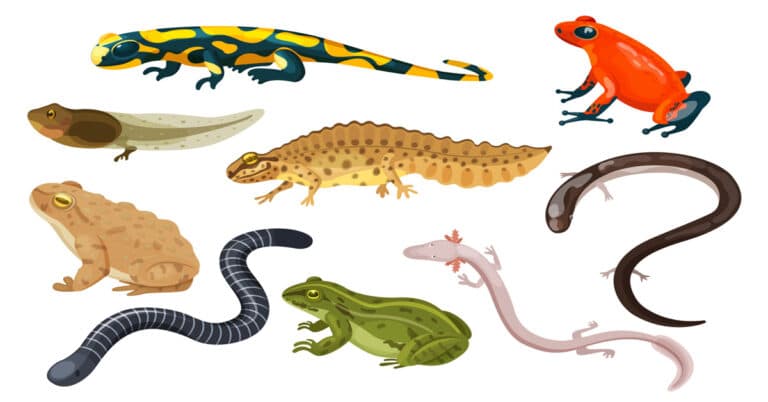
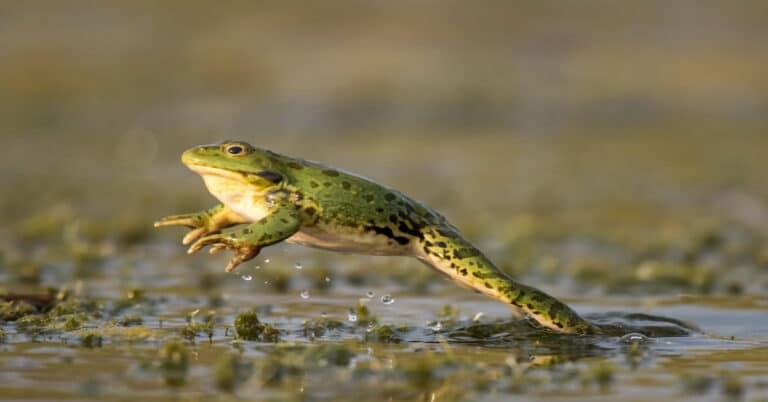
Amphibians live a double life, which is exactly what their name means. Most frogs, toads, newts and salamanders begin as aquatic larvae that breathe with gills, then transform into air-breathing adults that can move onto land. This change, called metamorphosis, is one of the most dramatic in the animal world. Amphibians also have thin, moist skin that can absorb water and even oxygen, so most species need damp places to live and lay their eggs, usually in or near fresh water.

Because that sensitive skin takes in whatever is around it, amphibians are often seen as indicators of a healthy environment, and scientists keep a close eye on their numbers. This section covers the most familiar members of the group. Explore the colors, calls and habits of frogs, follow the wriggling early stages of life in our guides to tadpoles, and learn how the dry, bumpy-skinned toad differs from its smoother frog cousins. It is a great starting point for pond studies, school projects and backyard nature watching.

  • Fun Frog Facts

    There are lots of interesting frog facts that you might not know, and maybe some frog facts that you do already know. Take a look at these frog facts and see what you can learn. Interesting Facts About Frogs • Frogs are amphibians because they start their frog life cycle as eggs in the water and then…

  • Do Frogs Have Teeth?

    Quick answer: Many frogs have tiny teeth along the upper jaw, but most have no teeth on the lower jaw. They use these teeth to grip prey, not chew it, and swallow food whole. Toads have no teeth. Many of you may be wondering, “Do frogs have teeth?”. Well, the answer is not all frogs…

  • Where Do Frogs Live?

    Quick answer: Frogs live on every continent except Antarctica, in places near water or damp ground. Habitats include ponds, streams, wetlands, forests, grasslands, deserts and trees, because their thin skin needs moisture. For a long time now, you have been familiar with frogs and toads, but have you ever given thought to, “where do frogs…

  • What Are Amphibians?

    Quick answer: Amphibians are cold-blooded animals with backbones, such as frogs, toads, salamanders and caecilians. Most begin life in water with gills and later develop lungs, and they breathe partly through their thin, moist skin. Amphibians are Tetrapod, ectothermic vertebrates (animals that depend on environmental sources of heat, not able to self-regulate body heat) that belong…

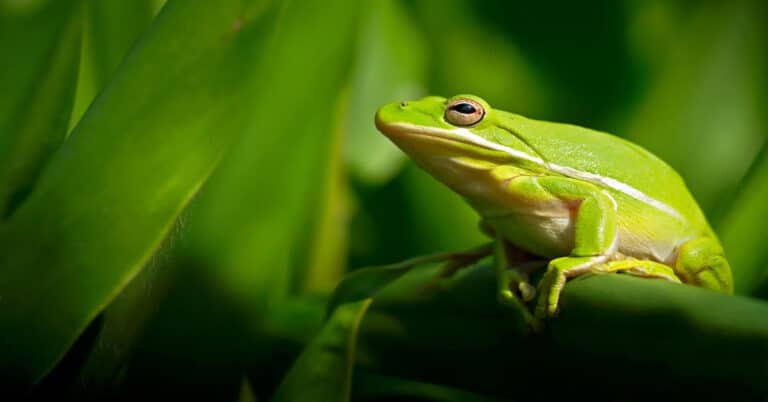
  • Green Frog

    Lithobates clamitans belong to the species of frogs. They are commonly known as Green frogs and usually belong to the Eastern half of Canada and the United States. The other subspecies of the green frog are the northern green frog and Bronze Frog Rana Clamitans.  Green frog Quick Facts Common name Green frog Scientific name Lithobates clamitans…

  • Leopard Frog

    A leopard frog is any of a group of slim, spotted frogs from North America, named for the dark, leopard-like spots on their green or brown backs. The best known is the northern leopard frog, a common pond and meadow frog across much of Canada and the northern United States. What Are Leopard Frogs? Leopard…

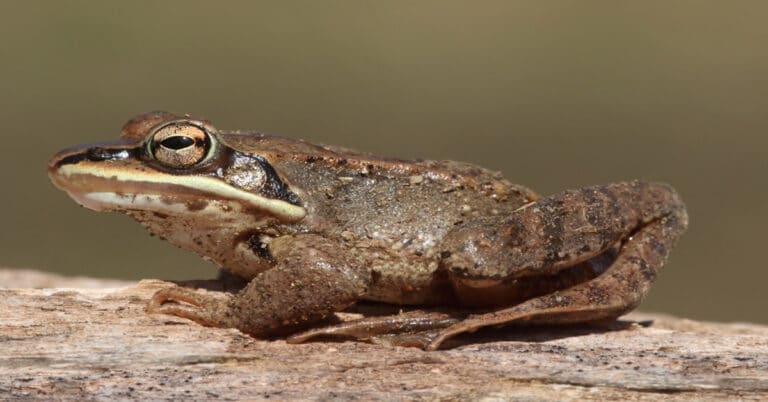
  • Wood Frog

    Lithobates Sylvaticus, usually known as the Wood frog, is a native of North America.  You can see them from the southern Appalachians to the boreal forest and Eastern North Carolina. These frogs have an amazing freeze tolerance ability and spend their maximum life on land. Their interesting habitat includes uplands, vernal pools, and peat bogs. This species is considered an…

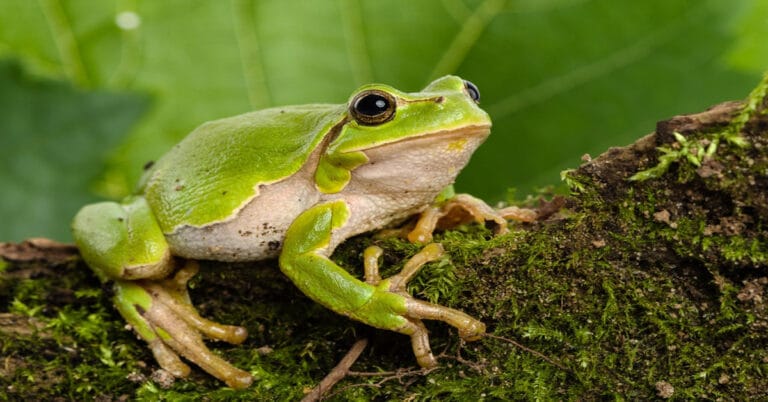
  • Tree Frog

    Tree frogs spend the most part of their life in trees, a situation referred to as the arboreal state. Many divisions of the Neobatrachia contribute to different types of tree frogs, although they are not all closely related (most belong to the family Hylidae). The Neobatrachia is a suborder of the Anura, under the order of frogs…

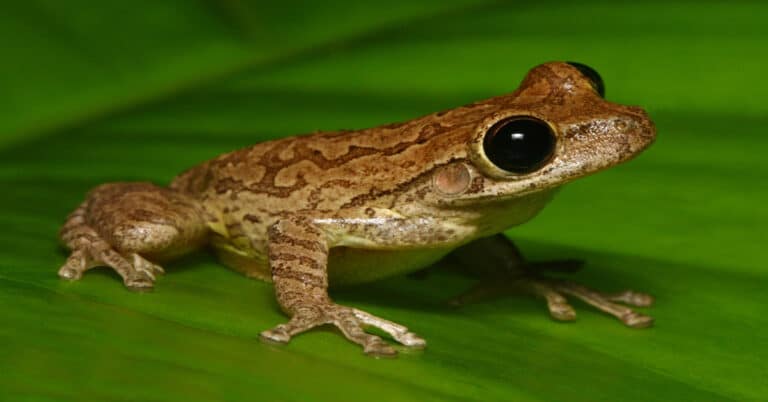
  • Cuban Tree Frog

    The Cuban tree frog (Osteopilus septentrionalis) is a large tree frog native to Cuba, the Bahamas and the Cayman Islands. It is the biggest tree frog found in North America, and it has become a troublesome invasive species in Florida and other places where people have accidentally brought it. Cuban tree frog Quick Facts Common…