Fun Frog Facts

There are lots of interesting frog facts that you might not know, and maybe some frog facts that you do already know. Take a look at these frog facts and see what you can learn.
Interesting Facts About Frogs
- • Frogs are amphibians because they start their frog life cycle as eggs in the water and then turn into tadpoles, which have gills and also live in the water. It isn’t until a tadpole turns into a frog that it can live outside of the water, but it will still need to get in the water to drink and to cool off.
- Frogs don’t actually drink water with their mouths; they drink it through their skin. A frog’s skin absorbs water when it is in the water so its body gets all of the hydration that it needs that way and the frog doesn�t need to drink with its mouth.
- Frogs are cold blooded. That means that the body temperature of a frog is the same on the inside as it is on the outside. That is why frogs need to be near water so that they can jump in and cool off on hot days.
- Frogs hibernate in the wintertime.
- When frogs hibernate their bones sort of grow a layer, like a tree does. When you look inside a frog’s bone you will be able to see rings and tell how old the frog is by counting the rings.
- Frog fossils have been found all over the world except in Antarctica, probably because it is too cold all year round there for frogs to live. Some of the fossils that have been found are as old as dinosaurs!
- A group of fish is called a school, but a group of frogs is called an army. Do you think that is why army colors are green? A group of people is called a group.
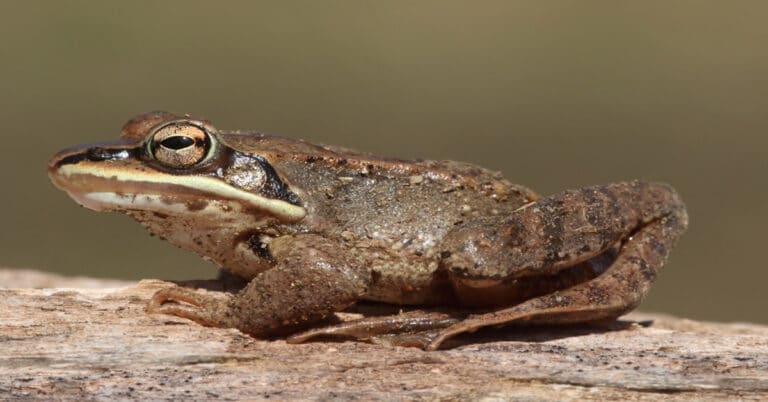
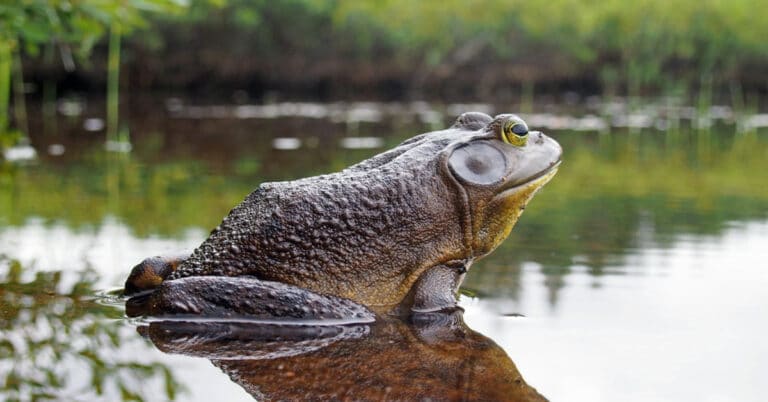
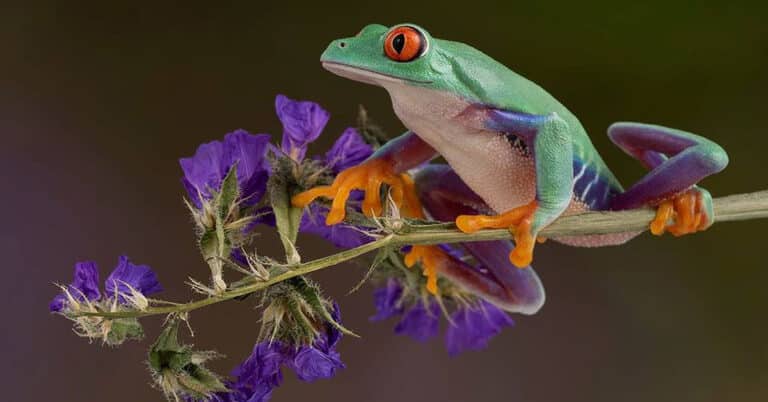
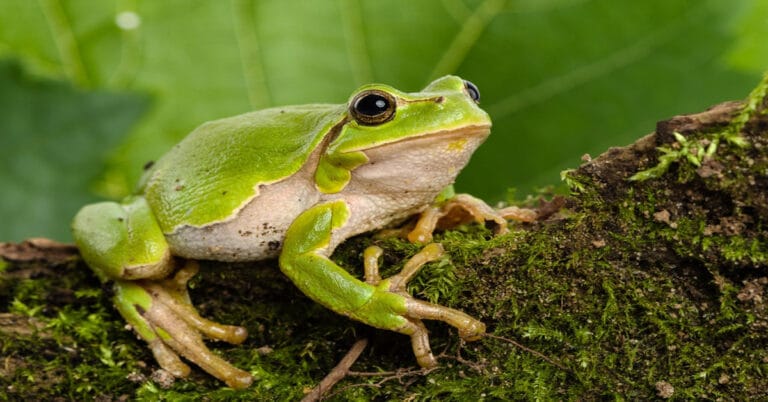
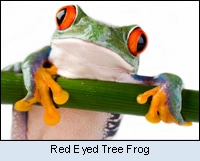
- Not all frogs are green. There are hundreds of species of frogs and each one looks different. Some frogs are red and some are yellow and some are brown. All of the different species of frogs have different patterns on their skin, too.
- One way to tell a male frog from a female frog is by looking at its ears. The ears can be found right behind the frog’s eyes. If the ears are as big as the eyes, then the frog is a boy. If the ears are smaller than the frog’s eyes, then the frog is a girl.
- The male frog is the only one who can croak, and every frog species makes its own unique sound and some are not even croaks. Some frogs whistle and some chirp like a bird.
- A frog won’t turn into a prince, no matter how many times you kiss him!
Frog Facts FAQs
Do frogs drink water?
Frogs do not usually drink with their mouths. Instead, they absorb water through their skin, especially through a thin patch of skin on the belly and thighs sometimes called the drinking patch. Sitting in water or on damp ground lets them take in the moisture their bodies need.
What is a group of frogs called?
A group of frogs is often called an army. Other collective names are sometimes used too, such as a colony or a knot. Frogs are not truly social animals, but they can gather in large numbers at ponds during the breeding season, when the males call loudly to attract mates.
Are frogs cold-blooded?
Yes. Frogs are ectotherms, often called cold-blooded, which means their body temperature changes with their surroundings. They warm up by basking in the sun and cool down by moving into shade or water. In cold winters many frogs become inactive and hibernate in mud, leaf litter or burrows.
How can you tell a male frog from a female?
In some species, such as bullfrogs and green frogs, the male’s round eardrum, or tympanum, is larger than its eye, while the female’s is about the same size as the eye or smaller. Males are also the main callers and often have vocal sacs and rough nuptial pads on their thumbs.
How old are frogs as a group?
Frogs are an ancient group of animals. The oldest known frog-like fossils date back more than 200 million years, to around the time of the early dinosaurs. Frog fossils have been found on every continent except Antarctica, showing that frogs have been widespread for a very long time.

Randi Jones is the owner and founder of the Nature Gift Store, an online retailer specializing in nature-themed gifts, educational science projects, live animal nature kits and real butterfly artwork. A biology graduate who fell in love with insects, she founded the company in 2001 to make active learning about nature fun, accessible and engaging for children and adults. Her store offers real butterfly frames, home and garden decor and educational live animal kits, including ant farms, worm farms, tadpoles, ladybugs and hermit crabs, and she runs a bug museum in Washington featuring live animals like Eddie the Iguana alongside other reptiles and insects. Randi wrote most of the guides on this site. They first appeared on her long-running nature sites, including Monarch-Butterfly.com, Ladybug-Life-Cycle.com, Frog-Life-Cycle.com, Dragonfly-Site.com and Butterfly Pictures, which have now been brought together here at Learn About Nature.