What Do Frogs Eat and What Eats Frogs?

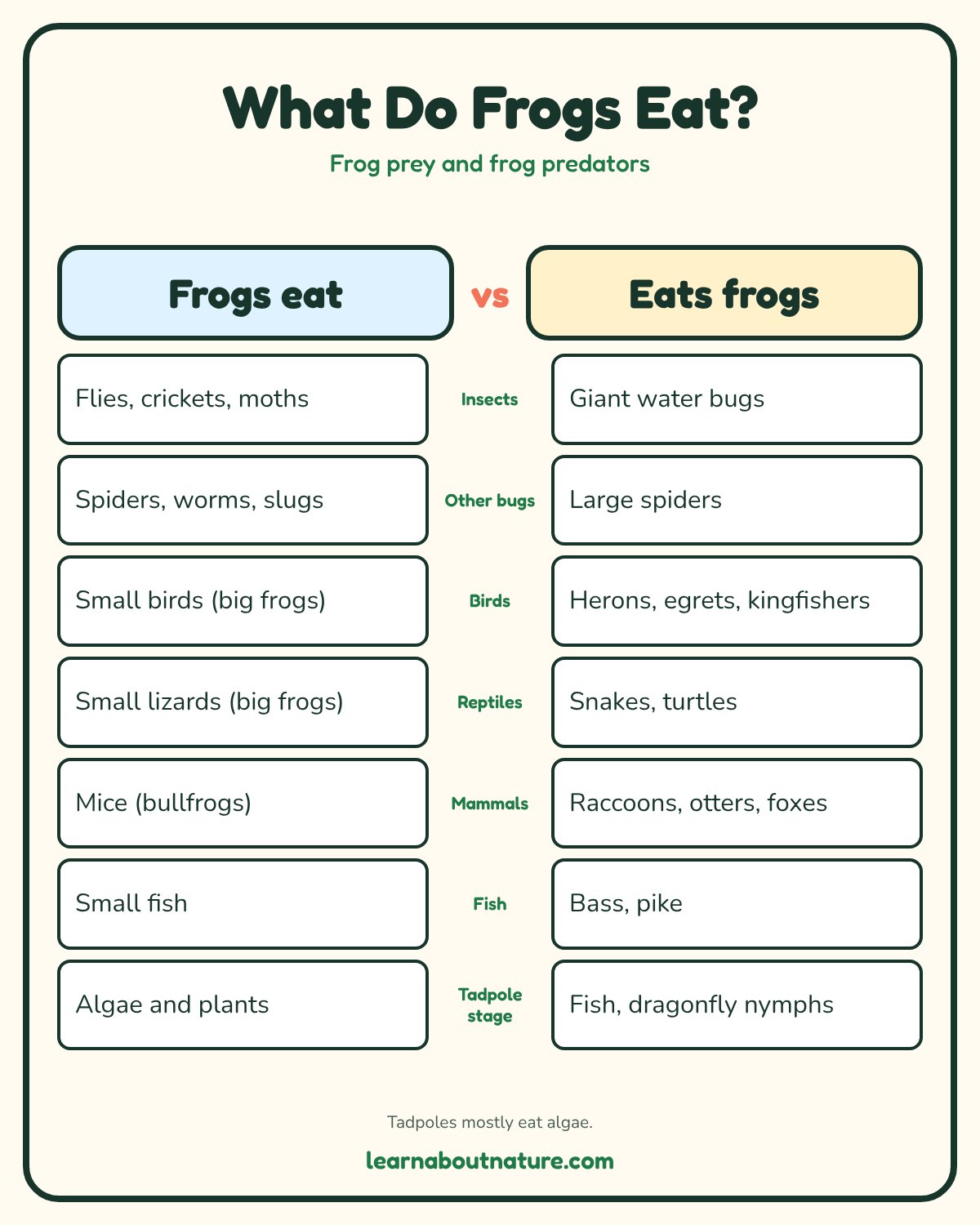
Quick answer: Frogs eat insects, spiders, worms and snails, and large frogs can eat mice or small fish. Frogs are eaten by snakes, birds, fish, raccoons, herons and other animals, and tadpoles are eaten by fish and insects.
A lot of people have no idea that frogs are not only the prey of many larger animals but also what frogs eat exactly. Have you ever had a pet frog? If not, you are probably not familiar with the fact that frogs actually do eat other live prey and are definitely not vegetarians by any means. Insects, snails, spiders, worms, and even small fish have all been known to be part of a frog’s diet and while some bigger frogs had been known to go after something as big as a mouse, there are still those frogs that just stick to insects.

What Do Frogs Eat?
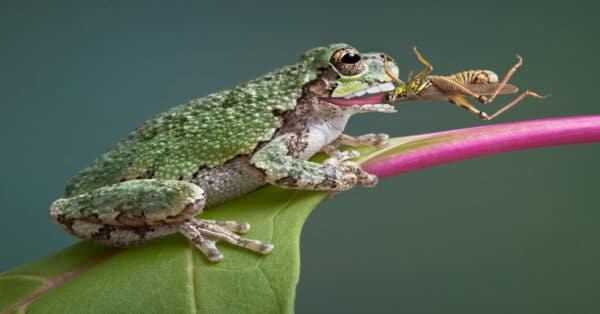
Frogs eat live animals. Adult frogs are carnivores that catch insects such as flies, crickets, beetles and moths, plus spiders, worms, slugs and snails, with a fast sticky tongue. Big frogs like bullfrogs also eat small fish, mice, other frogs and even small snakes. Tadpoles mostly eat algae and plant matter.
How Do Frogs Eat Without Teeth?
One of the neat facts about how frogs eat is that they have no teeth for chewing. Similar to snakes, frogs have to swallow their entire meal whole because they can not chew anything. Usually, frogs will only use the upper jaw to hold onto their prey, it is not used for biting or chewing at all. One of the most memorable things that people usually pick up on is the sticky tongue that all frogs have. This tongue takes less than a second to roll out and once it is out, whichever insect they are attempting to catch will not have any time at all to react.
Another cool fact about how frogs eat is the fact that their eyes help them swallow. As you may have noticed in some of the photographs of frogs up close, when frogs eat, their eyes actually sink through the opening of their skull in order force the food to go down their throat. This is one of the main reasons why it seems as if frogs are constantly blinking while they are eating.

What Eats Frogs?
When it comes down to it, frogs are pretty low on the food chain. Now, they do have a few defense mechanisms, such as their color being able to change and the fact that they are so fast in their jumping ability, but in general, there are many different animals that make frog part of their diet.
Explore next
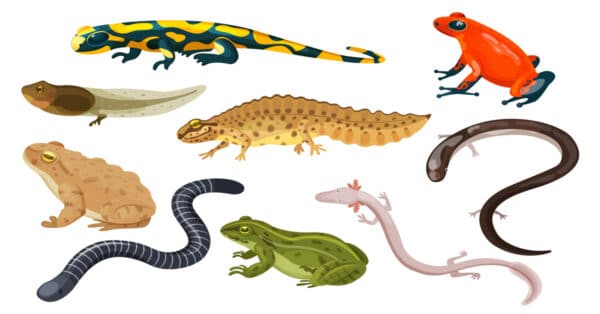

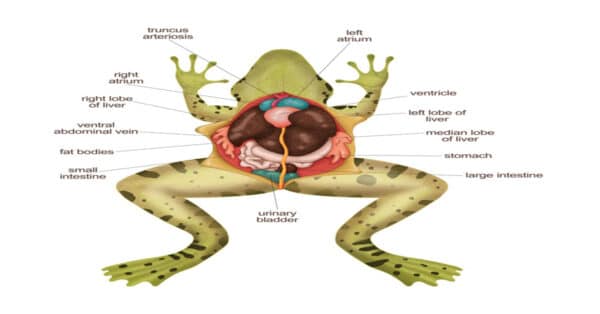
Frogs as Food for People
Snakes, foxes, dogs, bass, pike, hawks and even seagulls have all been known to feast on frogs on a regular basis, but there are many humans that have made frogs part of their diet. In France, frog legs are definitely one of the top menu items in some of the best French restaurants. While you may think that most of the water frogs may be safe from creatures attempting to make a meal out of them, water frogs are usually a regular diet for many of the sharp-toothed fish in the world.
If you are out hunting for a frog to make it part of your dinner, be sure that you are watching out for the poisonous frogs. While poisonous frogs do not make their home in every single state, you still need to be careful and read up on the colors of frogs. Many red, blue, purple and even bright green frogs can be extremely poisonous to us humans.
What Do Tadpoles Eat?
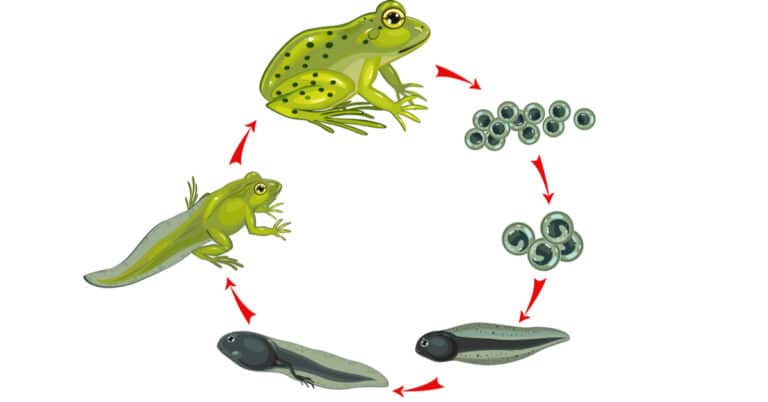
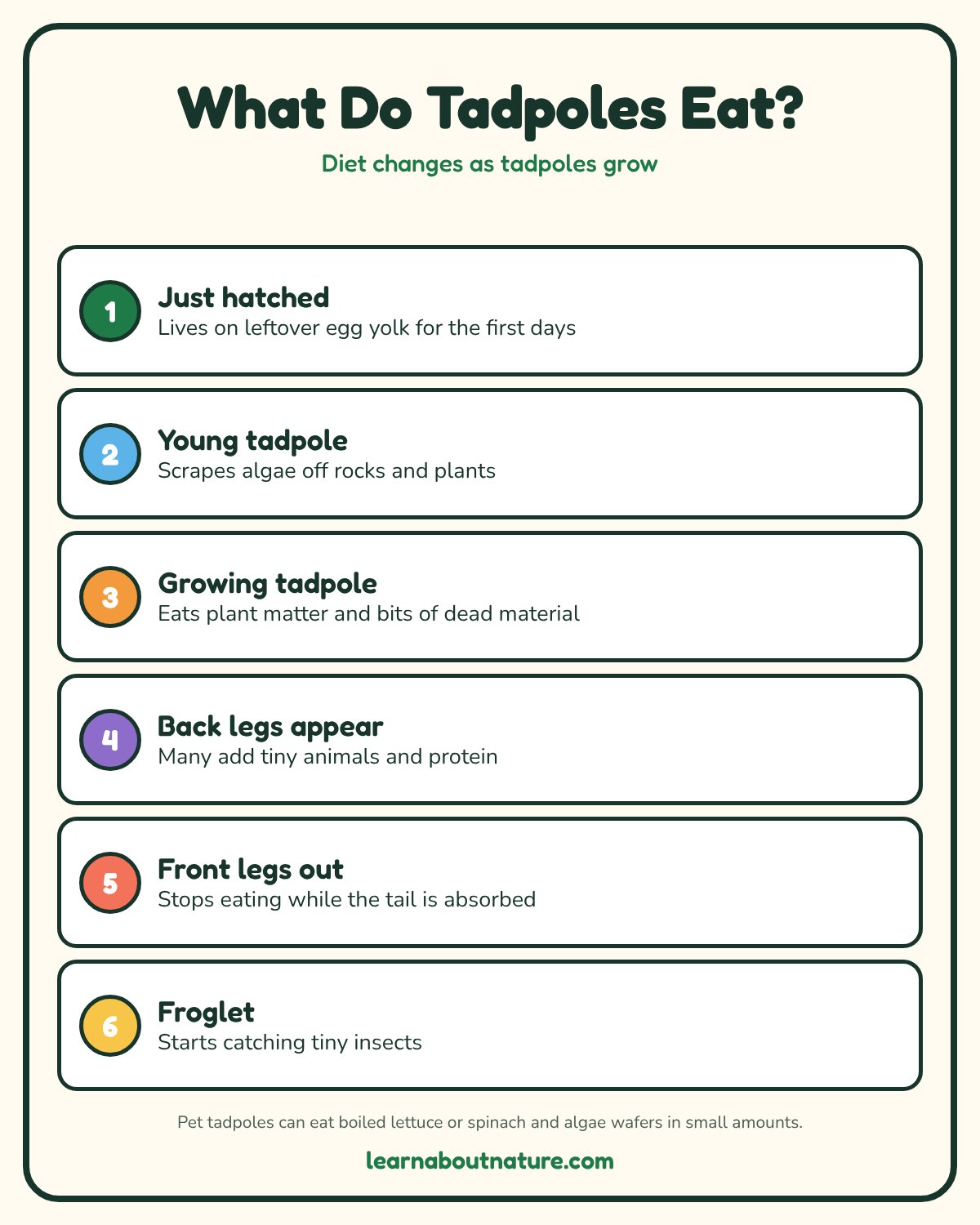
A frog’s diet changes completely as it grows. Most tadpoles are herbivores or grazers. They scrape algae off rocks and plants with tiny horny ridges around their mouths, and they also eat dead plant material and bits of decaying matter in the water.
As tadpoles grow legs, their diet starts to shift. Some species become partly carnivorous and will eat insect larvae, eggs or even dead animals. During the last part of metamorphosis, when the tail is being absorbed, the young froglet usually stops eating and lives off the energy stored in its tail.
Once it leaves the water, the tiny froglet becomes a hunter like its parents. Because it is so small, it starts with very small prey such as springtails, aphids, mites and tiny flies, then moves on to larger insects as it grows.
The time spent as a tadpole varies a great deal. Common frog tadpoles in Europe usually change into froglets in about 12 to 16 weeks, while American bullfrog tadpoles can take one to three years before they are ready to leave the water. Tadpoles that do not get enough food grow slowly and turn into smaller froglets, which then face more predators. Garden ponds with plenty of plants and algae give tadpoles the best start.
What Do Pet Frogs Eat?
Pet frogs need live food that moves, because most frogs only notice prey that is moving. The right food depends on the size of the frog: a good rule is that prey should be no wider than the space between the frog’s eyes.
| Pet frog | Typical foods |
|---|---|
| Small frogs (dart frogs, young froglets) | Fruit flies, pinhead crickets, springtails |
| Medium frogs (tree frogs, White’s tree frog) | Crickets, roaches, mealworms, waxworms as treats |
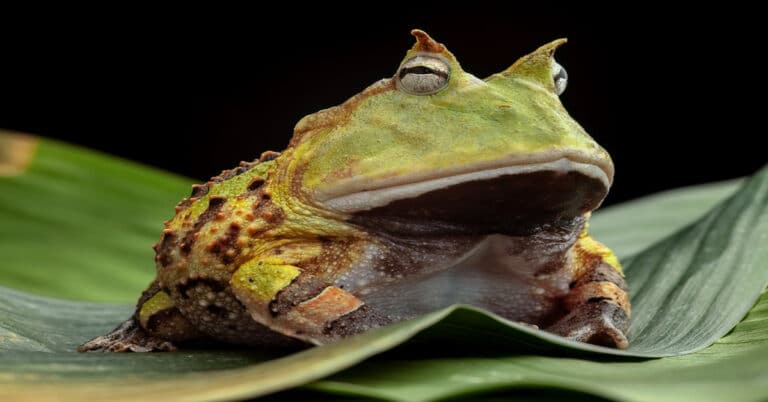
| Large frogs (horned frogs, bullfrogs) | Large crickets, roaches, earthworms, occasional pinkie mice |
| Aquatic frogs (African dwarf frogs) | Bloodworms, brine shrimp, sinking frog pellets |
- Dust insects with calcium and vitamin powder to prevent bone disease.
- Feed young frogs daily and most adults every two or three days.
- Never feed wild-caught insects, which may carry pesticides or parasites.
- Remove uneaten live insects so they do not bother the frog.
Avoid overfeeding, since overweight pet frogs are common and can develop health problems. Watch your frog eat to make sure it is taking its food, because a frog that stops eating may be too cold, stressed or unwell. Keeping the enclosure at the right temperature for the species is important, as frogs digest food slowly when they are cold and may refuse to eat at all.
How Frogs Hunt Their Prey
Most frogs are sit-and-wait hunters. They stay very still, often well camouflaged, until an insect comes close. Their large eyes face to the sides, giving them a wide view, and they are especially good at spotting movement.
When prey is in range, the frog flicks out its tongue. The tongue is attached at the front of the mouth, so it flips forward and out. It is soft and coated with special saliva that becomes very sticky on impact, then thickens again so the insect stays stuck as the tongue snaps back. The whole strike takes only a fraction of a second.
Larger frogs, such as bullfrogs and horned frogs, often lunge with their whole body and grab big prey with their wide mouths, using their front legs to push it in. Some aquatic frogs, like African clawed frogs, have no tongue at all and use their hands to shovel food into their mouths.
Frogs also use their eyes to find food in poor light. Many species hunt at night, and some can still see colours in very dim conditions. Toads and some frogs flick their toes or even wiggle a toe like a worm to lure prey closer, a behaviour called pedal luring.
How Frogs Protect Themselves From Predators
Because so many animals eat frogs, they have evolved a wide range of defences.
- Camouflage: most frogs are coloured like leaves, bark or mud, and some can lighten or darken their skin to match.
- Leaping: long, powerful back legs let many frogs jump many times their body length to escape into water.
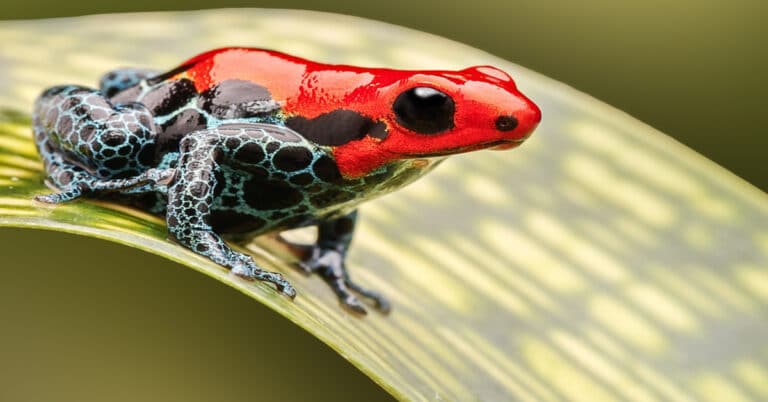
- Toxic skin: toads and poison dart frogs produce poisons from glands in their skin that make predators sick.
- Warning colours: bright reds, yellows and blues tell predators the frog is dangerous to eat.
- Puffing up: toads swell with air and stand tall to look too big to swallow.
- Playing dead: some frogs go limp and lie still until the predator loses interest.
- Screaming: some frogs let out a loud distress call when grabbed, which can startle a predator into letting go.
Tadpoles are especially vulnerable. Frogs survive as a species by laying huge numbers of eggs, sometimes thousands at once, so that at least a few young reach adulthood.
What Frogs Eat FAQs
What do frogs eat?
Adult frogs are carnivores. Most eat insects, spiders, worms, slugs and snails, catching them with a quick, sticky tongue. Larger frogs, such as bullfrogs, can eat bigger prey, including small fish, other frogs, mice and even small birds. Frogs generally only eat prey that moves.
Do frogs chew their food?
No. Frogs swallow their prey whole. Many frogs have small teeth in their upper jaw, but these are used only to grip prey and stop it escaping, not for chewing. To help push food down, a frog pulls its eyes down into its head, pressing on the food in its mouth.
Why do frogs blink when they swallow?
When a frog swallows, it pulls its eyeballs down through openings in its skull into the roof of its mouth. This pushes the food towards the throat. From the outside it looks as if the frog is blinking hard, but it is really using its eyes to help swallow.
What animals eat frogs?
Frogs have many predators. Snakes, herons, hawks, owls, raccoons, foxes, otters, large fish such as pike and bass, and even other frogs eat them. Tadpoles are also eaten by fish, aquatic insects and birds. Frogs defend themselves with camouflage, fast jumps and, in some species, toxic skin.
Are brightly coloured frogs poisonous?
Many brightly coloured frogs, such as poison dart frogs, use their colours to warn predators that they are toxic. This is called warning coloration. Not every colourful frog is dangerous, though, and some harmless species copy the colours of toxic ones. It is best never to handle or eat a wild frog.

Randi Jones is the owner and founder of the Nature Gift Store, an online retailer specializing in nature-themed gifts, educational science projects, live animal nature kits and real butterfly artwork. A biology graduate who fell in love with insects, she founded the company in 2001 to make active learning about nature fun, accessible and engaging for children and adults. Her store offers real butterfly frames, home and garden decor and educational live animal kits, including ant farms, worm farms, tadpoles, ladybugs and hermit crabs, and she runs a bug museum in Washington featuring live animals like Eddie the Iguana alongside other reptiles and insects. Randi wrote most of the guides on this site. They first appeared on her long-running nature sites, including Monarch-Butterfly.com, Ladybug-Life-Cycle.com, Frog-Life-Cycle.com, Dragonfly-Site.com and Butterfly Pictures, which have now been brought together here at Learn About Nature.