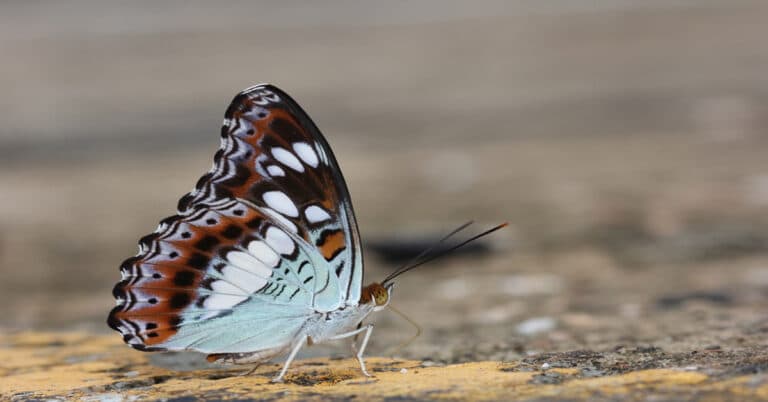
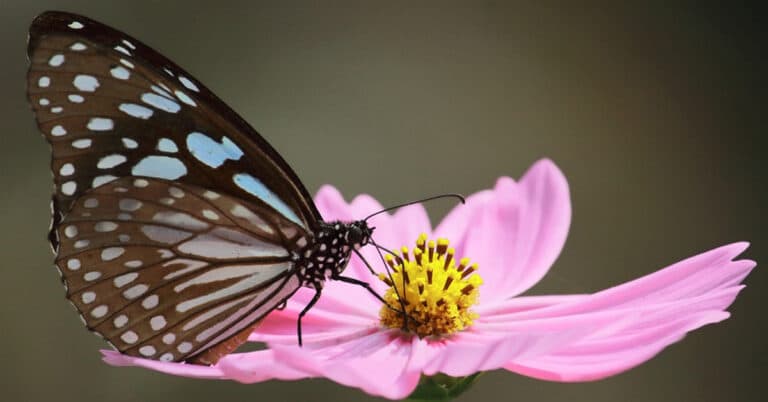
Butterfly Anatomy: Parts of a Butterfly and What They Do
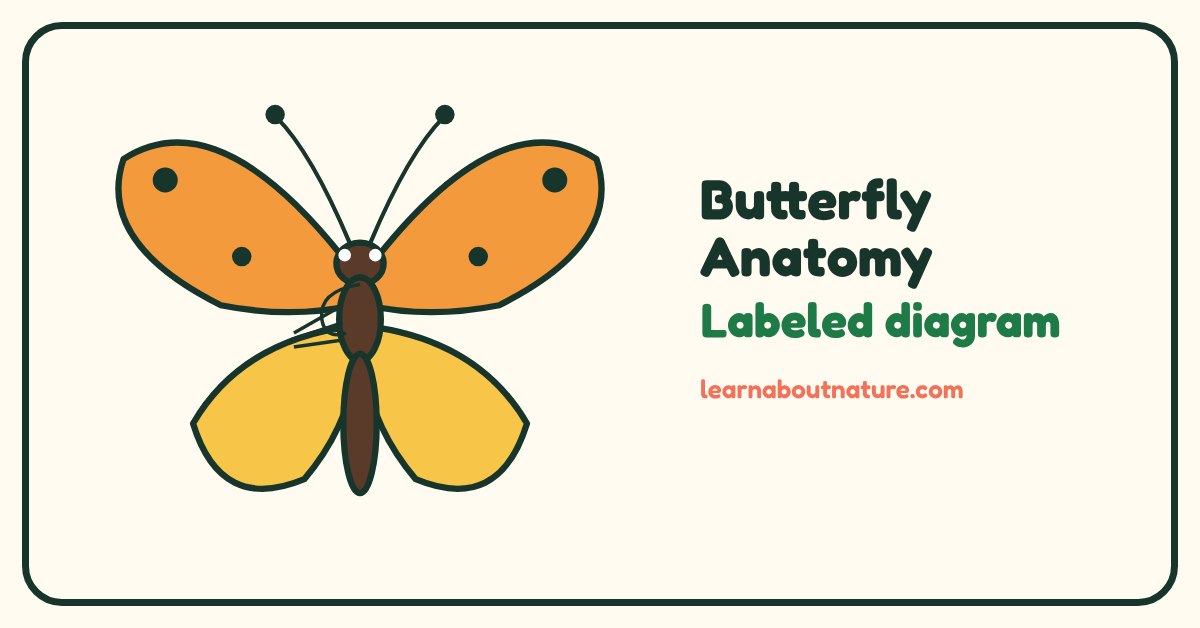
Quick answer: A butterfly has three body sections: a head with two clubbed antennae, two large compound eyes and a coiled feeding tube called a proboscis; a thorax that carries six legs and four scale-covered wings (two forewings and two hindwings); and a slender abdomen that holds the digestive and reproductive organs.
Butterflies are insects, so they share the same basic body plan as beetles, bees and crickets. What makes them special are their colorful scaly wings and a feeding tube that unrolls like a party blower.
There are about 20,000 known species of butterfly. This guide explains the parts of an adult butterfly and how each one helps it feed, fly and find a mate. Caterpillars, the young stage, have a very different body, which we touch on near the end.
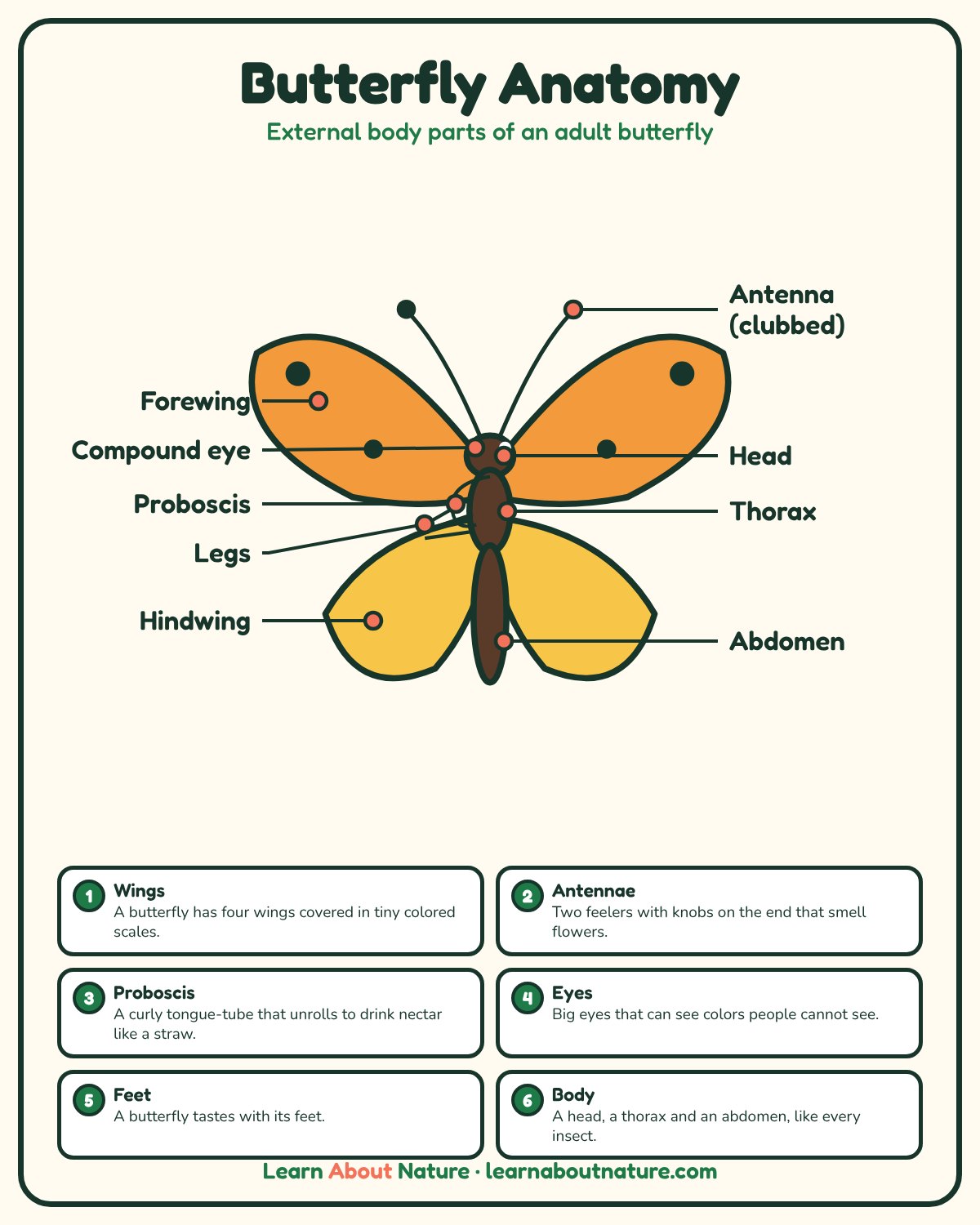
Teachers and students: you’re welcome to use this diagram in lessons and projects with credit to Learn About Nature.
Free printable: Download the Butterfly Anatomy labeling worksheet (PDF) – label the parts using the word bank. Answer key included.
Parts of a Butterfly and What They Do
| Part | What it does |
|---|---|
| Head | Holds the eyes, antennae and proboscis |
| Antennae | Smell flowers and mates; help with balance |
| Compound eyes | See color, ultraviolet light and movement |
| Proboscis | Coiled tube for sipping nectar and other liquids |
| Palps | Protect the proboscis and sense food |
| Thorax | Holds the flight muscles; wings and legs attach here |
| Forewings | Front pair of wings; do most of the work in flight |
| Hindwings | Back pair of wings; help with lift and steering |
| Scales | Give the wings their color and pattern |
| Legs | Grip surfaces and taste food plants |
| Abdomen | Holds the digestive and reproductive organs |
| Spiracles | Tiny breathing holes along the sides of the body |
The Butterfly Body Plan
Like all adult insects, a butterfly has three body parts: the head, the thorax and the abdomen. It has six legs and a hard outer covering called an exoskeleton.
Butterflies and moths belong to an insect group called Lepidoptera. The name comes from Greek words meaning scale and wing, because almost every surface of their bodies, especially the wings, is covered in tiny scales.
The Head: Antennae, Eyes and Proboscis
- Antennae: two long, thin feelers with a club or knob at the tip. They are covered in sensors that pick up smells, which helps butterflies find flowers and mates. They also help with balance.
- Compound eyes: two large eyes made of many tiny units. Butterflies are good at spotting movement and see a wide range of colors, including ultraviolet light, which people cannot see.
- Proboscis: a long, hollow feeding tube. When the butterfly is not feeding, it stays coiled under the head like a garden hose. To drink, the butterfly uncoils it and sips nectar, juice from rotting fruit or water from damp soil.
- Palps: two short, hairy mouthparts in front of the face that protect the coiled proboscis and help sense food.
The Thorax: Wings and Legs
The thorax is the muscle center of the butterfly. It has three segments, each with one pair of legs. The wings attach to the second and third segments.
Butterflies have four wings: two forewings at the front and two hindwings behind them. The forewing and hindwing on each side overlap and move together in flight.
Butterfly legs end in small claws for gripping leaves and flowers. In the large brush-footed butterfly family, which includes monarchs and painted ladies, the front pair of legs is small and held folded against the body, so these butterflies look as if they have only four legs.
Wings and Scales
A butterfly wing is made of two thin layers of membrane supported by a framework of tubes called veins. The wing surfaces are covered in thousands of tiny, flat scales that overlap like roof shingles.
Scales create the colors and patterns. Some contain colored pigments. Others have tiny ridges that bend and reflect light, which produces shining blues and greens, like the light from a soap bubble. Scales rub off easily, which can help a butterfly slip free from a spider web, so it is best not to handle butterflies by the wings.
Wing patterns have many jobs. Bright colors can attract mates or warn predators that a butterfly tastes bad. Eyespots can startle a bird, and dull undersides help many butterflies hide when their wings are closed.
The Abdomen and Internal Anatomy
The abdomen is long and soft, made of ten segments. Tiny breathing holes called spiracles run along its sides. Air passes through them into a network of tubes that carry oxygen around the body.
Inside the abdomen are most of the digestive system and the reproductive organs. A long tube-shaped heart runs along the back and pumps the butterfly’s blood, called hemolymph. When a butterfly first comes out of its chrysalis, it pumps hemolymph into the veins of its crumpled wings to stretch them out before they dry and harden.
Butterfly Senses
Butterflies taste with their feet. Taste sensors on the legs tell a female whether a leaf is the right food plant for her caterpillars before she lays her eggs. There are also taste sensors on the proboscis.
Smell comes mainly through the antennae, and the eyes detect color and movement. Some butterflies can also hear: certain species have thin, drum-like ear patches at the base of the wings.
How Butterflies Feed and Fly
Butterflies do not chew. The proboscis is made of two long halves that zip together to form a tube. The butterfly draws up liquid through it, much like drinking through a straw.
Butterflies are cold-blooded, so they often bask in the sun to warm their flight muscles before taking off. Many butterflies fold their wings upright over the back when resting.
Butterflies vs Moths
Butterflies and moths are close relatives, but there are some useful clues for telling them apart. Most butterflies have slender antennae with a club at the tip, while most moths have antennae that are thin and tapering or feathery.
Many moths also have a small hook-and-bristle link that holds the forewing and hindwing together, which butterflies lack. Most butterflies fly by day, while most moths fly at night, though there are exceptions in both groups.
Fun Facts About Butterfly Bodies
- A caterpillar has chewing jaws, short stubby legs and simple eyes. Its body is rebuilt into the adult form inside the chrysalis.
- The colors on some butterfly wings, such as the bright blue of morpho butterflies, come from structure, not pigment.
- Monarch butterflies, which migrate long distances, have bigger and longer forewings than many monarchs that stay put.
Butterfly Anatomy for Kids
- Wings: a butterfly has four wings covered in tiny colored scales.
- Antennae: two feelers with knobs on the end that smell flowers.
- Proboscis: a curly tongue-tube that unrolls to drink nectar like a straw.
- Eyes: big eyes that can see colors people cannot see.
- Feet: a butterfly tastes with its feet.
- Body: a head, a thorax and an abdomen, like every insect.
Key words: proboscis – a butterfly’s long, coiled feeding tube; Lepidoptera – the insect group that includes butterflies and moths; it means scale wing; forewing – one of the front pair of wings; hindwing – one of the back pair of wings; scales – tiny flat plates that cover a butterfly’s wings and give them color; thorax – the middle part of the body, where the wings and legs attach.
Try this: Make a model proboscis with a party blower and use it to point at flowers in a garden. Then look closely at a photo of a butterfly wing and count how many colors you can find.
Related Guides
- Butterfly life cycle
- Monarch butterfly life cycle
- Bee Anatomy
- Spider Anatomy
- Insect Anatomy
- Grasshopper life cycle
- Cockroach life cycle
- All animal & plant anatomy diagrams
- Animal & plant life cycles
See also: Butterfly Facts for Kids
Butterfly Anatomy FAQs
What are the main parts of a butterfly?
A butterfly has a head, a thorax and an abdomen. The head carries two clubbed antennae, two compound eyes and a coiled proboscis for drinking. The thorax carries six legs and four wings. The abdomen holds the digestive and reproductive organs.
How many wings does a butterfly have?
A butterfly has four wings: two forewings at the front and two hindwings behind them. On each side, the forewing and hindwing overlap so they move together when the butterfly flies, which can make it look as though there are only two wings.
What is a butterfly’s proboscis?
The proboscis is a long, hollow feeding tube formed from two halves that join together. It stays coiled under the head when not in use. When a butterfly feeds, it uncoils the proboscis and sips nectar, fruit juice or water through it.
Do butterflies really taste with their feet?
Yes. Butterflies have taste sensors on their legs. A female lands on a leaf and tastes it with her feet to check that it is the right plant for her caterpillars to eat before she lays her eggs.
Why do some butterflies seem to have only four legs?
All butterflies have six legs, but in the brush-footed butterfly family, which includes monarchs and painted ladies, the front pair is small and folded close to the body. They are not used for walking, so these butterflies stand on four legs.
Sources: Butterfly Anatomy – American Museum of Natural History; Butterfly FAQ – Florida Museum of Natural History; Lepidopteran: Form and Function – Encyclopaedia Britannica; Insect Anatomy – Museum of the Earth

Nato is a content writer and researcher with a background in psychology who’s eager to explore the wonders of nature. As a travel enthusiast and animal lover, she hopes to inspire others to discover and cherish the beauty and importance of the natural world. She also writes about the history of candy and snacks for Snack History and about food and healthy eating for The Fitchen.