Bushy Tailed Jirds
Scientific Classification
| Kingdom: | Animalia |
| Phylum: | Chordata |
| Class: | Mammalia |
| Order: | Rodentia |
| Family: | Muridae |
| Subfamily: | Gerbillinae |
| Tribe: | Gerbillini |
| Subtribe: | Rhombomyina |
| Genus: | Sekeetamys |
| Species: | S. calurus |
| Binomial name: | Sekeetamys calurus |
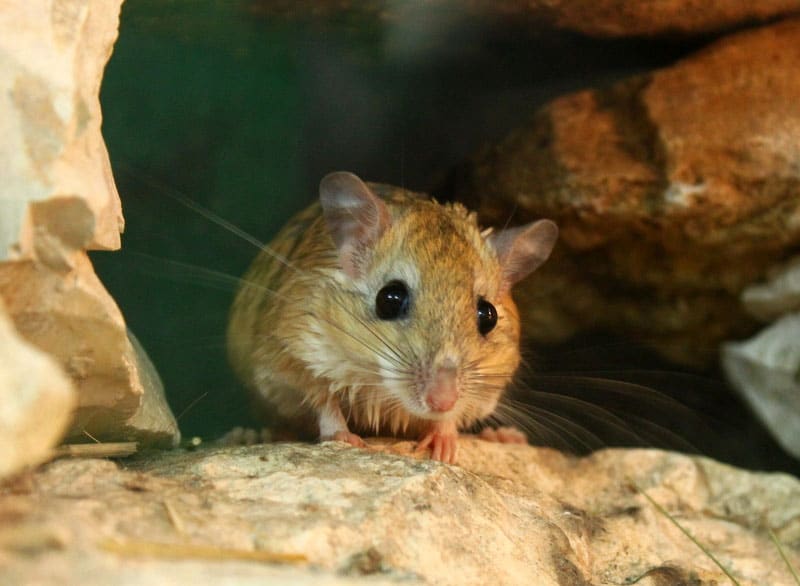
This bushy-tailed jird, Sekeetamys calurus. This is a variety of rodents of the Muridae family. In the genus Sekeetamys, the Bushy-tailed jird is the solitary member.
Anatomy
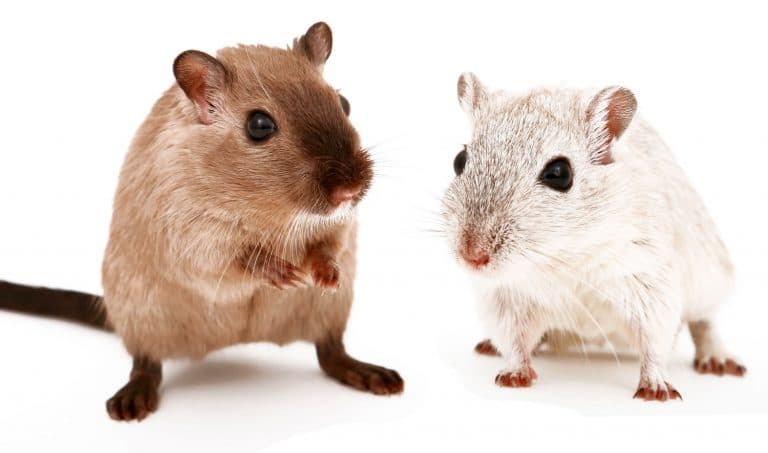
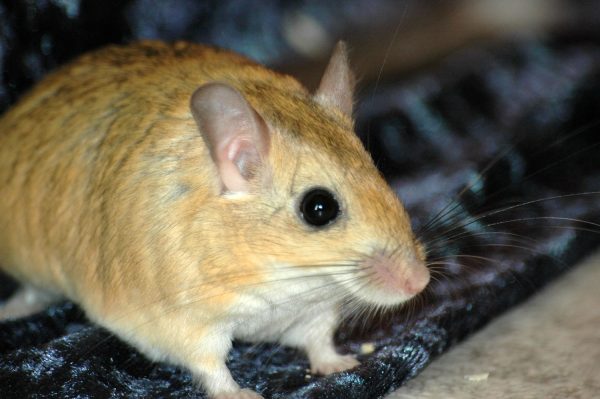
They are almost similar in size to the Mongolian Gerbils but thinner and longer in-build. Their whiskers are very conspicuous; their faces are long and pointed. The most notable feature is their tail. The length of their body and head is 9.8 to 12.8 cm; and tail of length 11 to 16.4 cm. When in captivity, they weigh from 80 – 95 gm and in the wild, a specimen weighs significantly less which is 45 gm. Females are normally smaller than the males. It has a bushy tail of length exceeding half its body; the leading males have the bushiest tails.
Behavior
When compared with the Mongolian Gerbils, the bushy-tailed jirds are more adapted to the night, but if disturbed during the day they wake up and explore. They enjoy hiding and often squeeze themselves into some small item or jar given for nesting. They enjoy gnawing and tear down anything and everything in their reach. The only material that they do not attack is glass. Their coat appears greasy, very quickly, but they take pleasure in having a sand bath.
Habitat
We see these bushy-tailed jirds in places like Jordan, Sudan, Egypt, Saudi Arabia and Israel. Rocky areas are its natural residence.
As a Pet
Breeding
When in custody these Bushy-tailed jirds reproduce liberally when you compare them to other jirds. The year round they keep breeding, whereas inexperienced young mothers often fail to bring up their first litter. They gestate for about 21 – 25 days.
Housing
A glass aquarium as big as 15 – 20 gallons having a lid made of wire mesh is the most preferred cage for these very active jirds. Plastic tanks are not only normally very small for many of the varieties, but most of them chew and tear down their way out.
Food
Their basic diet consists of a standard rodent mixture having less sunflower seeds, supplemented with rodent pellets and some hard dog biscuits. Those who breed rodents on a commercial basis, give them an excessive amount of pellets that seem to have all the necessary minerals and vitamins. However, they become monotonous and bland. The best method the rodent keepers adopt for making the animals active and free of boredom is providing them with changing diets.
Handling
This Bushy –tailed jirds are easy to tame, they hardly bite you, and they are very friendly (at times they are better than the Mongolian Gerbil), and on occasions, take food from your hands. Handle your animal by sitting on the floor, on a couch, a table, since they do not understand gravitation or space, and therefore can easily walk into “midair” out from your hand. As all animals have a deep sense of smell, do not handle them immediately after you have taken your food, as your hands are likely to smell of food which arouses them to nip.
Having discovered a fondness for insects while pursuing her degree in Biology, Randi Jones was quite bugged to know that people usually dismissed these little creatures as “creepy-crawlies”.