Emin’s Pouched Rat
Scientific Classification
| Kingdom: | Animalia |
| Phylum: | Chordata |
| Class: | Mammalia |
| Order: | Rodentia |
| Superfamily: | Muroidea |
| Family: | Nesomyidae |
| Subfamily: | Cricetomyinae |
| Genus: | Cricetomys |
| Species: | C. emini |
| Binomial name: | Crycetomys emini |
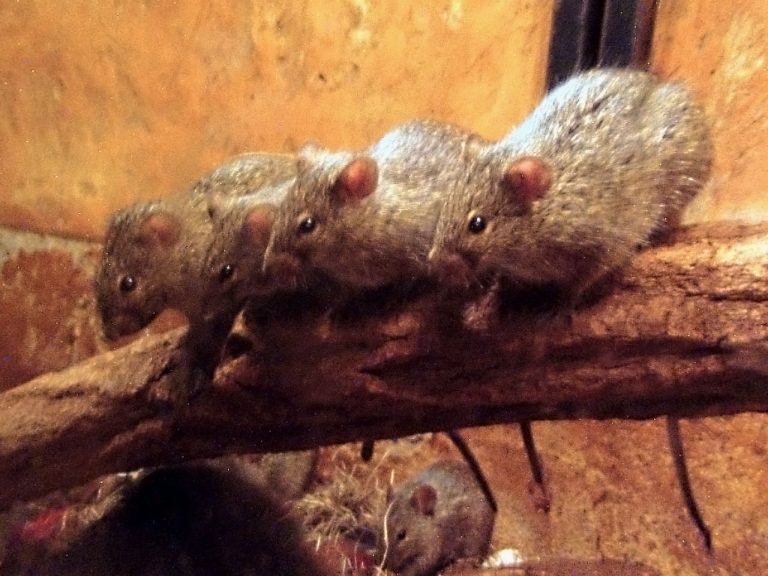
Emin’s pouched rat (cricetomys emini), otherwise called African pouched rat belonging to the muriod super family, is a big rat. It has a close association with the cricetomys gambianus, the Gambian pouched rat.
Anatomy
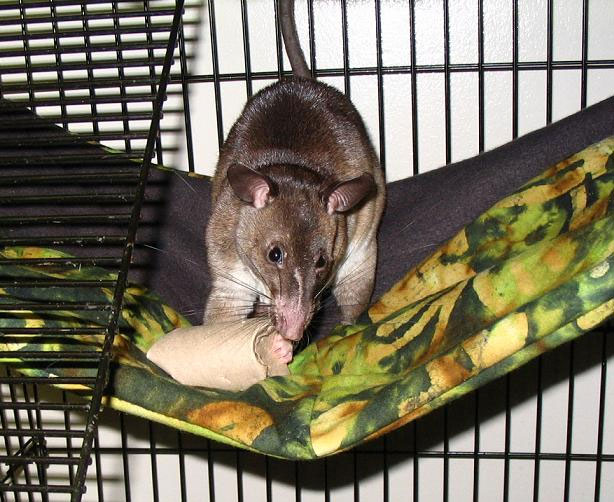
In appearance Emin’s pouched rats are muscular and very sleek. They have slim looks and are very good climbers. Emin’s rats have a clearly perceptible line of color difference between their upper body and lower abdomen area; their upper body is deep brown while the abdomen is white/gray. The lip of the tail is white. The length of a fully grown Emin’s rat is almost 2 1/2 feet, of which the tail accounts for half its size. The Emin’s weight is about 1 to 4 lbs.
Behavior
In the dawn at sunrise, we see these Emin’s quite active. They enjoy climbing trees in the wild. They seem to love palm nuts. They are nocturnal. Emin’s rat, they say larder and hoard food, particularly nuts and seeds in their burrows. However, there is not much information about their role in seed dispersal They play an important role in dispersing seeds as is the case in “Neotropical scatter hoarding rodents.” In houses they have a tendency to climb doors, shelves, closet shelves, windows and curtain rods. They scamper up the sides of the shelves to the top just as the squirrels do.
Habitat
The Emin’s Pouched Rat (Cricetomys emini), otherwise called an African pouched rat, is a native of tropical rainforest, they depend on seeds and fruits in their diet.
As a Pet
Breeding
Five months are enough for the Emin’s Pouched Rat to mature sexually. You would do well to breed these rats only after they reach 8 to 12 months of age. When the female rats are in passion, they are likely to lift their hind part up in the air before the male rats. The pregnancy period of Pouched rats is 27 to 36 days. Most of them have 1 to 5 issues. It is only after 3 weeks that the babies open their eyes. Till they grow up to 7 to 8 weeks, they stay with their mother in the wild. You can wean the babies any time after 6 weeks.
Emin’s pouched rats are a different species; they don’t breed with domestic rats.
Housing
Have a cage 3 ½ feet or more. If the cage base has wire, then offer a covering, to protect the rat’s feet from getting trapped. For bedding, you can use shredded newspaper or Aspen bedding. In the cage, offer a house for the rat to hide and a towel and some toys or some cloth for them to cuddle in. They take pleasure in chewing for which wooden toys are best. Confirm that the wood is not cedar or pine and the wood is not subjected to any chemical treatment to prevent toxicity from harming the pets. Keep strong and short water bottles; if not they tend to chew through them. Add a shelf and a hammock to the cage. You can, quite easily litter train them.
Food
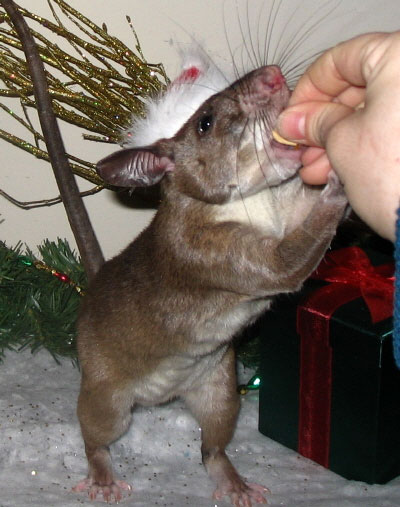
No need of a special feeding dish. Choose a particular part of the cage to feed your rats and place a hand full of food there, Maintain a diet of vegetable, fresh fruits and a mixture of seeds for them. They relish eating insects, snacks, cereal, bread and pasta.
Handling
It is possible to tame the Emin’s pouched rats well if handled from birth. While approaching these large rats, do not startle them, be careful. Having very weak eyesight, they depend on smell and sound. Their bite is dangerous, if you do not train them well, they might not stop with biting; they can severely attack, scratching and continuously biting.
Having discovered a fondness for insects while pursuing her degree in Biology, Randi Jones was quite bugged to know that people usually dismissed these little creatures as “creepy-crawlies”.