Agouti
Scientific Classification
| Kingdom: | Animalia |
| Phylum: | Chordata |
| Class: | Mammalia |
| Order: | Rodentia |
| Family: | Dasyproctidae |
| Genus: | Dasyprocta |
| Species: | D. punctata |
| Binomial name: | Dasyprocta punctata |
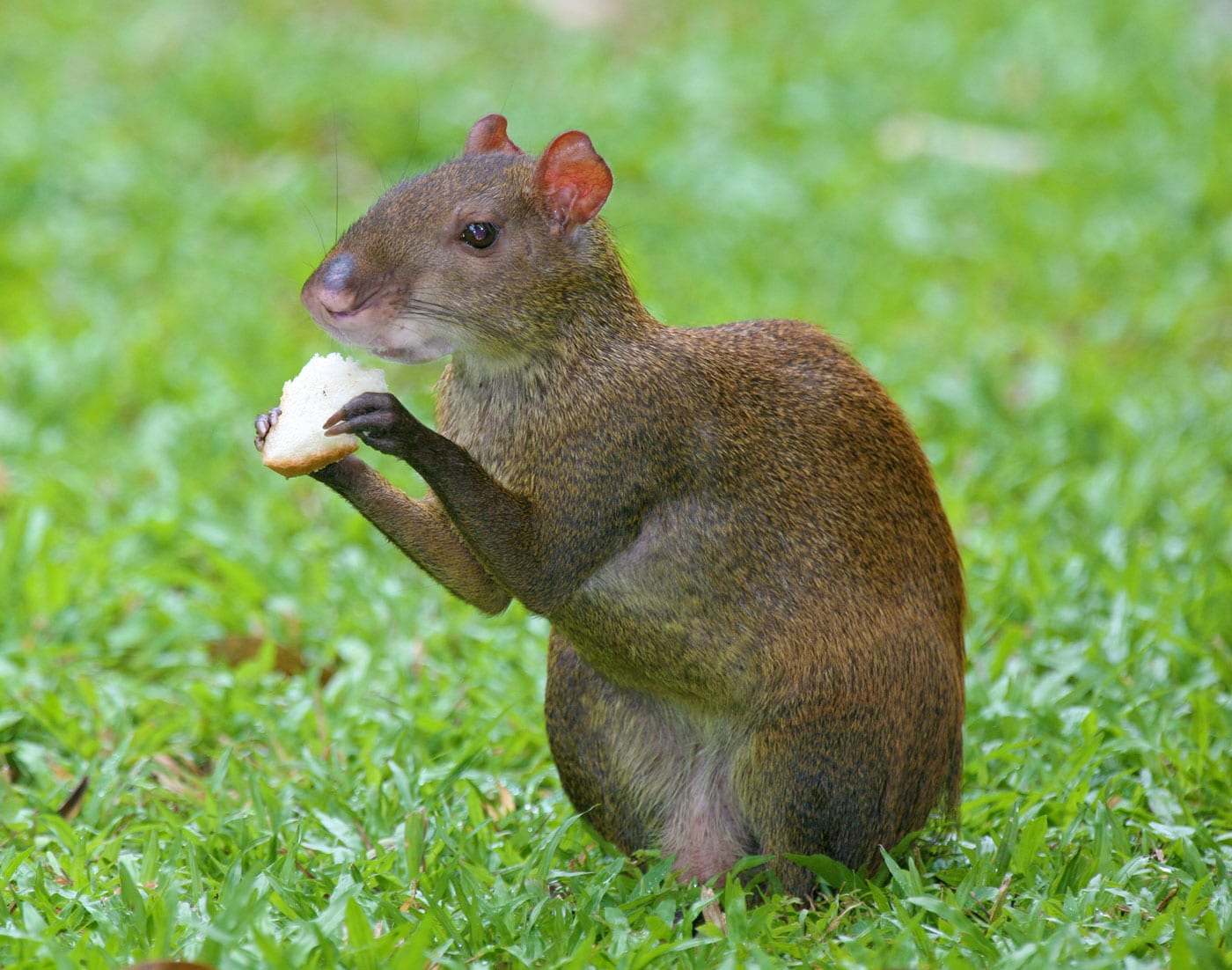
Agouti belonging to the genus Dasyprocta (punctata), is a variety of tropical American rodents that have 11 types. There are a number of them in central and South America. The fur on them contains pigments in a particular design of which every hair has many bands of dark and light pigments with the tip, black.
Anatomy
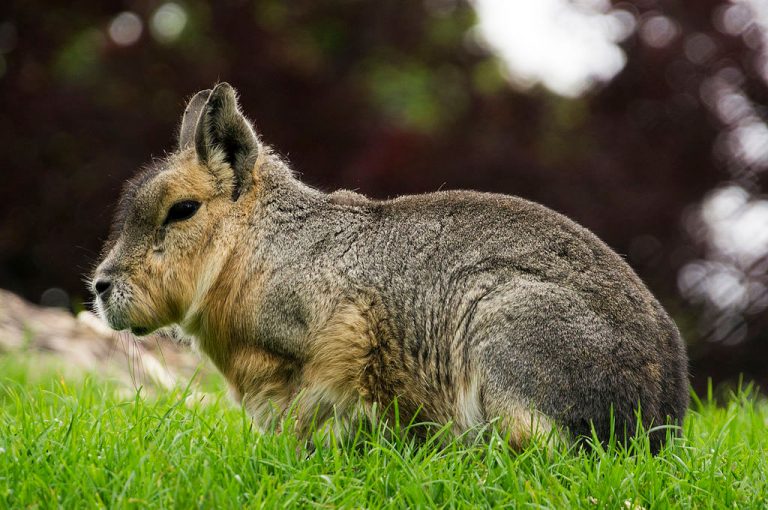
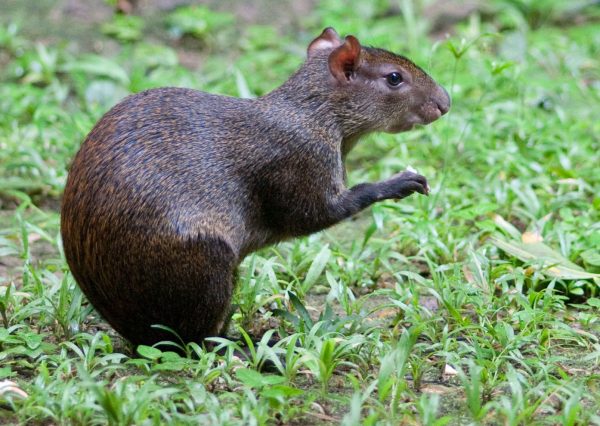
An agouti weighs 6 kg (13 lbs), its body is long 76 cm (2.5 feet). They have heavy buttocks and big heads with slim legs. When compared to the body, their ears are small; besides, they have a bald tail which is not prominent. The hind feet have hoof like claws and just three toes. The agouti’s fur is glossy and coarse, colored light orange in shades of brown progressing to blackish. Every separate hair has alternative black and buff banded colors which are a characteristic of this rodent. The upper part of the agouti is whitish to buff color.
Behavior
Agouti’s normally look out for possible danger. It is difficult to find most of the varieties in their natural habitat. They trot, walk or gallop on their legs; they move very fast if chased or frightened and they can leap to a height of 2 meters (6.3 feet) from a still place. Agoutis live on land. At night they stay in burrows made at the roots of trees, near boulders, in the hollow of logs or on the floor of bush creepers.
Habitat
We see these agoutis in the south of Mexico progressing southwards to Ecuador and eastwards to the Andes right through the Amazon River basin. Even though most of them reside in the forests of mountainous tropics and in the lowlands, a great number of them are from the Yucatan Peninsula (South Mexico), Chiapas, North western Ecuador, Central America, distant Western Venezuela and Columbia. You can find a separate population of this agouti in the South East of Peru, along the South West of Brazil, Western Paraguay, and Bolivia and distant to North West Argentina.
As a Pet
Breeding
Female agoutis are capable of breeding at the early age of five weeks and male agoutis become mature sexually at the early age of three weeks. It is highly advisable to wait till the female attains for months before breeding. Grown up females will enter estrus about every fortnight, with ‘heat’ lasting for 2 days. The females become normal as soon as they give birth, thus to get rid of a postpartum pregnancy, remove the males quite early. If not, it is harmful to the females who become stressed.
Housing
Build a cage of a minimum of 2 square foot space to satisfy the adults. Cages with wire floor are not very good because it is possible for their feet to get stuck in the mesh.This is dangerous and hurting to your agoutis. Even if the wire flooring is close enough to prevent their feet to slide into it, they will face discomfort to their sensitive and delicate feet.
Food
Feed them with normal agouti diet available in the market. In the wild, the Agouti’s teeth wear out. The right choice of fresh fruits and vegetables are cauliflower stalks, carrots, skinless melon, tomatoes, celery and apples. Provide them with water, not in a bowl, but in a 8 Oz bottle to help them dash it down.
Handling
Agoutis are very loving and playful. Most of them love cuddling.
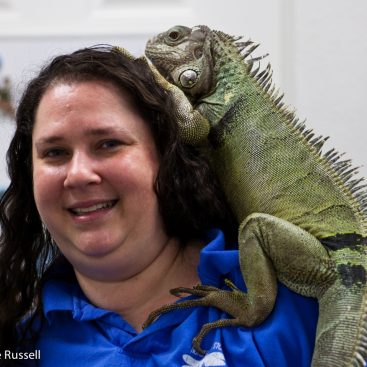
Having discovered a fondness for insects while pursuing her degree in Biology, Randi Jones was quite bugged to know that people usually dismissed these little creatures as “creepy-crawlies”.