Short-eared Elephant Shrew
Scientific Classification
| Kingdom: | Animalia |
| Phylum: | Chordata |
| Class: | Mammalia |
| Order: | Macroscelidea |
| Family: | Macroscelididae |
| Genus: | Macroscelides |
| Species: | M. proboscideus |
| Binomial name: | Macroscelides proboscideus |
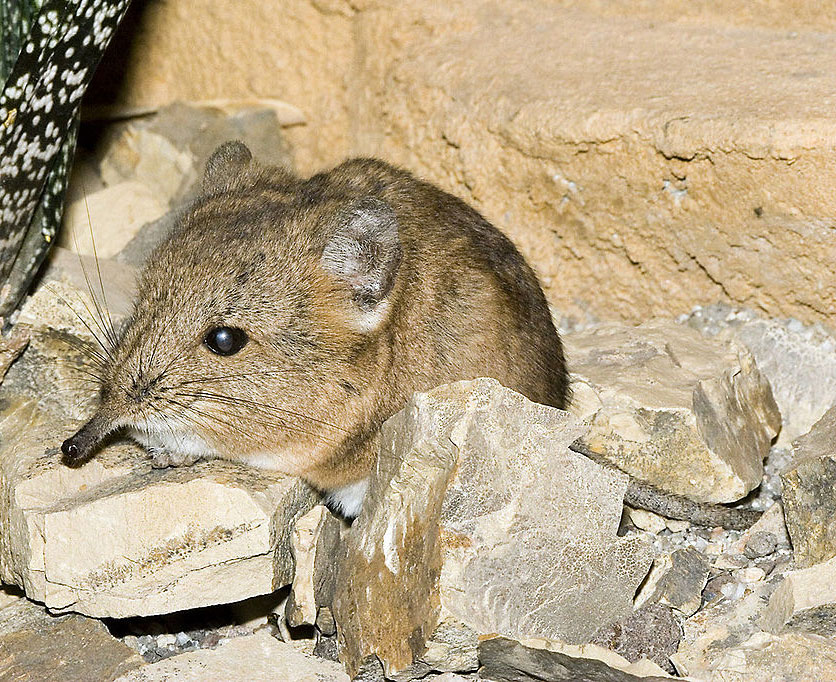
The short-eared elephant shrew Macroscelides Proboscideus, otherwise called round-eared elephant shrew or as round-eared sengi, belonging to the family of Macroscelididae, is a variety of elephant shrew. There is only one of its variety in this genus, and this condition they call monotypic in spite of the fact that it is in the group of (nongiant) the soft-furred elephant shrews.
Anatomy
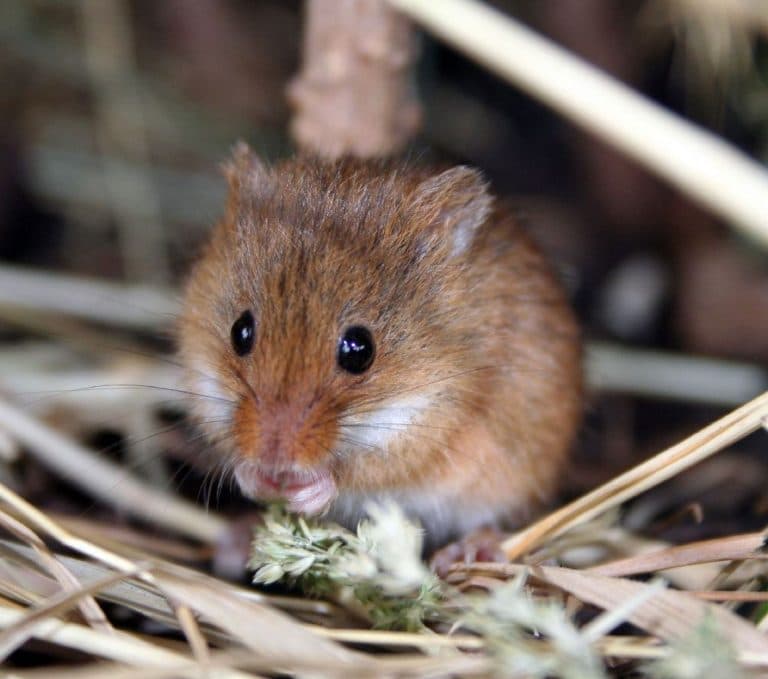
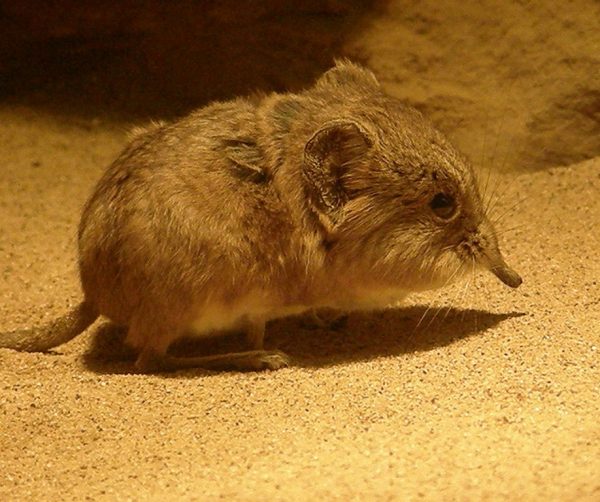
The Short-eared Elephant Shrew is a four–legged, tiny, insectivorous mammal similar to the opossums or rodents having lengthened snouts, tails with scales and comparatively long legs to suit their size. This explains their hopping movement style similar to the rabbits. Their size ranges from 19cm to nearly 30 cm, and they weigh between 50 g to 500 g. The average size of the short-eared elephant shrew is 150mm (5.9”). The fur on the body is grayish brown and the underside is white. It has its nostrils at the end of the flexible snout.
Behavior
Even though more or less diurnal and quite energetic, we rarely see them and they are not easy to catch. They are cautious, very good at concealing themselves and very skillful in escaping from their enemies. Many types are good at creating a chain of paths below the ground and spend their time searching for insects. In case predators trouble them, there is a route free from obstacles for them to escape. Even though they are not sociable, they appear cute.
Habitat
We see them in South Africa, Botswana and Namibia. They are originally native to the tropical or subtropical dry scrubland, tropical or subtropical grasslands and the hot deserts
As a Pet
Breeding
The breeding time for the short-eared elephant shrew is August to September. In a single breeding period, it is possible for a female conceive more than once. They deliver one to two young ones in a gestation period of almost 56 days.
Housing
Cages and terrarium meant for small mammals are ideal for breeding short-eared elephant-shrews. Larger terrariums are convenient, particularly when you breed them in pairs. You can rear a female in a terrarium of base area 50 x 90 cm and a male in a 50 x 80 cm sized cage. For substrate, use sand with grain size of 1mm which is used for children’s sand box. You can also use coarser substrate such as chips of bark, gravel or chips of wood, provided you give your pet a plate of fine sand (chinchilla sand) for a sand bath. Ensure that you change the sand at frequent intervals to keep up it clean and dry. If not provided with sand or in case of unclean sand, pets end up with fatty and rough pelage.
Food
These rodents characteristically feed on insects, mostly termites and ants, as well as some small invertebrates. Roots, shoots and berries also form a part of their diet.
Handling
The Short-Eared Elephant Shrew is not so good as a pet. They are dull as pets; they are timid and mate for life. A few states prohibit capturing and caging such wild animals. You require a special license in other states.
Having discovered a fondness for insects while pursuing her degree in Biology, Randi Jones was quite bugged to know that people usually dismissed these little creatures as “creepy-crawlies”.