Larder Beetle
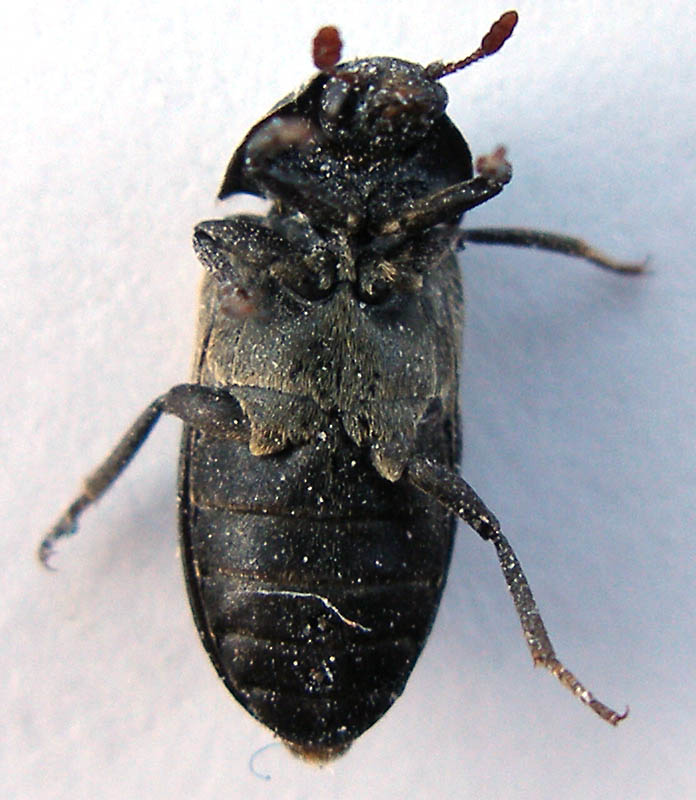
The larder beetle (Dermestes lardarius) is a small, dark beetle that loves dried meat, cheese and other animal-based foods. Its name comes from the ‘larder’, an old word for a pantry where meat and food were stored. Today it lives in homes, warehouses and farm buildings almost everywhere people do.
Larder beetle Quick Facts
| Common name | Larder beetle |
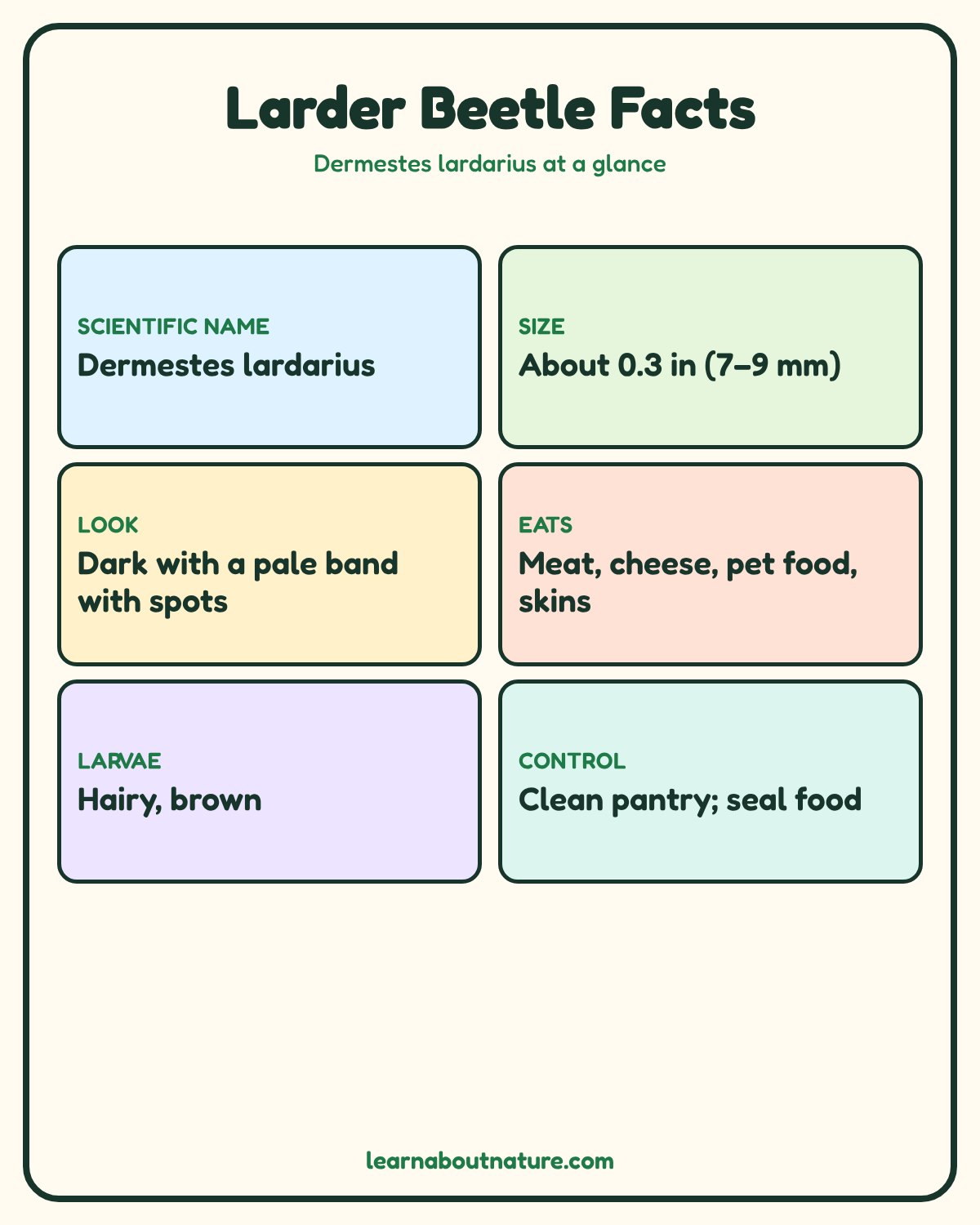
| Scientific name | Dermestes lardarius |
| Kingdom | Animalia |
| Phylum | Arthropoda |
| Class | Insecta |
| Order | Coleoptera |
| Family | Dermestidae |
| Genus | Dermestes |
| Type | Insect (beetle) |
| Diet | Dried meat, cheese, hides, feathers, dead insects and animals |
| Habitat | Homes, pantries, warehouses, animal nests and carcasses |
| Native range | Europe and western Asia; now found worldwide |
| Size | Adults 7-9 mm (about 1/3 in); larvae up to about 15 mm |
| Colours | Dark brown with a pale yellowish band and dark spots |
| Special feature | Larvae have two curved spines on their tail end |
Where Do Larder Beetles Live?
The larder beetle is thought to have come originally from Europe and nearby parts of Asia. By hitching rides in stored food and animal products, it has spread around the world and is now found across Europe, North America and many other regions, though it is rare in the coldest polar areas.
Outdoors, larder beetles live where animals have died or where birds and other animals nest. They feed on dead animals, old bird and wasp nests, and piles of dead insects. Indoors, they turn up in pantries, attics, walls and chimneys, especially where a mouse or bird has died.
What Does a Larder Beetle Look Like?

The adult larder beetle is about 7 to 9 mm long (roughly 1/3 inch) and oval in shape. It is mostly dark brown to black. Across the front half of its wing covers is a wide pale band, made of yellowish-gray hairs, with about six to eight dark spots on it. The underside and legs are covered in fine yellowish hairs.
The larvae look quite different. They are long, brown and very hairy, and grow to about 12 to 15 mm (around 1/2 inch). At the tail end they have two small curved spines that point backwards. These spines help tell them apart from the larvae of their close cousins, the carpet beetles.
What Do Larder Beetles Eat?
Larder beetles feed mainly on animal protein. Their menu includes:
- Dried and cured meats such as ham, bacon and jerky
- Cheese, dried fish and dry pet food
- Hides, skins, leather, fur, feathers and wool
- Dead insects, dead mice and birds, and old nests
They will sometimes nibble plant foods that contain protein, but these are not their first choice. In museums, related beetles can damage stuffed animals and insect collections. On the other hand, scientists put a close relative, the hide beetle, to good use: museums keep colonies to clean the flesh off animal skeletons without damaging the bones.
Life Cycle
Like all beetles, the larder beetle goes through four stages: egg, larva, pupa and adult.
- Eggs: In spring and early summer, the female lays her eggs on or near a good food source. A female can lay over 100 eggs, and they hatch in about a week or two.
- Larvae: The larvae feed and grow, shedding their skin several times. In warm conditions this stage can take about one to two months; in the cold it takes longer.
- Pupae: When fully grown, the larvae usually wander away from their food to find a safe place to pupate. They often bore into soft materials such as wood, cork or insulation to make a little chamber.
- Adults: The adult beetle comes out after a week or two. In warm conditions the whole life cycle can take about six to eight weeks, so there may be more than one generation a year.
Behavior Through the Year
Adult larder beetles often spend the winter outdoors, sheltering under tree bark or in other hidden spots. When spring arrives, they become active, mate, and may feed on pollen. In spring and early summer, adults often fly or crawl into buildings looking for food and places to lay eggs. They tend to avoid bright light and hide in dark corners and cracks.
Larder Beetles as Pests
Larder beetles do not bite people or spread serious diseases, but they can be a real nuisance. The larvae ruin stored food and animal products, and their habit of boring into wood, cork, foam insulation and other soft materials to pupate can leave small round holes. The hairs shed by larvae can also irritate the skin or eyes of some people.
A sudden appearance of larder beetles often means there is a hidden food source nearby, such as a dead mouse, a bird’s nest in a chimney, or a forgotten bag of dog food.
How to Get Rid of Larder Beetles
The best approach is to find and remove what they are eating. Simple, safe steps include:
- Check pantries for infested food, especially dried meat, pet food and birdseed, and throw away anything with larvae or holes.
- Store food in sealed glass, metal or thick plastic containers.
- Vacuum shelves, cracks and corners thoroughly, then empty the vacuum outside.
- Look for and safely remove dead animals, old nests and piles of dead insects in attics, chimneys and wall spaces.
- Seal gaps around windows, doors and vents to stop adults getting in.
- Freeze small infested items, such as a wool garment, for about a week to kill hidden larvae.
For a large or stubborn infestation, a professional pest controller can help find the source.
Larder beetle FAQs
Are larder beetles harmful to humans?
No. Larder beetles do not bite or sting and do not spread serious diseases. However, the hairs of their larvae can irritate the skin or eyes of some people, and they spoil stored food.
What attracts larder beetles to a house?
They are drawn to animal-based food such as dried meat, cheese and pet food, and to dead mice, birds, insects or old nests hidden in attics, chimneys and walls.
How big is a larder beetle?
Adults are about 7 to 9 mm long, roughly a third of an inch. Their hairy brown larvae can grow to about 15 mm, a little over half an inch.
How do I get rid of larder beetles naturally?
Find and remove their food source, throw away infested food, store food in sealed containers, vacuum cracks well, and seal gaps where adults get in.
How long do larder beetles take to grow up?
In warm conditions, a larder beetle can go from egg to adult in about six to eight weeks. In cooler places the process takes longer.

Randi Jones is the owner and founder of the Nature Gift Store, an online retailer specializing in nature-themed gifts, educational science projects, live animal nature kits and real butterfly artwork. A biology graduate who fell in love with insects, she founded the company in 2001 to make active learning about nature fun, accessible and engaging for children and adults. Her store offers real butterfly frames, home and garden decor and educational live animal kits, including ant farms, worm farms, tadpoles, ladybugs and hermit crabs, and she runs a bug museum in Washington featuring live animals like Eddie the Iguana alongside other reptiles and insects. Randi wrote most of the guides on this site. They first appeared on her long-running nature sites, including Monarch-Butterfly.com, Ladybug-Life-Cycle.com, Frog-Life-Cycle.com, Dragonfly-Site.com and Butterfly Pictures, which have now been brought together here at Learn About Nature.