Types Of Geckos

From the Nocturnal to the Diurnal and the Docile to the Aggressive
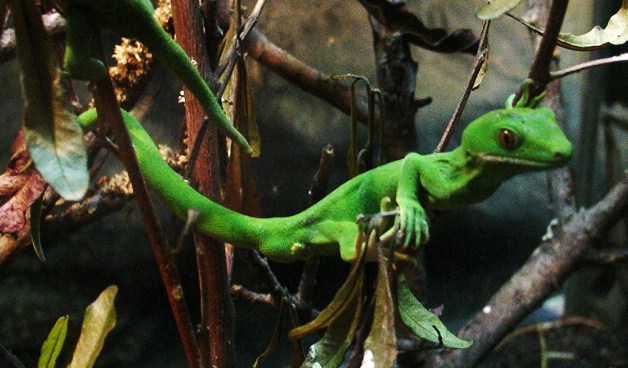
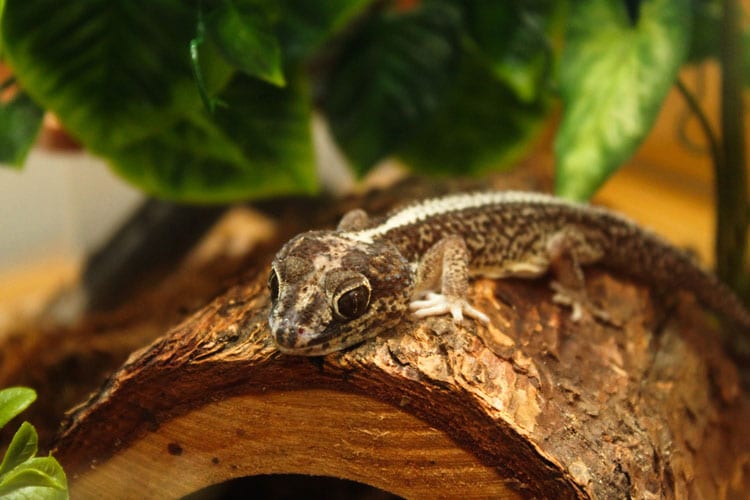
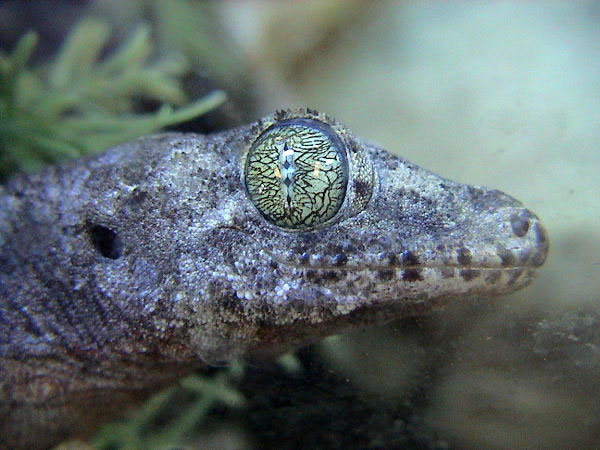
Geckos form a very exceptional choice of lizards, with their worldwide species exceeding two thousand. These types of geckos (lizards) have existed for more than 100 million years and flourish in warm tropical climates. Hobbyists patronize their assorted varieties as pets, including the white-lined gecko, the Leopard Gecko, the giant day gecko, the Madagascar Ocelot gecko, the Central American banded gecko, and others. Here we try to identify different types of some of the geckos.
Leopard Gecko

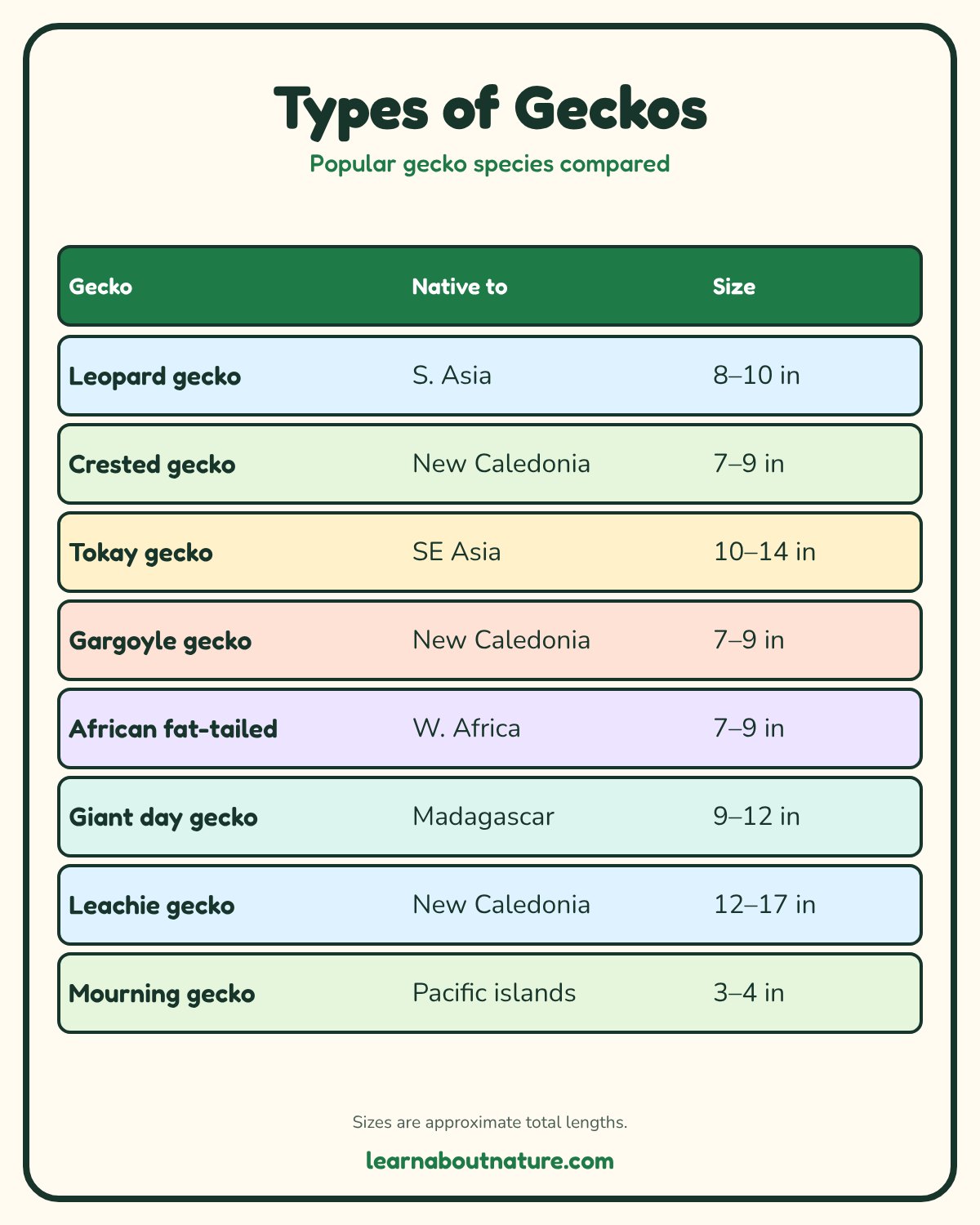
Leopard gecko or Eublepharis macularius, fits the bill as the most favorite gecko pets. Inhabitant of the deserts of Northwest India and Pakistan, this is a tough variety that you can easily take care of. These nocturnals prefer spending hot days in burrows dug into the ground or rock crevices, where they stay out of sight. When you breed them in captivity in containers with plants and places for retreat, they find relief in the hiding places.
Because of selective breeding, you can find a large variety of colored Leopard morphs these days. These types of geckos vary from lizards having patterns, exquisitely unlike the wild variety, called jungle lizards, with a large proportion of them in orange color, having one extended band travelling from the head, right up to the tail. You also find albinos among them.
Crested Geckos, Once Considered Extinct, is a Popular Pet Now

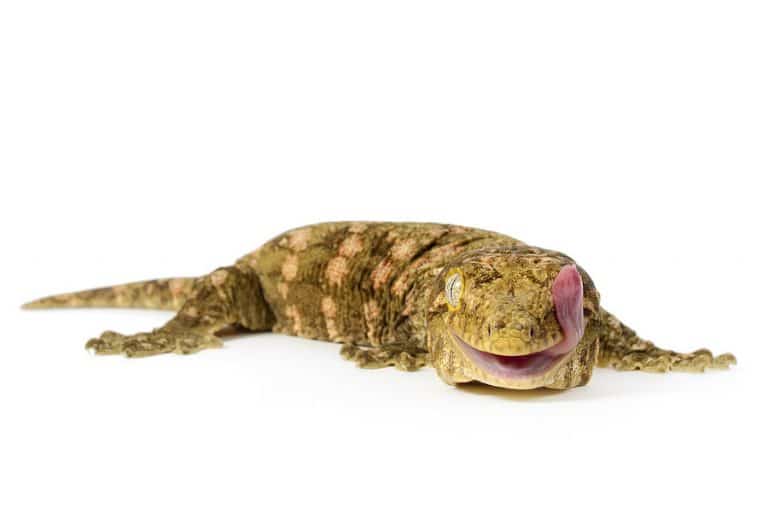
You will find these amazing geckos only in the New Caledonian forests. But now hobbyists can keep them as pets because of programs that encourage captive breeding in Europe and the US, where they are among the most favored reptile pets. A skin protrusion akin to hairs runs from each eye down to its tail is suggestive of the clear derivation of their name from the family Rhacodactylus ciliates. That is why they also call them ‘eyelash gecko.’ Living on trees, these lizards are nocturnal. They have sticky toes that have claws at the end which aid them to get a grip on a surface. They also have a semi-prehensile tail that displays at its end an adhesive pad. These are tough geckos. They like to feed on insects and fruits but can survive on commercially available diet of Repashy super diet for geckos, now available in powdered form in several flavors like Strawberry, Banana, and Mango.
The Day Geckos of Madagascar
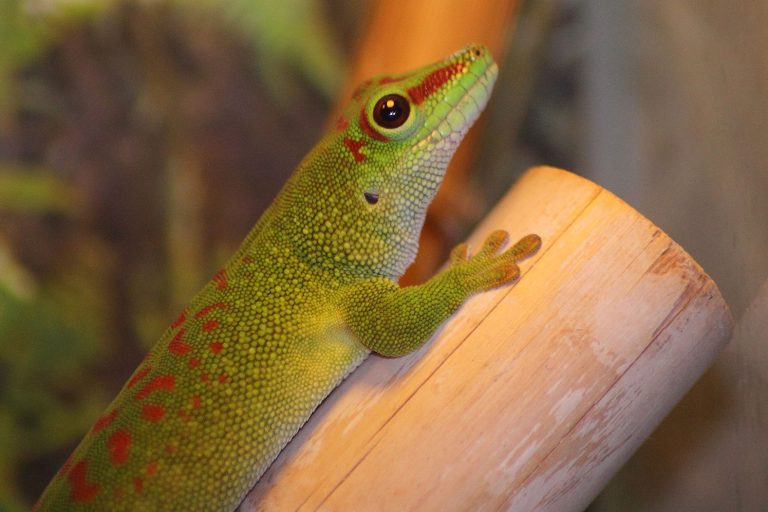
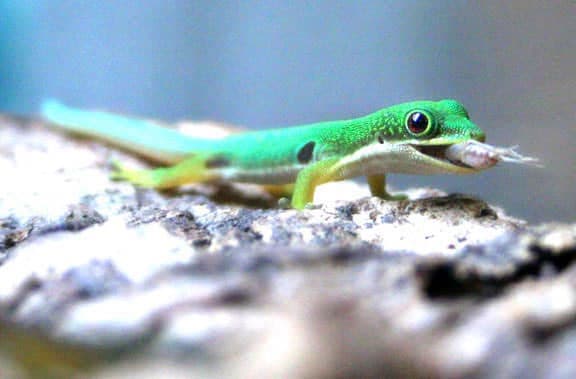
The day geckos also called Phelsuma day geckos live abundantly in Madagascar and neighboring islands. They usually have bright green color with red stains, though the neon day-gecko comes with two neon blue lines on its side and a yellow head. Other species also have blue markings like blue eye shadow that you find in gold dust geckos.
Contrary to the activities of a great majority of species, the Phelsuma geckos are active in daytime (diurnal). They love sunbathing on branches, allowing the ultraviolet rays of the sun to produce the vitamin D3 they need to absorb calcium, that helps them to display amazing colors. You will find these geckos more perceptive to the correct application of the principles of breeding, but you can strive to set up a careful breeding process and a convenient habitat, and there is no reason they will not thrive in their new terrarium with very careful feeding.
White-Lined Gecko
This gecko also goes by the name of skunk gecko. The white-lined gecko grows to 10 inches when fully mature and lives up to about 10 years. In small communities, they display their climbing abilities. A White-lined gecko is not your ideal pet because they move very fast and sometimes bite very painfully. In other words, you would do well not to handle them like the docile Leopard Geckos.
The Frog-Eyed Gecko
They refer to this gecko also as “Wonder Gecko”. These are terrestrial lizards that burrow in the sand and grow up to a size of 4.5 to 5.5 inches. This gecko lives up to 15 years and is peculiar in that it has special scales like the fish, that they rattle in self-defense and to confirm his territory and attract the female of the species.
Central American Banded Gecko

These types of geckos are nocturnal in habit, grow up to about seven inches and live up to about ten years. Hobbyists can care for these animals very easily and they adjust extremely well to conditions in captivity in ten-gallon tanks or terrariums with a wire screen lid. This gecko is generally very docile and will socialize well for short periods if they were born in captivity from the beginning.
Why are Geckos Great Pets
If you are a lizard or reptile aficionado and are planning to bring home a lizard, you would do well to start with a gecko. Two major factors recommend the gecko: You have a variety of gecko species to select from and the experience level of breeders and pet traders to advise you on the right choice of geckos is astonishing. Moreover, you have such a wide choice among the different types of geckos.
Types of Geckos FAQs
How many species of geckos are there?
There are more than 2,000 known species of geckos, making them one of the largest groups of lizards. They live in warm regions around the world, from deserts to rainforests, and range from tiny species under 2 centimetres to large ones over 30 centimetres.
Are geckos nocturnal?
Many geckos are nocturnal, with large eyes adapted to see in low light. However, some groups, such as the brightly coloured day geckos of Madagascar, are active during the day. Diurnal species often have round pupils, while nocturnal ones usually have vertical pupils.
What are day geckos?
Day geckos, in the genus Phelsuma, are bright green lizards often decorated with red, orange or blue markings. Most come from Madagascar and nearby islands in the Indian Ocean. They are active in daylight and feed on insects, nectar and fruit.
Which gecko is best for beginners?
Leopard geckos are widely considered the best beginner gecko. They are docile, easy to handle, stay a manageable size and have simple care needs. Crested geckos are another good option, especially for keepers who prefer not to feed live insects every time.

Randi Jones is the owner and founder of the Nature Gift Store, an online retailer specializing in nature-themed gifts, educational science projects, live animal nature kits and real butterfly artwork. A biology graduate who fell in love with insects, she founded the company in 2001 to make active learning about nature fun, accessible and engaging for children and adults. Her store offers real butterfly frames, home and garden decor and educational live animal kits, including ant farms, worm farms, tadpoles, ladybugs and hermit crabs, and she runs a bug museum in Washington featuring live animals like Eddie the Iguana alongside other reptiles and insects. Randi wrote most of the guides on this site. They first appeared on her long-running nature sites, including Monarch-Butterfly.com, Ladybug-Life-Cycle.com, Frog-Life-Cycle.com, Dragonfly-Site.com and Butterfly Pictures, which have now been brought together here at Learn About Nature.