Tokay Gecko
The Tokay Gecko (Gekko gecko) or grassland gecko of the night, inhabits the Northeastern parts of India, entire southeastern Asia, Nepal, Bangladesh, the Philippines, Indonesia, and the Western part of New Guinea. Its main habitats are trees, cliffs, and tropical forests, but often adapts well to human surroundings. At night they wander on ceilings and walls searching for prey. With urbanization increasing at a rapid pace, these poor animals have their field restricted. Towards the end of the 1980s through to the beginning of the 1990s, ecologists initiated these animals to places like Hawaii, Texas, Florida, and the islands of the Caribbean, which consider them as invasive species, likely to cause environmental or economic harm to the ecosystem.
Behavior and Physical Characteristics
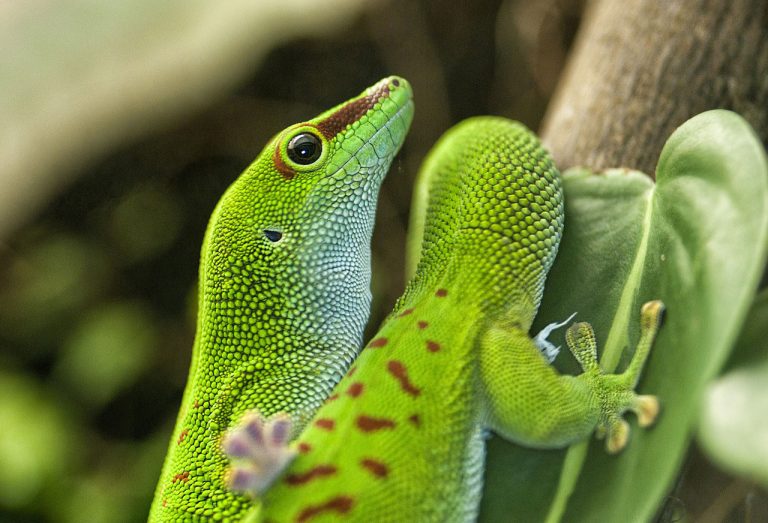
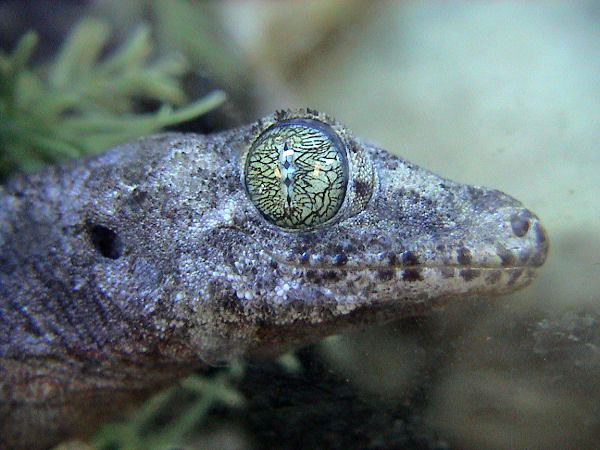
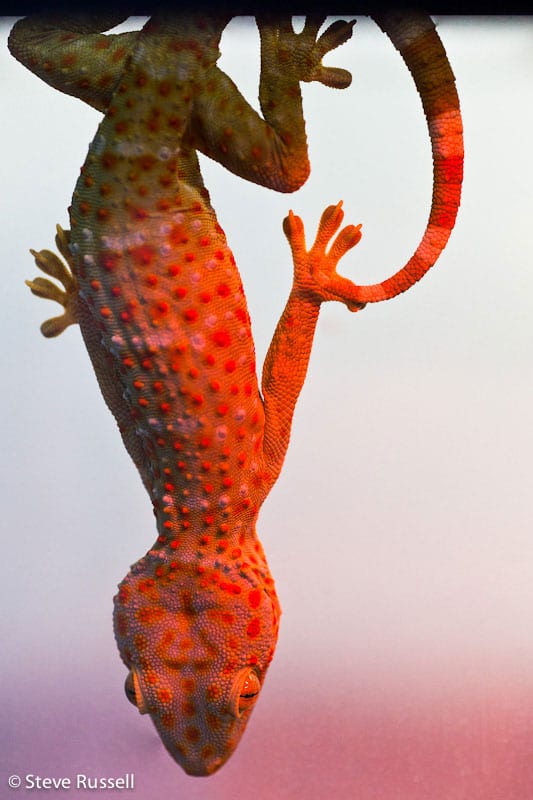
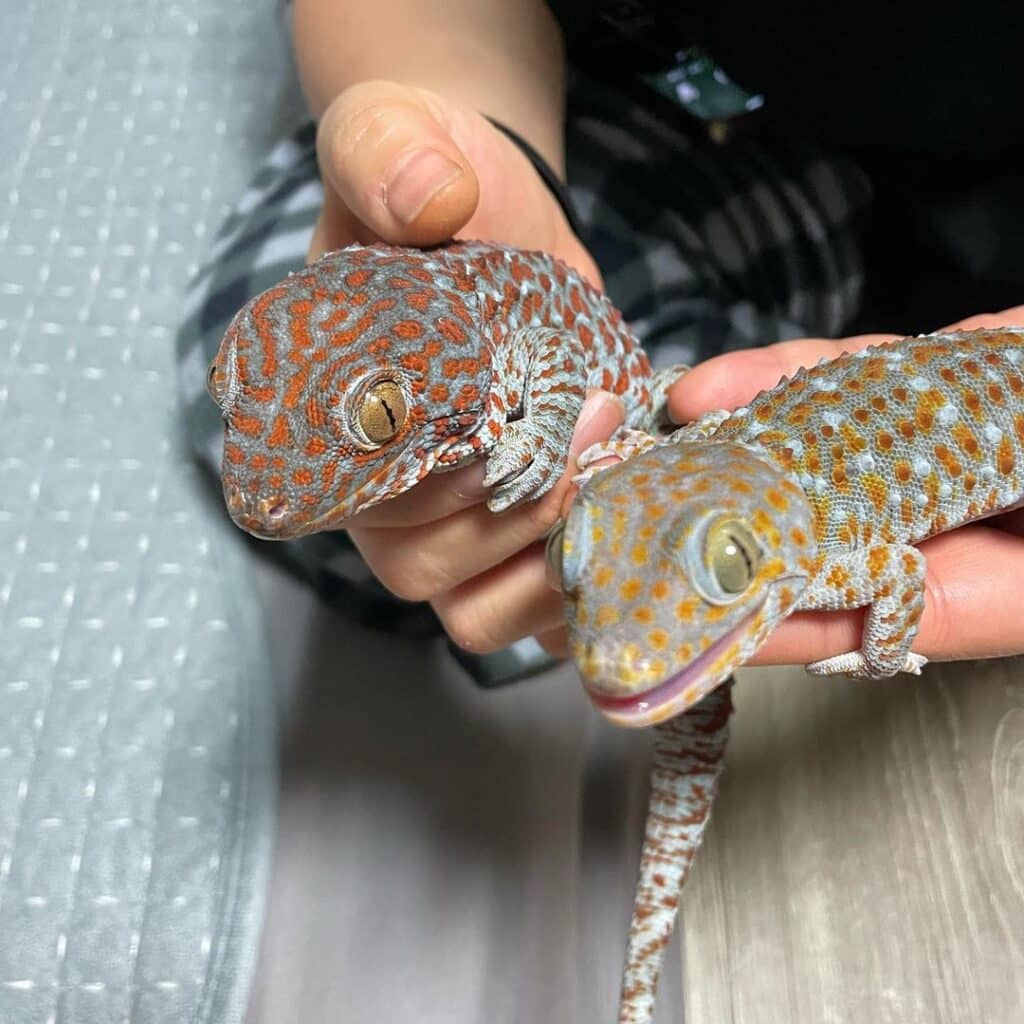
The second largest Gecko species are the Tokay Gecko. The male attains a length of about 11-20 inches while the female grows to 7-19 inches and weighs between 150-400 grams. They sport a distinctive body color of blue or gray with spots varying from light yellow to bright red. The female is not as bright as the male. Their eyes are big with the pupils slit vertically and the eyes can range from yellow, orange or brown to shades of greenish brown. Male Tokay Geckos quarrel among themselves and with other Geckos, and zealously guard their territory They live a secluded life and meet the females only at mating season. The females that lay clusters of one or two hard-shelled eggs guard them until they hatch.
Habitat
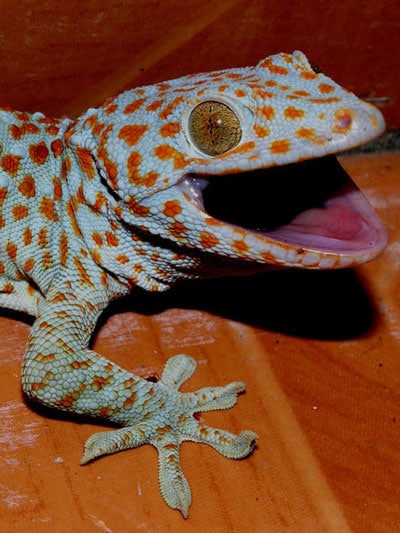
You can find the Tokay Gecko from Southeast India to the Malay Archipelago, which includes the Islands of the Philippines, Indonesia, Singapore, East Malaysia, Brunei, and East Timor.
The Tokay Geckos are cliff-dwelling and arboreal. They dwell in trees and cliffs in tropical rain forests and as pets with humans. They roam on floating rubbish and colonize the Islands of their destination. In tropical areas, Tokay Geckos have a symbiotic relationship with humans. Humans shelter them and geckos kill the insects there, which is exactly what you can see them do at a small mammal house. For raising them at home, you should keep the cage temperatures between 85° to 90° F, and providing for a drop of 15° F at night.
Breeding the Tokay Geckos at home
Tokay Gecko care involves several aspects.
Heat and Light- you can use an ordinary heating lamp for the cage. Since the Tokay Geckos are animals of the night (nocturnal), ultraviolet light is not essential, but you can consider it aesthetically and for the benefit of the plants. Under-tank heaters not necessary for this gecko, but you must provide a suitable environment with 10 hours of light and 14 hours of darkness.
Substrata: You can use a substrate made of sand mixture and potting soil, orchid bark, coconut fiber or fir barks.
Environment: Although Tokay geckos live in the tropics, you can equally see them in homes. They need a relative humidity of 70% to 90% but not less than 50% since they are rainforest species.If you maintain the above-mentioned Substrate, it helps to keep up the desired range if humidity.
Tokay Gecko Food and Water
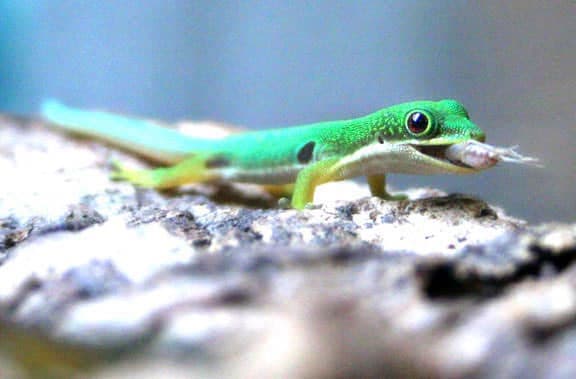
Tokay geckos are greedy insects. The best diet is wax worms, meal worms, super worms, roaches and Crickets. Giving varied insects in turns make for a mixed diet. An assorted diet of a bowl of flavored baby food and fruits or a crested gecko diet, becomes a sumptuous meal. At the time of reproduction, provide a bowl Calcium. Feeding them at least once a week with insects coated with vitamins and calcium given provides tour geckos with proper nutrition.
Reproduction
For easy sexual union, or attraction of the mate, the Tokay Geckos discharge a fluid from their femoral pores on the upper part of their hind legs, which facilitates the easy attraction of the mate and effortless copulation. Four to five months is the breeding season. The male attracts its mate by a loud “To-Kay” sound several times, for which reason they go by the name of Tokay geckos. During the breeding season that lasts all of four to five months, the males grasp the female with their mouths in sex. The male, entering from the rear,holds the female by biting its neck, and keeps moving laterally. The females lay monthly eggs in the breeding season.
Having discovered a fondness for insects while pursuing her degree in Biology, Randi Jones was quite bugged to know that people usually dismissed these little creatures as “creepy-crawlies”.