Giraffe Facts for Kids: Habitat, Diet and Fun Facts
Quick answer: A giraffe is a tall, long-necked mammal that lives on the savannas and woodlands of Africa. It is the tallest land animal, with males reaching about 18 feet. Giraffes browse on leaves high in the trees, especially acacia. Scientists now recognize four giraffe species: the northern, southern, reticulated and Masai giraffe.
No other animal can look over a tree the way a giraffe can. With legs as long as a grown-up is tall and a neck to match, giraffes reach leaves that most plant-eaters can only dream about.
Giraffes have also given scientists a surprise. In 2025, experts agreed that there is not just one giraffe species but four. Here is how giraffes live, eat and grow, and what is being done to protect them.
Teachers and students: you’re welcome to use this fact sheet in lessons and projects with credit to Learn About Nature.
Free printable: Download the Giraffe fact file worksheet (PDF) – draw the animal, fill in the facts and match key words. Answer key included.
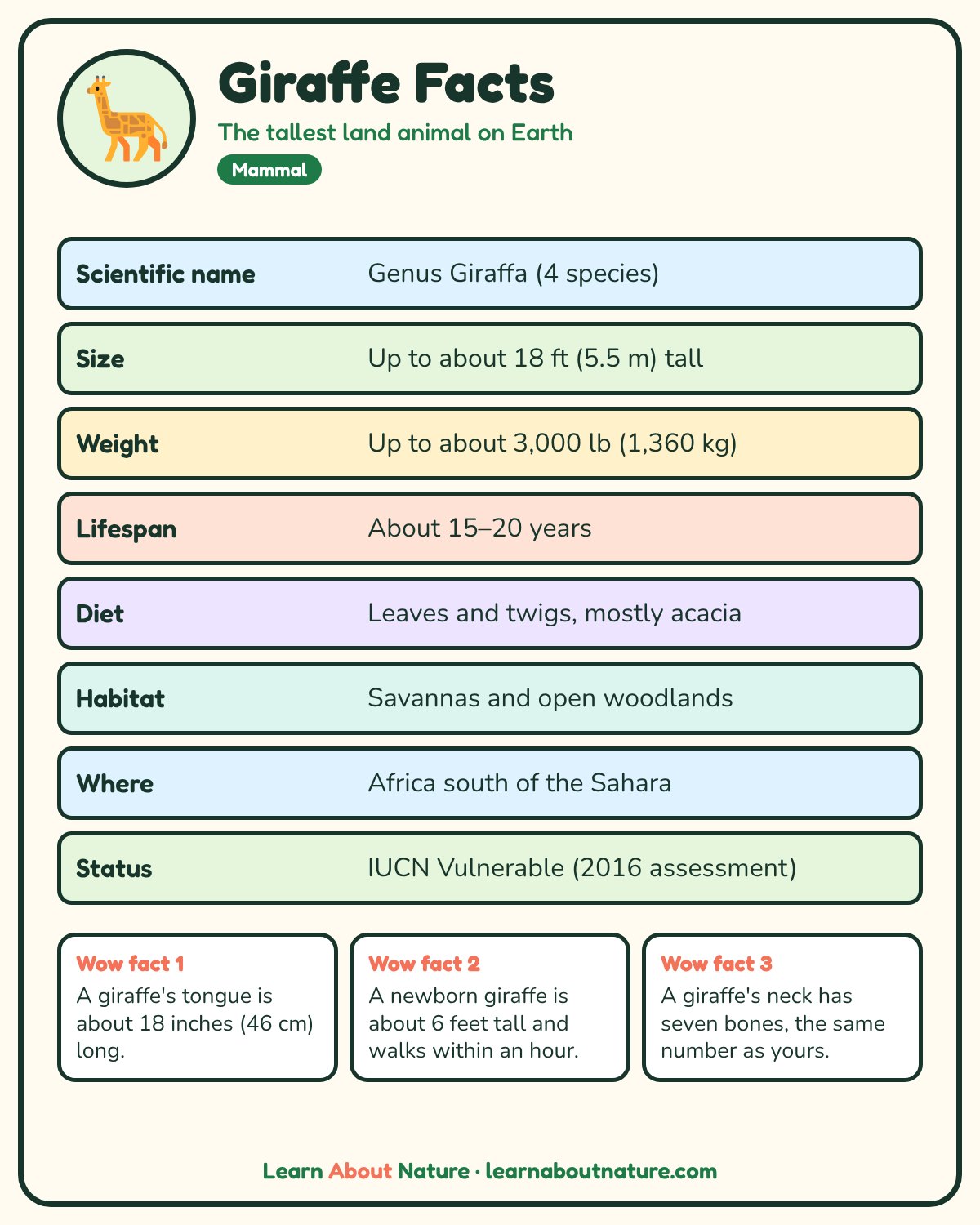
Giraffe Quick Facts
| Class | Mammal |
| Species | Northern, southern, reticulated, Masai |
| Height | Males up to about 18 ft (5.5 m); females up to about 14 ft (4.3 m) |
| Weight | Up to about 3,000 lb (1,360 kg) |
| Diet | Herbivore: leaves, buds, twigs |
| Top speed | About 35 mph (56 km/h) for short distances |
| Pregnancy | About 14 months |
| Baby name | Calf |
| Lifespan | About 15–20 years |
| Conservation status | Vulnerable (IUCN, 2016, as one species) |
What Is a Giraffe?
A giraffe is a hoofed mammal with a very long neck, long legs and a coat covered in brown patches. It chews its food twice, like a cow: it swallows leaves, brings them back up and chews them again. This is called chewing the cud.
For many years, all giraffes were treated as one species, Giraffa camelopardalis, with several subspecies. In August 2025, the IUCN SSC Giraffe and Okapi Specialist Group officially recognized four species: the northern giraffe (Giraffa camelopardalis), the southern giraffe (Giraffa giraffa), the reticulated giraffe (Giraffa reticulata) and the Masai giraffe (Giraffa tippelskirchi).
Where Do Giraffes Live?
Giraffes live only in Africa, south of the Sahara Desert, in more than 15 countries. They are found anywhere there are trees to feed on, from dry, open savannas and grasslands to woodlands and the edges of deserts.
Each species has its own home. Northern giraffes live in scattered pockets from Niger to East Africa. Reticulated giraffes live mainly in northern Kenya and nearby parts of Ethiopia and Somalia. Masai giraffes live in Tanzania and southern and central Kenya. Southern giraffes live across southern Africa, in countries such as Namibia, Botswana, South Africa and Zimbabwe.
What Do Giraffes Eat?
Giraffes are herbivores. They are browsers, which means they eat leaves, buds and twigs from trees and bushes rather than grass. Their favorite food is the leaves of acacia trees, but they may eat from dozens of different kinds of plants.
A giraffe uses its long, dark tongue and flexible lips to pull leaves off branches, even thorny ones. It can reach leaves up to about 20 feet (6 m) above the ground. Giraffes spend 16 to 20 hours a day eating and can eat up to about 75 pounds (34 kg) of food in a day.
Giraffes drink water when they find it, but they do not need to drink every day. Much of the water they need comes from the juicy leaves they eat, which helps them live in dry places.
Body and Senses
Male giraffes can grow up to about 18 feet (5.5 m) tall and weigh up to about 3,000 pounds (1,360 kg). Females are smaller, up to about 14 feet (4.3 m) tall. The neck alone is about 6 feet (1.8 m) long, and so are the legs.
Like humans, giraffes have only seven neck bones, but each one can be more than 10 inches (25 cm) long. To pump blood all the way up that neck, a giraffe has a heart about 2 feet (0.6 m) long that weighs about 25 pounds (11 kg).
Both males and females have two horn-like bumps on their heads called ossicones, which are covered in skin and hair. Giraffes have large eyes, each about the size of a golf ball. For short distances they can gallop at about 35 mph (56 km/h).
Giraffe Calves
A baby giraffe is called a calf. A mother is pregnant for about 14 months and usually has one calf. She gives birth standing up, so the calf starts life with a short drop to the ground.
A newborn calf is already about 6 feet (1.8 m) tall and weighs about 100 to 220 pounds (45 to 100 kg). It can stand and walk within about an hour. In its first week, it may grow about an inch (2.5 cm) a day.
Calves start nibbling leaves at a few months old and drink milk until about 6 to 9 months. Giraffes are grown up at about 3 to 5 years old.
- Pregnancy: about 14 months
- Calves per birth: usually 1
- Height at birth: about 6 ft (1.8 m)
- Nursing: about 6–9 months
How Giraffes Live
Giraffes live in groups that come together and split up as the animals move around to feed. Long ago, people saw herds of 20 to 30 giraffes. Today, most groups have fewer than six.
Giraffes are mostly quiet, but they are not silent. They sometimes moo, snort, hiss or grunt, and scientists think they may also make very low sounds that people cannot hear.
Giraffes sleep very little. In a whole day and night, a giraffe may sleep only about 5 to 30 minutes, often in naps lasting just a minute or two.
The Four Giraffe Species Compared
The four giraffe species look similar, but they live in different places and have different coat patterns. The Giraffe Conservation Foundation’s 2025 report gives these rough numbers:
- Southern giraffe: the most common, about 69,000, living across southern Africa.
- Masai giraffe: about 44,000, in Kenya and Tanzania. Its patches have jagged edges.
- Reticulated giraffe: about 21,000, mostly in northern Kenya. Its patches are separated by neat, pale lines like a net.
- Northern giraffe: the rarest, only about 7,000, living in small, scattered groups from West Africa to East Africa.
Threats and Conservation Status
Adult giraffes are so big that only a few predators, such as lions, try to catch them. A grown giraffe can defend itself with powerful kicks. Calves are more at risk, and only about a quarter of young giraffes survive to become adults.
The biggest threats come from people: habitat loss to farms, settlements and roads, illegal hunting, loss of acacia trees, war and unrest, and climate change. Experts estimate there are about 140,000 giraffes in Africa today. Some groups are growing, partly thanks to better counts and conservation work, but others have fallen sharply. Masai giraffe numbers, for example, have dropped by about 39 percent over the past 30 years. Some experts think there may have been more than a million giraffes in the 1700s.
The IUCN Red List still lists the giraffe as a single species, rated Vulnerable in its 2016 assessment. Now that four species are recognized, each one is being assessed separately. Early findings suggest three of the four may qualify as threatened.
Fun Facts About Giraffes
Here are a few more giraffe surprises:
- A giraffe’s tongue is dark in color and about 18 inches (46 cm) long.
- Each giraffe’s coat pattern is unique, like a fingerprint.
- A giraffe’s feet are about 12 inches (30 cm) across.
- Giraffe lungs can hold about 12 gallons (55 liters) of air.
- Older males can develop extra bony bumps on their heads, so they may look like they have more than two horns.
Fast Facts for Young Readers
- Giraffes are the tallest animals on land.
- They live in Africa.
- There are four kinds of giraffe.
- Giraffes eat leaves from tall trees.
- A baby giraffe is called a calf.
- A giraffe calf can walk when it is about an hour old.
- Giraffes sleep for only a few minutes at a time.
Key words: browser – an animal that eats leaves and twigs from trees and bushes; ossicones – the two horn-like bumps on a giraffe’s head; herbivore – an animal that eats only plants; species – a group of living things that can have young together; vertebrae – the bones that make up the neck and backbone.
Try this: Use a measuring tape and painter’s tape to mark 6 feet and 18 feet on a wall or hallway floor. Compare the height of a newborn giraffe, a grown male giraffe and the people in your class.
Related Guides
- Giraffe life cycle
- Raccoon facts for kids
- Meerkat facts for kids
- Bat facts for kids
- Sloth facts for kids
- All animal facts for kids
Giraffe FAQs
How many species of giraffe are there?
There are four. In 2025, giraffe experts working with the IUCN recognized the northern giraffe, southern giraffe, reticulated giraffe and Masai giraffe as separate species. Before that, all giraffes were treated as one species with several subspecies.
How tall is a giraffe?
Male giraffes can grow up to about 18 feet (5.5 m) tall, and females up to about 14 feet (4.3 m). Even a newborn calf is about 6 feet tall. That makes the giraffe the tallest land animal in the world.
What do giraffes eat?
Giraffes eat leaves, buds and twigs from trees and bushes. Their favorite food is acacia leaves. They spend 16 to 20 hours a day eating and can eat up to about 75 pounds of food in a day. Juicy leaves also give them much of their water.
Are giraffes endangered?
The IUCN Red List still lists the giraffe as one species, rated Vulnerable in 2016. Now that four species are recognized, each will be assessed separately, and experts expect some to be listed as threatened. The northern giraffe is the rarest, with only about 7,000 left.
How long do giraffes sleep?
Not long at all. Giraffes may sleep only about 5 to 30 minutes in a full day, often in short naps lasting a minute or two. They spend most of their waking time eating, up to 16 to 20 hours a day.
Sources: IUCN: Evaluation of the taxonomic status of giraffe (2025); Giraffe Conservation Foundation: Giraffe conservation status; Giraffe Conservation Foundation: State of Giraffe 2025 report; San Diego Zoo Wildlife Alliance: Giraffe; African Wildlife Foundation: Giraffe; Mongabay: Giraffe is now officially four species

Nato is a content writer and researcher with a background in psychology who’s eager to explore the wonders of nature. As a travel enthusiast and animal lover, she hopes to inspire others to discover and cherish the beauty and importance of the natural world. She also writes about the history of candy and snacks for Snack History and about food and healthy eating for The Fitchen.