Lichen

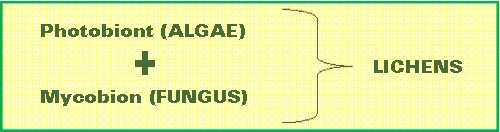
A lichen is not a single living thing but a partnership between a fungus and a partner that can make food from sunlight, usually a green alga or a cyanobacterium. Together they form crusty, leafy or bushy growths on rocks, trees, walls and soil all over the world.
A Living Partnership
The fungus in a lichen is called the mycobiont, and the food-making partner is called the photobiont. The photobiont can be a green alga, a cyanobacterium (a type of bacteria that photosynthesizes), or sometimes both.
Fungi cannot make their own food. They have to get it from somewhere else. In a lichen, the photobiont uses sunlight to make simple sugars, and the fungus takes a share of them. In return, the fungus builds the lichen’s body, wraps around the algal cells, protects them from drying out and strong sunlight, and helps collect water and minerals.
Because both partners seem to benefit, most scientists see lichens as a mutualism, a relationship where everyone gains. Recent research has shown that many lichens also contain yeasts and bacteria, so a lichen can be more like a tiny community than just a pair.
The body of a lichen is called a thallus. It looks completely different from either partner growing alone. Many lichen algae can live on their own in nature, but most lichen fungi are rarely found living without their partners.
There are around 20,000 known species of lichen. Even though lichens are often found with mosses and are studied by botanists, they are not plants. Each lichen is named after its fungus.
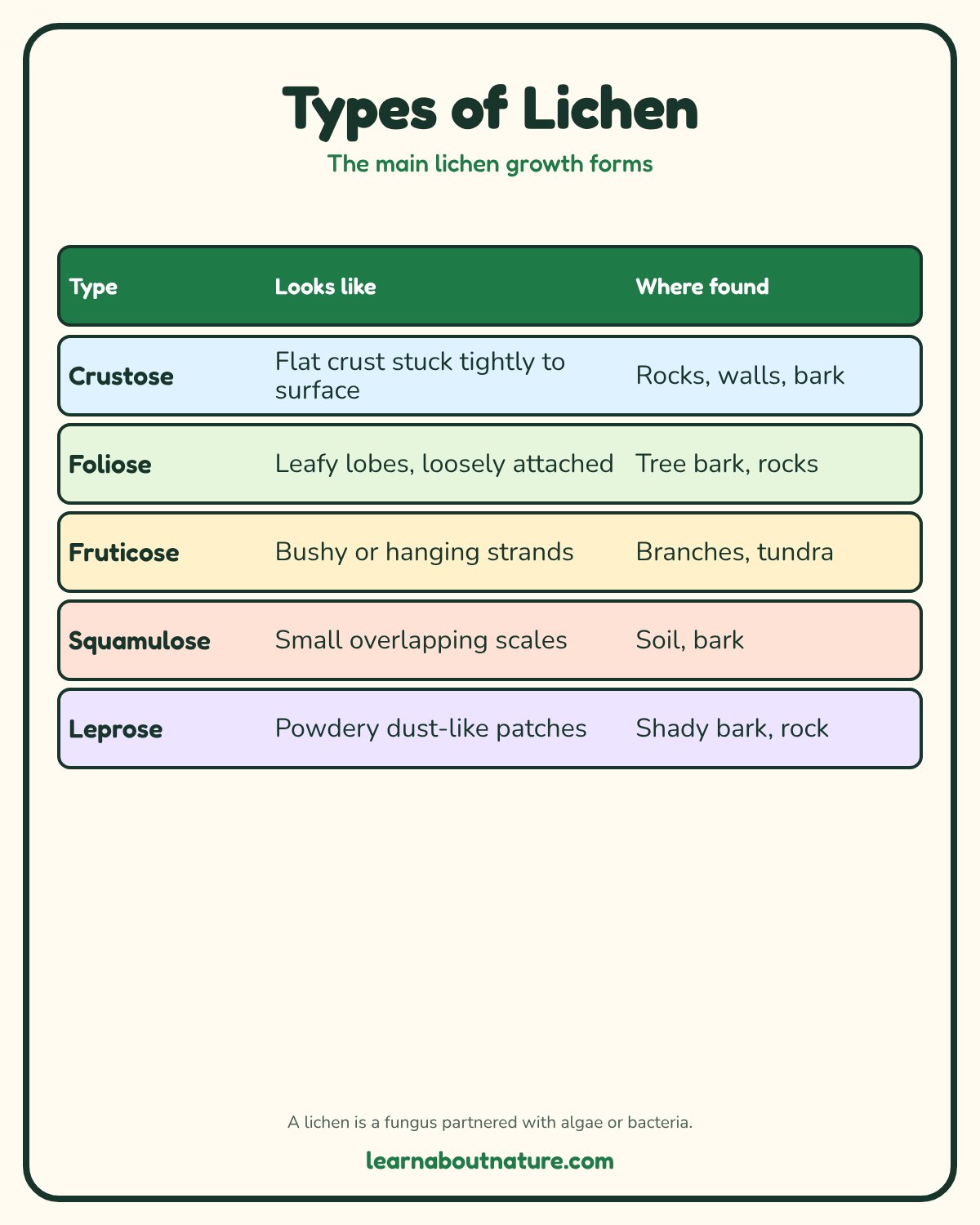
Types of Lichens
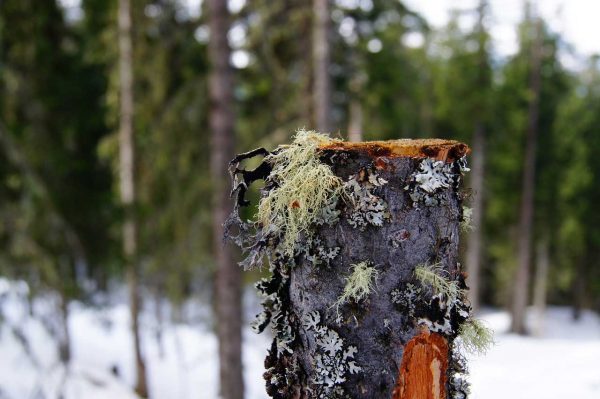
Lichens grow in several main shapes, which help people identify them:
- Crustose lichens form a flat crust that is stuck tightly to rock or bark. You cannot peel a crustose lichen off without breaking it or scraping away part of the surface underneath.
- Foliose lichens are leafy, with flat lobes that spread over the surface. They are attached by tiny root-like threads, and their lobes can often be lifted at the edges.
- Fruticose lichens are bushy or stringy, with many branches. Some stand up like tiny shrubs, while others hang from branches like beards. They are attached at just one point.
- Leprose lichens are powdery and look like a dusting of colored flour.
- Squamulose lichens are made of many small overlapping scales, a bit like a crust with raised, lobed edges.
Where Lichens Live
Lichens can grow on almost any surface that stays still for long enough: rocks, tree bark, fence posts, walls, gravestones, roof tiles and even old cars. A few kinds grow loose on the ground or blow about freely.
They are tough survivors and can live in places where few other living things can, including hot deserts, frozen Arctic tundra, high mountains, rocky seashores and old mine waste. When it is dry, many lichens simply dry out and stop growing, then spring back to life when it rains. In some very harsh places, lichens are among the only living things you will see.
Lichens are also common in forests, where they grow on trunks, branches and leaves. In the far north, reindeer lichen covers huge areas of ground and is a vital winter food for reindeer and caribou.
Many lichens are sensitive to air pollution, especially a gas called sulfur dioxide. Scientists use them as natural pollution detectors: lots of different lichens on trees usually means the air is clean.
History on Earth
The oldest fossils that are clearly lichens are about 400 million years old, from rocks in Scotland. Some scientists think lichen-like partnerships may be even older, and a few have suggested that some strange early life forms from more than 550 million years ago might have been lichens, but this idea is not widely accepted.
Lichen partnerships seem to have evolved many separate times, as different fungi teamed up with different algae and cyanobacteria.
Some lichens live for an extremely long time. The yellow-green map lichen (Rhizocarpon geographicum), which grows on rocks in cold places, can survive for thousands of years. Because it grows so slowly and steadily, scientists measure its patches to estimate how long ago glaciers uncovered the rocks.
Growth
Most lichens grow very slowly. Crustose lichens often spread by only about a millimeter or less each year. Leafy and bushy lichens usually grow faster, sometimes a centimeter or more per year in good conditions. The exact rate depends on the species and on how much light, water and warmth they get.
Reproduction
Lichens have a tricky problem: to make a new lichen, both partners need to end up in the same place. They solve it in a few ways:
- Fragments: pieces of lichen break off, are carried by wind, water or animals, and grow into new lichens.
- Soredia: tiny powdery balls made of a few algal cells wrapped in fungal threads. They often appear as a dusty coating on the lichen’s surface and blow away like dust.
- Isidia: tiny finger-like bumps that contain both partners and snap off easily.
- Fungal spores: the fungus can also make spores in small cup-shaped or flask-shaped fruiting bodies, called apothecia and perithecia. These spores contain no algae, so a new lichen only forms if the young fungus finds a suitable partner.
How People Use Lichens
People have used lichens for thousands of years. Before modern dyes were invented, lichens were an important source of colors for wool and cloth, giving shades of purple, red, orange, yellow and brown. Some traditional Scottish tweeds were dyed with lichens.
Lichens make many unusual chemicals. The litmus used in school science lessons to test whether something is an acid or an alkali comes from lichens. Some lichen chemicals, such as usnic acid, can kill certain bacteria and have been studied for use in medicines and creams.
Some lichens, such as Iceland moss, have been used as food in hard times after careful preparation, but many lichens are bitter or mildly toxic, so never eat one you find. Lichens have even been found in the packing material of ancient Egyptian mummies.

Randi Jones is the owner and founder of the Nature Gift Store, an online retailer specializing in nature-themed gifts, educational science projects, live animal nature kits and real butterfly artwork. A biology graduate who fell in love with insects, she founded the company in 2001 to make active learning about nature fun, accessible and engaging for children and adults. Her store offers real butterfly frames, home and garden decor and educational live animal kits, including ant farms, worm farms, tadpoles, ladybugs and hermit crabs, and she runs a bug museum in Washington featuring live animals like Eddie the Iguana alongside other reptiles and insects. Randi wrote most of the guides on this site. They first appeared on her long-running nature sites, including Monarch-Butterfly.com, Ladybug-Life-Cycle.com, Frog-Life-Cycle.com, Dragonfly-Site.com and Butterfly Pictures, which have now been brought together here at Learn About Nature.