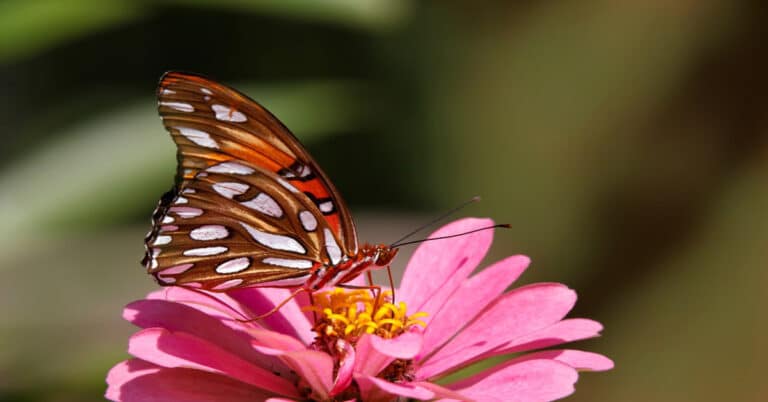
How to Take Butterfly Pictures: Tips for Phones and Cameras

Quick answer: To take good butterfly pictures, go out on a calm, sunny morning when butterflies are cool and slow, approach slowly from the side without casting your shadow on them, keep the camera parallel to the wings so they are all in focus, and shoot lots of frames. A phone works well if you get close and tap to focus on the eye.
Butterflies are one of the most rewarding subjects in nature photography. They are colorful, they visit gardens and parks almost everywhere, and you can photograph them with anything from a phone to a professional camera. They are also small, alert and quick to fly, so a few simple techniques make a big difference.
This guide covers when and where to find butterflies, how to approach them, the best camera and phone settings, and how to compose a picture that shows off their wings, while keeping the butterflies safe.
When to Photograph Butterflies
- Early morning: butterflies are cold-blooded and need to warm up before they can fly well. In the first couple of hours after sunrise they often sit with their wings open to bask, which is the perfect moment to get close.
- Cloudy, warm days: soft light from a thin layer of cloud shows colors without harsh shadows, and butterflies tend to stay still longer.
- Calm weather: wind makes flowers sway and butterflies restless. Choose still days.
- Late afternoon: many butterflies settle to roost, and the warm, low light flatters their colors.
Where to Find Them
Look for patches of nectar flowers in full sun: butterfly bush, coneflowers, milkweed, zinnias, lantana and asters are favorites. Butterfly gardens, meadows, woodland edges and the muddy edges of puddles, where some species gather to drink minerals, are all good spots. Our butterfly gardening guide explains how to attract them to your own yard, and public butterfly houses and gardens let you practice with tame, well-fed butterflies.
How to Get Close Without Scaring Them
- Move slowly and smoothly; sudden movements trigger take-off.
- Approach from the side or front, not from above.
- Keep your shadow off the butterfly. A shadow passing over it looks like a bird to a butterfly.
- Crouch down to the butterfly’s level instead of leaning over it.
- If it flies away, wait nearby. Many butterflies return to the same flower or perch within a minute or two.
- Watch a feeding butterfly: when its proboscis is deep in a flower it is less likely to notice you.
Camera and Phone Settings
Phones: get as close as the phone can focus, tap the screen on the butterfly’s eye to set focus, and lower the brightness slightly if bright wings look washed out. Use the 2x or telephoto lens if your phone has one, so you can stay a little farther back. Avoid digital zoom, which blurs the picture. Burst mode helps when the butterfly is moving.
Cameras: a macro lens (90–105 mm is popular) or a telephoto zoom lets you fill the frame from a comfortable distance. Good starting points are:
- Shutter speed: 1/500 second or faster to freeze wing movement and camera shake.
- Aperture: f/5.6 to f/8, so both wings and the body are sharp while the background stays soft.
- ISO: raise it as needed to keep that fast shutter speed. A little grain is better than blur.
- Focus: single-point autofocus on the eye, or manual focus by gently rocking forward and back.
Composing a Great Butterfly Photo
- Keep the sensor parallel to the wings. When the camera lines up with the wings, the whole butterfly falls into the same sharp zone.
- Focus on the eye. Like portraits of people, a sharp eye makes the picture.
- Watch the background. Move a step sideways so the butterfly sits against distant leaves or sky rather than busy stems.
- Try both views. Open wings show the upper-side colors; closed wings show the underside patterns many species use for camouflage.
- Tell a story. A butterfly feeding, a caterpillar on its host plant or a fresh adult drying its wings beside its chrysalis makes a memorable picture.
Photographing every stage of a butterfly’s life is a great project for students. Use our butterfly life cycle and butterfly anatomy guides to identify what you see.
Be Kind to Butterflies
- Never chase, net or handle butterflies for a photo. Touching the wings rubs off scales.
- Don’t move caterpillars, eggs or chrysalises to a better spot.
- Stay on paths in parks and reserves and avoid trampling host plants.
- Never use bright flash on resting butterflies at night.
Butterfly Photography Tips for Kids
- Go out on a sunny morning.
- Walk slowly and keep your shadow away.
- Get down low, at the same height as the butterfly.
- Focus on the eyes.
- Take lots of pictures. Even the pros throw most away.
- Look at the butterfly first, then photograph it.
Try this: Start a butterfly photo diary. Each time you see a butterfly, take a picture, write the date, place and weather, and use our types of butterfly guide to identify it. By the end of summer you will have your own field guide.
Related Guides
- Butterfly pictures
- Butterfly facts for kids
- Butterfly gardening
- Raising butterflies
- Monarch butterfly
- Free butterfly coloring pages
See also: Free butterfly wallpapers
Butterfly Photography FAQs
What is the best time of day to photograph butterflies?
Early morning is best. Butterflies need warmth to fly, so in the first hours after sunrise they bask with open wings and move slowly. Warm, overcast days and late afternoon also work well because the light is soft and butterflies settle for longer.
Can you take good butterfly pictures with a phone?
Yes. Get as close as your phone can focus, tap the screen on the butterfly’s eye, and use the 2x lens if you have one instead of digital zoom. Calm mornings and burst mode help you get a sharp shot before the butterfly moves.
What camera settings are best for butterflies?
A good starting point is a shutter speed of 1/500 second or faster, an aperture around f/5.6 to f/8, and auto ISO. Use single-point focus on the eye and keep the camera parallel to the wings so they are all sharp.
How do you get close to a butterfly without scaring it?
Move slowly, approach from the side, crouch to its level and keep your shadow off it. Feeding butterflies are easiest to approach. If one flies off, wait quietly, because many return to the same flower within a minute or two.
What lens is best for butterfly photography?
A macro lens around 90 to 105 mm is popular because it focuses close while letting you stand back. A telephoto zoom works too, especially for skittish species, and some photographers use a 70–300 mm lens at its longest setting.

Nato is a content writer and researcher with a background in psychology who’s eager to explore the wonders of nature. As a travel enthusiast and animal lover, she hopes to inspire others to discover and cherish the beauty and importance of the natural world. She also writes about the history of candy and snacks for Snack History and about food and healthy eating for The Fitchen.