Types of Butterfly

There are thousands of butterfly species around the world, from tiny hairstreaks to giant tropical swallowtails. Here are some of the most colourful ones, with pictures and a few facts about each.
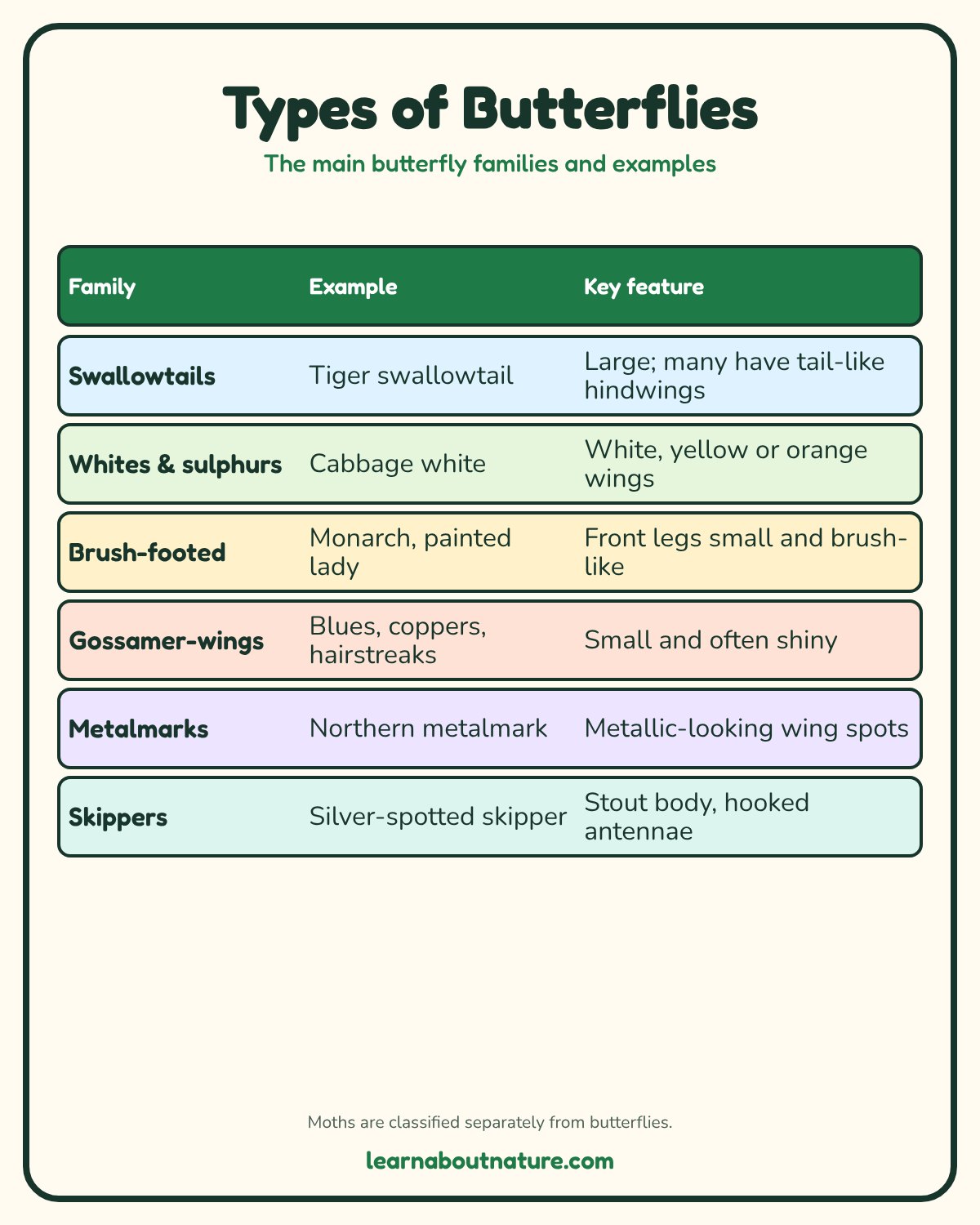
Butterfly types at a glance


Crowned Hairstreak Butterfly
The crowned hairstreak is found from southern Mexico to Ecuador. It is a very rare butterfly that also comes in a green color.

Blue Swallowtail Butterfly
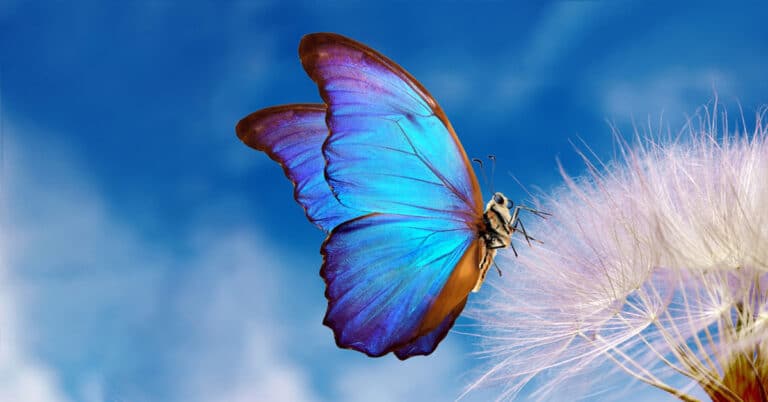
The blue swallowtail butterflies also known as pipevine swallowtails are found in North America and Central America. This butterfly is black with iridescent-blue hindwings. They are found in many different habitats, but are most commonly found in forests.
The butterfly can be frequently found in warmer and more temperate environments. You can easily spot these in open grasslands, woodlands, meadows, and backyard gardens. They like to be in areas where pipevine can grow in plenty.
Several other swallowtails subspecies have similar coloring to the pipevine swallowtail so that predators may also associate them with distaste. This is called Batesian mimicry.


Checkerspot Butterfly
The Bay checkerspot is a butterfly endemic to the San Francisco Bay region of the U.S. state of California. It is a federally threatened species.
Since the 1980s the population of checkerspots has been in serious decline.
While the larvae are dependent on the host plants, mostly the dwarf plantain, for sustenance the adult butterflies live on nectar.

Clubtail Butterfly
The common clubtail butterfly is found from the Nicobar Islands and Assam in India, east to Hainan in China, and south through Indochina, to Java and other islands of Indonesia.
The distinctive black and yellow/orange/red (depending on subspecies) markings and slow flight indicate that it is a protected butterfly being inedible due to sequestration of certain chemicals from the plants that the caterpillar feeds on.

Cyanea Butterfly
The cyanea butterfly found in the Indonesia, Papua New Guinea, the Solomon Islands and Australia. There is a pale blue to white patch on the hindwing. Females are white with a broad black border and a row of blue edged black spots.

Claudina Butterfly
Claudina Agrias is found from Venezuela and Guyana to Bolivia. It is found in primary and secondary rainforest at altitudes between 200 and 600 meters. Adults feed on decomposing fruit and rotting fish.

Lace Wing
The leopard lacewing butterfly is found from India to southern China and Indochina.

Moon Dust Butterfly
The black-veined white butterfly is a large butterfly. It survives in much of Europe but it has been extinct in Great Britain since about 1925. It was a favourite of Sir Winston Churchill who tried to reintroduce the beautiful species to Southern England where it used to thrive in earlier times. He released colonies of Black veined whites in the large grounds of his home at Chartwell in Kent but they did not survive.
The adults are quite social and their abundance varies greatly from year to year. The flight period of the black-veined white is between April and July.

Narcissus Butterfly
Agrias narcissus is a butterfly of the family Nymphalidae. It is found in South America.

Nobilis Butterfly
Papilio nobilis, the noble swallowtail, is a butterfly of the family Papilionidae. It is found in Africa.
The larvae feed on Ugandan greenheart, species of evergreen tree native to Africa.

Orange Tip Sulphur
Colotis auxo, commonly known as the yellow orange tip or sulphur orange tip, is a butterfly of the family Pieridae. It is found in southern Africa and is named after the Keiskamma River.
The wingspan is 35–40 mm. The adults fly year-round.

Red & Blue Prepona
Red & Blue Prepona is found in South and Central America. The underside wings are patterned. They have a robust appearance allowing fast flight.
They are found in both lowland and montane tropical wet forests.

Red Austria Butterfly
Red Austria are usually medium-sized to large butterflies. They have a reduced pair of forelegs and many hold their colourful wings flat when resting.
They are also called brush-footed butterflies or four-footed butterflies, because they are known to stand on only four legs while the other two are curled up.

Indian Leaf Butterfly
The Indian Leaf butterfly also called the orange oakleaf, Indian oakleaf or dead leaf, is found in Tropical Asia from India to Japan.
When its wings are closed, it looks like a dry leaf with dark veins. It is a spectacular and commonly known example of camouflage.
The orange oakleaf is a powerful flier and usually flies in dense forests with good rainfall, amongst undergrowth and along stream beds. It is attracted to tree sap and over-ripe fruit, and is also known to mud-puddle.
Much pursued by birds, when in danger the orange oakleaf flies erratically, soon dropping down into the foliage and occupying a stationary pose with wings closed, so that the birds are very often quite unable to find them. In such a pose, the butterfly resembles a dried leaf and is perfectly camouflaged.

Turquoise Demaphoon
These butterflies are native to Mexico, Central America, northern South America, and the Caribbean. The underside of their wings is pale brownish, while the upperside is dark with a distinct bright blue band.

Yellow Bar Butterfly
The yellow admiral or Australian admiral is a butterfly native to Australia, New Zealand, Lord Howe Island, and Norfolk Islands.
It is a medium-sized butterfly. The upperside of the forewings are dark brown to black toward the outer edges, with three small white patches and a wide, bright yellow bar, and dull red nearer the body.

Yellow White Butterfly
Yellow White, also known as the small white, is a small- to medium-sized butterfly species. The butterfly can be distinguished by the white color with small black dots on its wings. They are further distinguished by the smaller size and lack of the black band at the tip of their forewings.
It is widespread and is believed to have originated in Europe or Asia. Often referred to as the “imported cabbageworm” they are a serious pest to cabbage and other mustard family crops.

Types of Butterflies FAQs
What are the main families of butterflies?
Butterflies are usually grouped into about seven families, including swallowtails (Papilionidae), whites and sulphurs (Pieridae), gossamer-wings such as blues and hairstreaks (Lycaenidae), metalmarks (Riodinidae), brush-footed butterflies (Nymphalidae) and skippers (Hesperiidae). Each family has its own typical shapes and behaviors.
What is the most common butterfly in the world?
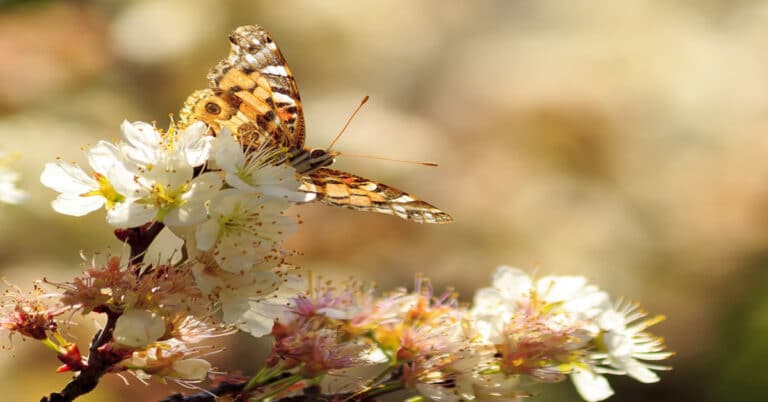
The painted lady is often described as the most widespread butterfly, found on every continent except Antarctica and South America. Cabbage whites are also extremely common and have spread to many parts of the world, where their caterpillars are crop pests.
What is Batesian mimicry in butterflies?
Batesian mimicry happens when a harmless species looks like a toxic or bad-tasting one, so predators avoid it. For example, several swallowtails that are not very toxic resemble the pipevine swallowtail, which stores poisons from its host plants, and gain protection from looking alike.
How does the Indian leaf butterfly camouflage itself?
The orange oakleaf, or Indian leaf butterfly, has bright orange and blue upper wings, but when it closes its wings it looks almost exactly like a dry, dead leaf, complete with a midrib and leaf-like veins. This lets it vanish among leaf litter and foliage when birds are nearby.
Why are some butterflies brightly colored?
Bright colors help butterflies recognize mates and can warn predators that a species is toxic or bad-tasting. Some colors come from pigments, while shimmering blues and greens are produced by microscopic structures on the wing scales that reflect and scatter light.

Randi Jones is the owner and founder of the Nature Gift Store, an online retailer specializing in nature-themed gifts, educational science projects, live animal nature kits and real butterfly artwork. A biology graduate who fell in love with insects, she founded the company in 2001 to make active learning about nature fun, accessible and engaging for children and adults. Her store offers real butterfly frames, home and garden decor and educational live animal kits, including ant farms, worm farms, tadpoles, ladybugs and hermit crabs, and she runs a bug museum in Washington featuring live animals like Eddie the Iguana alongside other reptiles and insects. Randi wrote most of the guides on this site. They first appeared on her long-running nature sites, including Monarch-Butterfly.com, Ladybug-Life-Cycle.com, Frog-Life-Cycle.com, Dragonfly-Site.com and Butterfly Pictures, which have now been brought together here at Learn About Nature.