Shark Anatomy: Parts of a Shark and How They Work
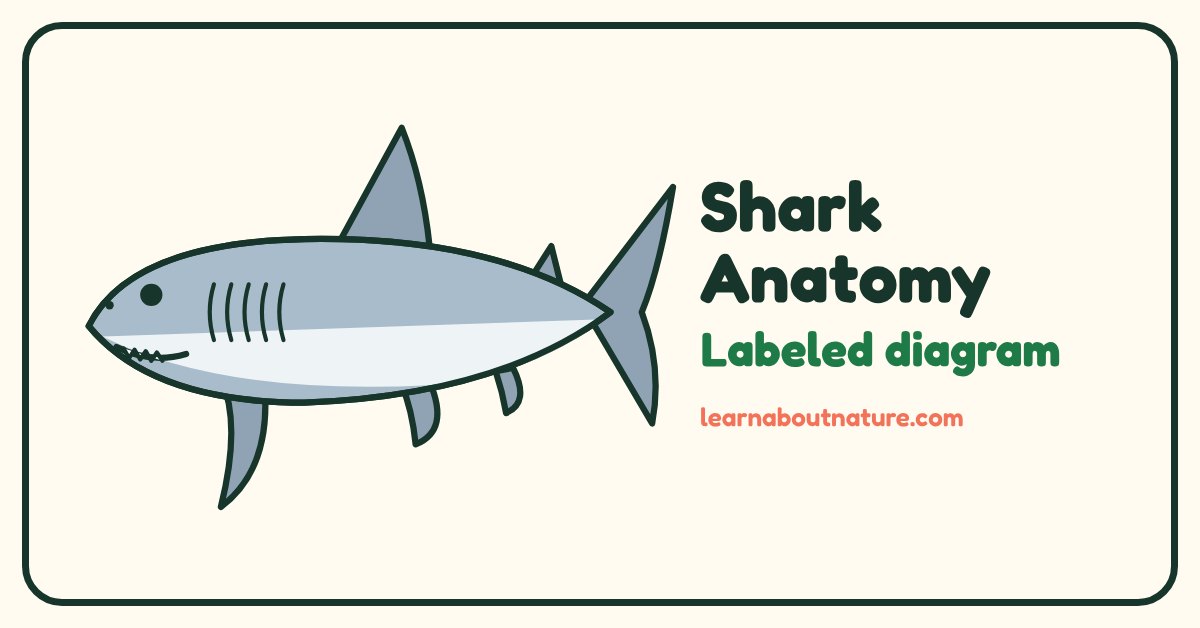
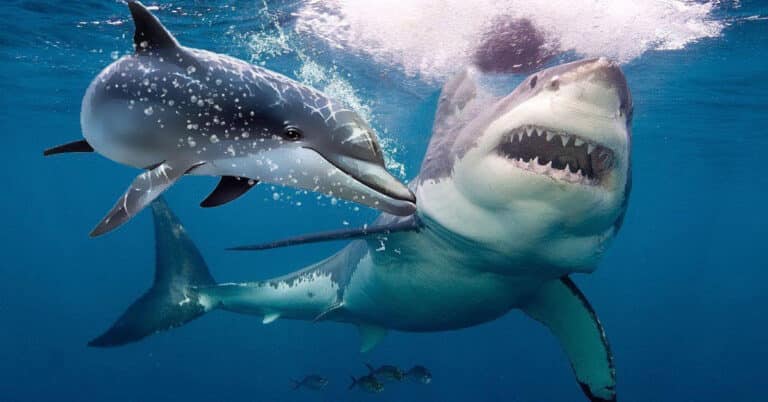
Quick answer: The main parts of a shark are its pointed snout, an underslung mouth with rows of replaceable teeth, eyes, five to seven gill slits on each side, a first and usually second dorsal fin, paired pectoral and pelvic fins, often an anal fin, and a caudal (tail) fin, all covered in tooth-like skin scales.
Sharks have been swimming in the oceans for more than 400 million years. Their bodies are built for efficient swimming and finding prey, with senses that can pick up smells, sounds and even tiny electric signals in the water.
There are more than 500 species of shark, from the small dwarf lanternshark to the huge whale shark. This guide explains the parts most sharks share, using a typical open-water shark such as a requiem shark as the model.
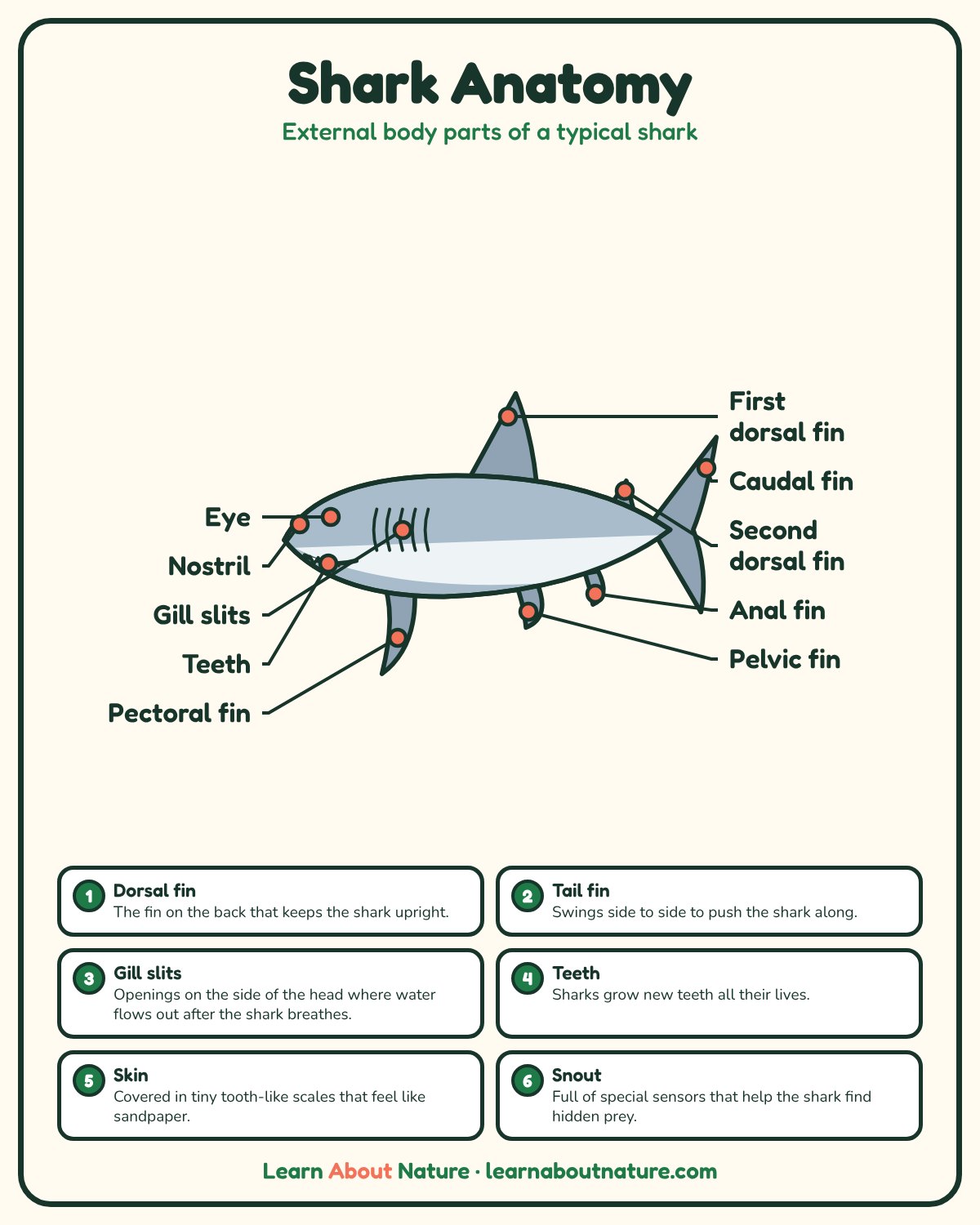
Teachers and students: you’re welcome to use this diagram in lessons and projects with credit to Learn About Nature.
Free printable: Download the Shark Anatomy labeling worksheet (PDF) – label the parts using the word bank. Answer key included.
Parts of a Shark and What They Do
| Part | What it does |
|---|---|
| First dorsal fin | Keeps the shark stable and stops it rolling |
| Second dorsal fin | Adds extra stability |
| Caudal fin (tail) | Pushes the shark forward |
| Pectoral fins | Give lift and help steer |
| Pelvic fins | Add stability; form claspers in males |
| Anal fin | Helps with balance (missing in some sharks) |
| Gill slits | Let water flow out after oxygen is taken in |
| Spiracle | Opening behind the eye that draws in water in many sharks |
| Snout and nostrils | Smell the water; hold electrical sensors |
| Mouth and teeth | Catch and cut prey; teeth are replaced throughout life |
| Eyes | See well in dim light |
| Dermal denticles | Tooth-like scales that protect the skin and smooth water flow |
| Liver | Large and oily; helps the shark float |
The Shark Body Plan
A shark is a cartilaginous fish. Its skeleton is made of cartilage, the same tough, bendy material that shapes your nose and ears. Cartilage is lighter than bone, which helps a shark stay afloat. Parts that need extra strength, such as the jaws and backbone, are hardened with calcium.
Most sharks have a torpedo-shaped body that tapers at both ends. This shape cuts down drag so the shark can swim smoothly. Bottom-dwelling sharks such as angel sharks are flatter, and hammerheads have a wide, flattened head.
Shark Fins
Shark fins are stiff and cannot fold down flat the way many bony fish fins can. Each one has a job in steering or balance.
- First dorsal fin: the large fin on the back. It keeps the shark steady and stops it rolling.
- Second dorsal fin: a smaller fin farther back that adds stability. A few sharks have only one dorsal fin.
- Caudal fin: the tail. It gives most of the forward push. In many sharks the upper lobe is longer than the lower one. Fast swimmers like makos have a crescent-shaped tail with two nearly equal lobes.
- Pectoral fins: large fins on the sides that give lift and help with steering, like the wings of a plane.
- Pelvic fins: smaller paired fins on the belly that add stability. In males, the inner edge of each pelvic fin forms a clasper, used in mating.
- Anal fin: a small fin under the body near the tail that helps with balance. Some groups of sharks, such as dogfish and angel sharks, do not have one.
Head, Mouth and Teeth
In most sharks the mouth is on the underside of the head, behind the snout. The upper jaw is only loosely attached to the skull, so many sharks can push their jaws forward as they bite.
Shark teeth grow in rows. Only the front one or two rows are used at a time. New teeth form behind them and move forward like a conveyor belt to replace teeth that are lost or worn, so a shark goes through thousands of teeth in its lifetime. Tooth shape matches diet: pointed teeth grip slippery fish, saw-edged teeth slice large prey, and flat teeth crush shellfish.
Gill Slits and Breathing
Unlike bony fish, sharks have no bony gill cover. Instead, you can see five to seven gill slits on each side of the head. Most sharks have five.
Many sharks breathe by pumping water over their gills with their mouth and throat muscles, even while resting on the seabed. Some active swimmers, such as great whites and makos, rely mostly on swimming forward with their mouth open, which pushes water over the gills. Many sharks also have a small opening behind each eye called a spiracle. It is largest in bottom dwellers, which use it to draw in water while lying still.
Skin: Dermal Denticles
A shark’s skin is covered in tiny scales called dermal denticles, which means skin teeth. They are built like small teeth, with a hard outer layer and a pulp inside. Rubbed from tail to head, shark skin feels like sandpaper.
On fast-swimming sharks the denticles have tiny grooves that help water flow smoothly over the body. Denticles are shed and replaced throughout the shark’s life.
Internal Anatomy: Inside a Shark
Sharks have no swim bladder. Instead, they have a very large liver filled with oil, which is lighter than seawater and helps keep them buoyant. In some species the liver makes up about a quarter of the shark’s body weight. Many sharks still sink slowly if they stop swimming, and their pectoral fins give lift as they move.
A shark’s heart has two main chambers, like a bony fish’s heart, and pumps blood in a single loop through the gills and then the body. Its intestine contains a corkscrew-shaped fold called a spiral valve, which gives food more surface area to be absorbed in a short gut.
Shark Senses
- Smell: sharks draw water through nostrils on the underside of the snout. These are used only for smelling, not breathing, and can detect very small amounts of blood or other chemicals.
- Hearing: inner ears inside the head pick up low-pitched sounds from far away.
- Lateral line: a line of sense organs along each side that feels movement and vibrations in the water.
- Electroreception: tiny jelly-filled pores on the snout, called ampullae of Lorenzini, sense the weak electric fields made by the muscles of other animals. This helps sharks find prey hidden in sand.
- Sight: many sharks see well in dim light thanks to a mirror-like layer at the back of the eye. Some have a protective eyelid, called a nictitating membrane, that closes as they bite.
Sharks vs Bony Fish
Sharks and bony fish both live in water, breathe with gills and swim with fins, but there are clear differences. Bony fish have a skeleton of bone, a gill cover, flat overlapping scales and usually a swim bladder. Sharks have a cartilage skeleton, open gill slits, tooth-like denticles and an oily liver instead of a swim bladder.
The closest relatives of sharks are rays and skates. Rays are like flattened sharks, with gill slits on the underside of the body and pectoral fins spread out like wings.
Fun Facts About Shark Bodies
- Shark fossils are mostly teeth, because cartilage rarely fossilizes.
- Whale sharks, the biggest fish in the world, filter tiny plankton from the water instead of biting prey.
- A hammerhead’s wide head spreads out its eyes and electrical sensors, which may help it scan the seabed.
Shark Anatomy for Kids
- Dorsal fin: the fin on the back that keeps the shark upright.
- Tail fin: swings side to side to push the shark along.
- Gill slits: openings on the side of the head where water flows out after the shark breathes.
- Teeth: sharks grow new teeth all their lives.
- Skin: covered in tiny tooth-like scales that feel like sandpaper.
- Snout: full of special sensors that help the shark find hidden prey.
Key words: cartilage – a tough, bendy material that forms a shark’s skeleton; dermal denticles – tiny tooth-like scales that cover a shark’s skin; gill slits – openings on the side of a shark’s head where water leaves the gills; ampullae of Lorenzini – jelly-filled pores on a shark’s snout that sense electric fields; caudal fin – the tail fin, which pushes the shark through the water; clasper – a part of a male shark’s pelvic fin used in mating.
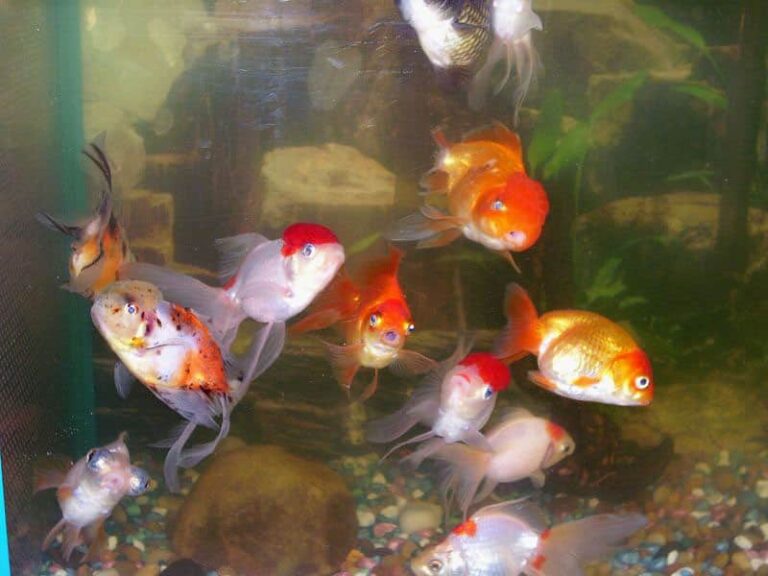
Try this: Compare a shark and a goldfish side by side using pictures. Make a two-column chart and list what is the same and what is different, including skeleton, gills, scales and how they float.
Related Guides
- Shark life cycle
- Jellyfish Anatomy
- Fish Anatomy
- Crab Anatomy
- Fish life cycle
- All animal & plant anatomy diagrams
- Animal & plant life cycles
See also: Shark Facts for Kids
Shark Anatomy FAQs
Do sharks have bones?
No. A shark’s skeleton is made of cartilage, the same flexible material found in human ears and noses. Cartilage is lighter than bone, which helps sharks float. Some parts, such as the jaws and backbone, are strengthened with calcium to make them harder.
How many gill slits does a shark have?
Sharks have five to seven gill slits on each side of the head. Most species have five. The sixgill and sevengill sharks, as their names suggest, have six or seven. Unlike bony fish, sharks have no bony cover over their gills.
How do sharks float without a swim bladder?
Sharks rely on a large liver filled with oil, which is lighter than seawater, plus a light cartilage skeleton. As they swim, their pectoral fins also create lift. Even so, many sharks slowly sink if they stop swimming.
What are dermal denticles?
Dermal denticles are tiny scales on a shark’s skin that are built like teeth. They protect the skin and, on fast sharks, have grooves that help water flow smoothly over the body. Shark skin feels like sandpaper when rubbed from tail to head.
How do sharks sense their prey?
Sharks use several senses. They smell chemicals in the water, hear low sounds from far away, feel movement with their lateral line, and use pores on the snout called ampullae of Lorenzini to sense the weak electric fields given off by other animals.
Sources: Shark Anatomy – Fisheries and Oceans Canada; Shark Anatomy – Hawaii Division of Aquatic Resources; All About Sharks – American Museum of Natural History (OLogy)

Nato is a content writer and researcher with a background in psychology who’s eager to explore the wonders of nature. As a travel enthusiast and animal lover, she hopes to inspire others to discover and cherish the beauty and importance of the natural world. She also writes about the history of candy and snacks for Snack History and about food and healthy eating for The Fitchen.