Milkweed Tortoise Beetle
|

Milkweed Tortoise Beetle


Food:

Beetles feed on the foliage of morning glories and related plants. Enjoy milkweed, raspberry, maize, and sweet potato. Also known to feed on the bindweed- a lawn weed.

Larva feeds on foliage, as well. When fully grown, they drop to the ground, burrow in, pupate, and over winter. They emerge as the adult beetle in midsummer.

Damage:

Beetles eat holes in the foliage. Considered a garden pest.

Identify

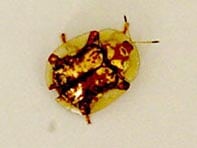
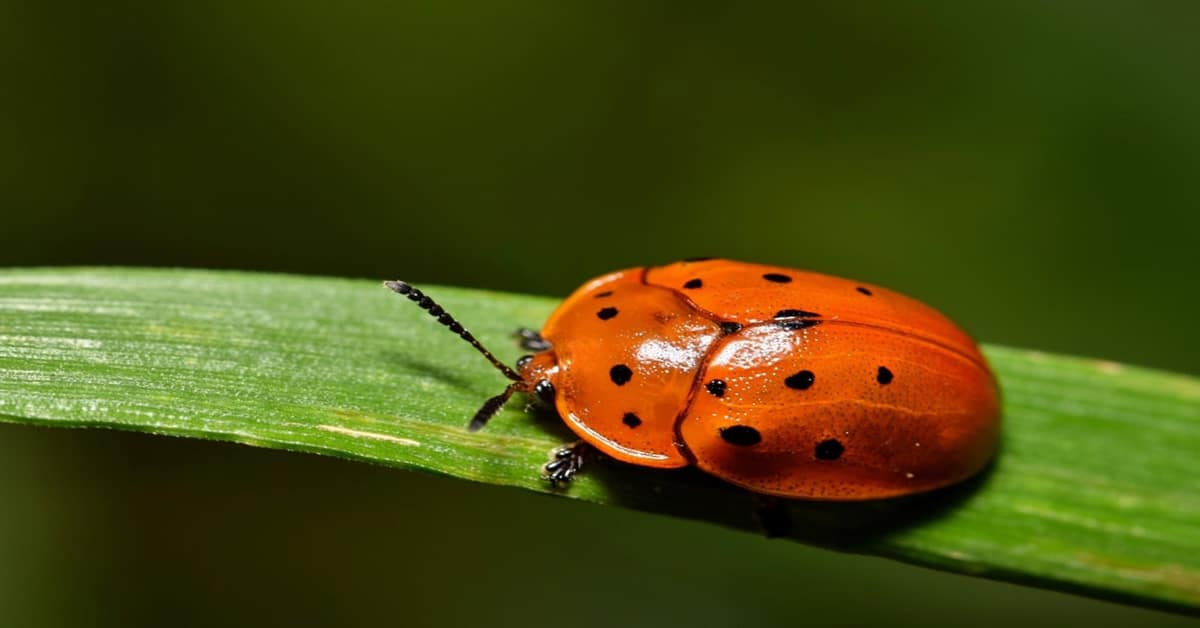
Oval, convex. Yellow or golden color with transparent edges. Elytra have 12 black spot or no spots. Capturing the Tortoise beetle causing it to change colors. The color is produced by an optical illusion; the outer cuticle is transparent and reflects light through a layer of liquid over the next layer of cuticle. The beetles change color depending on the availability of the liquid layer. In the fall and winter, the beetles become less lustrous and are more orange and bronze with flashes of iridescent color. If you try and collect the beetle for an insect collection, the beetle soon turns dark brown as is dries, loosing the golden color. Stress is also factor. As a defense mechanism the beetles may change color. The larva are yellow to orange in color.
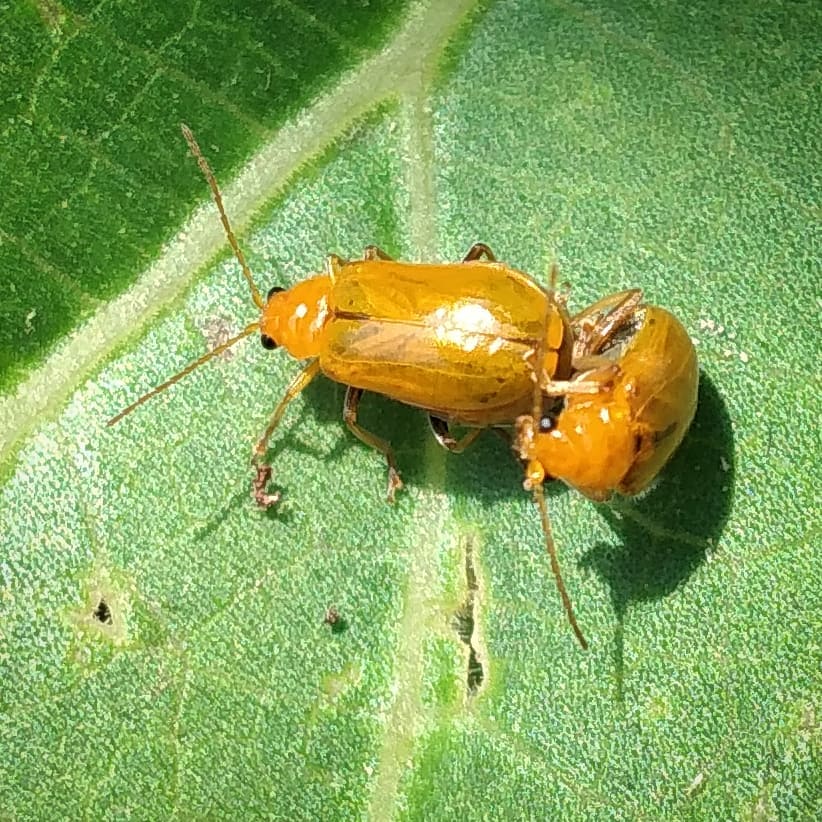
Milkweed Tortoise Beetle
MILKWEED TORTOISE BEETLE

Location

Found throughout North America usually in meadows, grassy areas and gardens.

READ MORE:  How to Get Rid of Weevils

More information can be found at: Garden Friends and Foes
An article by Tom Murray. Thanks Tom!
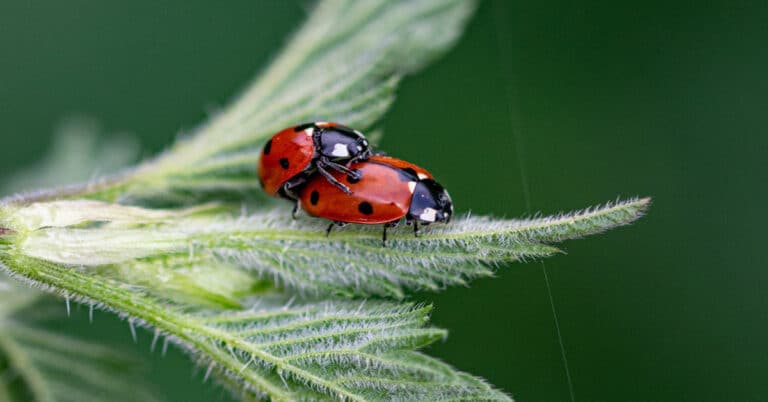
Golden Ladybug
Golden Ladybug Photo by Suzanne Downing

The Clavate Tortoise Beetle

Goldenbeetle 2
Photo by Ian R. W


In March of 2003, Ian sent this photo with a request for help in identifying them. These beetles were found INSIDE his house. We accepted the assignment and solved the mystery.
Thanks, Ian!


Damage:

Beetles eat the foliage. Considered a garden pest.

Interesting Characteristic:

The beetle pulls in its antennae when threatened, just like a turtle pulls in its head.

Identify

Almost circular, nearly convex resembling a flat turtle-like shell. Brownish yellow or golden color with transparent edges. Elytra have brown patches.

Location

Found throughout North America, the UK and Eastern Africa usually in meadows, grassy areas and gardens.

Food

Beetles feed on the foliage of morning glories and related plants. Enjoy milkweed, raspberry, maize and sweet potato.

READ MORE:  Glow Worms

The eggs are deposited on the leaves which the larva eat except for the veins. When full grown, they drop to the ground, burrow in, pupate and over winter. They emerge as the adult beetle in midsummer.
Similar Posts

  • Ladybug Facts

    A Ladybird FAQ Even More Fun Facts: Randy Jones Having discovered a fondness for insects while pursuing her degree in Biology, Randi Jones was quite bugged to know that people usually dismissed these little creatures as โ€œcreepy-crawliesโ€. READ MORE:  Ladybug Science Fair Info

  • Rice Weevil

    Scientific Classification Kingdom: Animalia Phylum: Arthropoda Class: Insecta Order: Coleoptera Family: Curculionidae Subfamily: Dryophthorinae Genus: Sitophilus Species: S. oryzae Binomial name: Sitophilus oryzae The rice weevil, scientifically named Sitophilus Oryzae is a severe pest found in stored granary products. It is harmful to many crops like rice, wheat, and maize. Description The fully grown rice…

  • Boll Weevil

    Scientific Classification Kingdom: Animalia Phylum: Arthropoda Class: Insecta Order: Coleoptera Family: Curculionidae Subfamily: Curculioninae Tribe: Anthonomini Genus: Anthonomus Species: A. Grandis Binomial name: Anthonomus Grandis The Boll weevil beetle is scientifically named Anthonomus Grandis, and it feeds on flowers and cotton buds. It is supposed to be endemic to Central America. Late 19th century, it…

  • Spider Beetles

    Scientific Classification Kingdom: Animalia (Animals) Phylum: Arthropoda (Arthropods) Subphylum: Hexapoda (Hexapods) Class: Insecta (Insects) Order: Coleoptera (Beetles) Suborder: Polyphaga (Water, Rove, Scarab, Long-horned, Leaf and Snout Beetles) Superfamily: Bostrichoidea (Carpet, Powder-post and Death-watch Beetles) Family: Anobiidae Subfamily: Ptininae (Spider Beetles) Tribe: Ptinini Genus: Ptinus No Taxon: (Subgenus Ptinus) Species: (Spider Beetle) Spider beetles belong to…

  • Ladybug Infestation – There’s Ladybugs In My House

    Ladybugs are Everywhere! Ladybug Infestation. They can infest your house in the winter instead of finding a home outside. Hippodamia convergentย ladybugs congregate together in the fall to hibernate. These ladybugs can be found most often in the upper elevations of the Sierra Nevadas, Rocky, Appalachian, Blue Ridge Mountains, and other mountainous areas throughout the United…

  • Leaf Beetle

    Scientific Classification Kingdom: Animalia Phylum: Arthropoda Class: Insecta Order: Coleoptera Suborder: Polyphaga Superfamily: Chrysomeloidea Family: Chrysomelidae The Chrysomelidae family is a group of beetles, that is commonly referred to as Leaf Beetles. This family comprises of more than 35,000 species, classified into over 2,500 genera. Hence, it is considered one of the most common and…