Rove Beetle

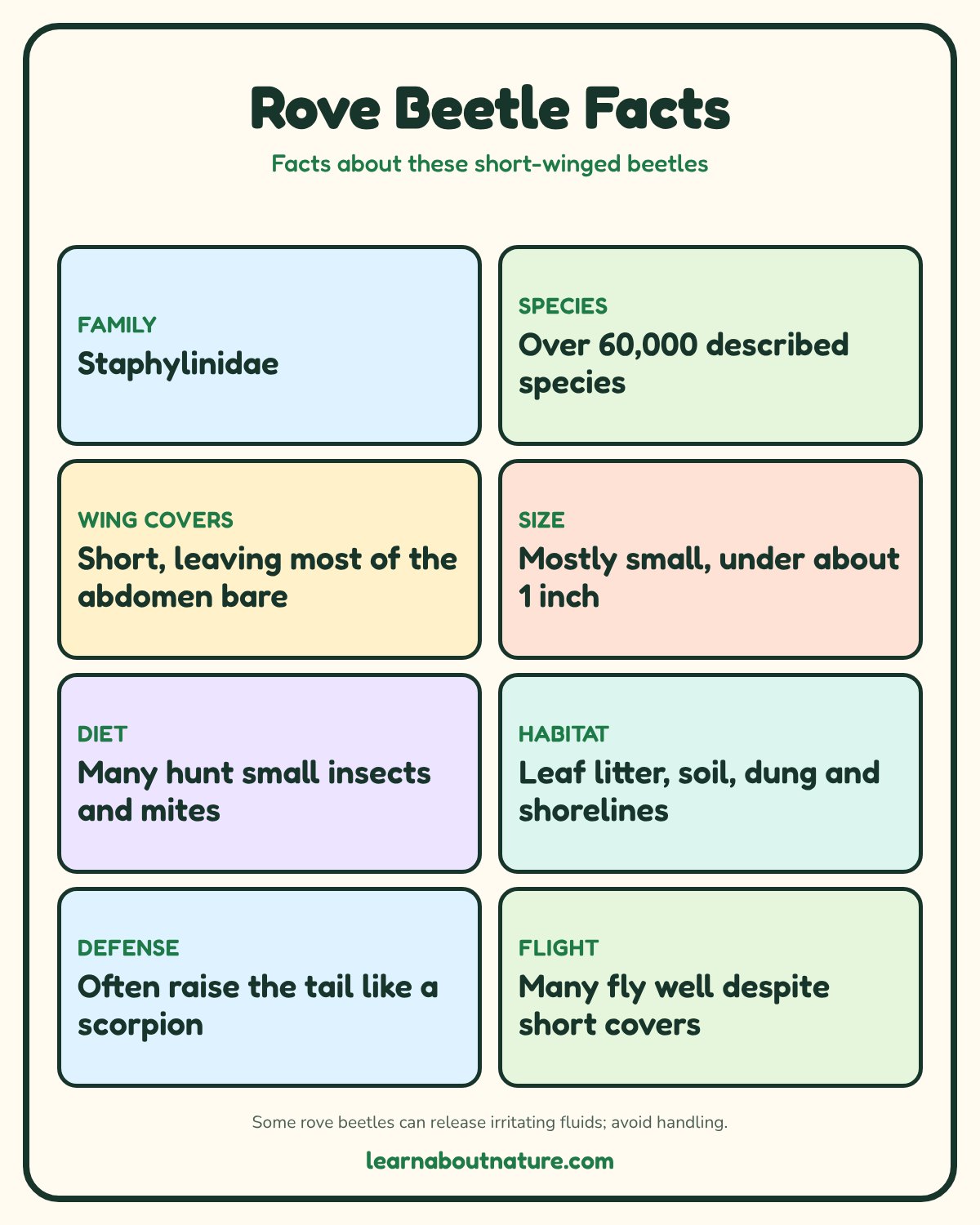
Rove beetles are a huge family of mostly small, slender beetles with very short wing covers that leave most of their abdomen showing. With more than 60,000 known species, they make up the largest family of beetles on Earth.
Rove beetle Quick Facts
| Common name | Rove beetle |
| Scientific name | Staphylinidae |
| Kingdom | Animalia |
| Phylum | Arthropoda |
| Class | Insecta |
| Order | Coleoptera |
| Type | Insect (beetle family) |
| Diet | Mostly small insects and mites; some eat fungi or pollen |
| Habitat | Damp places: leaf litter, compost, dung, shores, fungi |
| Native range | Worldwide except Antarctica |
| Size | Under 1 mm to about 3 cm; most 2-8 mm |
| Special feature | Very short wing covers that leave the abdomen exposed |
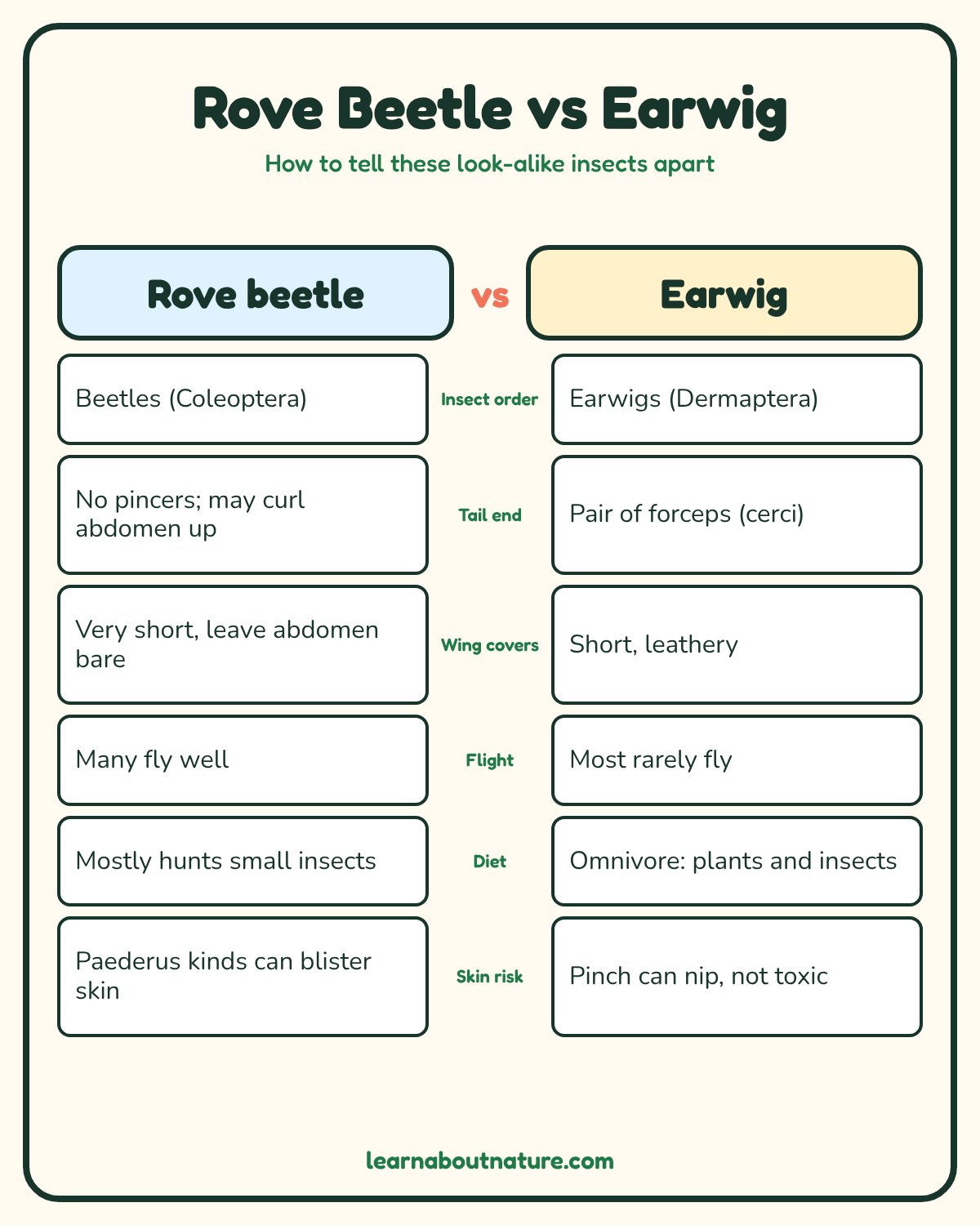
Many people mistake them for earwigs, but rove beetles have no pincers at the tail end. One of the best known species in Europe is the devil’s coach horse, a big black rove beetle that raises its tail like a scorpion when it feels threatened.

Do Rove Beetles Bite?
Most rove beetles are harmless, though large species like the devil’s coach horse can give a mild pinch if handled. The real concern is Paederus rove beetles: they do not bite or sting, but if crushed on skin they release pederin, a toxin that causes a painful blistering rash called Paederus dermatitis.
What Do Rove Beetles Look Like?
Most rove beetles are long and narrow, with a bendy abdomen they can curl up and move freely. Their wing covers (elytra) are short, usually covering only the first few segments of the body. Underneath, they hide a pair of full-sized flying wings, folded up in a clever origami-like pattern.
They come in many sizes. Most are only 2 to 8 mm long, and some are less than 1 mm. The largest, such as the devil’s coach horse, can reach about 3 cm. Most species are black or brown, but some are reddish, yellowish or even shiny metallic blue or green. Their antennae are usually thread-like, sometimes with a slightly thicker tip.
Where Do Rove Beetles Live?
Rove beetles live on every continent except Antarctica, from rainforests to seashores and mountaintops. They like damp places with plenty of food, such as:
- leaf litter and moss on forest floors
- compost heaps and rotting plants
- under stones, logs and bark
- in fungi and mushrooms
- in dung and on dead animals
- along the edges of ponds, rivers and beaches
- inside ant and termite nests
What Do Rove Beetles Eat?
Most rove beetles, both adults and larvae, are fast-moving predators. They hunt mites, springtails, fly maggots, small caterpillars, aphids and other tiny animals. Some species eat fungi, mold or pollen instead.
A few rove beetles have very unusual lifestyles. Some live as guests inside ant nests, fooling the ants with special chemical smells so the ants feed them or leave them alone. Larvae of the genus Aleochara are parasites of fly pupae: they find a pupa in the soil, chew their way in and eat the developing fly.
Life Cycle
Rove beetles go through complete metamorphosis: egg, larva, pupa and adult. Females usually lay their eggs in soil, leaf litter, rotting material or other damp places. The larvae look a bit like small, wingless versions of the adults and are usually active hunters. When fully grown, they make a small chamber in the soil or litter and pupate. In many species the whole cycle takes only a few weeks or months, and adults of larger species can live for a year or more.
Behavior and Defenses
Rove beetles move quickly and often run with their abdomen curled up over their back. This makes them look like a scorpion, which may scare off predators, even though they cannot sting. Many species also have glands at the tip of the abdomen that release bad-smelling chemicals.
Despite their tiny wing covers, most rove beetles fly well. After landing, they use the tip of their flexible abdomen to tuck their wings back underneath.
Paederus Rove Beetles: Look, Don’t Touch
A group of small, orange-and-black rove beetles called Paederus carries a powerful toxin called pederin in its body fluids. These beetles do not bite or sting, but if one is crushed or rubbed on the skin, the toxin can cause red, painful blisters called Paederus dermatitis. They are common in warm countries and are often attracted to lights at night.
If one lands on you, gently blow it away or brush it off with a piece of paper instead of slapping it. If you touch one, wash the area with soap and water and avoid rubbing your eyes.
Are Rove Beetles Good or Bad?
For gardeners and farmers, rove beetles are mostly helpful. They eat many pests, including aphids, mites and the eggs and maggots of flies. Some Aleochara species attack the root maggots that damage cabbages, onions and other vegetables. Rove beetles also help break down dung, dead animals and rotting plants, recycling nutrients back into the soil.
There is no need to control rove beetles in a garden. The only ones to be careful with are Paederus beetles indoors. Closing screens, turning off unnecessary lights at night and gently sweeping beetles outside is usually enough.
Amazing Facts About Rove Beetles
- Rove beetles are a very ancient group. Fossils show they were already around more than 200 million years ago, in the Triassic period, when the first dinosaurs lived.
- Some rove beetle lineages have changed very little in shape for tens of millions of years.
- Scientists think many tropical rove beetle species have not been discovered or named yet.
- A rove beetle called Stenus can shoot a chemical from its rear that lowers the surface tension of water, zooming it across a pond like a tiny speedboat.
Paederus Dermatitis: Symptoms and Treatment
Paederus dermatitis (also called blister beetle dermatitis or Nairobi eye) happens when someone swats or crushes a Paederus beetle on their skin. Symptoms usually appear 12 to 36 hours later:
- A red, burning line or streak where the beetle was smeared
- Small blisters that may join together
- Kissing lesions where two skin surfaces touch, such as in a skin fold or elbow crease
- Eye swelling and redness if the toxin is rubbed into the eye
If a beetle lands on you, blow or brush it off instead of crushing it. If you touch one, wash the skin right away with soap and water. Cool compresses help with burning. A doctor may suggest steroid creams, and should be seen if the rash is large, near the eyes or becomes infected. The rash usually heals in one to three weeks, sometimes leaving darker skin for a while.
How to Avoid Paederus Beetles
Paederus beetles are small (about 7–10 mm), with an orange body and black head, wing covers and tail tip. They live in damp places like rice fields and riverbanks and are attracted to lights at night, especially in warm, rainy seasons in Africa, Asia, Australia and South America.
- Use screens on windows and doors.
- Turn off unnecessary outdoor lights or use yellow bulbs.
- Sleep under a bed net in affected areas.
- Shake out bedding and clothing before use.
Rove beetle FAQs
Do rove beetles bite or sting?
Rove beetles cannot sting. Larger species like the devil’s coach horse may give a small pinch with their jaws if handled roughly, but they are harmless. Paederus rove beetles can cause skin blisters if crushed, so do not swat them.
What is the difference between a rove beetle and an earwig?
Both are long and slim, but earwigs have a pair of pincers at the tail end. Rove beetles have no pincers. They have very short wing covers and often curl their abdomen upward.
Can rove beetles fly?
Yes. Most rove beetles have full-sized wings folded under their short wing covers, and they fly well.
Are rove beetles good for the garden?
Yes. Most rove beetles hunt garden pests such as aphids, mites and fly maggots, and they help recycle rotting material. There is no need to get rid of them.
How many kinds of rove beetles are there?
More than 60,000 species have been described, making rove beetles the largest beetle family. Many more probably remain undiscovered in tropical forests.

Randi Jones is the owner and founder of the Nature Gift Store, an online retailer specializing in nature-themed gifts, educational science projects, live animal nature kits and real butterfly artwork. A biology graduate who fell in love with insects, she founded the company in 2001 to make active learning about nature fun, accessible and engaging for children and adults. Her store offers real butterfly frames, home and garden decor and educational live animal kits, including ant farms, worm farms, tadpoles, ladybugs and hermit crabs, and she runs a bug museum in Washington featuring live animals like Eddie the Iguana alongside other reptiles and insects. Randi wrote most of the guides on this site. They first appeared on her long-running nature sites, including Monarch-Butterfly.com, Ladybug-Life-Cycle.com, Frog-Life-Cycle.com, Dragonfly-Site.com and Butterfly Pictures, which have now been brought together here at Learn About Nature.