Difference Between Turtles and Tortoises?
Turtles are some of the oldest creatures on planet earth, first showing up in our fossil records around 230 million years ago during the late Triassic, though many scientists believe they could have come about long before that.
In fact, some believe they date as far back as 300 million years during the Carboniferous period.
Turtles were much, much different back then.
Though they had round builds like turtles and tortoises of today, their limbs and necks were much longer, and they lacked that protective shell they’re now known for.
Like most animals of their time period, turtles evolved in water.
After millions and millions of years of evolution, the first turtles decided to make their homes on land, eventually becoming tortoises.
There are currently 356 recognized species of turtles in the world, 49 of which belong to the tortoise family. There are also 25 species of softshell turtles, which are an incredibly unique family of reptiles, as well as seven species of sea turtles that exist across the globe.
Key differences between turtles and tortoises
It is believed that tortoises separated their lineage from turtles between 55-and-60 million years ago, and have been land dwellers ever since.
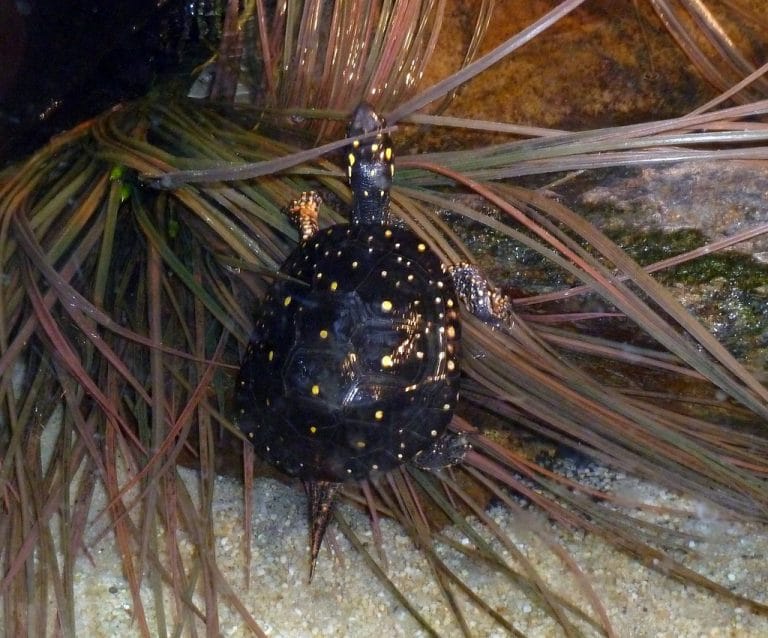
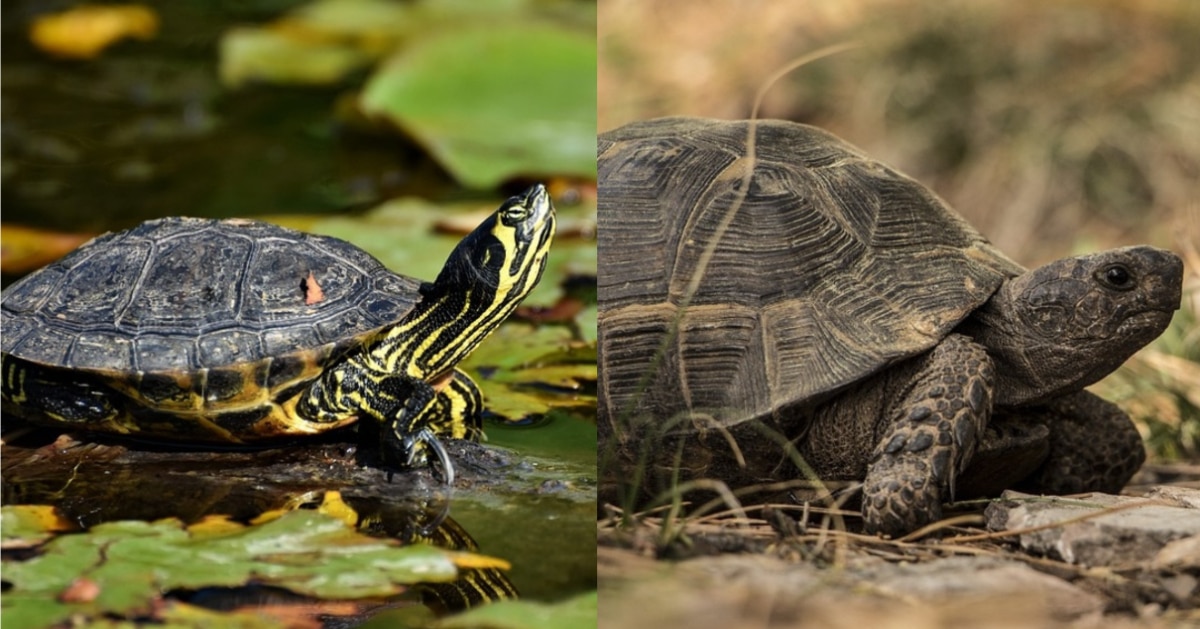
That is the biggest difference between turtles and tortoises; turtles are aquatic or semi-aquatic (live in water), while tortoises are terrestrial (live on land).
But, their differences don’t stop there.
Many people confuse turtles for tortoises and vice versa, and it’s easy to see why given their body structures and appearance.
But they are indeed very different from one another.
We’ll start by stating that tortoises are a type of turtle, though turtles are not tortoises. It’s much like the difference between frogs and toads.
In contrast to their respective habitats, another big difference between turtles and tortoises is their feet.
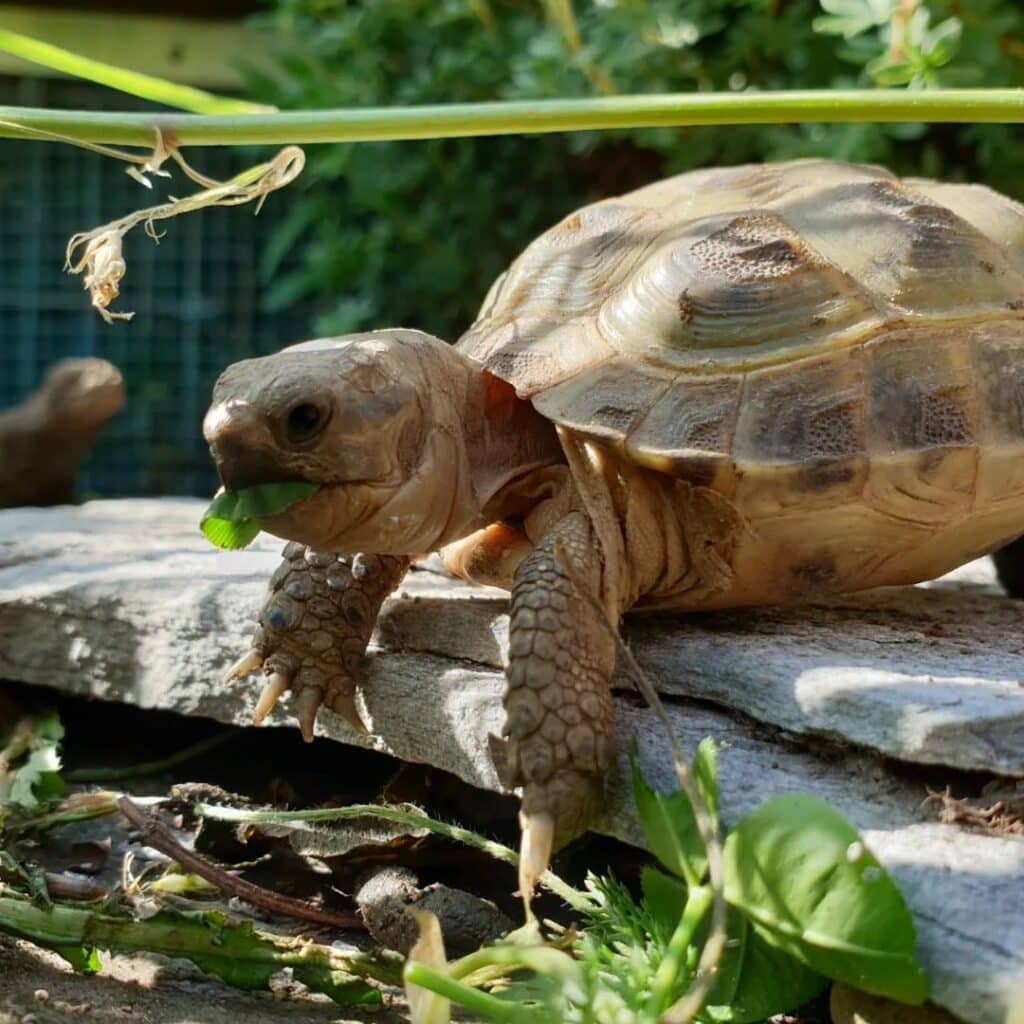
Turtles plant their feet as they walk, and their feet are generally webbed to aid them in swimming, while tortoises have flatter feet and walk on their toes much like that of an elephant.
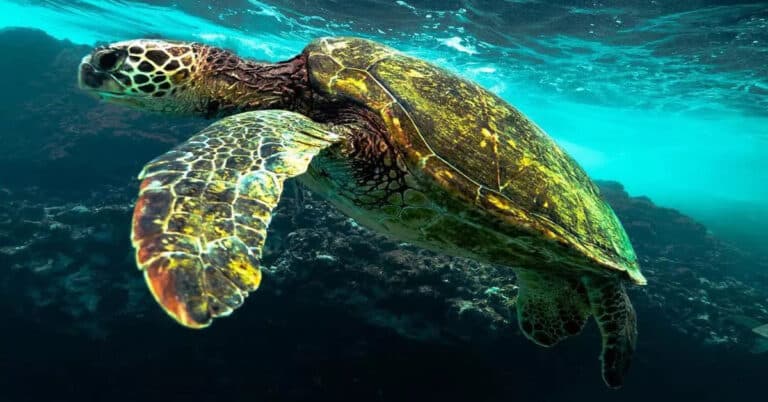
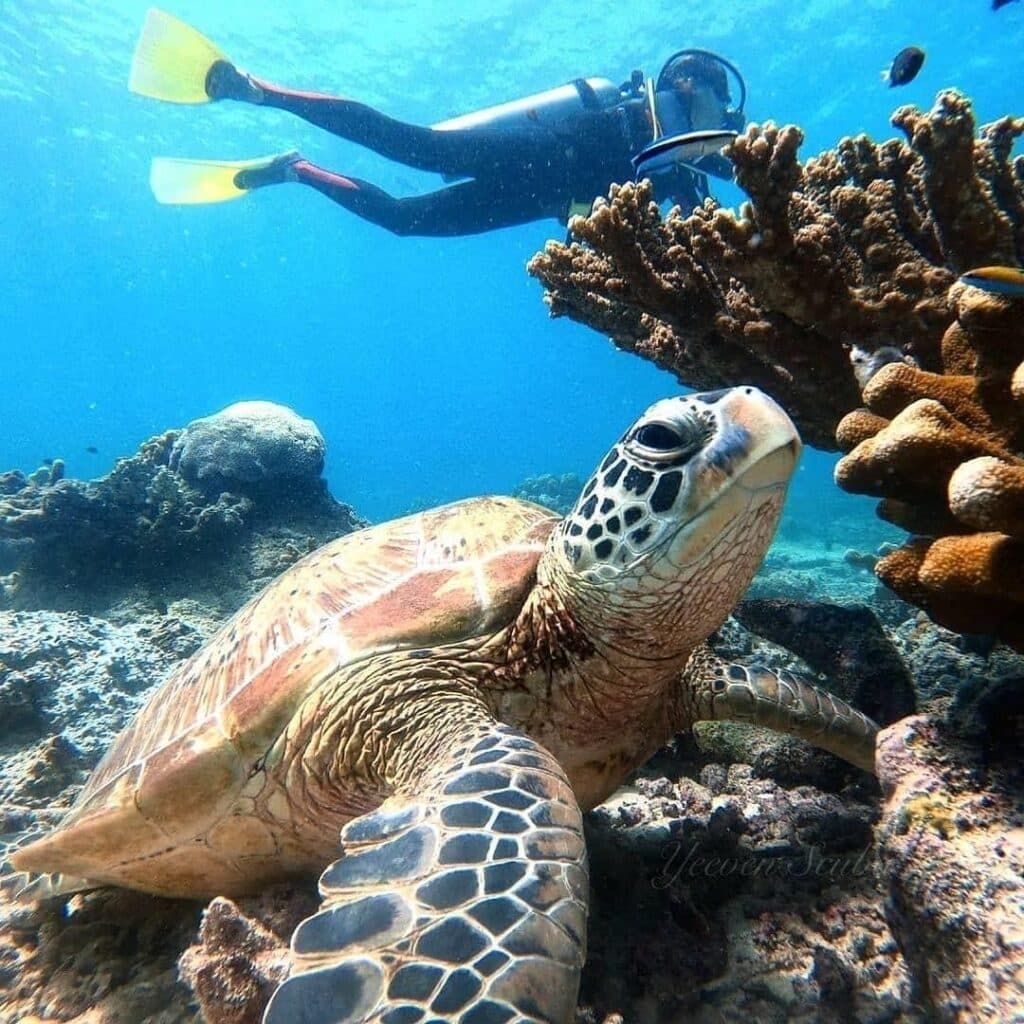
Then we have sea turtles that are quite different than both other aquatic turtles and tortoises. They do not have claws at the end of their hands and feet. Instead, they have just two claws on the front of their flippers which helps them glide along the sea floor.
Turtles and tortoises both lay eggs, with the number of eggs laid differing between species and genus. Tortoises can lay as few as one egg per clutch and up to 30.
On the other hand, the most common pet turtle, red eared sliders, lay anywhere from 10-to-30 eggs in a clutch.
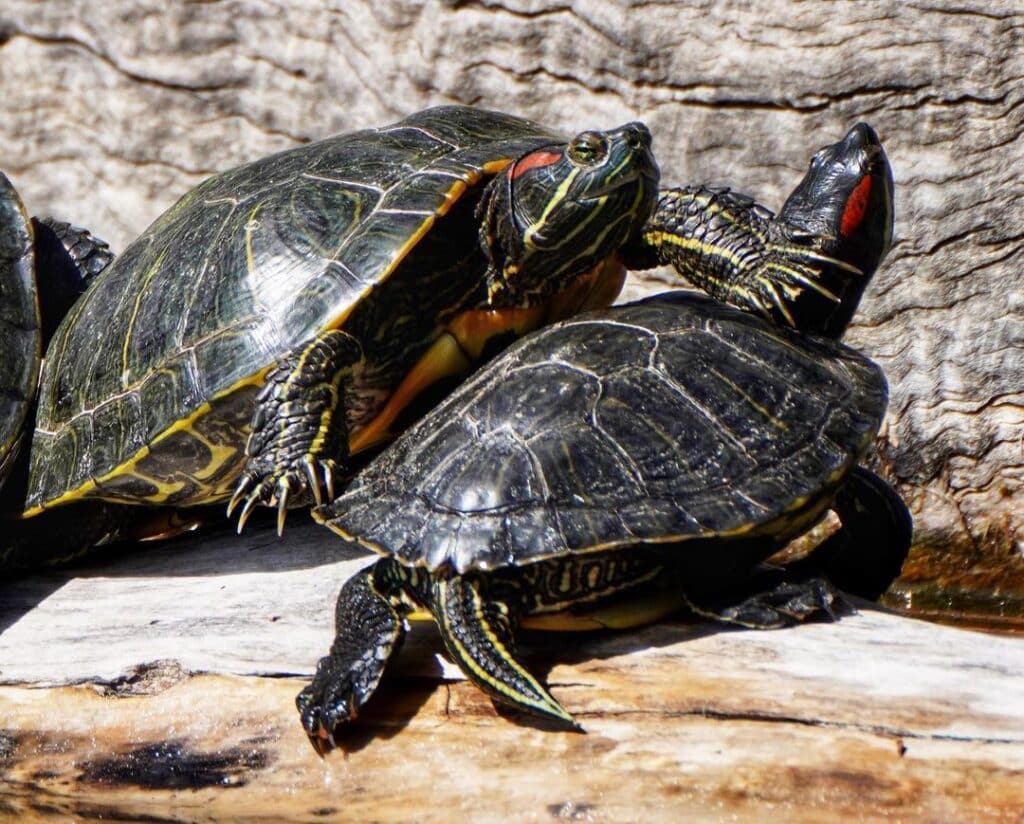
Box turtles lay 3-to-9 eggs at a time, snapping turtles can lay 20-to-40, mud turtles lay between just 2-to-5, hawksbill turtles average 140-to-160 in a clutch, and green sea turtles, as well as leatherback sea turtles lay an average of 100-to-120 at a time.
The largest clutch ever recorded was produced by a green sea turtle, and that particular mother laid a whopping 238 eggs. This is however a very rare occurrence.
Then we have softshell turtles, which again, depending on the species, can lay anywhere from 10-to-70 eggs in a single clutch.
Tortoises are caring mothers, protecting their young for up to 80 days following the date of them hatching, while turtles are on their own from the moment they hatch.
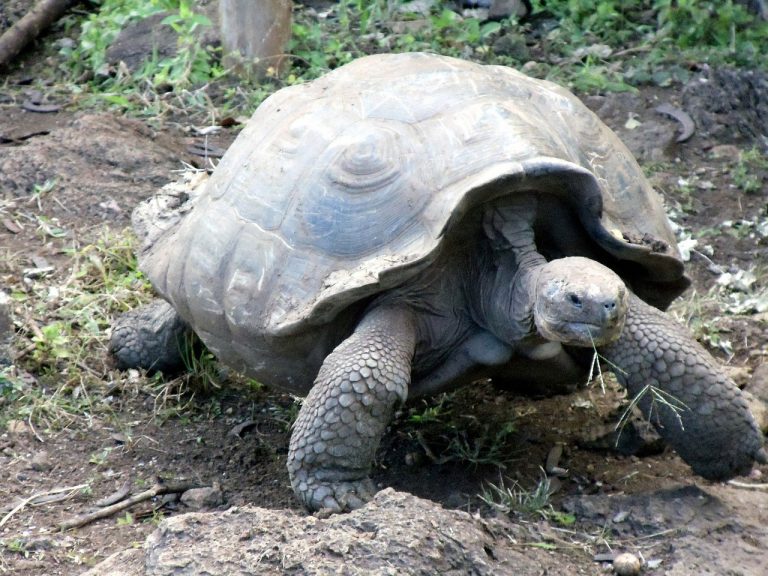
Turtles often times have flatter shells than tortoises, who have more dome-shaped shells, box turtles being the exception as they also have domed shells. Turtle shells are also lighter in weight than tortoise shells, both features of which aid them in swimming.
Tortoises are mostly herbivorous with plants making up well over 90% of their diet, while many turtles are omnivorous with most of their diets consisting of plants, as well as meat such as crustaceans, insects, and fish.
Though some species only live an average of about 20 years, it isn’t at all uncommon for both turtles and tortoises to exceed well over 100 years in age.
Tortoises do however oftentimes live longer than turtles, the oldest ever recorded having just turned 190 years old this past December.
Another difference between turtles and tortoises is that some turtles from cooler climates hibernate every winter, while tortoises are not known to hibernate, as they’re all from warmer climates.
Now let’s talk about their similarities:
As you probably already knew, and as you’ve learned by now had you not already known, turtles and tortoises are both protected by a shell that encases their bodies, though we must make another exception as softshell turtles aren’t so lucky to have this feature.
As their reproductive process causes them to lay eggs, turtles and tortoises also both dig burrows on land to lay their eggs in. Once they’ve hatched, turtles will immediately find a water source, which is always nearby the nest, while tortoises of course do not.
The only time you’ll see a tortoise near water is if it needs a drink, and for an occasional bath. Aside from that, you will never see a tortoise in water, as they cannot swim.
We’ve all heard stories about people finding tortoises in the wild and tossing them in a body of water, as they believe they’re helping the animal get back to its home.
Be sure to never, ever do this, unless you know for sure it’s a turtle and not a tortoise. If it is indeed a tortoise, it will die from being submerged.
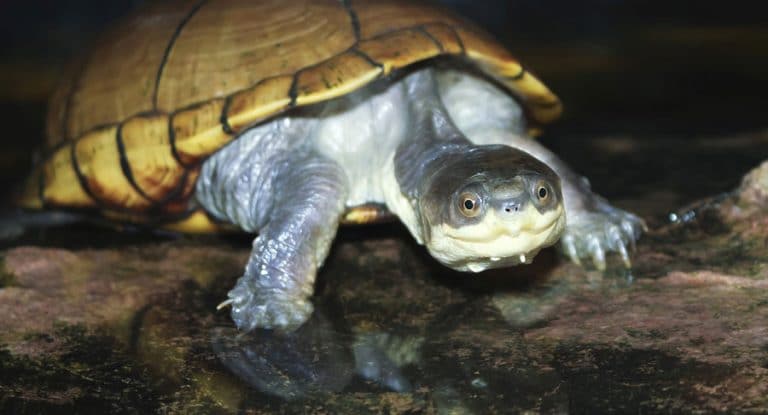
You may be thinking, ‘box turtles look more like tortoises than turtles, so can they swim?’ The answer is yes, all turtles that are not true tortoises are capable and skilled swimmers.

I started writing in the fourth quarter of 2018. I wrote solely about MMA and boxing up until October of 2022, where I began writing about animals; primarily dangerous, venomous species. They’ve always fascinated me. Considering, my goal is to make a living by teaching people about these wonderful creatures. You can check out my Facebook page, where every article I’ve ever written currently sits, or you can check out my Twitter page, where I’ve shared all of my animal pieces to date.