Facts About Turtles
Turtles are reptiles under the Testudines or Chelonii classification. The peculiarity of this variety is that it has a cartilaginous or bony shell, grown from their ribs which functions like a shield. Turtles trace back to the Chelonian class altogether (American English) or they belong to fresh water and sea dwelling chelonians (British English).
The class Testudines or Chelonii comprises of the extinct class and extant (living). The primitive turtles dated back to 220 million ago, which means that turtles are one among the ancient groups of reptiles, older than snakes, lizards or crocodiles. Among the various varieties existing today, certain turtles are very much dying out.
Turtles are ectotherms-The temperature within the turtles change by the surrounding conditions. Most of us know turtles as generally cold-blooded animals. But the body temperature of the leatherback sea turtles is comparatively higher than the surrounding water temperature, this is because of their high metabolic rate
Together with mammals and other reptiles (inclusive of birds), you can group Turtles among the amniotes. Similar to the other amniotes, turtles never lay eggs under water and they breathe air, even though several other varieties live around or in water.
Chelonian is a Catchy, trendy name for any member belonging to the great order Chelonia’ this comprises of all the extinct and living turtles, and their immediate ancestors. Chelonia derives from the Greek word kelone, for amour.
Based on the region, the word Chelonian has different meanings. In Great Britain, they call only the sea-dwelling variety as turtles and not the tortoises, In North America, they classify all chelonians including tortoises and terrapins as turtles.
The Largest Leatherback Found
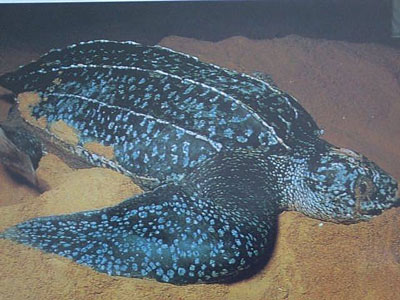
The leatherback sea turtle (Dermochelys coriacea) is the largest Chelonian existing. The length of its shell reaches 200 cm (6.6ft) and weighs well over 900 kg (2,000 lb). Fresh water turtles are normally smaller, but among the largest variety,you hear reports of the Asian Softshell turtle “Pelochelys cantonil”, attaining 200 cm (6.6 ft) Archelon ischyros, a recent Cretaceous sea turtle, have attained a length of 4.6 m(15 ft)
Specked padloper tortoise is the smallest turtle from South Africa, with a length of about 8 cm (3.1 in); its weight is almost 140 gm(4.9 oz). The musk turtle and the American mud turtle are the other two small varieties of turtles that live in the regions from South America to Canada.
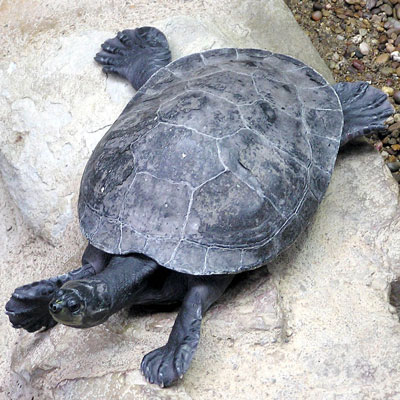
The two classifications of turtles depend on the method they develop in finding a solution to the difficulty of withdrawing their necks into their shell, one is the Pleurodira, it contracts its neck to the side, the other, cryptodira can draw its neck in while contracting it under its spine.
The beak of the turtle is inflexible; it cuts and chews food with its jaws. In place of teeth, a horny ridge covers its lower and upper jaws.. The ridges of the carnivorous turtles are as sharp as a knife meant for slicing through their prey, whereas the herbivorous turtles have serrated ridges that help them to cut through tough plants. Quite different from most of the reptiles, the turtle cannot stick out its tongue to trap its prey, they use their tongues to swallow food.
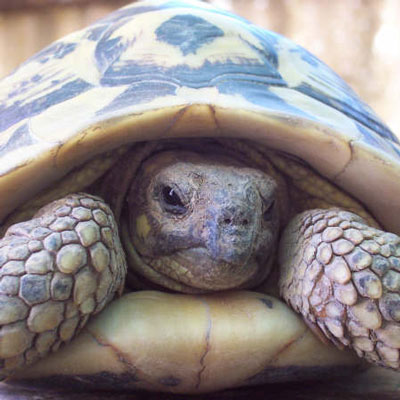
The lower shell of the turtle that encloses the belly is known as the plastron and the upper shell is known as the carapace. The plastron and the carapace join together on the sides of the turtle by bony constructions or “ bridges.” It is impossible for the turtle to crawl out of the shell, because nearly 60 bones including the ribs and backbone, form the inner layers of the shell.. In many turtles, horny scales known as scutes, an integral part of the outer skin or epidermis, encloses the external layer of the shell. It is the fibrous protein keratin that forms the scutes and the scales of other reptiles. These scutes overlap the joints between the shell bones, thereby strengthening the shell. Horny scutes are absent in the leatherback sea turtle and the soft-shelled turtle, that have , in its place, a leathery skin that covers its skin.
Here are some amazing sea turtles facts including some fun facts
- Turtles existed on earth for over 200 million years. They came into existence prior to the crocodiles, mammals, snakes, birds and even lizards.
- The former turtles had teeth which prevented them from retracting their heads, except for this, the recent turtles are similar to their ancestors.
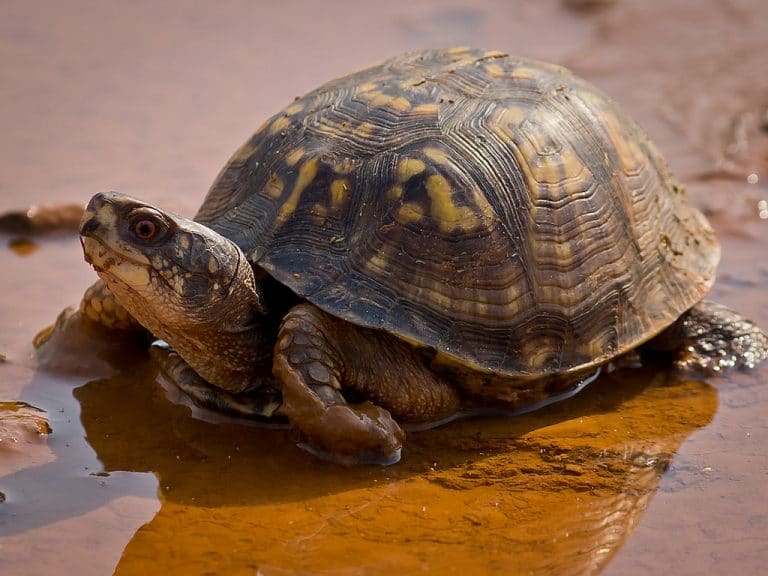
- Many varieties of turtles, including the American Box Turtle survive for more than hundred years.
- A document exists of the prolonged existence of an adult Indian Ocean Giant Tortoise captured in at an estimated age of at fifty years. It further survived for 152 years in custody.
- Except Antarctica we see turtles on every continent.
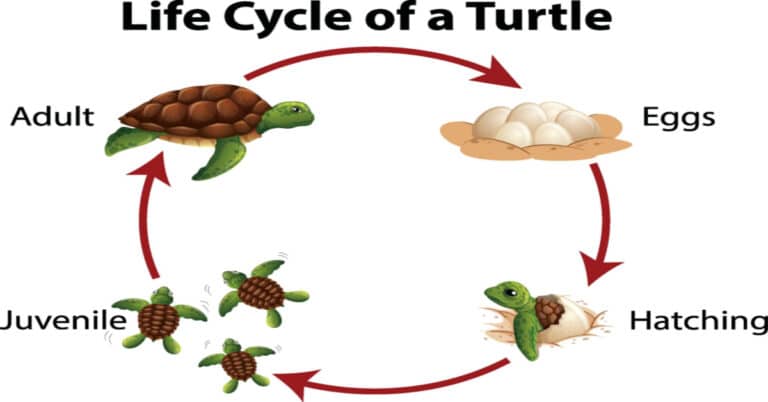
- Turtles exist in climates that are sufficiently warm to enable them to complete their breeding cycle,
- Many of the turtles cannot put up with the cold well, but the Blanding turtle seems to adapt well to the cold and swim under the ice in the Great lake regions.
- The size of a turtle ranges from 4 inches Bog turtle and 1500 pound leathery turtle.
- There are a great many varieties of turtles in North America, whereas in Europe, there are only two varieties of turtles and three varieties of tortoises.

- The bottom underlying part of the turtle is known as the plastron and the top doom portion the carapace.
- The turtle’s shell comprises of 60 different bones joined together.
- Plates (scutes) cover the bony parts of the shell, they derive from the skin and give added strength and acts as a shield.
- Many turtles have elevated carapaces; this shields them from the snapping jaws of earthly predators.
- Aquatic turtles seem to have a flat shell of more or less an aerodynamic shape. The Pancake Tortoise of East Africa is an exception to the dome-shaped tortoise-shell. When menaced, they wedge themselves in the gaps between narrow rocks and inflate themselves with air their making extraction almost impossible.
- Most of the varieties of turtles possess five toes on each limb, except the Box Turtle of the Carolina variety that possesses four toes and in certain cases they have only three toes.
- Turtles possess an excellent sense of smell and good eyesight. Their sense of touch and hearing are also excellent. They even have nerve endings in the shell.
- A few aquatic turtles can absorb oxygen via their skin or neck and the cloacal portions, permitting them to stay submerged in water for a considerable period of time, thereby making it possible for them to hibernate under water.
- Among reptiles, turtles belong to the most ancient and primitive species.
- Turtles have existed more than most other species. One may wonder whether its shell has any part in its extended longevity.
Having discovered a fondness for insects while pursuing her degree in Biology, Randi Jones was quite bugged to know that people usually dismissed these little creatures as “creepy-crawlies”.