Northern Water Snake
Scientific Classification
| Kingdom: | Animalia |
| Phylum: | Chordata |
| Subphylum: | Vertebrata |
| Class: | Reptilia |
| Order: | Squamata |
| Suborder: | Serpentes |
| Family: | Colubridae |
| Subfamily: | Natricinae |
| Genus: | Nerodina |
| Species: | N. sipedon |
| Binomial name: | Nerodia sipedon |
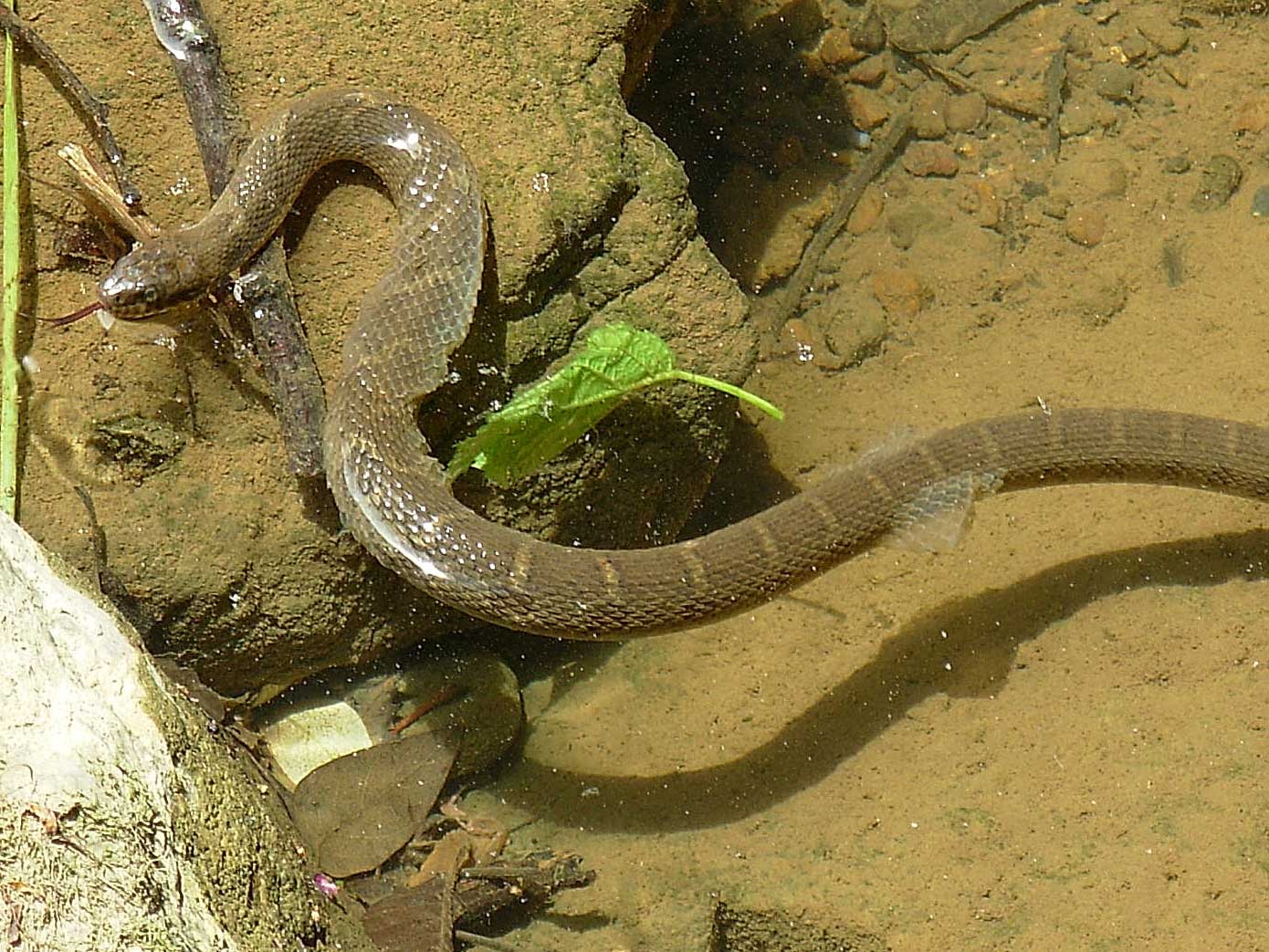
Even though they are very common, We tend to confuse the Northern water snake Nerodia subfamily with other species because of their varying color patterns, or due to the fact, we frequently see them covered in mud.
Their lifespan in captivity is around 9 years and six months. One does not know anything about how long they live in the wild.
Anatomy
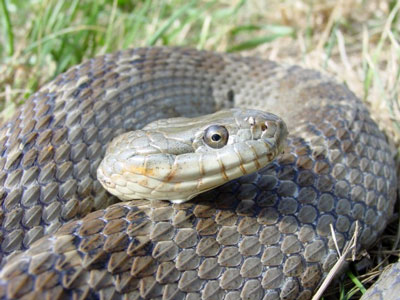
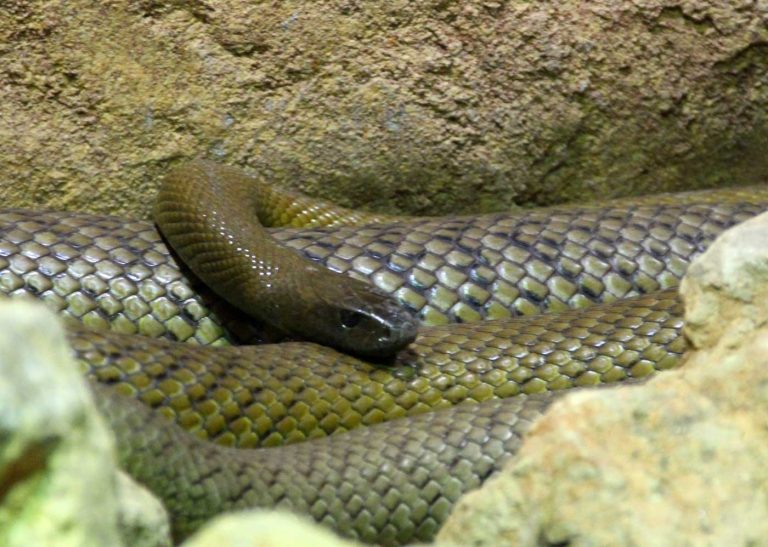
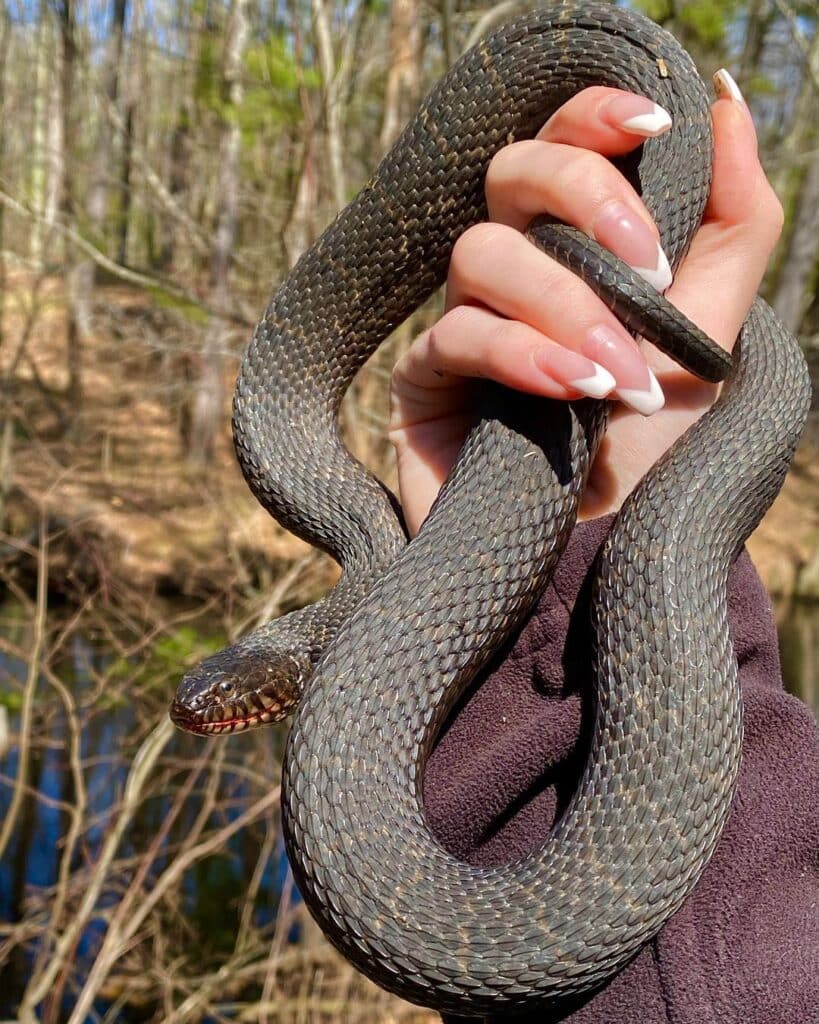
This water snake, medium to large in size, usually grows up to 140 centimeters in overall length. Their colors can be gray, brown, reddish or brownish black. They sport on their necks, dark cross bands, with dark blotches and stripes on the rest of the body. Some people (mere Novices) tend to confuse them with Copperheads and Cottonmouths. Their colors darken along with age. Some of the species become completely black. Even their belly colors show variation, ranging between yellow, white or gray. They usually have black or reddish crescents.
There are a series of alternating square blotches on the sides and back. These blotches seem to merge and form bands. Juvenile snakes display saddles of reddish brown on gray, brown or tan backgrounds. Females are usually larger than males. They have keeled scales, with divided anal plate. There are 21 to 25 scales in the mid body.
Behavior
Northern water snakes are not well known for their behavior. If they feel threatened, they are vicious in self defense. If someone tries to pick them up, they will definitely bite. They will also release foul smelling musk and Feces, to add to the effect.
These snakes do not mind sharing the winter den of other snakes like Rat snakes or copperheads.
Habitat
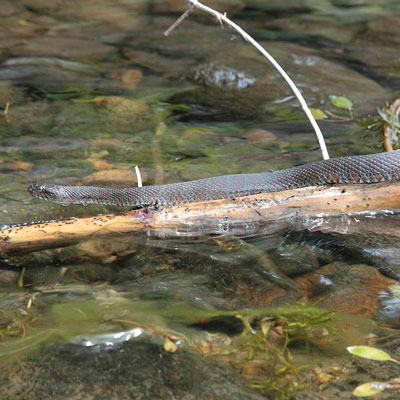
We can usually find these snakes near streams, rivers, lakes, ponds, marshes and even canals. They are active both during night and day. These snakes are commonly seen basking on tree stumps, rocks or brush. They forage for food during the day among the vegetation at the waters’ edge. They feed on a variety of prey that include frogs, leeches, crayfish, worms, young turtles, salamanders, mammals and even birds. They concentrate at night on minnows and other shallow water fishes.
As a Pet
Breeding
The mating season of the Northern Water Snake is from April to June. Unlike most snakes, these water snakes are ovoviviparous. In other words, they give birth to young ones. At birth, the baby snakes average 19 to 23 centimeters in length. Even though a female can give birth up to thirty young snakes at a time, eight is the average. These snakes give birth between August and September. Mothers do not care for their babies and they are on their own, right from the moment they are born.
Housing
Unlike other Colubrid snakes, water snakes do better in large enclosures. Corn and King snakes are content in a 15 or 20 gallon aquariums. These snakes need larger ones. A thirty gallon (breeder) aquarium will be ideal. The enclosure you provide should not be too wet. A water filled aquarium is not what they need. They need dry areas, since they spend a lot of time out of water. If they spend too much time in the water, they might develop water blisters. In such conditions, put them in very dry enclosures with small water dishes. The problem usually disappears with shedding.
You can provide a regular cage set up for your Northern Water Snake pet. You can place a tub in the enclosure. Come feeding time, you can put fishes into the tub so that he snake can swim about and catch the fish. When you keep a water snake as a pet, you will have a lot of cleaning up to do because of its diet. Newspapers make ideal substrates. They are easy to clean up and inexpensive. Sakes need hiding places. Even a plastic hide box will do. If you can place a flat rock supported by smaller rocks, the snake can hide under the rock or bask on top.
Water snakes spend a lot of time basking. You can provide a sixty watt bulb as basking light. You do not have to go for UVB lights since snakes do not need them. They just need warmth. Ensure that the door or lid of the enclosure is secure. Snakes can and will escape when they get the opportunity.
Food
These snakes are carnivorous as well as scavengers. Their diet is quite varied. They eat fish, amphibians, large insects, leeches, crayfish, turtles, mammals, birds and even other snakes. They often herd schools of tadpoles or fish to the water’s edge and feed on them at will. They hunt at night and day. They do not constrict their prey. They just swallow their prey alive.
You can put live guppies in the snake’s water tub so that the snake gets the feeling of actually hunting for prey. You can also put fish strips together with minnows, or waggle them on tongs. The snake may develop a taste for them. You can feed them frozen snakes after thawing and farming them. If they do not go for rodents, try rubbing them with fresh guppies. This might make the rodents appetizing for them.
Handling
A Northern water snake easily get agitated and bites when you try to handle it. It seems they tame down with time. They are slowly becoming popular as pets.
Having discovered a fondness for insects while pursuing her degree in Biology, Randi Jones was quite bugged to know that people usually dismissed these little creatures as “creepy-crawlies”.