Geranium
Scientific Classification
| Kingdom: | Plantae |
| (unranked): | Angiosperms |
| (unranked): | Eudicots |
| (unranked): | Rosids |
| Order: | Geraniales |
| Family: | Geraniaceae |
| Genus: | Geranium |
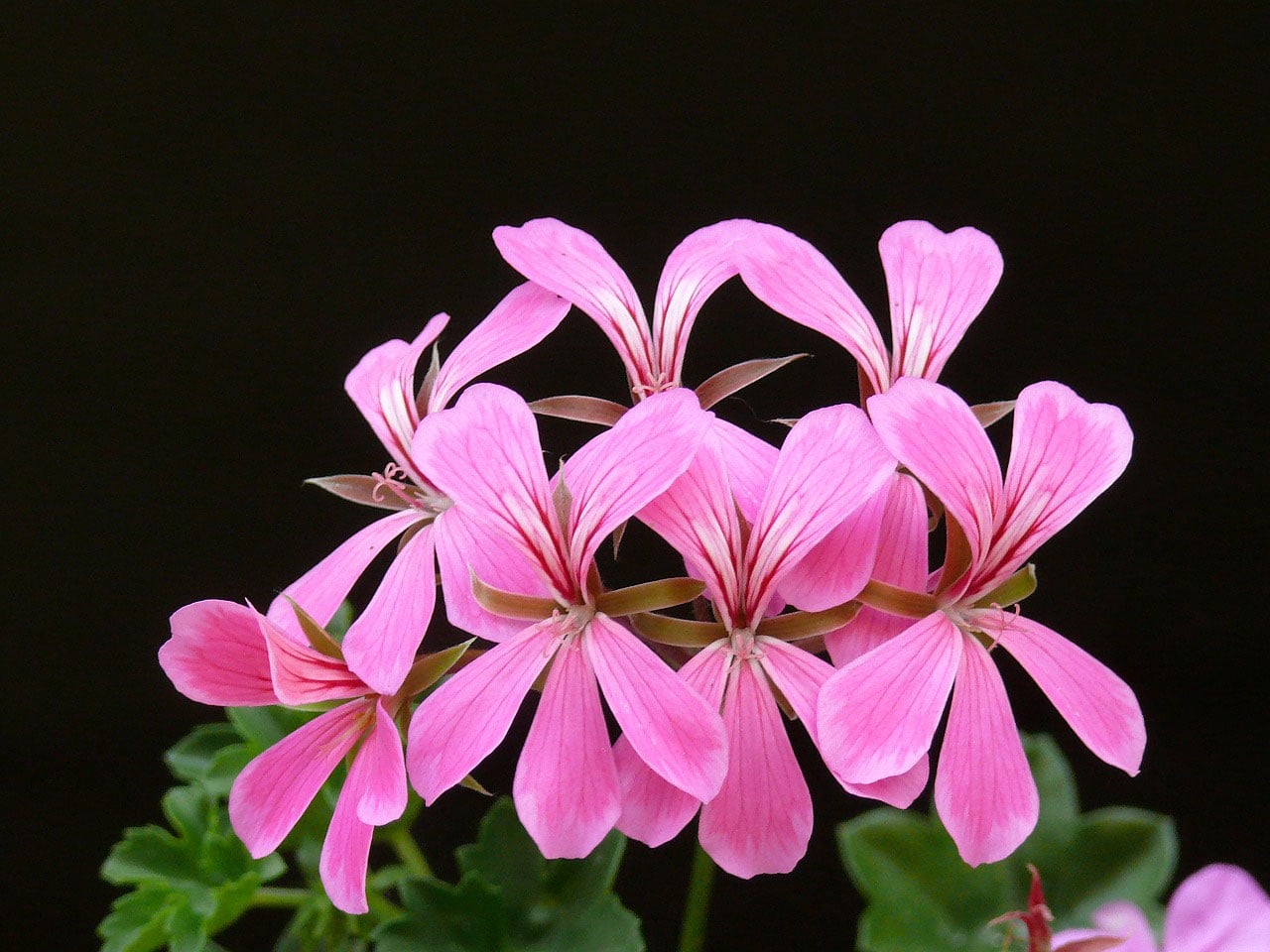
Geranium is a genus comprised of 422 varieties of flowers that belong to the yearly blossoming perennial and biennial plants belonging to the family Geraniaceae. In general, they are known by the name Cranesbill. We find them all over the temperate regions and the tropical mountains. The majority of them are in the Eastern regions of the Mediterranean. Its long leaves are like palms with cleaves roughly in the form of a circle. The flowers are colored purple, white, blue, or pink, with five petals. Their veins are conspicuous. Geraniums grow in any soil, provided the water is not stagnant. The propagation is done in summer by cuttings that are half ripe.
History
There is always a misunderstanding that geranium also belongs to the common name of the group Pelargonium (occasionally called storks bill), also of the family Geraniaceae. Normally they are half-hardy plants that are grown every year either from seeds or from budding springs and, following flowering, they are of no use. Linnaeus initially classified all the species in one variety known as Geranium. In due course Charles L Heritier discriminated them into two genes during the year 1789. Earlier specimens belonging to this genus are grouped in the genus Erodium, comprising the plants known in North America as Filarees.
Anatomy
It is possible to discriminate the two genuses Pelargonium and Geranium by their shapes. The Pelargonium flowers have three lower petals, not identical to the two upper petals therefore the blossoms are symmetrical in just one plane while the Geranium blossoms possess five petals quite alike so much so they are symmetrical along the radius.
Habitat
The natural Geranium is a widespread woodland plant seen everywhere, in all of its Illinois habitats, inclusive of upland woodlands and floodplain woodlands, meadows in woodland locations, savannas, rocky glades and partially shaded seeps. Occasionally, in the nearby wooded Pelargoareas, it occupies hill prairies. Natures Geranium belongs to a particular variety of Mesic deciduous woodland.
Soil
Geranium is planted where there is total sun and a bit of shade in a medium soil that is properly drained. In order to enrich the soil, supplement it with peat, humus or compost. If necessary make the soil loose. However, they favor a variety of soils. They adjust to all types of soils. For perennials, make sure that the soil is airy and light.
Planting
The ideal time for planting the perennials is in spring; however, other seasons too are suitable for planting them. In case you plant Cranesbills geraniums in the dry seasons, make sure that they are provided with a sufficient quantity of water. Blend the soil with organic material to enhance fertility and drainage prior to planting the transplanted plants in the chosen areas..
Temperature and Humidity
The majority of geraniums prefer human temperature. At day, the ideal temperature for them is 70 degrees F. Also at night during slumber, 50 degrees F is agreeable. Most of them adjust to temperature above this; however, if the temperature exceeds 80oC, they get affected. Their growth gets retarded when the temperature falls below 40 degrees F at night. Many of the ordinary Cranesbills tolerate a temperature of 32°C unharmed. Most of plant tissues do not get frozen until the temperature of the air falls below or at 27°C.
The usual geraniums are not choosy on humidity. If the humidity goes high, it leads to rise in diseases from the organisms such as fungi and bacteria. When the humidity falls very low, it enhances the growth of spider mites, to which the geraniums are susceptible.
Uses
The documents prove that this plant is likely to possess astringent and diuretic characteristics, however, prior to making use of any plants for medical use, seek the advice of experts..
Care
The best growth of Cranesbills is when they are watered once a week or once in 10 days. By monitoring a wet meter scale inserted into the soil you can determine whether excess water is needed or not. Never permit the soil to get totally dry. When fall comes to a close, get your plants pruned to the required size. These plants which do not need much maintenance are not in need of frequent use of fertilizers.
Pests and Disease
Certain disease and pests are likely to attack the garden geranium pelargonium. The majority of them are identified and controlled with ease, however, some are trouble makers.
Having discovered a fondness for insects while pursuing her degree in Biology, Randi Jones was quite bugged to know that people usually dismissed these little creatures as “creepy-crawlies”.