Horse Tail
Scientific Classification
| Kingdom: | Plantae |
| Class: | Equisetopsida |
| Order: | Equisetales |
| Family: | Equisetaceae |
| Genus: | Equisetum |
| Species: | E. Arvense |
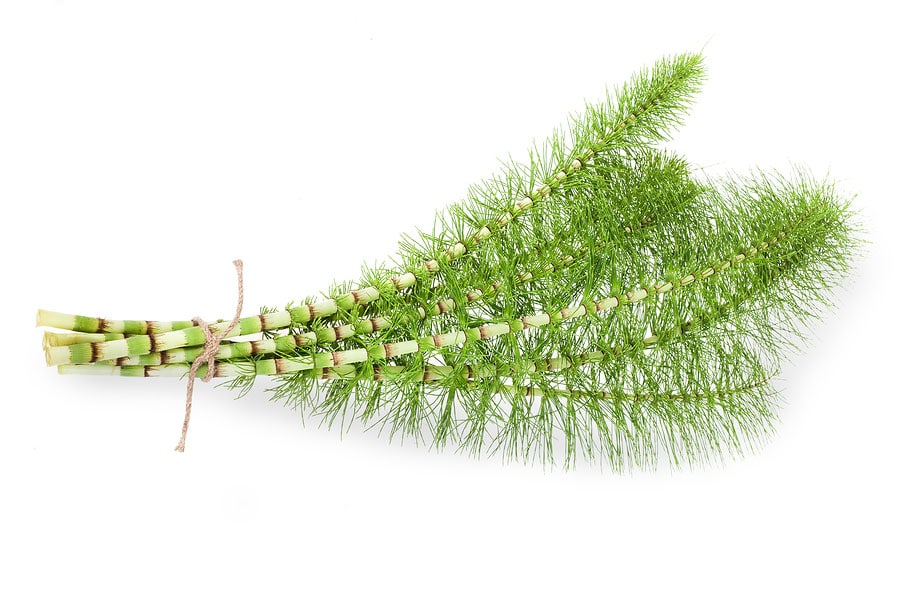
The order Equisetales has only a lone extant family, the Horsetail family, sometimes also referred to as Equisetaceae, and its single surviving genus, Equisetum consists of about 20 species. Though most living horsetails are relegated under the. Equisetum genus, excavation of a few fossil species indicates that they may not be bracketed with the genus Equisetum. The Horsetail plant is also known as Common Horsetail, Field Horsetail, or Mares Tail. It is a herbaceous perennial plant that contains many substances which are used in medicines. It is a green, slender ornamental grass. It is an astringent herb. But it is toxic to cattle and horses because it produces silica crystals in its stem, which contains silicon, and not good for strengthening the bones of the animals.
History
Horsetail was an herbal remedy in ancient Greek and Roman times. It was used traditionally to treat many problems like tuberculosis and problems of the kidney. From the Paleolithic era, it has survived 400 million years. In the past it was used in metals polishing. In the 17th century it was described as a hardening medication, meaning it reduces excess moisture in the body and also reduced inflammation.
Anatomy
The stem of horse tail plant is green in color and undergoes photosynthesis. And they are distinctive in being jointed, hollow and ridged. It does not have flowers and leaves. For food it depends on the chlorophyll present in the stem. Its shoot and stem are hollow.
Habitat
The stem of horse tail plant is green in color and undergoes photosynthesis. And they are distinctive in being jointed, hollow and ridged. It does not have flowers and leaves. For food it depends on the chlorophyll present in the stem. Its shoot and stem are hollow.
Soil
The Horsetail plant grows in rich, moist soil. It prefers acidic soil. Clay, sandy and loamy soil are also ideal for them. It grows well in swampy areas.
Planting
The Horsetail is a versatile plant. It grows in any waterlogged area. Horsetail is a good pond plant for growing at home. It grows up to 4 feet tall. Growing a horse tail is not a difficult task if they receive right conditions.
Water
The Horsetail plant is fond of boggy or wet areas. They require watering daily. After planting they need water immediately to keep the soil moist
Temperature and Humidity
The Horsetail plant is fond of boggy or wet areas. They require watering daily. After planting they need water immediately to keep the soil moist
Care
This plant grows well in full or partial sunlight. It cannot tolerate shady areas. It does not need extra fertilization because it is not good for them..
Harvest
Harvesting of the horsetail plant is done in the summer season. Its stems are picked and then placed in a dark, cool place. Once the stems dry, they can be ground into powder and stored in an airtight container. It is used for up to one year as an ornamental purpose.
Pests and Disease
Many pests and diseases affect the horsetail plant. Pests like Aphids damage the plants. Insects, slugs and caterpillars also affect the plant. To control the disease, the anti fungal preparation method is ideal.
Uses
Horsetail plants above ground level are used in making medicines. It is used in the treatment of fluid retention, bladder stones, kidney problems, urinary tract infections and general problems of the bladder and the kidney. It also applied directly to treat burns and wounds of the skin. It is also useful in treating jaundice, heavy menstrual problems, weak bones, weight loss, hepatitis, brittle fingernails, gout, frostbite and uncontrolled bleeding of the nose and in disease of the joints. It is also used as an ingredient in cosmetics. It is rich in minerals.
Having discovered a fondness for insects while pursuing her degree in Biology, Randi Jones was quite bugged to know that people usually dismissed these little creatures as “creepy-crawlies”.