About Mason Bees

It is pretty obvious that bees are not only one of the most feared insects in the world but did you know they are also one of the most loved insects in the world? Of course, the only people that really love bees are gardeners, but still, they are definitely an important part of the world and if we did not have bees, we would not be able to pollinate our flowers and crops! One of the biggest pollinators is the mason bee. This bee is honestly one of the most interesting of the bee family and it is certainly one of the most sought-after bees.
Mason bees Quick Facts
| Common name | Mason bees |
| Scientific name | Osmia |
| Kingdom | Animalia |
| Phylum | Arthropoda |
| Class | Insecta |
| Order | Hymenoptera |
| Family | Megachilidae |
| Type | Solitary bees |
| Habitat | Narrow holes and tubes sealed with mud |
| Size | Smaller than a honey bee, with a stout body |
| Colours | Metallic green or bluish |
| Special feature | One female can pollinate 2,000 apple flowers a day |

What Is a Mason Bee?
The mason bee is known for being a solitary bee. This bee can build a solitary nest all by itself out of mud or plant fiber that has been chewed to paste. The mason bee is smaller than a honey bee, but they have stout bodies and are usually metallic green or bluish in color. This is one of the main reasons why the mason bee is so sought after – the colors on this bee are simply amazing and mason bees live across North America, Europe and Asia.
There are roughly one hundred and forty species of mason bees found in North America and over three hundred species of mason bees are found worldwide. The mason bee is also one bee that is pretty mellow in its attitude and really only stings when it feels it is being threatened. Otherwise, this is one of the mellowest bees in the world. It is similar to the ground bee that does not sting even if you wreck its nest with a garden hose.
Mason Bees as Pollinators
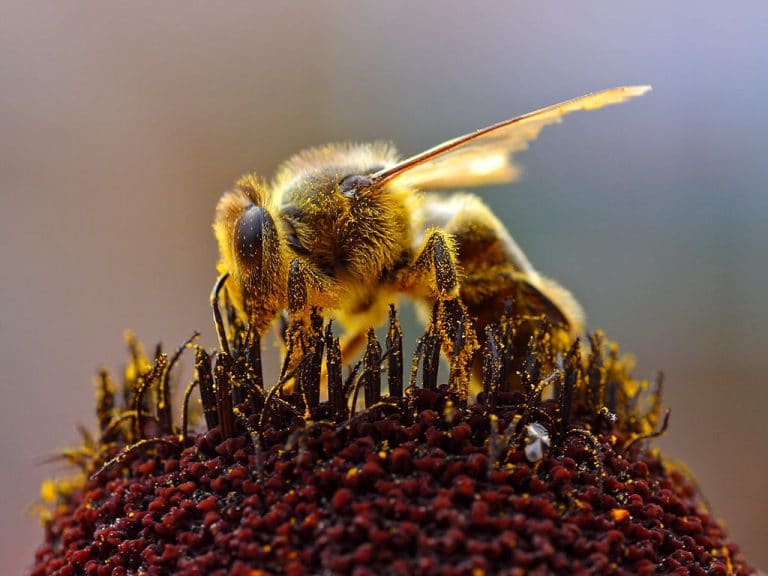
Many of the reasons that mason bees are so popular in the United States are because they are excellent for pollinating. These amazing bees can pollinate with the best of them, one female mason bee can pollinate up to two thousand apple flowers a day. For this reason, mason bees have been dubbed orchard mason bees and many orchards have taken to harvesting these bees and letting them loose on their orchards in order to have them pollinate their entire orchard.
Mason Bee Life Cycle and Nesting
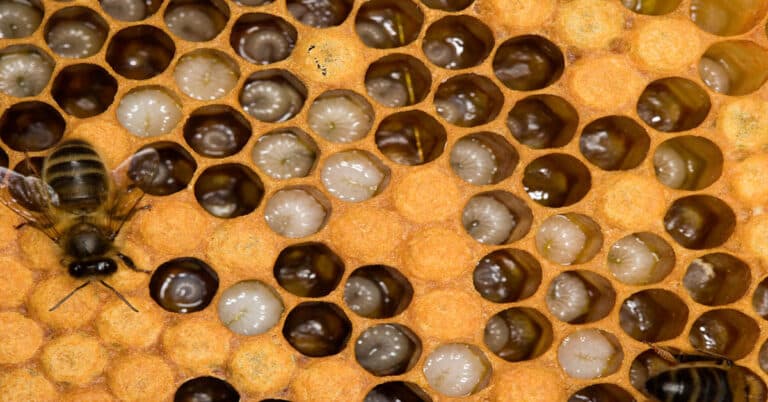
Mason bees can only be found in the spring time as the bees will break out of their cocoons at the first sign of spring. First the males will come out and then the females will remain until the weather completely breaks. Once the females break out of their cocoons, the first thing the mason bees will do is mate. The males will die soon after the mating season and the female bees will begin looking for a place to build their nest.
Narrow holes, tubes and mud all make great places for these female mason bees to lay their eggs. A female mason bee might inspect the same place several times before she decides that she can nest there. It is all part of the cycle of finding the perfect nest to lay all of her eggs in. Many gardeners will buy ready-made mason bee houses to encourage them to visit and stay in their gardens.

Mason bees FAQs
What is a mason bee?
A mason bee is a solitary bee, so each female builds her own nest. She uses mud or chewed-up plant fibre to build it.
Are mason bees good pollinators?
Yes, they are excellent. One female mason bee can pollinate up to 2,000 apple flowers in a day, so orchards often use them.
Do mason bees sting?
Mason bees are very mellow and only sting if they feel threatened.
When do mason bees appear?
They come out of their cocoons at the first signs of spring. The males appear first, and after mating the females look for places to nest.
Where do mason bees build nests?
Females lay their eggs in narrow holes, tubes and mud. Many gardeners buy ready-made mason bee houses to attract them.

Randi Jones is the owner and founder of the Nature Gift Store, an online retailer specializing in nature-themed gifts, educational science projects, live animal nature kits and real butterfly artwork. A biology graduate who fell in love with insects, she founded the company in 2001 to make active learning about nature fun, accessible and engaging for children and adults. Her store offers real butterfly frames, home and garden decor and educational live animal kits, including ant farms, worm farms, tadpoles, ladybugs and hermit crabs, and she runs a bug museum in Washington featuring live animals like Eddie the Iguana alongside other reptiles and insects.