Owl Facts for Kids: Habitat, Diet and Fun Facts
Quick answer: An owl is a bird of prey with a round face, large forward-facing eyes and sharp talons. There are more than 200 species, living on every continent except Antarctica. Most owls hunt at night, catching mice, voles, insects and other small animals. Special feathers let them fly almost silently, and keen hearing helps them find prey in the dark.
On a quiet night, a pale shape glides over a field without making a sound. Suddenly it drops into the grass and rises again with a mouse in its feet. That silent hunter is an owl.
Owls have some of the most amazing senses in the bird world. They can hear a mouse rustling under leaves, turn their heads almost all the way around and fly so quietly that their prey never hears them coming. On this page we look at owls as a group, with the barn owl and the great horned owl as our main examples.
Teachers and students: you’re welcome to use this fact sheet in lessons and projects with credit to Learn About Nature.
Free printable: Download the Owl fact file worksheet (PDF) – draw the animal, fill in the facts and match key words. Answer key included.
Owl Quick Facts
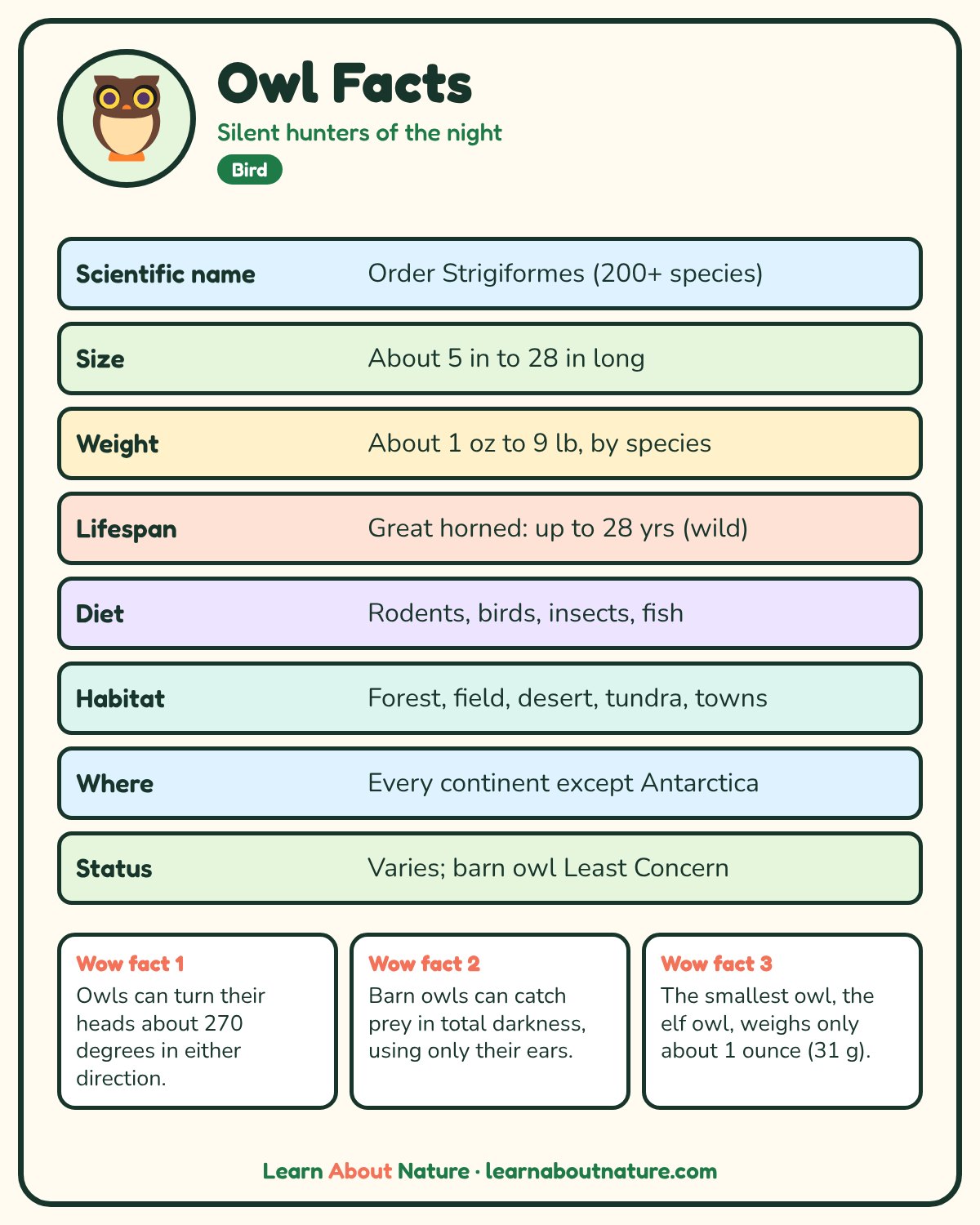
| Class | Bird |
| Order | Strigiformes |
| Number of species | More than 200 |
| Smallest | Elf owl, about 5 in long and 1 oz |
| Largest | Eurasian eagle-owl and Blakiston’s fish owl, about 28 in long |
| Head turn | About 270 degrees each way |
| Baby name | Owlet |
| Group name | Parliament |
| Examples | Barn owl (Tyto alba); great horned owl (Bubo virginianus) |
| Conservation status | Varies; barn and great horned owls Least Concern, snowy owl Vulnerable (IUCN) |
What Is an Owl?
An owl is a bird of prey, also called a raptor, which means it hunts other animals using sharp talons and a hooked beak. Owls belong to the order Strigiformes. There are more than 200 species, divided into two families: the barn owls and bay owls, and the much larger group of “typical owls,” which includes the great horned owl.
Owls range from tiny to huge. The elf owl is about 5.3 inches (13.5 cm) long and weighs about 1 ounce (31 g). The largest owls, such as the Eurasian eagle-owl and Blakiston’s fish owl, can be about 28 inches (71 cm) long, with wings over 6 feet (1.9 m) across, and weigh about 9 pounds (4.2 kg).
Where Do Owls Live?
Owls live on every continent except Antarctica. Different species live in forests, grasslands, deserts, wetlands, mountains and the Arctic tundra. Some, such as barn owls and great horned owls, even live near farms, towns and cities.
The barn owl (Tyto alba) lives in open places such as grasslands, marshes and farm fields. It nests in hollow trees, cliffs, caves, nest boxes, church towers and, of course, barns. The great horned owl (Bubo virginianus) lives across most of North America and into Central and South America, in deserts, wetlands, forests, grasslands and cities.
What Do Owls Eat?
Owls are carnivores. Many species eat mostly small mammals such as mice, voles, shrews and rats. Owls also eat birds, insects, frogs, lizards and fish, depending on the species. Fish owls, for example, catch fish from rivers.
Barn owls eat mainly small mammals and may catch one or more voles a night. Great horned owls have a very wide diet, from mice and rabbits to birds, frogs and even skunks. Their poor sense of smell may be one reason skunks do not put them off.
Owls often swallow small prey whole. Later they cough up the parts they cannot digest, such as bones, fur and feathers, as a neat bundle called a pellet. Scientists and students open owl pellets to find out exactly what the owl has been eating.
Owl Senses: Eyes, Ears and Silent Wings
Owls have big eyes that face forward, which helps them judge distance. Their eyes are shaped like tubes and are fixed in place, so an owl cannot roll its eyes like you can. Instead, it turns its whole head, as far as about 270 degrees in either direction.
Owls also have amazing hearing. In many owls, one ear opening sits higher on the skull than the other. This uneven placement helps the owl tell exactly where a sound is coming from, both side to side and up and down. Barn owls are among the most accurate birds at finding prey by sound alone, and they can hunt in complete darkness.
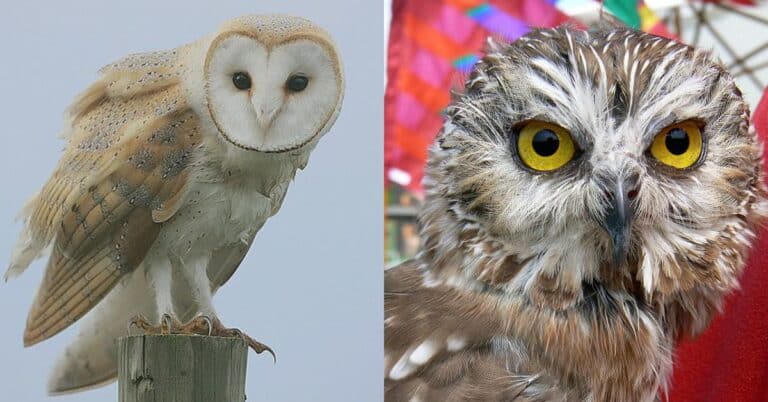
Many owls have a round, dish-shaped face that helps collect sound, like a satellite dish. The barn owl’s pale face is shaped like a heart.
Owls can fly almost silently. The front edges of their wing feathers have tiny comb-like fringes that break up the air and soften the sound of flapping. This lets an owl sneak up on prey without being heard.
Owl Babies
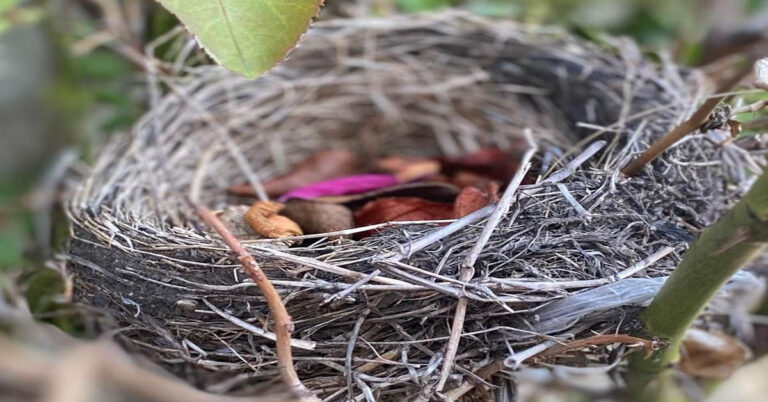
A baby owl is called an owlet. Many owls nest in tree holes, cliffs or buildings rather than building big nests of their own.
Barn owls usually lay about 4 to 7 eggs. The female keeps them warm for about 29 to 34 days. The owlets leave the nest on their first flight about 50 to 70 days after hatching.
Great horned owls are among the earliest birds to nest in North America, often laying eggs in winter. They usually lay 1 to 6 eggs, with about 3 on average. The eggs hatch after about 30 to 37 days, and the young leave the nest at about 6 to 9 weeks old.
- Barn owl eggs: usually 4–7
- Barn owl hatching time: about 29–34 days
- Great horned owl eggs: usually 1–6
- Great horned owl young leave the nest: about 6–9 weeks
How Owls Live
Most owls are nocturnal, which means they are active at night and rest during the day. Some species are active at dawn and dusk or during the day instead.
Owls use calls to keep in touch with mates and to tell other owls where they live. Not all owls hoot. Great horned owls have deep, soft hoots, but barn owls make a long, rough, gargling scream.
A group of owls is sometimes called a parliament.
Barn Owl vs Great Horned Owl
The barn owl and the great horned owl are two of the best-known owls in North America, and they are easy to tell apart.
The barn owl has a pale, heart-shaped face and a large, rounded head with no feather tufts. It is about 13 to 16 inches (32 to 40 cm) long and weighs only about 1 to 1.4 pounds (430 to 620 g). It belongs to the barn owl family.
The great horned owl is much bigger and heavier. It is about 18 to 25 inches (46 to 64 cm) long, has a wingspan of about 4 to 5 feet (1.3 to 1.5 m) and weighs about 3 to 3.7 pounds (1.3 to 1.7 kg). It has two tall feather tufts that look like horns or ears. These tufts are just feathers; its real ears are hidden on the sides of its head. Great horned owls are very strong and have a powerful grip.
Threats and Conservation Status
Like many wild birds, owls can be harmed when the forests, grasslands and wetlands where they hunt and nest are cleared or changed.
Conservation status varies by species. The IUCN Red List lists the barn owl and the great horned owl as Least Concern, because they are widespread and common. Some owls are in much more trouble. The snowy owl of the Arctic was moved from Least Concern to Vulnerable in 2017 after studies showed its numbers were falling.
Putting up nest boxes in safe places and protecting old trees, grasslands and wetlands can help many owl species.
Fun Facts About Owls
Here are a few more owl surprises:
- Owls cannot move their eyes, so they turn their heads instead.
- The great horned owl’s feather “horns” are not ears.
- A wild barn owl has been recorded living to 34 years old, though most live much shorter lives.
- Owl pellets can contain whole tiny skulls and bones of the animals the owl ate.
- Barn owls live on every continent except Antarctica.
Fast Facts for Young Readers
- Owls are birds that hunt other animals.
- Most owls hunt at night.
- Owls can turn their heads very far around.
- Owls fly almost without a sound.
- Owls can find mice just by listening.
- A baby owl is called an owlet.
- Owls cough up pellets of bones and fur.
Key words: bird of prey – a bird that hunts other animals using sharp talons and a hooked beak; nocturnal – active mostly at night; talons – the sharp, curved claws on an owl’s feet; pellet – a bundle of bones and fur that an owl coughs up; facial disc – the round, dish-shaped face that helps an owl collect sound.
Try this: Dissect an owl pellet (sterilized pellets are sold for classrooms) and sort the tiny bones you find, using a bone chart to work out which animals the owl ate.
Related Guides
- Penguin facts for kids
- Hummingbird facts for kids
- Bald Eagle facts for kids
- All animal facts for kids
Owl FAQs
Why do owls turn their heads so far?
An owl’s eyes are shaped like tubes and are fixed in its skull, so it cannot move them like we can. To look around, an owl turns its whole head instead, as far as about 270 degrees in either direction. This helps it follow moving prey with its eyes locked forward.
How do owls fly so quietly?
Owl wing feathers have soft, comb-like fringes on their front edges that break up the air flowing over the wing. This softens the whooshing sound of flapping, so owls can fly almost silently and sneak up on prey that is listening for danger.
What is an owl pellet?
An owl pellet is a small bundle of fur, feathers and bones that an owl coughs up because it cannot digest them. Owls often swallow small prey whole. Scientists study pellets to learn what owls eat, and students often take them apart in class.
Do all owls hoot?
No. Great horned owls are famous for their deep hoots, but many owls make other sounds. Barn owls, for example, give a long, rough, gargling scream instead of a hoot. Each owl species has its own set of calls.
Are owls endangered?
It depends on the species. The IUCN Red List lists common owls such as the barn owl and great horned owl as Least Concern. Others are more at risk; the snowy owl was moved to Vulnerable in 2017. Losing the places where they hunt and nest is a major threat.
Sources: Animal Diversity Web: Tyto alba (barn owl); Animal Diversity Web: Bubo virginianus (great horned owl); Cornell Lab All About Birds: Great Horned Owl; Audubon: Snowy owls show worrying declines in IUCN Red List update (2017); Wikipedia: Owl; Wikipedia: Great horned owl

Nato is a content writer and researcher with a background in psychology who’s eager to explore the wonders of nature. As a travel enthusiast and animal lover, she hopes to inspire others to discover and cherish the beauty and importance of the natural world. She also writes about the history of candy and snacks for Snack History and about food and healthy eating for The Fitchen.