Pictus catfish
Pimelodus pictus is otherwise called Pictus Catfish. This fish is just 11 cm (4.3 inches in length. It is associated with the Pimelodidae Catfish Family, indigenous to the Orinoco and Amazon River basins. The Pictus catfish is normally a freshwater aquarium pet. In the commercial market, there are instances of the Pictus catfish being taken for granted as Angelicus cats. However, the name Angelicus cats are considered to have no relation with the African catfish, called as Mochokid Syndontis Angelica.
Description
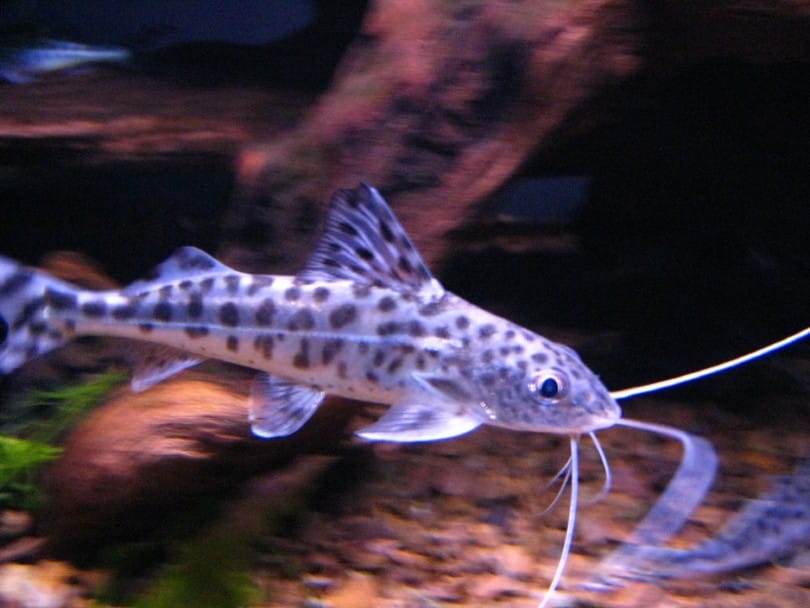
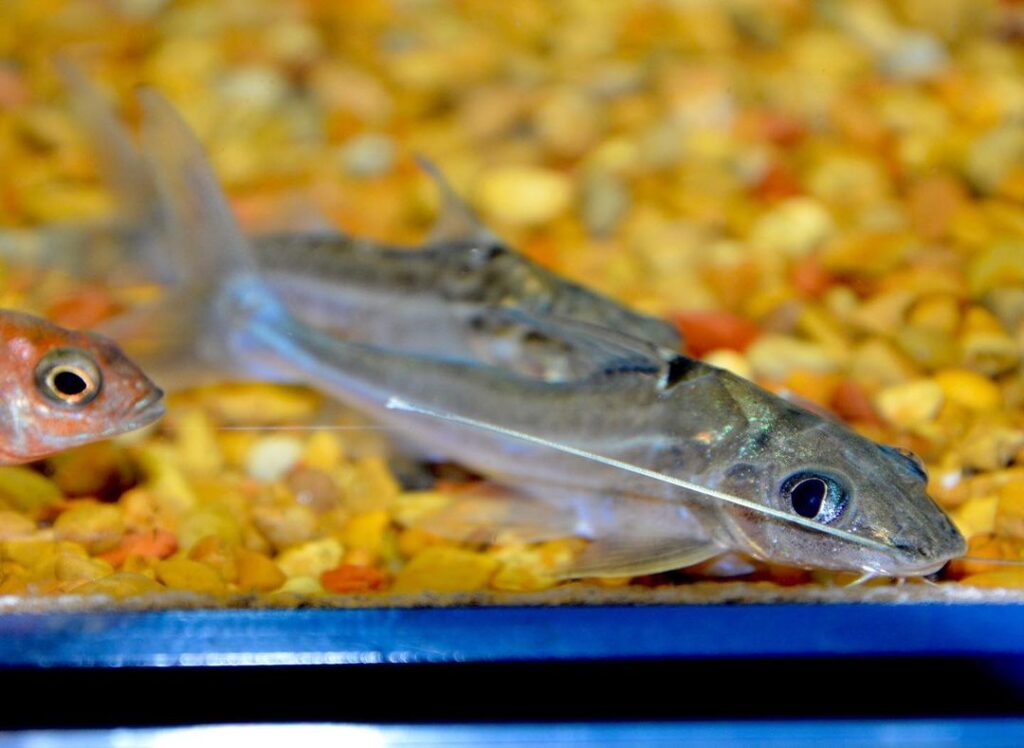
Never mistake the Pimelodus Pictus with the Leiarius Pictus, which is a bigger one, measuring 60 cm, it is a Pimelodid. Similar to the remaining associates of the Pimelodidae, Pimelodus pictus is famous for their very long barbells; it stretches all along the caudal fin. The color of this fish is silver; it has black colored spots as well as stripes. Their spines, situated on their pectoral and dorsal fins are sharp, this causes difficulty in shipping, because the sharp spines are liable to penetrate into the plastic bags and get entangled in the nets. Compared to the others, the sexual dimorphism is less, where the females are a bit bigger than the males. Similar to the other catfish, the mouth of the Pimelodus Pictus is inverted and its tail is forked.
The P.Pictus are expert swimmers and similar to the other catfish, they feed a lot at night time. The two varieties are a tiny spotted type and a big spotted type. Among them, in the aquarium business, we see only the big spotted type; the tiny spotted type grows as long as 4.8” (12 cm.), But the big spotted type does not grow that much. A properly looked after specimen lives as long as 8 years.
Habitat
We most likely see them in low lying and moving waters on muddy or sandy substrates of the big river channels as well as their streams. They are indigenous to the Amazon basins in Colombia and Orinoco, Peru, Venezuela and Brazil.
Breeding
There is no clear idea of discriminating a male from a female P. Pictus. When a fully developed female is loaded with eggs, it looks fatter compared to the male. There is no other way to differentiate either of them at their appearance.
Little knowledge is available on the method of breeding of these varieties. Assumptions are there that fishes like this lay eggs. No one succeeded in breeding them in captivity.
How to Grow at Home
Water Conditions
The most suitable temperature of the water for the Pictus catfish is warm water of 72 to 78oF (22 to 25oC). The acidity needed is slight to neutral, pH ranging from 5.8 to 7.2 and hardness from 4 to 8oN dGH ( 71 to 143 ppm, 1,43 to 2.86 mEQ). Pictus is very sensitive to medication and chemicals, therefore ensure you use them only when an emergency arises, that too diluted.
Diet
Though the Pictus catfish consumes all types of food, they are grouped as carnivorous fish. They love eating a sumptuous meal consisting of insects, worms and frozen beef heart, in addition, they welcome flakes of veggies and algae wafers. It is important to feed the Pictus catfish sufficiently well, therefore, be certain that you give them plenty of food dropped at the bottom of the aquarium. In case you feel that they are insufficiently fed, purchase and give them sinking catfish wafers.
Tank
The Pictus catfish is quite a lively one; it needs sufficient space for swimming. Furnish your aquarium with enough caves formed from rocks and bits of driftwood. For a better exposure, place some plastic as well as live plants in the aquarium. This motivates the Pictus catfish to be at ease and less timid. The Pictus catfish takes food at the bottom of the tank; therefore, give them a substrate that is made of fine and smooth sand or gravel, to prevent them from hurting their mouth while taking food. The least size of the aquarium suggested is 45 gallons (205 liters)
Having discovered a fondness for insects while pursuing her degree in Biology, Randi Jones was quite bugged to know that people usually dismissed these little creatures as “creepy-crawlies”.