Blue Gourami
Scientific classification
| Kingdom: | Animalia |
| Phylum: | Chordata |
| Class: | Actinopterygii |
| Order: | Perciformes |
| Family: | Osphronemidae |
| Genus: | Trichopodus |
| Species: | T. Trichopterus |
| Binomial name: | Trichopodus Trichopterus |
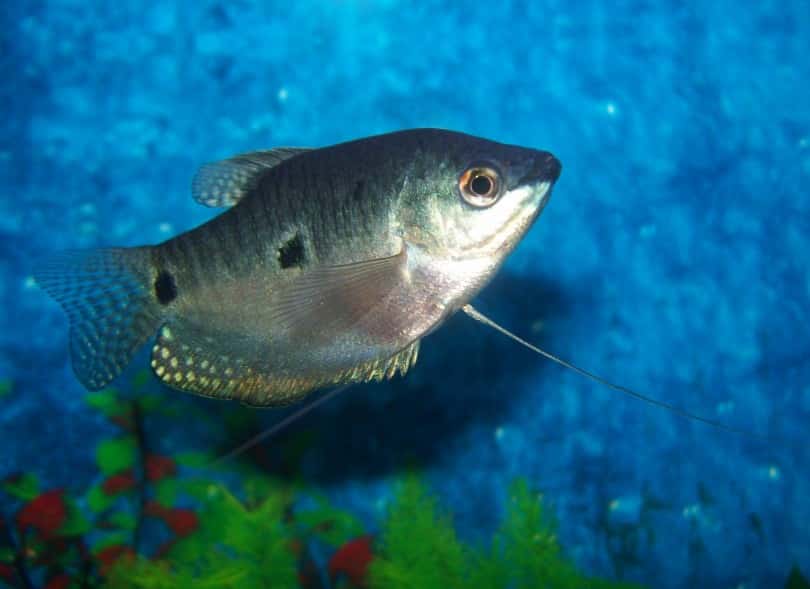
Blue Gourami fish is also known as three-spot Gourami. It gets its name from two spots on each side of the body in line with its eye which is considered the third spot. It is a beautiful and durable aquarium fish and in nature, this fish occurs in lowland wetlands. They are also found in the Swamps Peat lands, marshes, as well as in flowing canals and streams.
Habitat and range
Blue Gourami fish is native to southeastern Asia. As a food fish, this species is of a minor commercial importance in its native range. In the year 1770, this fish was described by Pallas. This species was found throughout Indonesia and continental Southeast Asia. It occurs mainly in the River Mekong basin in Cambodia, Vietnam, Laos, Malaysia, Southern China, Thailand and Myanmar and it is also found in the parts of Java, Kalimantan, Northern Indonesia and Sumatra. . During the flood season, theses fishes migrate from permanent water bodies to flooded areas like seasonally flooded forests in the lower and middle Mekong. And during the dry season, they again return to these permanent water bodies.
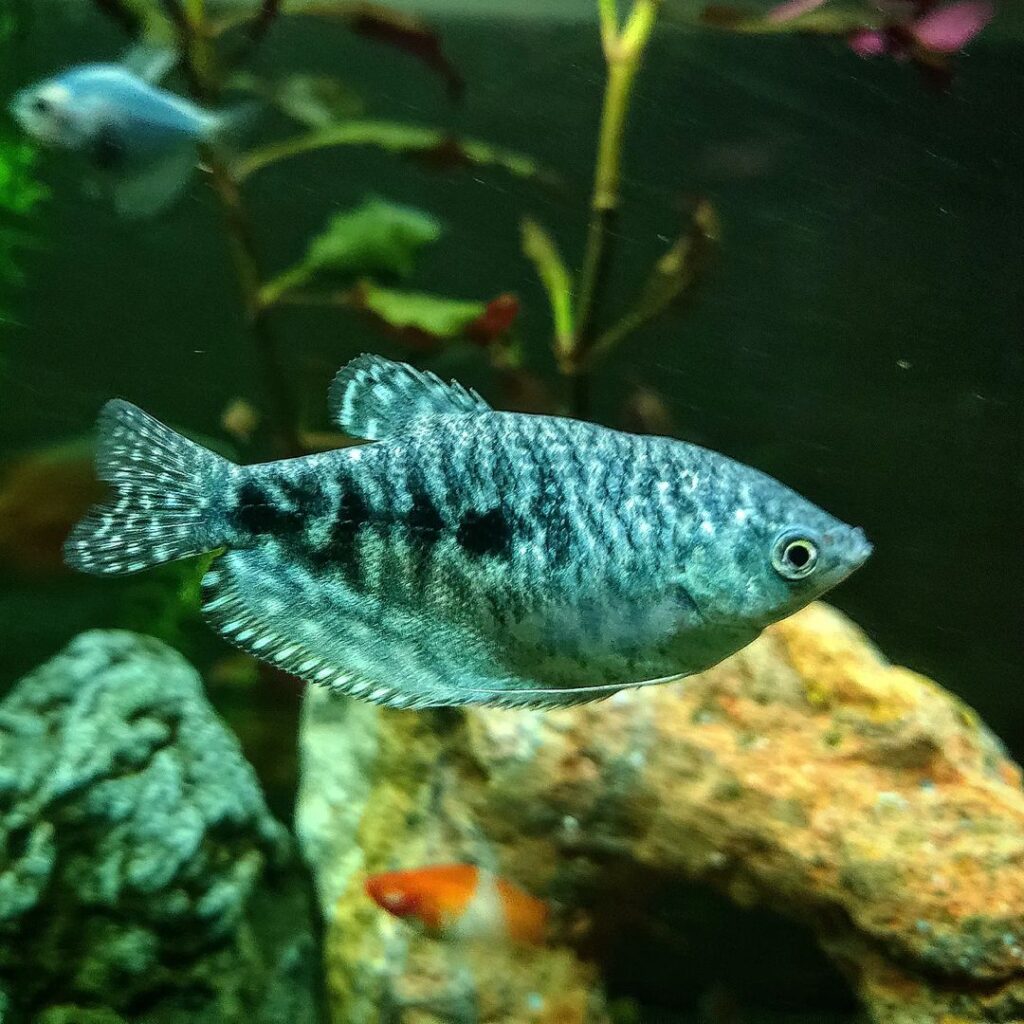
Blue Gourami is an elongated fish and it can reach up to a length of 6 inches, but in the aquarium it will be a bit smaller. The fins of this fish are relatively rounded and large. It has a Labyrinth organ; this organ allows the fish to absorb atmospheric oxygen directly into the bloodstream. The average lifespan of this fish is 4 years, but with good care, it can live longer. Its body has a hazy, whitish blue color and it has two spots on its body; one in the center of the body and another at the beginning of the tail. The third spot is generally considered to be the eye. White spots on the fins of this fish give them a very attractive look.
Breeding
The main difference between male and female Blue Gourami fish is their dorsal fin. In the male fish, the dorsal fin is pointed and long and the anal fin is only pointed, whereas the females have a rounded and shorter dorsal fin. Like other fish, the Blue Gourami fish is a bubble nest builder. Breeding is fairly easy for this fish, but a separate tank of 20 to 30 gallons should be set up for the breeding. The female fish may lay up to 800 eggs.
Tank size
To house the Blue Gourami, a fish tank of 35 gallons is the minimum requirement, but it is better to start with more. Young fish can easily housed in 15 to 20 gallons. The Maximum amount of surface is good for them because a large surface area of water helps the fish in taking oxygen easily.
Water conditions
Blue Gourami fish is an extremely hardy fish and its Labyrinth organ allows it to even survive in oxygen depleted water. This fish is undemanding of water quality. But, weekly water changes keep it healthy and fit. It does its best at temperatures around73 to 82 degree F.
Nutrition
Blue Gourami fish is an omnivore, so it requires both meaty and algae based food. In the wild it can feed on insect larvae, Zooplankton and crustaceans. In an aquarium it can eat all kinds of fresh, flake and live foods. Quality flake or pellet food keeps them in good condition. This fish is well known for eating hydra.
Setup
Blue Gourami fish swim in all parts of the aquarium. The Tank should be well decorated because the well decorated tank allows fish to live happily and stay healthy. An efficient filtration system is also ideal for them, but this fish does not like too much of current in the tank.
Having discovered a fondness for insects while pursuing her degree in Biology, Randi Jones was quite bugged to know that people usually dismissed these little creatures as “creepy-crawlies”.