Doves
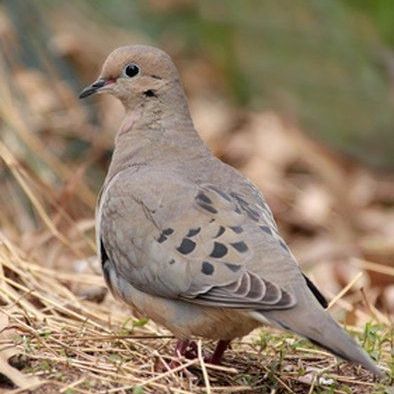
Doves or pigeons are from the Columbidae family, which has around 300 species of birds. Doves and Pigeons find an interchange in the use of their names, but in Ornithology, Doves represent smaller species of birds, whereas Pigeons represent the larger ones. A special type of feral domestic species often found in large cities is known as the “Rock Dove”. Some species like the White Ring-neck Doves are native to Africa, whereas the other species have originated from different parts of the world. For example, the Mourning Doves are very commonly found in North America and the Fruit Doves are native to Australia.
Description
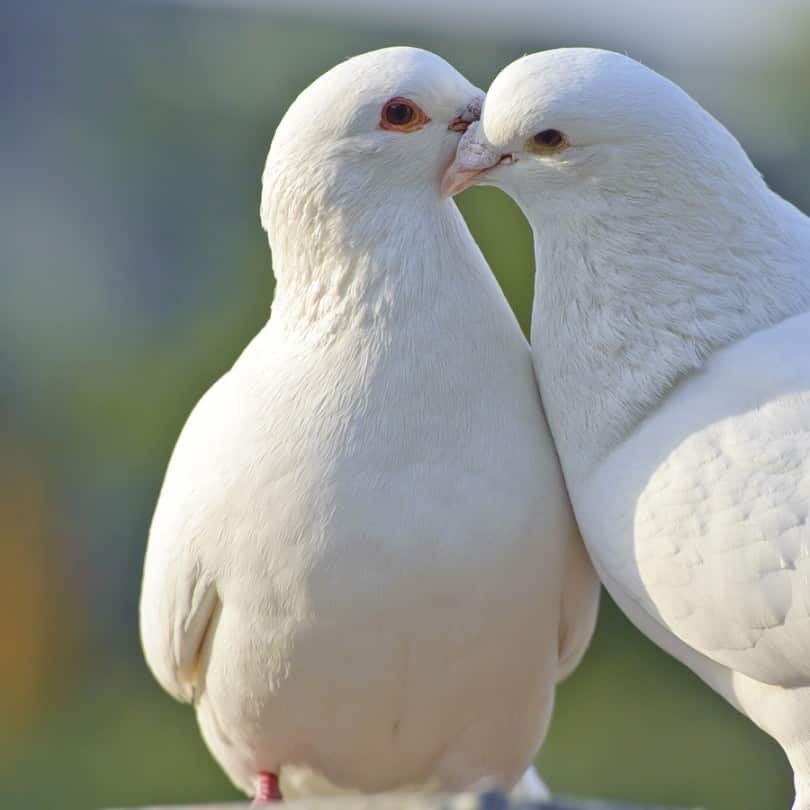
Doves are found in varied sizes and shapes. You can find the smallest Dove to be the size of a sparrow, and on the other hand, a large Dove can grow up to a height of a big chicken. The colors of different Doves also differ, like some are a pure white color, whereas some are blue, green or gray. Mostly they are found in pale colors. The body of a Dove depends on the species, some are long and skinny and some are stout and short. Larger birds have a deep-chested body frame and a muscular appearance. The beak of a Dove bird is small and narrow, and it is slightly bent at the tip. The cere is generally found featherless, and the nostrils are widely opened. They have a small head and scaly legs. The average lifespan of a pet Dove is between 10 to 25 years.
Habitat
Doves are very hardy and can be found in almost all parts of the world except the driest parts of the Sahara Desert, areas near high Arctic and Antarctica. There have inhabited mostly the oceanic islands of the world, like the Pacific Chatham Island, the areas near the Indian Ocean and Azores of the Atlantic Ocean. Various habitats are suitable for these birds like savannas, temperate woodlands, grasslands, mangrove forests, deserts and forests. The largest species found all over the world is Rock Dove. It is commonly found in Britain, Arabia, India, Central Asia, the Himalayas, Ireland, from northern Africa till Europe and in some parts of China, Japan, Australia and Mongolia.
Reproduction
Doves have a strong and powerful drive of reproduction, and are easier to breed. They undergo reproduction process indoor as well. These species of birds mate for life, and are monogamous in nature. They will not easily mingle with other birds; hence the breeders prefer to keep the juvenile in the pen, until they find their own mate. However, there is a possibility of choosing a same sex, hence if a pair produces more than 3 eggs, and then you can be sure that you have got two hens. For nesting, you should provide them with a shallow box, basket or pan. For the specific hole nesting birds, you can arrange a nest box. Fill half the nest with materials like twigs, willow pieces, straw and moss. The female bird lays two eggs, which are incubated for about 13 to 19 days. Both the parents take the responsibility of incubation. After the eggs hatch, for the first few days, both the parents feed the little ones with special milk known as ‘crop milk’. This milk consists of curd like material and partly digested food of the parents. The curd emerges from the parent’s crop, and hence it is called “crop milk.”
Types of Doves
White-Tipped Dove
It is a large Dove with small head. It has a brown back and chestnut color in the portion under the wings. It is mostly found in the southern Texas.
Common Ground Dove
These birds are small in size and have rounded wings, short bill and small tail. The color of the plumage is sandy brown with big dark spots on the flap of the wings. It is commonly seen in Florida and California and nearby places.
Inca Dove
It is a small Dove with a light brown body and dark brown wings. Its tail is long with a square tip. It is commonly found in cities and towns.
The other common types of Doves are:
- Mourning Dove
- White-winged Dove
- Eurasian Collared-Dove
- African Collared-Dove
How to Grow at Home
Food
Doves need a regular and rich nutritional food. Commercially available diets that contain rich green vegetable nutrients are suitable for the Doves. Green vegetables include endive, lettuce, clover, chickweed and spinach. Fresh fruits can also be provided like berries, pear and apple. For smaller species, a canary or budgie diet mix can be given. Seed eating types will love millet sprays that are highly nutritious. Seed=only diets are also available for these birds, but are insufficient to provide a well balanced diet. It should be supplemented with fruits and vegetables to fill any inadequate nutrients in the body. Pellets are also good for the Doves. Purchase good diet mix that is free of artificial flavors and preservatives.
Cage
Like the other pets, Doves also require some flight time. The cage should be large enough to expand its wings and to move around. The required cage size is 24 x 24 x 24 inch. The space between the bars should not be more than half an inch. They are not destructive type of birds; hence they can be placed in a wooden or plastic cage, but it should be of premium quality.
Care
Generally, these birds are very active from morning till dawn. They require very simple things like a simple cage, enough food and water, normal temperature and some attention. Hence, spend some time with these little creatures. Never leave these birds alone in the cage as they always need a pair or companion to live. Arrange for a mate of the same species, if you cannot find time for your pet. Basically, they are very social and affectionate, but if you spend very less time or rarely mingle, then they can turn very aggressive. Provide a balanced diet and fresh water to give a quality and long lifespan. Clean their cages and food vessels every week. Use mild detergents and disinfectants to keep away micro-organisms. Regular checkup will be helpful to keep the health updates.
Some Amazing Facts About Doves
- Doves collect as many seeds as possible, and store them in their crop, which is the enlarged portion of the esophagus.
- They are basically seed-eater and not insect eaters. They also prefer eating weed seeds from the farms and gardens.
- You can always hear the coooo-woooo sound or whistle made by these birds, but only the male bird has the ability to make these sounds. The main purpose of this whistle is to attract its mate.
- Their sleep posture is a bit different; they tuck their heads between the shoulders for a comfortable sleep.
- The oldest Dove lived for 30 years and 4 months.
Having discovered a fondness for insects while pursuing her degree in Biology, Randi Jones was quite bugged to know that people usually dismissed these little creatures as “creepy-crawlies”.