Do Frogs Have Teeth?
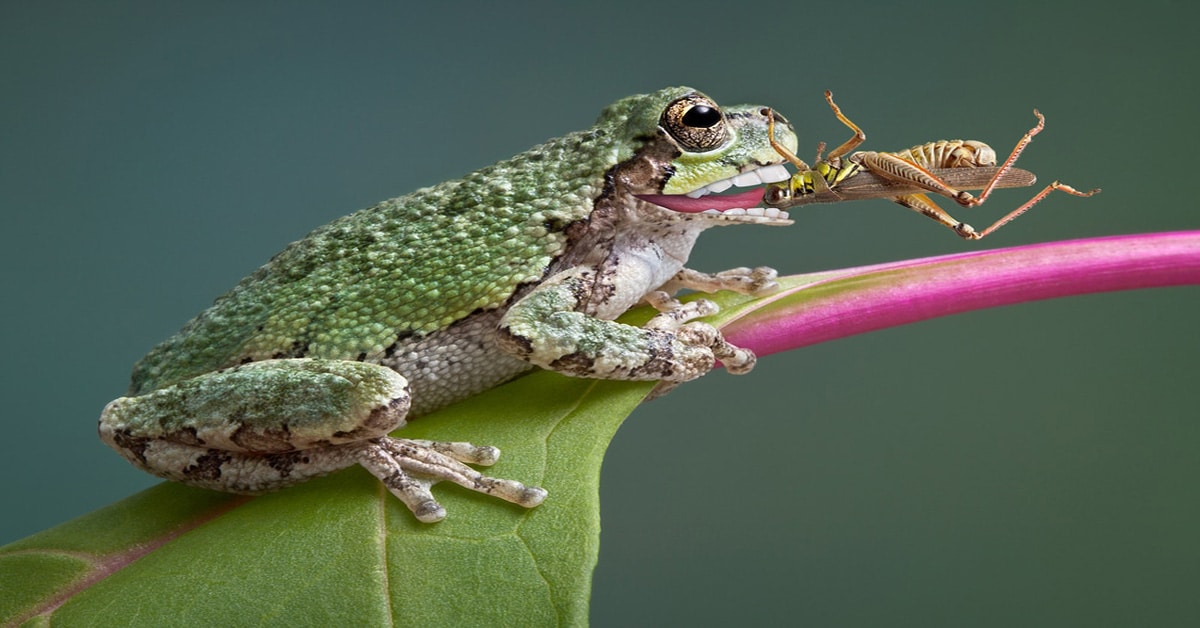
Quick answer: Many frogs have tiny teeth along the upper jaw, but most have no teeth on the lower jaw. They use these teeth to grip prey, not chew it, and swallow food whole. Toads have no teeth.
Many of you may be wondering, “Do frogs have teeth?”. Well, the answer is not all frogs have teeth. There are some species of frogs that have teeth. These species are carnivorous and so have very sharp teeth. After extensive study and research, the latest indications are that, after more than 200 million years, teeth in their lower jaw have started re-evolving.
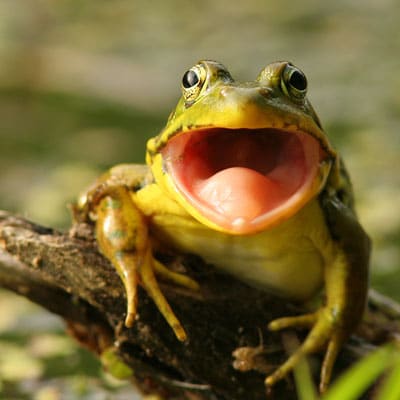
Gastrotheca Guentheri
Out of 6000 species, Gastrotheca Guentheri, native to South America, is the only frog species that has teeth in both jaws. The frog usually has teeth in its upper jaw. For carnivorous frogs, teeth are very crucial; they help in chewing their prey. These species have fanged teeth on their upper jaw.
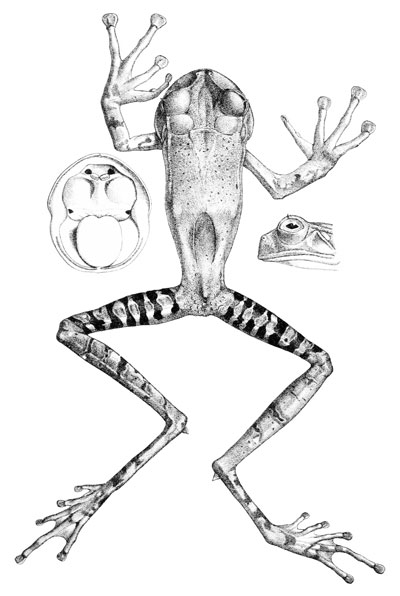
Research analysis states that the ancestor of frogs had vanished their teeth about 230 million years before. These frog species are amphibians and their size ranges between 7.7 mm and 300 mm. You can often find them in Papua New Guinea and Cameroon. They feature three membranes for eyelids. The transparent membrane safeguards their eye underwater. Unlike frogs, toads are toothless. Frogs use these teeth to clutch their prey and then chew on it. The bull frog of Africa is one that can grasp large animals such as frogs and mice. They have sharp conical teeth.
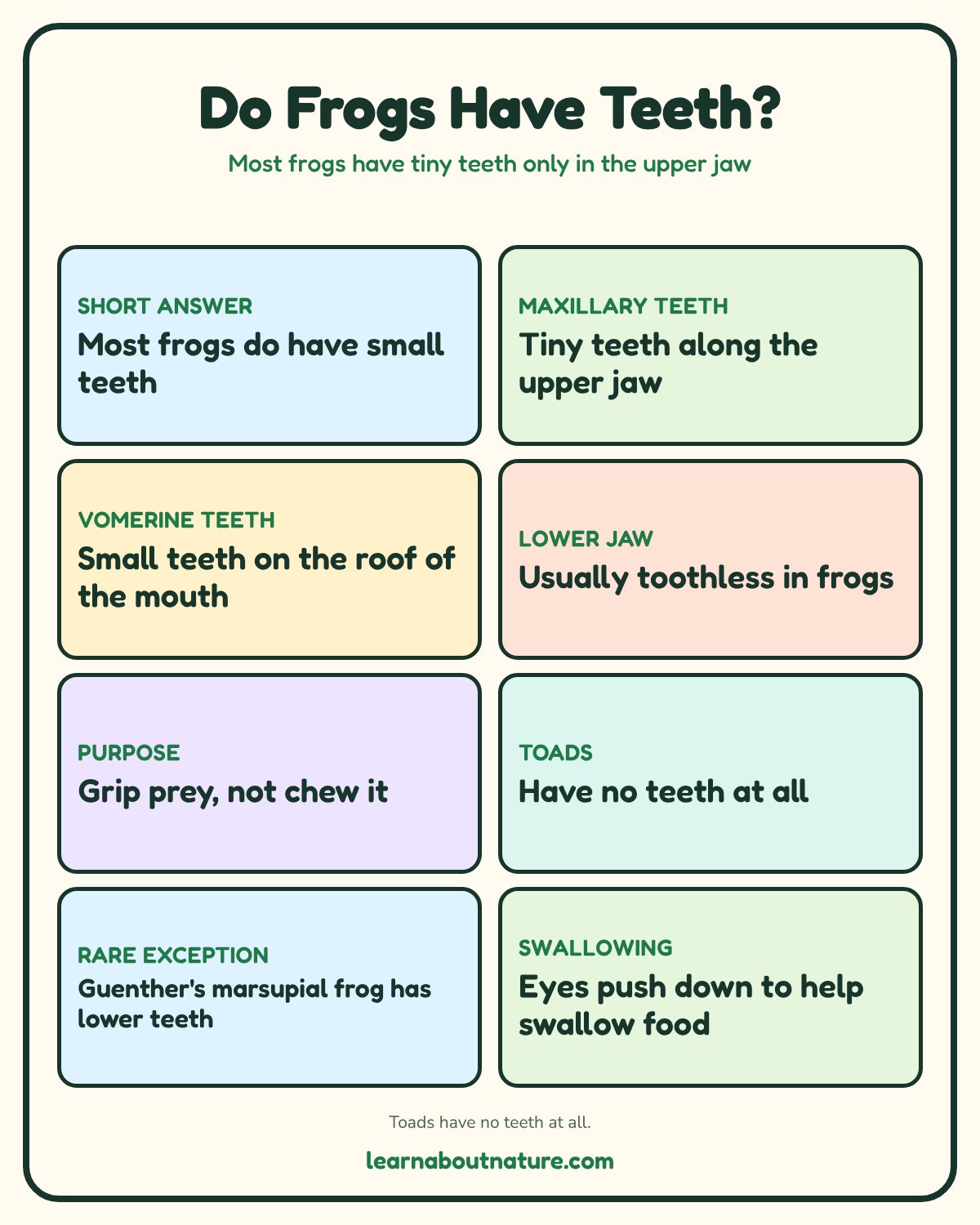
Most Frogs Have Some Vestigial Teeth
- The cone like teeth at the edges of the upper jaw of frogs are known as Maxillary Teeth.
- Frogs have Vomerine Teeth on their upper jaw as well.
- They swallow their entire prey as it is. Teeth in the upper jaw are used to grasp the food and grip the prey. After the food is properly clutched, these frogs, will then swallow the entire prey down the throat as their meal.
- The frogs with teeth do not attack humans. They are among the world’s gentlest animals. To hold their prey they use their tongue and then pull back it to the back of the throat to eat. Most of the time they swallow their prey as it is. The so called teeth only help them to grip the prey before swallowing them whole, using
- Frogs are not herbivorous. They not only rely on small insects, but also hunt for tiny mammals, some of which includes bats, rats and the like. Their sharp teeth help them to grasp their prey. Therefore, frogs use their teeth to hold their food rather than chewing. Frogs retract the eyes into the head, assisting them in swallowing the food. They have a muscle that is connected between the bottom of the eye and the roof of the mouth. Retracting helps to swallow the food smoothly. Frog’s teeth are useless for masticating. They do not help in chewing the food; they are used for grabbing the food and to prevent the prey’s escape from the mouth.
Frogs Have Two Different Kinds of Teeth:
Some frogs have tiny teeth. They are Primary Maxillary and Vomerine In the upper jaw, these frogs have Maxillary teeth at the same place where humans have.These frogs also have two Vomerine teeth on their upper mouth palate.The Gastrotheca Guentheri frog species have teeth in their both jaws. They are the natives of Ecuador and Colombia.
The only difference between frogs and human’s teeth is their usage. Frogs use these teeth to grab their prey while humans use teeth for chewing. Frog swallows their entire prey and never chews. Their lower jaw is toothless; they only have teeth in their upper jaw and upper mouth palate.
Toads are toothless; they do not have teeth at all but many frogs have teeth.
Many have Maxillary Teeth on the upper jaw and Vomerine Teeth placed on the mouth’s roof. The teeth are called Pedicellate, a condition where the root is separated from the crown by fibrous tissue. There are no teeth in their lower jaw.
Frog Teeth FAQs
Do frogs have teeth?
Most frogs have small teeth, but only in the upper jaw. These include maxillary teeth along the edge of the upper jaw and vomerine teeth on the roof of the mouth. Frogs do not chew; their teeth help them grip slippery prey before swallowing it whole.
Do toads have teeth?
No. True toads in the family Bufonidae have no teeth at all. They catch insects and other small animals with their sticky tongues and swallow them whole. This lack of teeth is one of the features that scientists use to separate true toads from many other frogs.
Which frog has teeth in both jaws?
Gastrotheca guentheri, a marsupial frog from the Andes of Colombia and Ecuador, is the only known frog with true teeth in both its upper and lower jaws. Scientists believe frogs lost their lower teeth long ago and that this species re-evolved them, which is a very rare event in evolution.
What are vomerine teeth?
Vomerine teeth are small teeth on the vomer bones in the roof of a frog’s mouth. They usually come in two small groups. Along with the maxillary teeth on the upper jaw, they help a frog hold on to wriggling prey so that it can be swallowed whole.
Can frogs bite?
Most frogs are too small to hurt people. A few large species, such as the African bullfrog and Pacman frogs, have tooth-like projections on the lower jaw called odontoids and can give a painful bite if handled. They use these to grip large prey such as mice and other frogs.

Randi Jones is the owner and founder of the Nature Gift Store, an online retailer specializing in nature-themed gifts, educational science projects, live animal nature kits and real butterfly artwork. A biology graduate who fell in love with insects, she founded the company in 2001 to make active learning about nature fun, accessible and engaging for children and adults. Her store offers real butterfly frames, home and garden decor and educational live animal kits, including ant farms, worm farms, tadpoles, ladybugs and hermit crabs, and she runs a bug museum in Washington featuring live animals like Eddie the Iguana alongside other reptiles and insects. Randi wrote most of the guides on this site. They first appeared on her long-running nature sites, including Monarch-Butterfly.com, Ladybug-Life-Cycle.com, Frog-Life-Cycle.com, Dragonfly-Site.com and Butterfly Pictures, which have now been brought together here at Learn About Nature.