Black Marsh Turtle – Fresh Water and Terrestrial
Scientific Classification
| Kingdom: | Animalia |
| Phylum: | Chordata |
| Class: | Reptilia |
| Order: | Testudines |
| Family: | Geoemydidae |
| Subfamily: | Geoemydinae |
| Genus: | Siebenrockiella |
| Species: | S. crassicollis |
| Binomial name: | Siebenrockiella crassicollis |
Siebenrockiella crassicollis go under the names Black marsh turtle, Siamese temple turtle, and smiling terrapin, among others, are freshwater turtles widespread in the southeastern part of Asia. Out of the two species, you find one classified under the genus Siebenrockiella belonging to the family Geoemydidae.
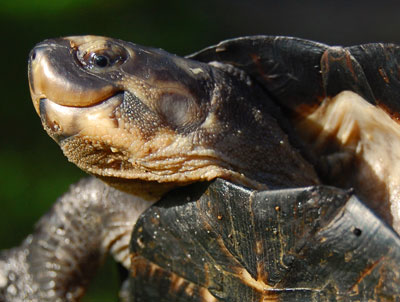
These Black marsh turtles range from small to medium size and are totally black, excepting the head where they sport white and yellow marks. Although they are aquatic they want still water bodies or quiet water bodies with intense vegetation. In the Buddhist temples of South East Asia, they rear these Black marsh turtles as sacred animals in the ponds and as common pets.
Black marsh turtles are carnivorous and like underwater feeding. Their diet consists of small fish, amphibians, worms, crustaceans, insects, and mollusks. However, they rarely feed on fruits or scavenge rotting plants or corpses of larger animals that die in the water. Young ones are particularly more flesh eaters than adults.
Anatomy
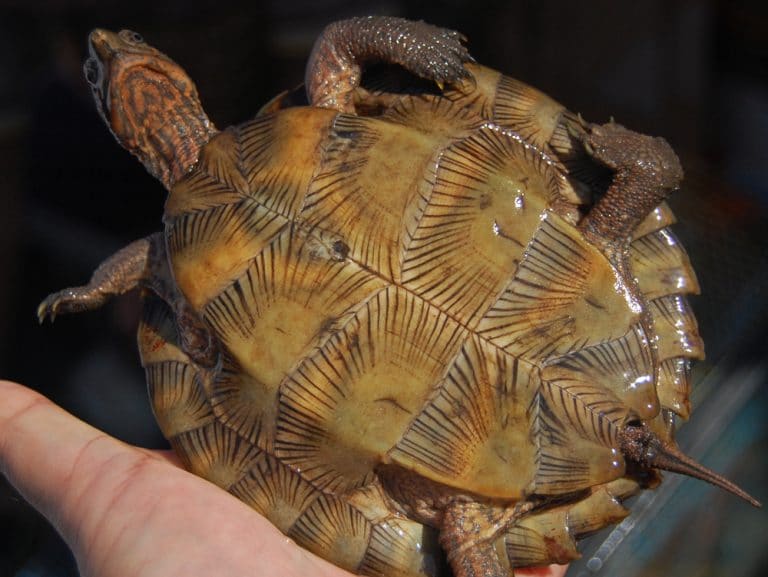
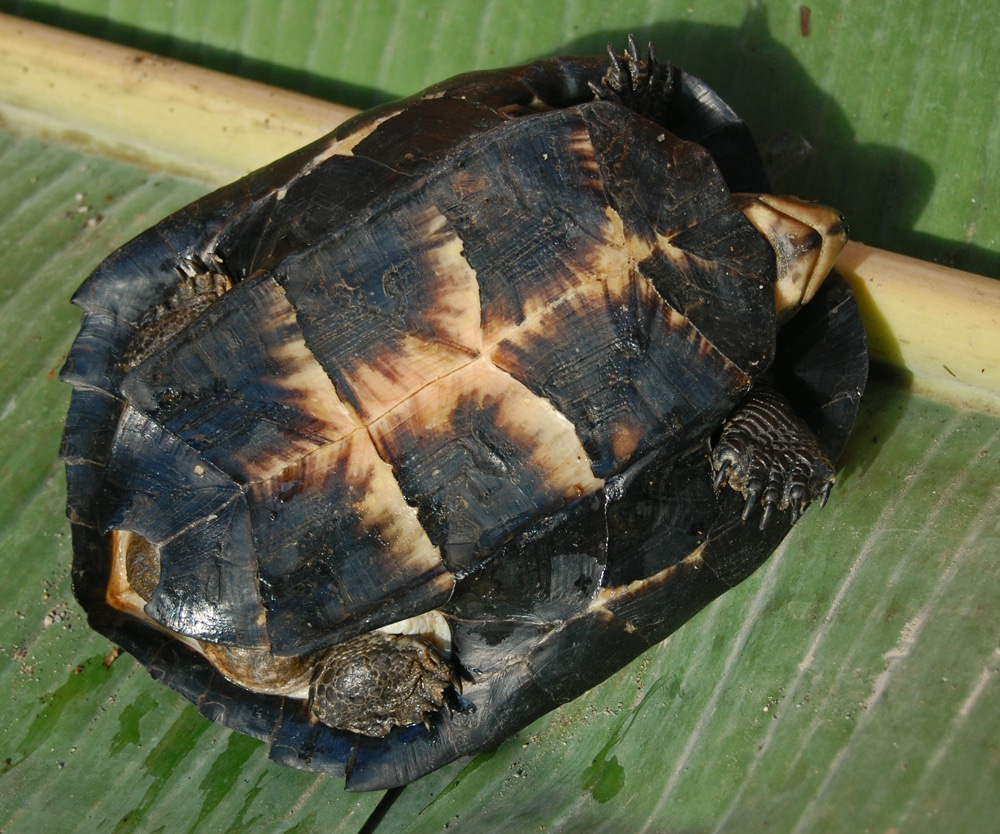
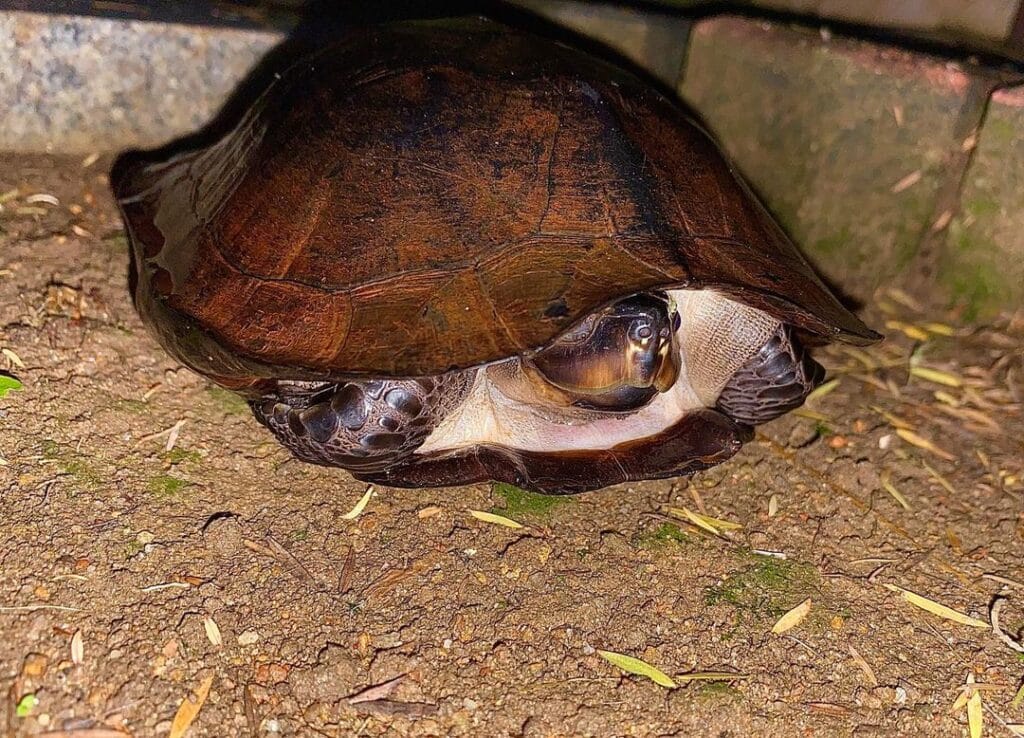
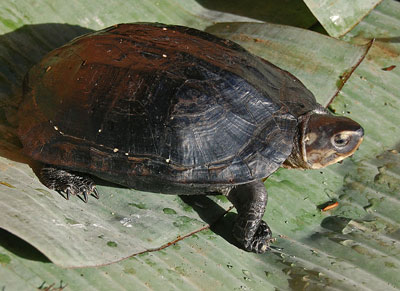
You can find adult Black marsh turtles in small or medium in size of about 17cm (6.7in) and occasionally you can see them seen in sizes of 20cm (7.9in). The egg-shaped covering (the dorsal shell) is broad at the middle part with its hind part resembles a saw-edge. A conspicuous central crest (called keel) passes through the mid portion of the shell. You can see two sideways keels even though that they are often invisible. The case is more or less brown, having totally black glowing designs. The tail, limbs and neck are black to dark gray. The turtle’s broad head has a snout pointing upwards. It is mostly black on the top with yellow or cream designs rounding its eyes and near the throat. If some predator threatens the black marsh turtles; they expel a stinking discharge from their cloaca to drive away the enemies.
Habitat
The black mud turtle resides in shallow warm water bodies, in thick plantations and soft beds. Most of the times they take pleasure living in the low water muddy land. In spite of this they swim about in still and deep waters and come to the land area occasionally for basking.
As a Pet
Housing
The least size of aquarium required for one turtle is a long aquarium of 20 gallons. Maintain the water temperature to 75 to 80°F (24-28°C). You would do well to offer these turtles with shallow water and other secret places to assist this shy animal a safe hideaway..
Heating, Lighting and Humidity
The Black marsh turtle rarely basks; still a dry area and basking light in the vivarium is a must. For psychological and physical needs give an extra reptile light. At day time, this basking light warms up one end to a temperature of 85°F (29°C). Maintain a high air humidity by keeping the aquarium slightly covered.
Water
Properly filter and heat the water. Use a separate vessel for feeding your turtle. Maintains clear water in the aquarium.
Food
The marsh turtle feeds on a diet of plants; few green peas (NO SPINACH), dark-leaf lettuce, tender weeds and the like. As for meat, try slices of fresh water fish, dry cat food, and fresh fat-free ground beef. Supplement with a pinch of powered vitamins, fruit, powdered calcium liquid multivitamin one drop, once in two to three days.
Breeding
While enticing a female the male Black marsh turtle approaches the female nodding its head and biting the legs of the female earlier to mating. In Malaysia the hatching season prolongs from April to June where the female turtle lays three to four clutches, in every clutch there one or two eggs. These eggs hatch within 68 or 84 days, these tiny hatchling’s emerge in sizes less than 5 cm.
Handling
These shy Black marsh turtles need time for acquaintance.
Having discovered a fondness for insects while pursuing her degree in Biology, Randi Jones was quite bugged to know that people usually dismissed these little creatures as “creepy-crawlies”.