Red-Eared Slider – A Favorite Pet Over the World
Scientific Classification
| Kingdom: | Animalia |
| Phylum: | Chordata |
| Class: | Reptilia |
| Subclass: | Anapsida |
| Order: | Testudines |
| Family: | Emydidae |
| Genus: | Trachemys |
| Species: | T. Scripta |
| Subspecies: | T. s. elegans |
| Trinomial name: | Trachemys scripta elegans |
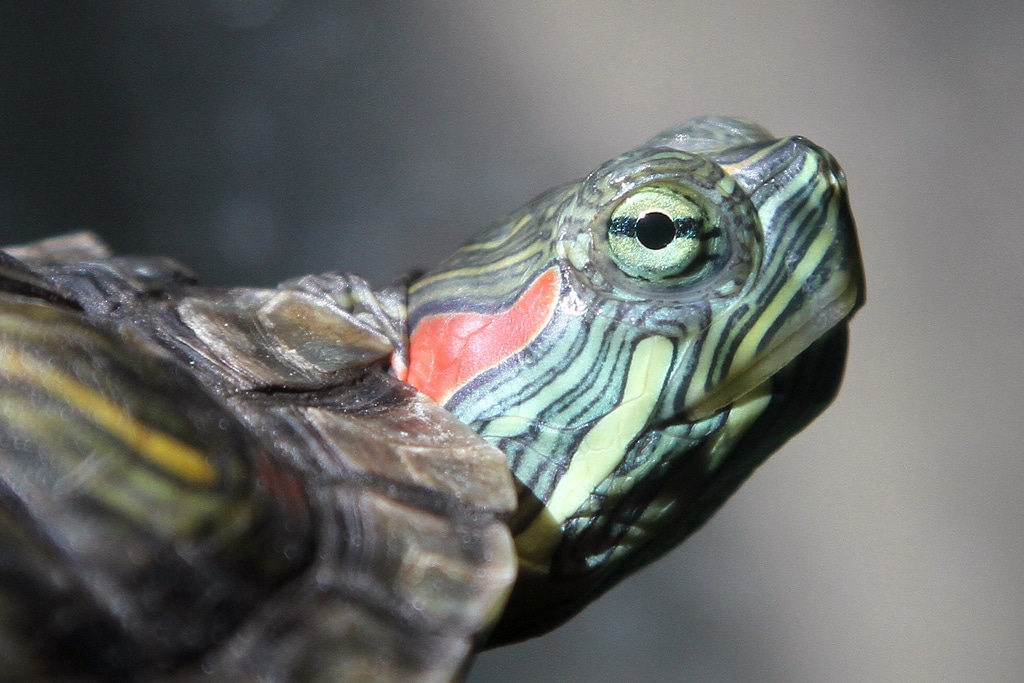
The red-eared slider turtle (Trachemys scripta elegans), otherwise named the red-eared terrapin turtle, in the group Emydidae, is semi-aquatic. This turtle is secondary to the pond slider. This turtle is a well-liked pet in the United States and all over the world. Besides, maintaining this turtle is not an issue and as such, it is the world’s most traded turtle. It inhabits northern Mexico and the southern part of the United States. On account of its pet qualities, you can find it in other places as well. In addition, in several areas, it is an invasive variety. The red-eared slider takes its name after the tiny red dash about their ears. This turtle obtained the name ‘slider’ from its ability to slide down logs and rocks and dip into the water.
Anatomy
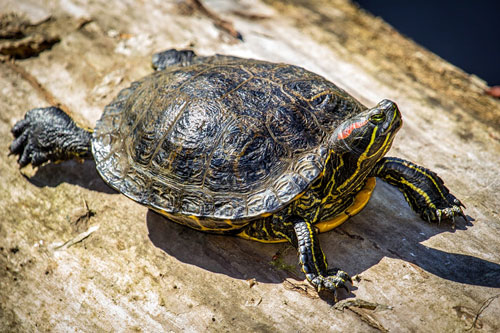
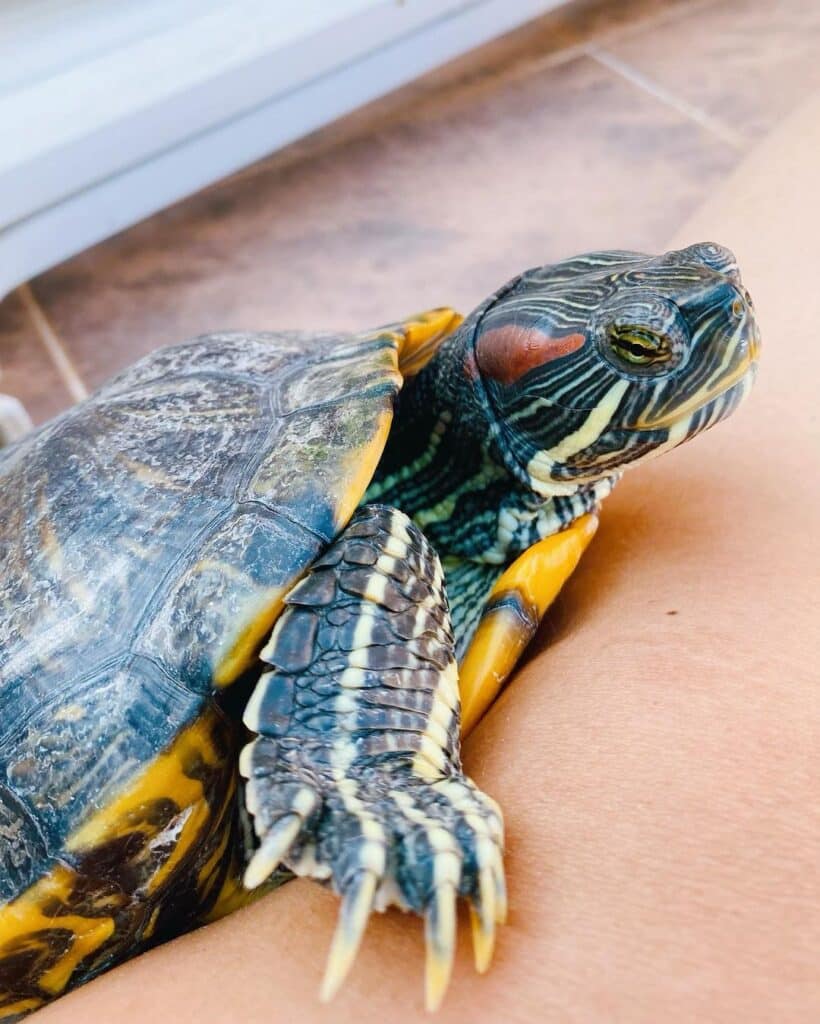
The exterior of this variety grows to a length of 30cm, however, certain varieties grow more than 40cm, On an average, it reaches 12 to 20cm. In this species, females grow slightly bigger than the males. The average life of this turtle is 20 to 30 years; however, some turtles live up to 40 years or more. The exterior (upper shell) has markings on it with light and dark shades varying to a great extent. Its background is dark green. The ventral section of the shell (lower shell) is mostly light in color. Its head is blunt faced; the red-eared turtles eyes have a mark running diagonally or horizontally across its pupil; its periphery is light green. Most of the scutes have short yellow muzzles with dark uneven paired markings in the center. The leg, head and tail are green with minute uneven yellow markings. Irrespective of their sex, practically you find no difference in the red-eared slider juveniles.
Habitat
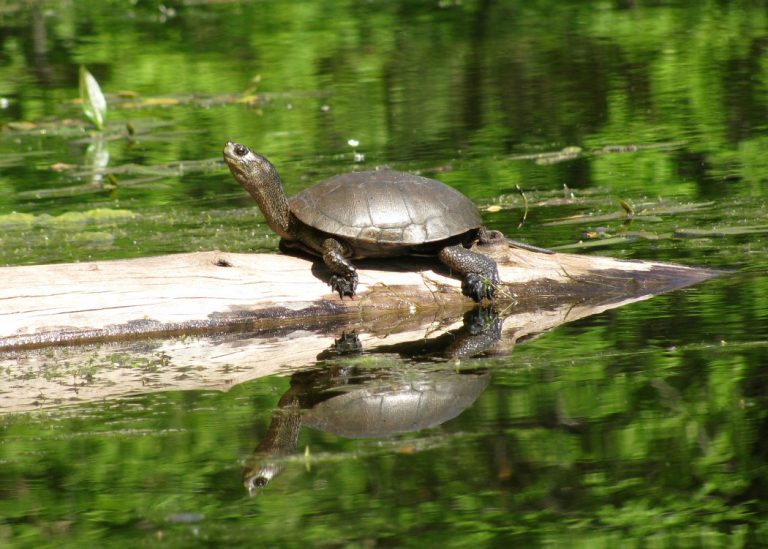
Basically the red-eared sliders originate in the Gulf of Mexico, Mississippi River and the warm climatic regions of the southeastern parts of the United States. These turtles dwell in calm water regions where they are capable of crawling out of the water and climbing on tree trunks and rocks to warm themselves in the sun.
As a Pet
Housing
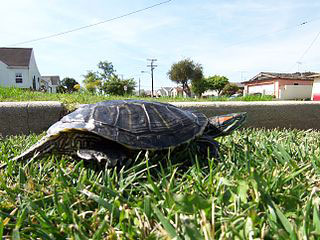
A 75 gallon aquarium will suffice for an individual average sized adult male turtle, but the female turtles will require a tank of size at least 125 gallon. This permits them a good stay (quality of life). Apart from this, give them sufficient water, health care and filtration. Red-eared sliders are passionate baskers, hence provide a heat lamp in the aquarium over the basking platform and simulate a day temperature of nearly 85 to 90°F. The substrate you use can vary from river rock, sand, bare bottom or any convenient size gravel. Give the turtle provision for resting on the surface with submerged driftwood or anything else, particularly for the young turtles.
Temperature Range (°F)
A young or sick turtle requires a water temperature of 80 to 82°F (26.5 to 27.5°C), whereas a healthy one, older than one year, may need a temperature of about 77 to 80°F (25.5 to 26.5°C). To tempt the turtle to warm up itself through basking, keep up the basking (dry land part) temperature to 10°F (6°C)] above the water temperature. The heat of the light is crucial for the turtles, for which a UVB light will suffice to give 5% excess light.
Diet
These young omnivorous Red-eared sliders that are mainly carnivore, progress as they grow to become mainly herbivore when they become adults. Most of the pet keepers adopt a standard brand name for their commercial diets (normally ReptoMin Aquatic Turtle Diets or Mazuri), carnivorous diet (about 25 – 80 %) and treats of crickets, crayfish krill, earthworms and ghost shrimp. Romaine lettuce, Anacharis offer good herbivorous staple food.
Note
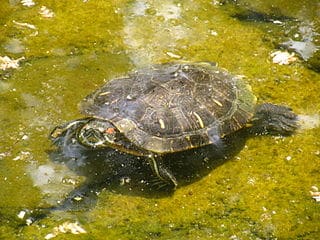
A red-eared slider turtle is ideal as a pet if you are on the lookout for a lifelong companion. These turtles live a long life provided you take proper care of them. They will never cease to overwhelm you.
Having discovered a fondness for insects while pursuing her degree in Biology, Randi Jones was quite bugged to know that people usually dismissed these little creatures as “creepy-crawlies”.