Coral Snakes

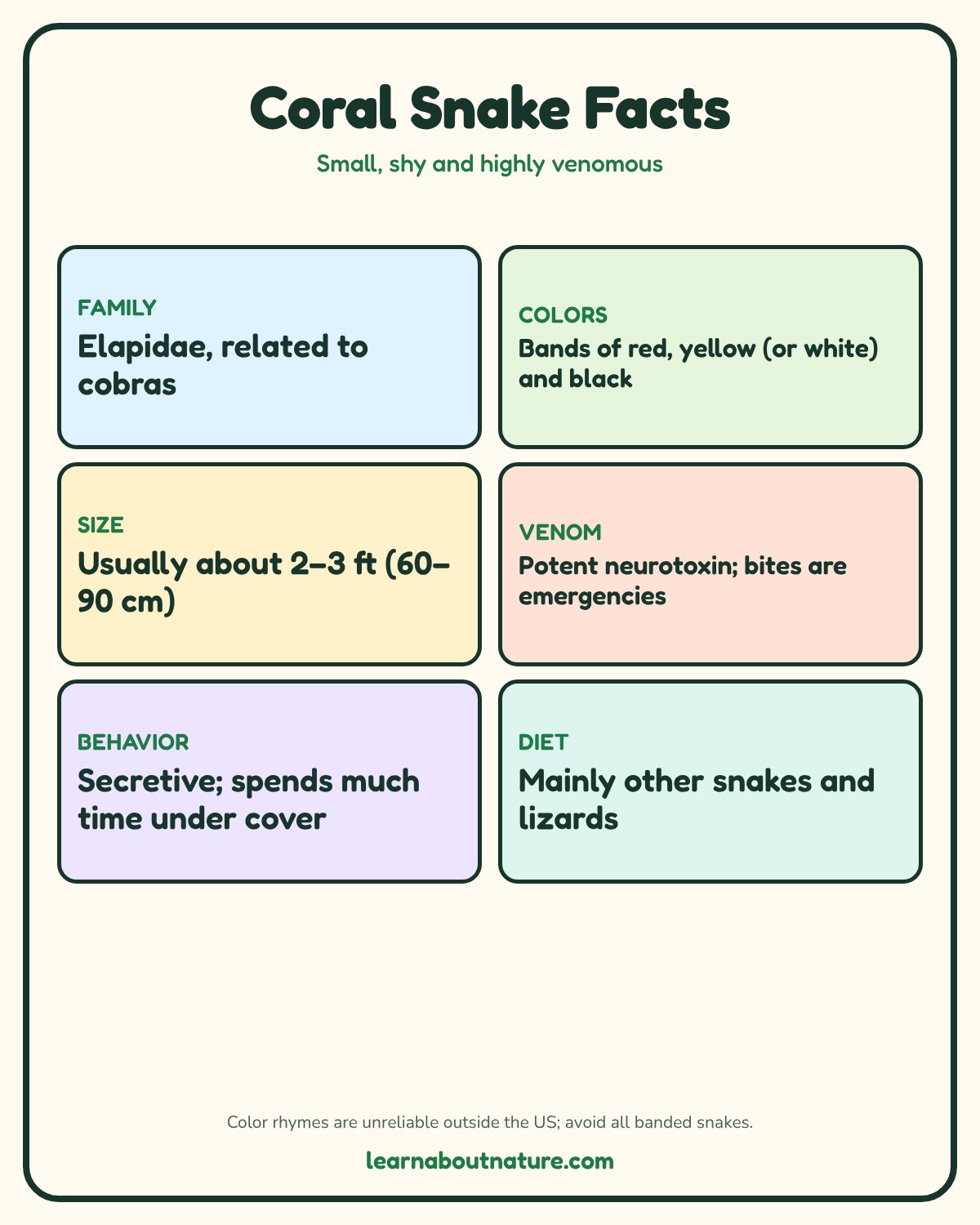
Coral snakes are small, brightly banded, highly venomous snakes found in the Americas and in Asia. They belong to the same family as cobras, mambas and sea snakes, but they are shy, secretive animals that rarely bite unless someone picks them up or steps on them.
Scientific Classification & Quick Facts
| Common name | Coral snake |
| Scientific name | Micrurus |
| Kingdom | Animalia |
| Phylum | Chordata |
| Class | Squamata |
| Family | Elapidae |
| Type | Reptile (highly venomous snake) |
| Diet | Other small snakes, lizards, some frogs |
| Habitat | Forests, brushy woods, marshes, sandhills; often underground |
| Native range | The Americas and Asia |
| Size | 45-50 cm (18-20 in); some reach 1 m |
| Special feature | Pops its cloaca and lifts tail to confuse enemies |
Types of Coral Snakes
Coral snakes are members of the family Elapidae, the group of venomous snakes with short, fixed fangs at the front of the mouth. There are more than 80 species of coral snakes in the Americas, from the southern United States down to Argentina, and a smaller number of Old World coral snakes in Asia.
Three species live in the United States: the eastern coral snake of the Southeast, the Texas coral snake, and the small Sonoran or Arizona coral snake of the Southwest.
Red, Yellow and Black
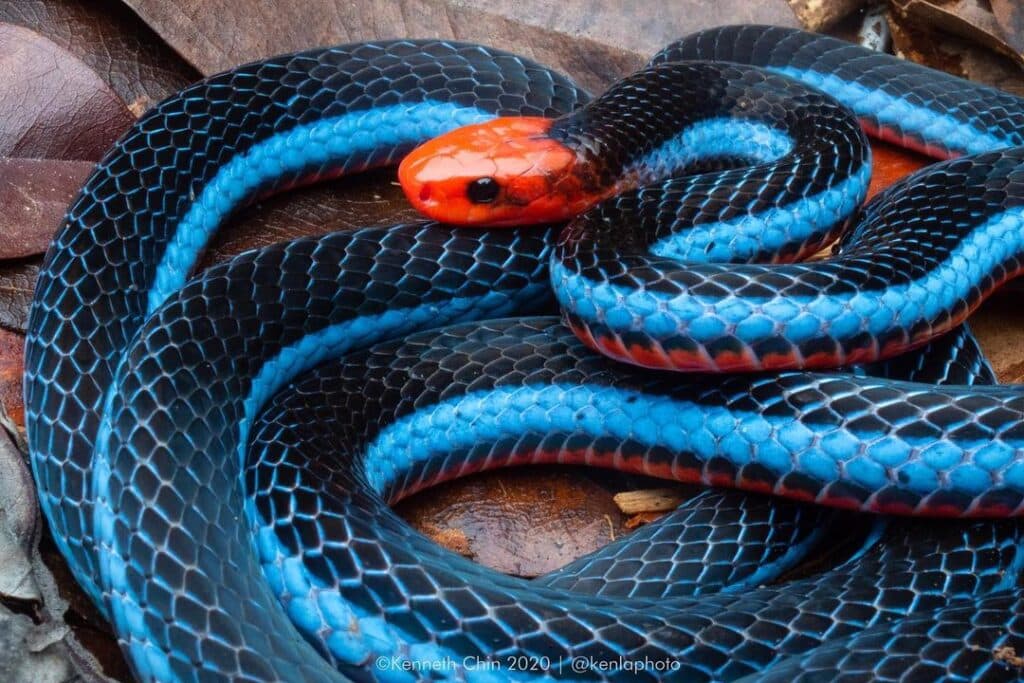
Most coral snakes are ringed with bands of red, yellow (or white) and black. These bold colors are a warning to predators: “I’m dangerous, leave me alone!” Several harmless snakes, such as scarlet kingsnakes and milk snakes, have similar colors, which helps protect them too.
In the United States, people use an old rhyme to tell them apart: “Red touches yellow, kills a fellow; red touches black, venom lack.” On US coral snakes, the red bands touch the yellow ones. But the rhyme does not work in Mexico, Central or South America, where many coral snakes have different patterns, and some Asian species are even blue. The only safe rule anywhere is: never touch a brightly banded snake.
Anatomy

Coral snakes are slender, with smooth, shiny scales. Most species are about 45 to 75 cm (18 to 30 inches) long, and only a few ever reach about 1 m (3 feet). Some are as thin as a pencil. Their heads are small and rounded and barely wider than the neck, and their tails are short and blunt, so it can be hard to tell which end is which. Their eyes are small with round pupils.
Like other venomous snakes in their family, coral snakes have small fangs fixed in place at the front of the upper jaw. They cannot fold their fangs back like rattlesnakes and other vipers can. Their venom is a powerful neurotoxin, which attacks the nerves and can stop muscles, including the ones used for breathing, from working. A bite is a medical emergency, even if it does not hurt much at first.
Behavior

Coral snakes are secretive and rarely seen. Most spend their time hidden underground or under leaf litter, logs and rocks. They tend to come out around dawn and dusk, after rain, or during the breeding season. As they move, they poke their noses under leaves and into holes, hunting for other small snakes.
When threatened, a coral snake often hides its head under its coils and raises and waves its curled tail, which looks like a head. This tricks predators into attacking the wrong end. The little Sonoran coral snake even makes a popping sound by pushing air out of its cloaca, the opening at the base of its tail, a bit like a tiny burp from the wrong end.
Unlike vipers, which strike and let go, a coral snake tends to hold on and chew when it bites, to work its venom in. Fortunately, they are not aggressive. In the United States, coral snakes cause well under one percent of venomous snakebites each year, and most happen when people try to handle them. Antivenom is available, so anyone bitten should get to a hospital straight away.
Habitat
Coral snakes live in many kinds of places, from tropical rainforests to dry scrub and deserts. They need loose soil or thick leaf litter to burrow into. In the United States, eastern coral snakes favor pine woods, scrubby sandhills, hardwood forests and the edges of marshes, while the Sonoran coral snake lives in rocky desert and grassland.
Breeding

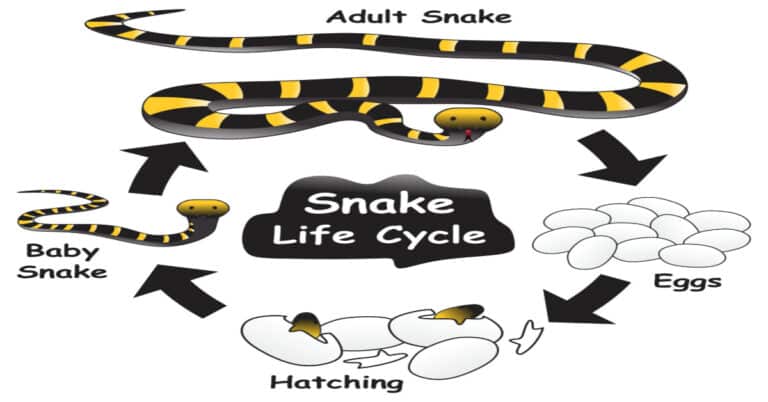
Most venomous snakes in North America, such as rattlesnakes and copperheads, give birth to live young. Coral snakes are different: they lay eggs. The eastern coral snake lays about 3 to 12 eggs in early summer, usually hidden in rotting logs, leaf litter or soil. The eggs hatch in late summer, and the babies are about 18 to 20 cm (7 to 8 inches) long. Hatchlings are brightly colored and fully venomous from the moment they hatch. The smaller Sonoran coral snake lays just 2 or 3 eggs.
Because coral snakes eat other snakes, they sometimes eat each other too, which makes breeding them in captivity tricky even for experts.
Coral Snakes in Captivity
Coral snakes are not pets. They are dangerous, very hard to feed and easily stressed, and in many places keeping them requires a special permit. They are mostly kept by zoos, research centers and venom labs, where trained keepers work with them for education and to produce antivenom.
In these facilities, coral snakes live in secure, locked enclosures with a deep layer of burrowing material, such as shredded cypress mulch, sphagnum moss or peat, kept slightly damp at one end and dry at the other. They also get flat pieces of bark and other hiding places, and a shallow water bowl large enough to drink from and soak in.
Food
In the wild, coral snakes mostly eat other snakes and lizards. The Sonoran coral snake specializes in tiny worm-like blind snakes and thread snakes, while some tropical coral snakes also eat frogs, eel-like amphibians or fish.
Eastern coral snakes eat small snakes such as young racers, corn snakes, green snakes and burrowing snakes, as well as legless glass lizards and skinks. Because they are such picky eaters, feeding them in zoos is a real challenge. Only a few individuals learn to accept mice that have been scented with the smell of a snake or lizard.
Handling
Coral snakes should never be handled. Even experts avoid touching them and use special tools when they must move one. If you see a coral snake, or any snake you cannot identify, stay calm, back away slowly and leave it alone.
Coral snake FAQs
Are coral snakes dangerous?
Coral snakes are very venomous, but they are shy and rarely seen, and they cause less than 1 percent of snakebites in the United States. Never pick one up.
How can you tell a coral snake from a harmless lookalike?
In the United States there is an old rhyme: ‘Red to black, venom lack; red to yellow, kill a fellow.’ If red touches yellow, it is a coral snake. This rhyme only works in North America.
What do coral snakes eat?
They mostly eat other small snakes and lizards. Eastern coral snakes also eat frogs. They poke around with their noses to find food.
Do coral snakes lay eggs?
Yes. The eastern coral snake lays 6 or 7 eggs in summer, and they hatch in early fall. The babies are about 7 to 9 inches long and are venomous from birth.
Where do coral snakes live?
They live in forests, brushy woods and marshes in the Americas and Asia, often hidden under leaf piles or underground. In the southeast US they like scrubby sandhills.

Randi Jones is the owner and founder of the Nature Gift Store, an online retailer specializing in nature-themed gifts, educational science projects, live animal nature kits and real butterfly artwork. A biology graduate who fell in love with insects, she founded the company in 2001 to make active learning about nature fun, accessible and engaging for children and adults. Her store offers real butterfly frames, home and garden decor and educational live animal kits, including ant farms, worm farms, tadpoles, ladybugs and hermit crabs, and she runs a bug museum in Washington featuring live animals like Eddie the Iguana alongside other reptiles and insects. Randi wrote most of the guides on this site. They first appeared on her long-running nature sites, including Monarch-Butterfly.com, Ladybug-Life-Cycle.com, Frog-Life-Cycle.com, Dragonfly-Site.com and Butterfly Pictures, which have now been brought together here at Learn About Nature.