Uva Ursi
Scientific Classification
| Kingdom: | Plantae |
| Order: | Ericales |
| Family: | Ericaceae |
| Genus: | Arctostaphylos |
| Species: | A. Uva-Ursi |
Uva ursi plant is also known as Pinemat Manzanita, Bearberry, Hog Berry, Mountain Box, Arberry, Mountain Cranberry, and Kinnikinnick. It is a woody ground cover shrub. In gardens, it is an attractive evergreen plant and is also used for the control of erosion. Mainly its leaves are used in the making of medicines. Uva Ursi is a Latin name that means “bear’s grape”. This herb has astringent and antimicrobial properties. Its astringent property helps in the treatment of bed-wetting problems and its antimicrobial property can help in fighting infections. It is a slow-growing plant.
History
From ancient times Uva Ursi has been used for medicinal purpose. From 2nd Century it has been used as an astringent, diuretic and antiseptic. In some parts of Russia it was used as a beverage tea and its berries were considered as an aid in weight loss. Native Americans smoke it by combining with tobacco.
Anatomy
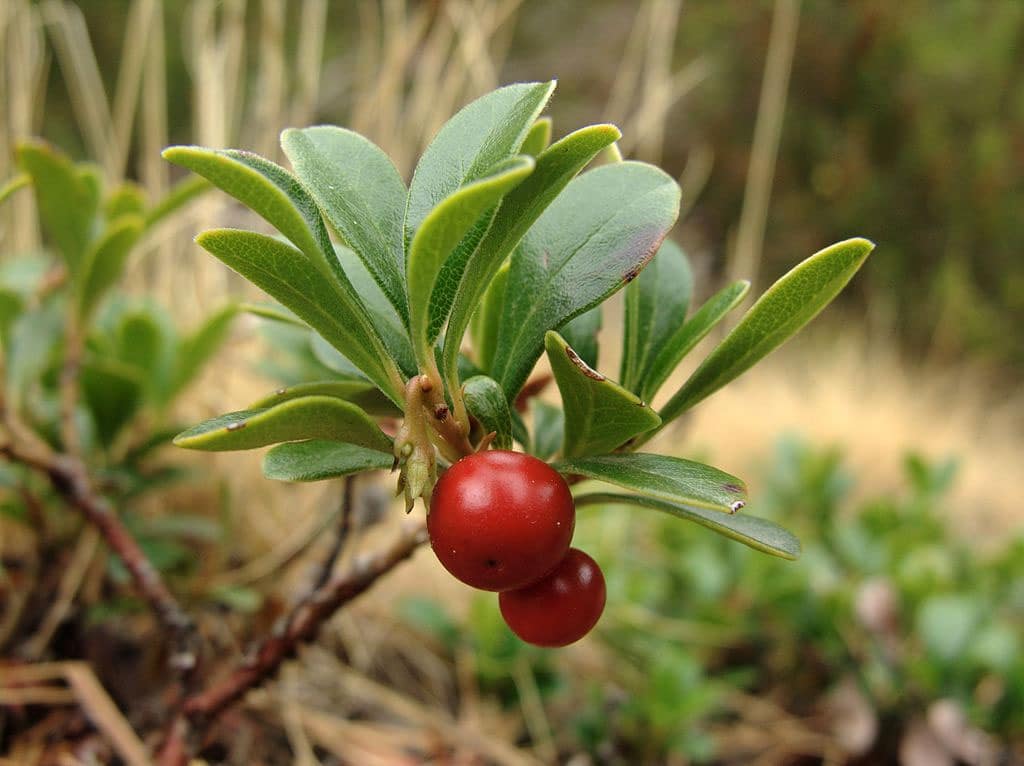
The Uva ursi evergreen shrub produces red berries. It has short and creeping branches. These branches are reddish brown in color. It has white or pink bell shaped flowers. These flowers are followed by clusters of berries. Its Flowers bloom in the summer season. Its stem is decorated with small and glossy leaves. Its leaves are mixed with tobacco and used in smoking.
Habitat
Uva Ursi grows in alpine forests in many regions such as Europe, the Himalayas, the Iberian Peninsula, North America and Siberia. It is found from Labrador to Alaska, in Southern California and Virginia.
Soil for Planting
The Valerian plant requires fertile, moist and well drained soil. Rich and loosed soil is ideal for the plant. It thrives in high humus content soil. It prefers nutrient-rich and slightly acidic soil. Loamy and sandy soil is also suitable for this plant.
Planting
Planting of Uva ursi plant is done by sowing seeds. Usually its seeds germinate in 2 to 3 months. It is also propagated by stem cuttings or softwood cuttings. It is planted for medicinal purpose.
Watering
Watering is essential for the growth of Ufa Ursi plants. They require deep and regular watering. Once established, watering once in a week is sufficient.
Temperature and Humidity
The seeds of Uva Ursi plant germinate at 15 degrees C. This plant grows best in USDA zones 2 to 6. It grows poorly in humid and hot summer season. It cannot survive in temperature below 33 degree F.
Flowering and Maturing Care
The Uva Ursi plant requires less care and maintenance. It requires full sunlight to partial shade. It can also tolerate drought. It does not require fertilizers.
Harvest
The leaves of Uva Ursi plant are harvested in the month of early autumn. Sometimes its berries are also harvested in the autumn season along with other parts of the plant.
Pests and Pesticides
No serious diseases and pests have known to be a problem for the Uva Ursi plant. It is susceptible to diseases like black mildew, root rot, rust, leaf spot and leaf gall. These diseases do not cause any serious damage to the plant.
Uses
Uva Ursi herb is used in the treatment of infections of the bladder and the kidney, urinary tract infections, swelling of urinary tract and in painful urination. It is also used to treat bronchitis and constipation. This herb is also used as a general tonic for the pancreas or the liver and for weakened kidneys. Its leaf extract is helpful in removing excess liquid of the body. Its dried fruits are used as beads in a necklace. Its leaves and fruits are also used in the making of dyes.

Having discovered a fondness for insects while pursuing her degree in Biology, Randi Jones was quite bugged to know that people usually dismissed these little creatures as “creepy-crawlies”.