What Do Tortoises Eat?
More people now are getting intrigued with the idea of keeping tortoises as pets. As a matter of fact, the maintenance cost is minimal and you have over 250 varieties as your choice. Prior to taking a decision on having a tortoise as a pet in your home, knowledge of their expectations and how to manage them is essential.
Food with good nutritive value is quite essential for optimizing its health. It is vital that you have sufficient knowledge of the right food your special tortoise requires.
The majority of the tortoises is herbivorous, even so, it is insufficient for you to feed them with just a little limp lettuce leaves and at times tomatoes. In addition give them other foodstuff having high nutritive value containing such materials as water, fats, fiber, carbohydrates, vitamins, proteins, minerals and enzymes. With these items, they become free from illness and they have a speedy growth.
Most of the people who produce and sell tortoise food, declare that their food products are supplemented with the necessary minerals and vitamins. Yet it is up to you to give them fresh vegetables and at times fruits if you can. This wide diet will not only be healthy, but it will also be exciting for your pet.
Feeding your Pet
Different Types of Tortoises
You need to know basically, that the tortoises are both omnivorous and herbivorous. The diet of the omnivorous tortoise consists of snails, insects and slugs. Still, it is possible to restrict the tortoise diet to plants (human beings who are omnivorous do survive with abstinence of meat; this applies to omnivorous tortoises too). Herbivorous tortoises feed only on plants.
As a matter of fact, it is far easier to feed tortoises when compared to other pets, the reason being, tortoises can abstain from food for several days. Actually, in warm seasons, you need feed your tortoise with fresh meat, sliced into tiny pieces mixed in water and not dropped on dry. Do not give your tortoise boiled food and make sure to discard the unused food to avoid giving it stale food.
Generally speaking, a diet for a tortoise should comprise of items that possess a high content of fiber, phosphorous, calcium and other minerals and low content of phosphorous, proteins and fat. Bear it in mind:
Variety in Foods
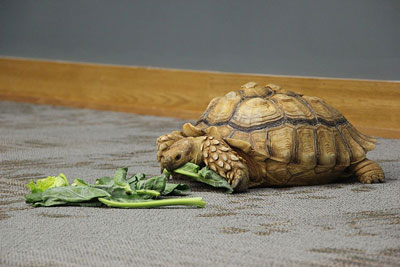
As far as nutrition is concerned, human beings opt for a balanced diet. In nature, we watch tortoises roving about in the wild and eating anything they get, Certain tortoise consume more than 200 varieties of plants. While designing a tortoise diet, it is ideal to take this into consideration. Allow your tortoise to have freedom in choosing their food, naturally.
For the tortoise to have healthy bones in the growth process, it requires a balanced diet consisting of calcium, vitamins, water, minerals and UVB. Calcium is vital for the growth of bones. Vitamin D3 is manufactured with the help of UVB, but you can complete this process only with the presence of calcium. Keep on changing the diet of the tortoise and do not stick on to a particular food that will not provide the tortoise with the essential minerals and vitamins.
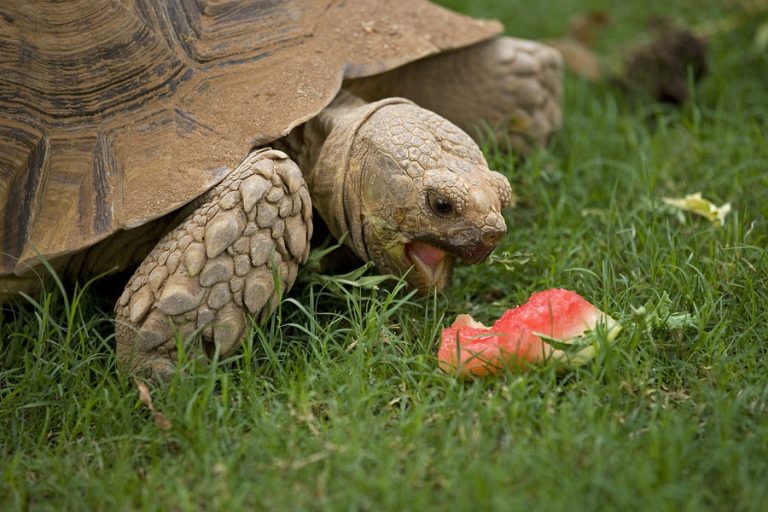
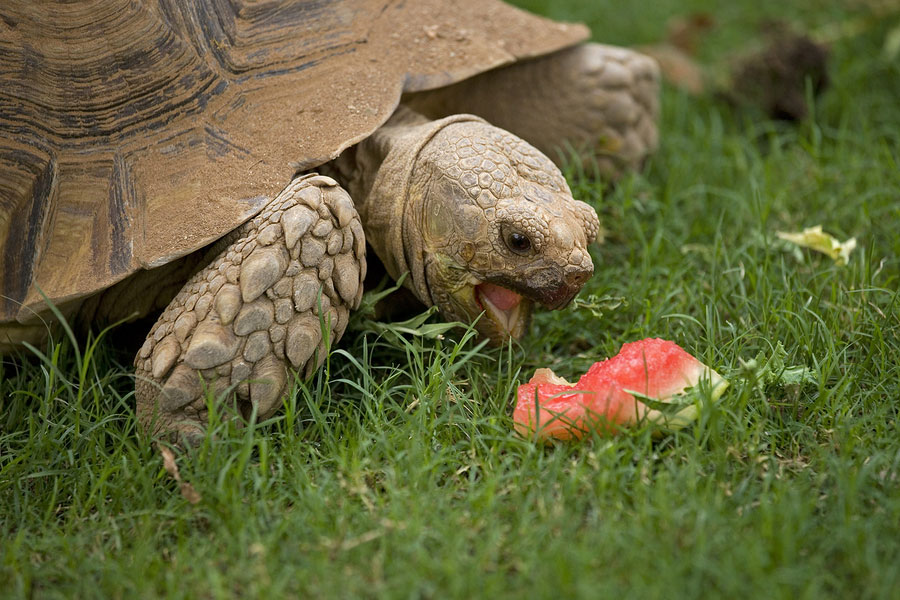
Green leafy plants contain high content of minerals, fiber and calcium. Hence, they are the key items to the diet of the tortoise. This includes salad greens, weeds, flowers and leaves. Some food items that the tortoise relish are:
Lettuce, Dandelions, prickle pear, roses, Mulberry leaves, Romaine lettuce, Nasturtium, Nettles, hen-bit, Lamb’s leaf, White clover, Parsley, Hibiscus, agave, Timothy, Hollyhock, Petunia, Flowering maple, celeriac, Aloe, Plantain, Comfrey, Daisy, Chicory, Artichoke, Calendula marigolds, Raspberry leaves, Bermuda grass, Black currant leaves, Strawberry leaves, Blackberry leaves, Oregano, Dahlia, Fennel, and wild rosemary.
What to Eat?
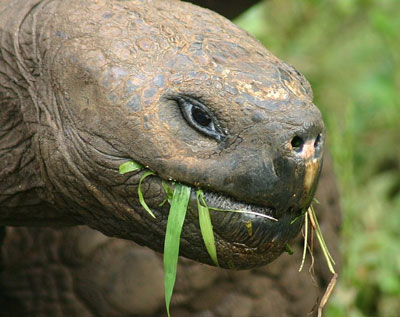
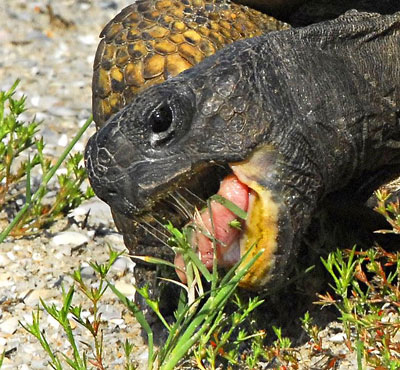
A warning on feeding your tortoise with grass: some varieties of tortoise are used to consume great quantities of grass, but others find it impossible to consume the amount of silica contained in hays and grasses.
Calcium
One of the peculiarities concerning the nutrition of the tortoise is the requirement of a large quantity of Calcium. The necessity of calcium is very clear to us; it is the calcium that maintains and builds the mass in their bone. Tortoise is an animal that craves most for calcium, since the bony carapace of the tortoise contains a large quantity of its body mass. The requirement of calcium grows when the female tortoise lays eggs, and when the juveniles start growing.
Meat
As regards meat, there is a difference in opinion of its requirement for tortoise. And as far as fruits are concerned an uncertainty arises in the varied dietary requirements for the different types of tortoise.
Water
It is highly suggested that you make available sufficient quantity of fresh water for your tortoise so that it can have water at all times. Another method of convincing yourself whether your tortoise had enough water is by dousing your tortoise in warm water for a superficial bath when the tortoise sucks water through its tail when dipped in water. At summer season in particular, give your tortoise a bath on a regular basis.
Conclusion
On the whole tortoises are herbivorous. Further, when you learn more about your tortoise’s original habitats on the earth, then you get a picture of what type of diet you are supposed to provide your pet. Be cautious not to provide your pet tortoise with plenty of vegetation originating from the cabbage group because they obstruct the absorption of calcium and the functioning of the thyroid. In fact, they provide good nutrition, but still feed them with less quantities only every other week.
Having discovered a fondness for insects while pursuing her degree in Biology, Randi Jones was quite bugged to know that people usually dismissed these little creatures as “creepy-crawlies”.