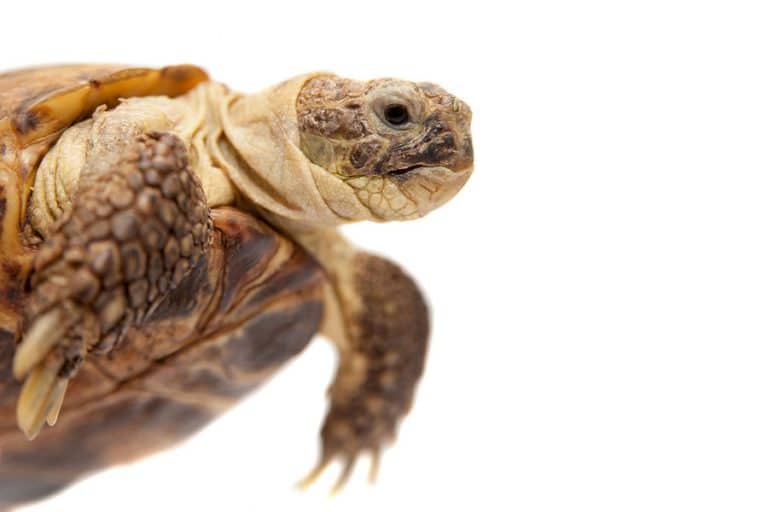
Knowing the Golden Greek Tortoise

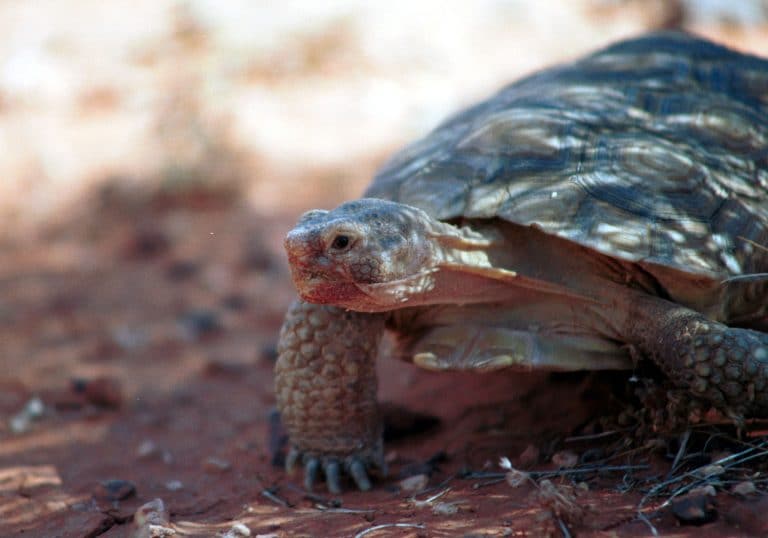
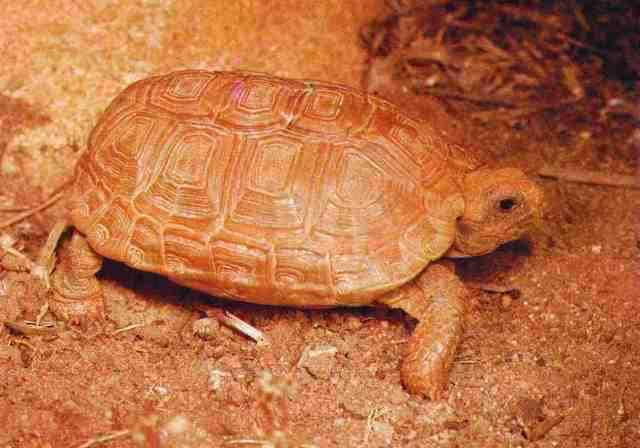
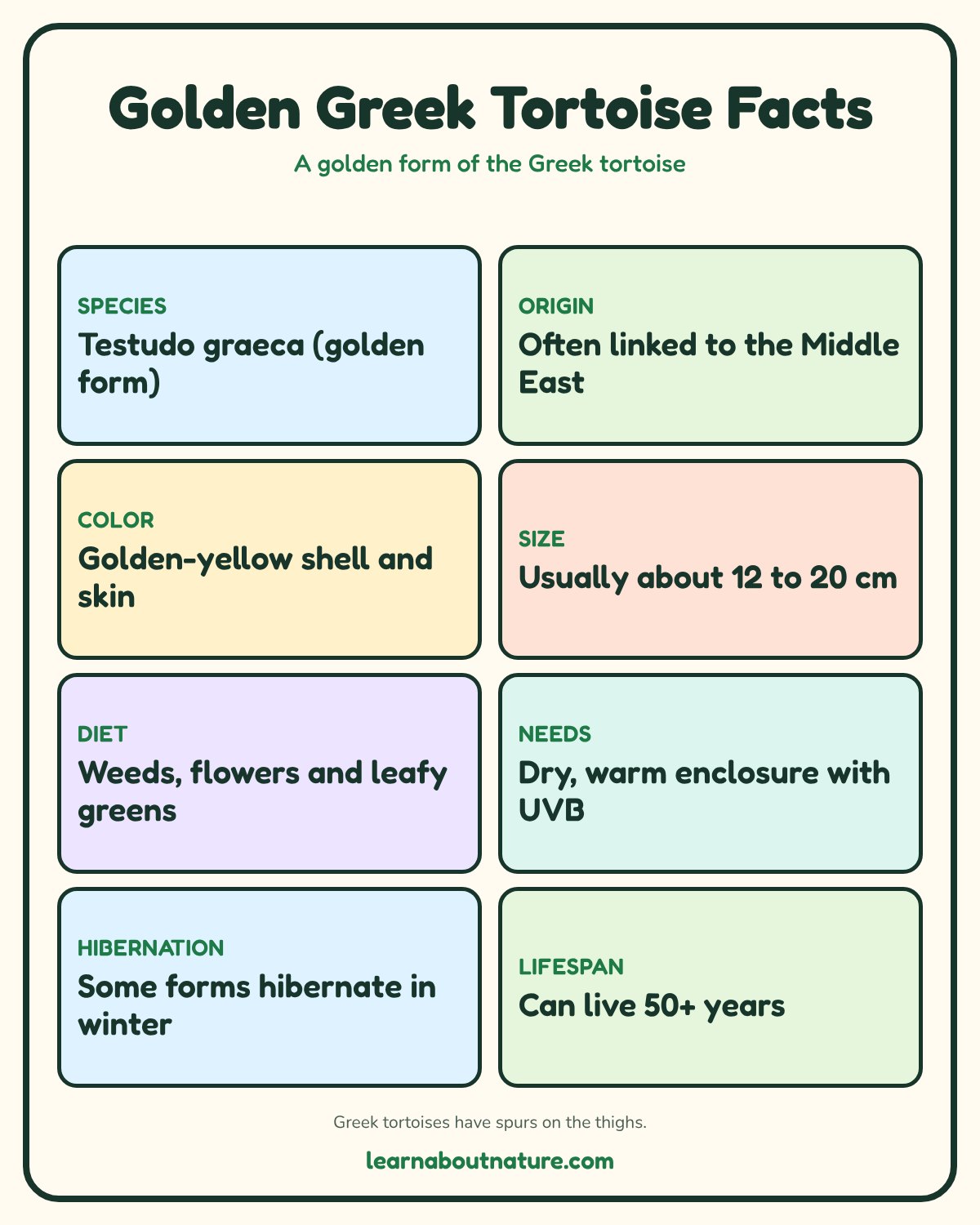
The golden Greek tortoise is a pale, golden-colored form of the Greek tortoise (Testudo graeca), a small tortoise also known as the spur-thighed tortoise. Golden Greeks mostly come from the Middle East, and their sunny shell color has made them a favorite in the pet trade.
Golden Greek tortoise Quick Facts
| Common name | Golden Greek tortoise |
| Scientific name | Testudo graeca |
| Kingdom | Animalia |
| Phylum | Chordata |
| Class | Testudines |
| Family | Testudinidae |
| Genus | Testudo |
| Conservation status | Vulnerable |
| Type | Reptile (tortoise) |
| Diet | Leafy greens such as collard, mustard and dandelion |
| Native range | Northern Africa, Spain and the Middle East |
| Size | 3.5–10 in (9–25 cm) long |
| Colours | Rich brown with orange to yellow marks |
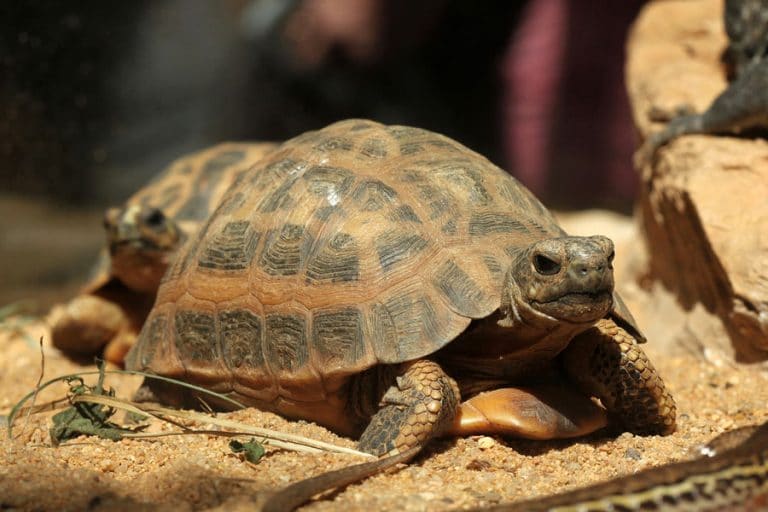
| Special feature | Black-tipped bumps along the shell |
Where Do Greek Tortoises Live?
Greek tortoises have a large natural range that stretches across North Africa, southern Spain, parts of southeastern Europe, Turkey and the Middle East, as far east as Iran. Despite the name, they are not limited to Greece.
They live in dry, warm places such as scrubland, rocky hillsides, open woodland and semi-desert. Tortoises from different areas can look quite different, which is why there are many local forms, including the golden Greek.
The name spur-thighed tortoise comes from the small, cone-shaped spur on the back of each thigh.
Golden Greek Tortoise Colors and Markings
Golden Greeks are known for their light golden, tan or straw-colored shells. Many have only faint dark markings, so they look much paler than other Greek tortoises, which often have bold black patterns on a yellow or olive background.
The skin is usually pale too, from cream to light tan. The plastron (the flat underside of the shell) is often yellowish with some darker patches. Each tortoise has its own slightly different pattern, a bit like a fingerprint.
How Big Do Golden Greek Tortoises Get?
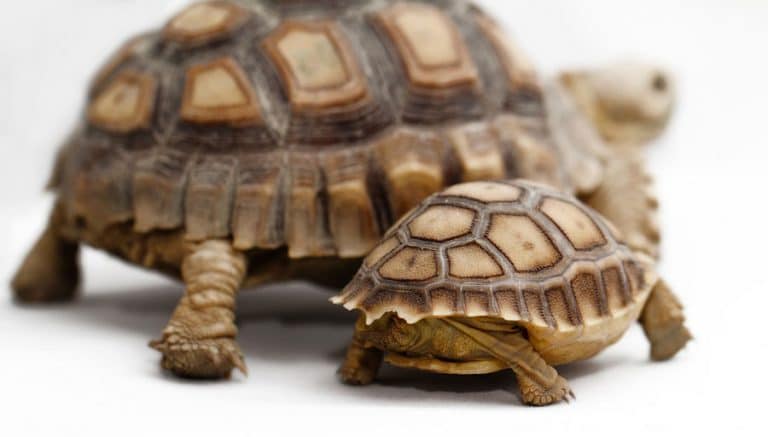
Golden Greeks are small to medium tortoises. Most adults are about 5 to 8 inches (13 to 20 cm) long. Females usually grow larger than males.
You can often tell males and females apart by looking at their tails. Males have longer, thicker tails, while females have shorter, stubbier ones. Adult males also tend to have a slightly dipped plastron, which helps during mating.
Golden Greek Tortoise Habitat and Temperature
In a home setting, golden Greeks need a warm, dry enclosure. An open-topped tortoise table is better than a glass aquarium, because it gives good airflow and the tortoise is less likely to become stressed by walking into glass.
Provide a heat lamp at one end to create a warm basking spot, with a cooler area at the other end so the tortoise can choose its temperature. They also need UVB light, either from natural sunshine or a reptile UVB lamp, to help them use calcium and keep their shell healthy.
A substrate of plain topsoil or a soil and sand mix lets them dig, which they enjoy. Add a hiding place, and in warm weather let them spend time outdoors in a secure, predator-proof pen.
What Do Golden Greek Tortoises Eat?
Golden Greek tortoises are herbivores that need a high-fiber diet. In the wild they eat weeds, grasses, flowers and leaves. At home, base their diet on weeds such as dandelion, clover and plantain, plus leafy greens like collard, mustard and turnip greens.
Fruit should be avoided or given only as a very rare treat, because these dry-country tortoises are not built to handle much sugar. A light dusting of calcium powder on their food helps keep bones and shell strong.
Always provide fresh water in a shallow dish that is easy to climb in and out of. Many tortoises like to soak, and some drink while sitting in the water.
Golden Greek Tortoises in the Pet Trade
Golden Greeks are a fairly recent arrival in the reptile hobby. They became widely available in the United States reptile market in the last few decades, mainly through imports from the Middle East. Before that, most Greek tortoises sold as pets were darker, more boldly patterned forms.
Today, many golden Greeks are captive bred, which is better for wild populations and usually means healthier pets. Greek tortoises are protected in much of their range, so if you buy one, choose a reputable breeder and make sure it comes with any paperwork required where you live.
With good care, golden Greek tortoises can live for 50 years or more, so they are a long-term commitment, but a rewarding one for a prepared family.
Golden Greek tortoise FAQs
What do golden Greek tortoises eat?
They are plant eaters. They like high-fibre leafy greens such as collard, mustard and turnip greens and dandelion leaves, plus fresh water in a shallow bowl.
How big do golden Greek tortoises get?
They are fairly small tortoises, from about 3.5 inches to 10 inches (9 to 25 cm) long. Females grow bigger than males.
Where do golden Greek tortoises come from?
The Greek tortoise lives in northern Africa, Spain and the Middle East. The golden form has become a popular pet all over the world.
How can you tell a male from a female golden Greek tortoise?
Look at the tail. According to the article, the female’s tail is much smaller than the male’s.
Can a golden Greek tortoise live in an aquarium?
No. It needs more fresh air than an indoor aquarium gives, so a open-topped tortoise table is better.

Randi Jones is the owner and founder of the Nature Gift Store, an online retailer specializing in nature-themed gifts, educational science projects, live animal nature kits and real butterfly artwork. A biology graduate who fell in love with insects, she founded the company in 2001 to make active learning about nature fun, accessible and engaging for children and adults. Her store offers real butterfly frames, home and garden decor and educational live animal kits, including ant farms, worm farms, tadpoles, ladybugs and hermit crabs, and she runs a bug museum in Washington featuring live animals like Eddie the Iguana alongside other reptiles and insects. Randi wrote most of the guides on this site. They first appeared on her long-running nature sites, including Monarch-Butterfly.com, Ladybug-Life-Cycle.com, Frog-Life-Cycle.com, Dragonfly-Site.com and Butterfly Pictures, which have now been brought together here at Learn About Nature.