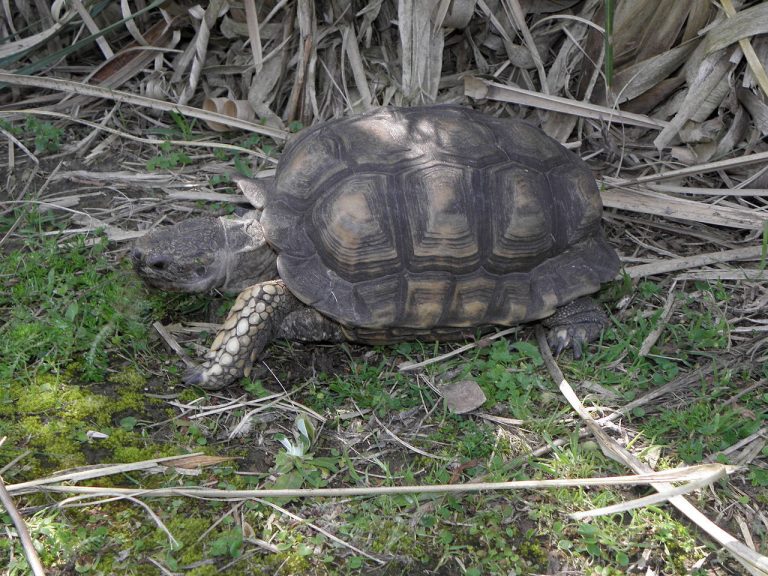
Tortoise Life Cycle: Stages From Egg to Adult
Quick answer: A tortoise’s life cycle has four stages: egg, hatchling, juvenile and adult. The female digs a nest, lays her eggs and leaves them to be warmed by the sun. Hatchlings dig out on their own after a few months, grow slowly as juveniles, and become breeding adults at about 15 to 25 years old, depending on the species.
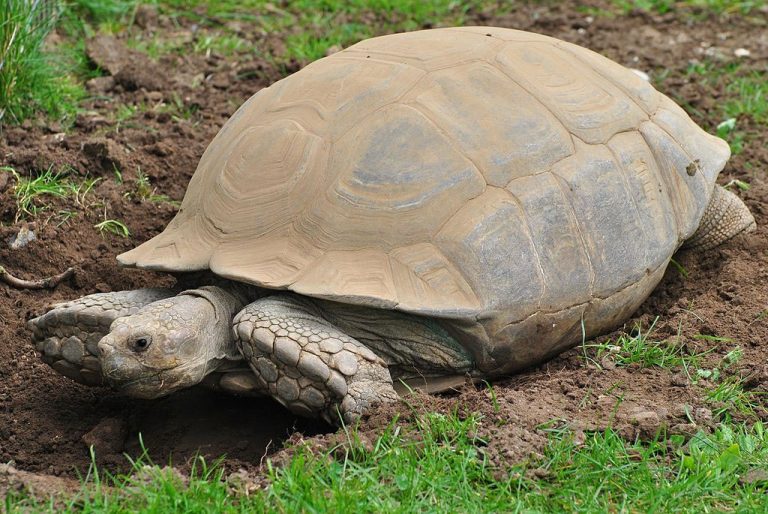
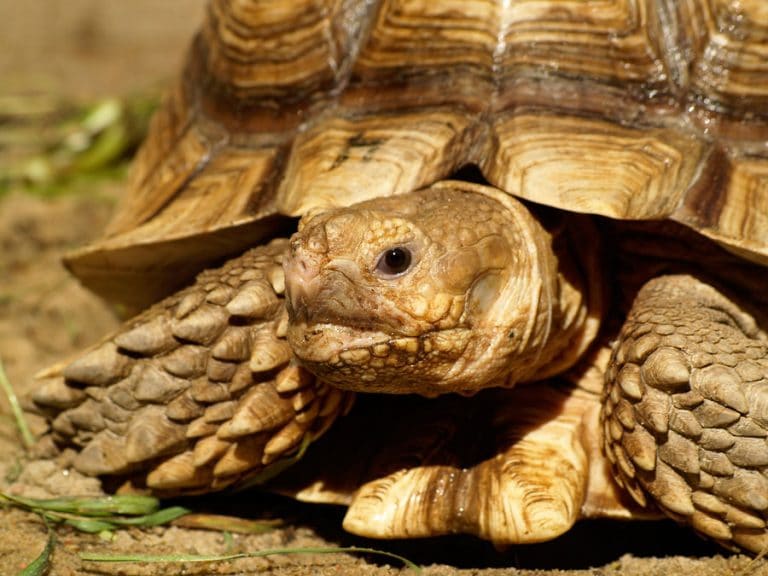
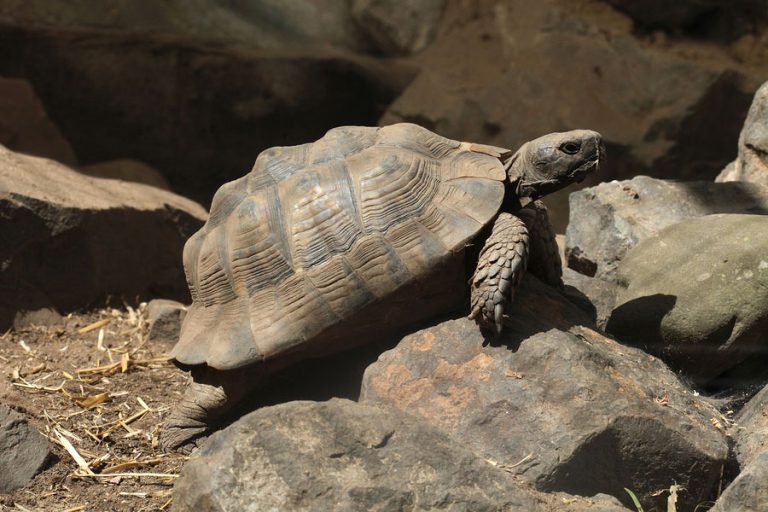
Tortoises are turtles that live on land. They have high, domed shells, sturdy elephant-like legs, and they cannot swim the way sea turtles and pond turtles do. Most tortoises eat plants, and many live in dry places such as deserts, grasslands and islands.
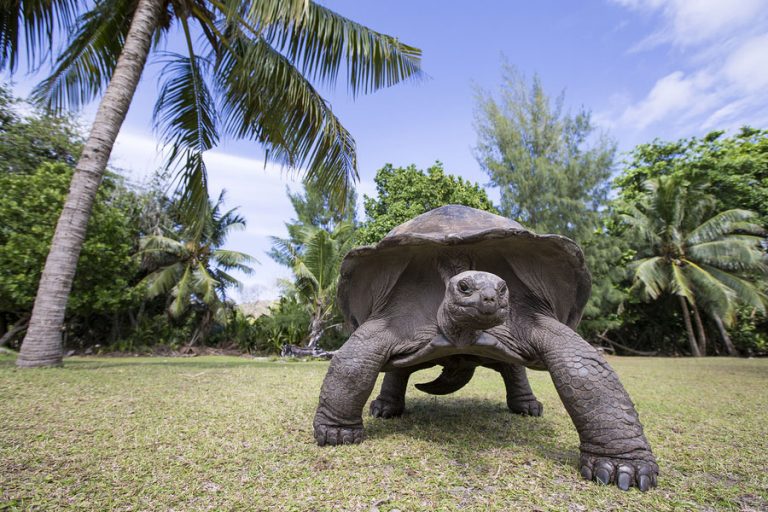
On this page we look at the life cycle shared by land tortoises, using two famous examples: the desert tortoise of the southwestern United States and the giant Galápagos tortoise. Both grow slowly, start breeding late in life and can live for many decades.
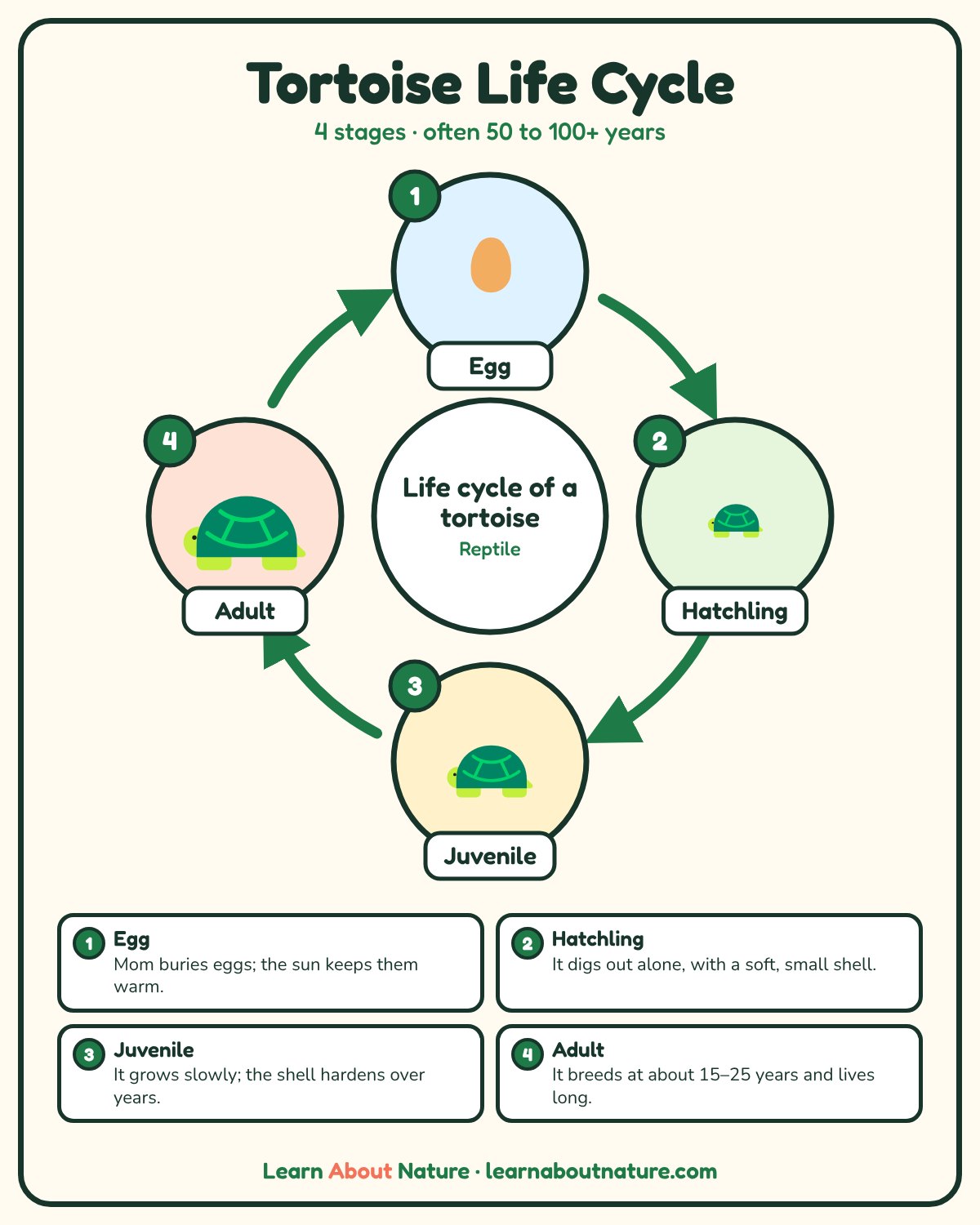
Teachers and students: you’re welcome to use this diagram in lessons and projects with credit to Learn About Nature.
Free printable: Download the Tortoise life cycle worksheet (PDF) – label the diagram, cut and sequence the stages, and match key words. Answer key included.
Tortoise Life Cycle Quick Facts
| Example species | Desert tortoise and Galápagos tortoise |
| Eggs per clutch | 1–14, usually 4–7 (desert tortoise) |
| Incubation | about 90–120 days (desert); about 3–6 months (Galápagos) |
| Sex decided by | nest temperature; warmer nests make more females |
| Hatchling shell length | about 4.2–4.5 cm (desert tortoise) |
| Parental care | none after the eggs are buried |
| Shell hardens | after about 5–8 years (desert tortoise) |
| Breeding age | about 15–20 years (desert); 20–25 years (Galápagos) |
| Lifespan | about 45–50+ years (desert); 100+ years (Galápagos) |
Courtship and Mating
Tortoise courtship can look rough. A male desert tortoise follows a female, bobs his head, circles her, and bumps or nips at her shell. Courtship can go on for an hour or more, and a female often ignores a male several times before she accepts him.
Female desert tortoises can store sperm inside their bodies for a long time, even years. This means a female can lay fertile eggs without mating every season.
Galápagos tortoises usually mate toward the end of the wet season, when the weather is warm and food is plentiful. Large males make loud, groaning sounds while mating that can be heard from far away.
Stage 1: Egg
When she is ready to lay, the female uses her back legs to dig a nest in the soil. Then she lays her eggs, covers them up and leaves. Tortoise mothers do not guard their nests or care for their young. The warmth of the sun and soil does the work of incubating the eggs.
A desert tortoise lays between 1 and 14 eggs, usually 4 to 7. The eggs are about the size of a ping-pong ball, and in good years a female may lay two or even three clutches. They are laid from May to July and hatch after about 90 to 120 days.
A Galápagos tortoise digs a deep nest, about 30 to 40 cm (12 to 16 in) deep, which can take her hours. Her eggs are about the size of a tennis ball. Some kinds lay just a few eggs, while larger domed kinds can lay 20 or more. Incubation usually lasts about 3 to 6 months, depending on the weather.
Warm Nests Make Girls
In many tortoises, the temperature of the nest decides whether a baby will be male or female. This is called temperature-dependent sex determination.
In desert tortoises, warmer nests produce more females, and cooler nests produce more males. Scientists found that the switch point is about 31.8°C (89°F). Eggs kept cooler than about 30.6°C hatched as males, while eggs kept warmer than about 32.8°C hatched as females.
This means the weather in a single summer can affect how many males and females hatch. Scientists are watching how hotter summers might change the balance in tortoise populations.
Stage 2: Hatchling
When a baby tortoise is ready to hatch, it uses a tiny, hard point on its snout called an egg tooth to break the shell. The egg tooth drops off soon after. A small yolk sac may still be attached to the baby’s belly, and it gives the hatchling food for its first hours or days.
Hatchlings must dig their way up through the soil to the surface by themselves. A desert tortoise hatchling has a shell only about 4.2 to 4.5 cm (1.7 to 1.8 in) long, about the size of a silver dollar. A Galápagos hatchling weighs only about 70 to 90 g (2.5 to 3.2 oz), even though it may one day weigh more than an adult person.
From the moment it hatches, a baby tortoise is on its own. It must find food, water and shelter without any help from its parents.
Stage 3: Juvenile
Young tortoises grow slowly. Juvenile desert tortoises add only about 2.5 cm (1 inch) a year to the length of their shells. Their shells stay fairly soft for the first 5 to 8 years.
A soft shell makes juveniles easy prey. Ravens, roadrunners, snakes, bobcats, kit foxes and coyotes all eat young desert tortoises. Very few wild hatchlings survive to become adults, which is one reason tortoise populations recover slowly when numbers drop.
To stay safe, juveniles spend a lot of time hidden in burrows, under bushes or between rocks. A wild young desert tortoise may lunge or hiss if something touches it near the head, a defense it often keeps until it is several years old.
Stage 4: Adult
Tortoises take a long time to grow up. Wild female desert tortoises usually begin breeding at about 15 to 20 years old, and in some areas closer to 20 years or more. Galápagos tortoises usually begin breeding at about 20 to 25 years.
Adult desert tortoises dig burrows to escape both summer heat and winter cold, and they spend much of their lives underground. They get most of their water from the plants they eat, such as grasses, flowers and cactus. Adult Galápagos tortoises roam their islands, grazing on grasses, leaves and cactus pads.
Once a female is mature, she can lay eggs nearly every year for decades. Each new nest starts the life cycle again.
A Year in the Life of a Desert Tortoise
Desert tortoises live where summers are scorching and winters can be cold, so they plan their year around the weather. In spring, when wildflowers and fresh grasses appear, they come out to eat, drink from rain puddles and look for mates.
During the hottest part of summer, they may be active only in the early morning and evening, spending the rest of the day in cool burrows. Summer rainstorms bring a burst of activity, and this is also when many hatchlings emerge, from about mid-August to October.
In late fall, desert tortoises retreat into their burrows and become inactive for the winter, a resting state similar to hibernation. Because they spend so much time underground, a tortoise’s burrow is one of the most important parts of its habitat, and other desert animals sometimes shelter in them too.
How Long Do Tortoises Live?
Tortoises are famous for living a long time. Desert tortoises can live about 45 to 50 years or more in the wild. Galápagos tortoises are reported to live more than 100 years, though the oldest ages for wild animals are often hard to confirm.
Slow growth, late breeding and a long life go together. A tortoise that survives its risky early years has a tough shell and few predators, so it has many years in which to lay eggs. Over a long life, just a few surviving young are enough to replace the parents.
Threats and Conservation
Because tortoises breed late and lose so many young, populations can shrink fast when adults are taken or harmed. The Mojave desert tortoise is listed as Threatened in the United States and as Critically Endangered on the IUCN Red List. Threats include habitat loss, off-road vehicles, disease, fires, invasive plants and growing numbers of ravens that eat young tortoises.
Many Galápagos tortoise populations were badly reduced by sailors and settlers in past centuries, and by goats and rats brought to the islands. Breeding programs and the removal of invasive animals have helped some populations bounce back.
If you see a wild tortoise, enjoy it from a distance and do not pick it up. A frightened desert tortoise may empty its bladder, losing water it badly needs to survive dry weather. It is fine to help one off a road in an emergency, but otherwise leave it where it is.
Tortoise Life Cycle for Kids
Here is the tortoise life cycle in simple steps:
- Egg: The mother tortoise buries her eggs in the ground and the sun keeps them warm.
- Hatchling: The baby tortoise breaks out of its egg and digs up to the surface alone.
- Juvenile: The young tortoise grows very slowly while its shell gets harder.
- Adult: After many years, the grown-up tortoise can lay eggs of its own.
Key words: tortoise – a turtle that lives on land and cannot swim well; hatchling – a baby animal that has just come out of its egg; clutch – a group of eggs laid at the same time; incubation – the time eggs are kept warm while babies grow inside; carapace – the top part of a tortoise’s shell; burrow – a tunnel an animal digs in the ground to live in.
Try this: Measure an inch on a ruler, then mark how big a desert tortoise shell would be at 1, 5 and 10 years if it grows about one inch a year, and compare it with your own growth.
Related Life Cycles and Guides
- Crocodile life cycle
- Alligator life cycle
- Turtle life cycle
- Sea turtle life cycle
- Snake life cycle
- Lizard life cycle
- All animal & plant life cycles
Tortoise Life Cycle FAQs
Do tortoises take care of their babies?
No. A mother tortoise digs a nest, lays her eggs, covers them and leaves. The sun-warmed soil incubates the eggs. When the babies hatch, they dig out of the nest and live on their own from the start, finding their own food and shelter.
How long does it take tortoise eggs to hatch?
It depends on the species and the weather. Desert tortoise eggs usually hatch after about 90 to 120 days in the wild. Galápagos tortoise eggs take longer, often about 3 to 6 months. Cooler weather slows development and warmer weather speeds it up.
How many eggs does a tortoise lay?
Clutch size varies a lot. A desert tortoise lays 1 to 14 eggs, usually 4 to 7, and may lay more than one clutch in a good year. Some Galápagos tortoises lay only a few eggs, while larger kinds can lay 20 or more.
How long do tortoises live?
Many tortoises live for decades. Desert tortoises can live about 45 to 50 years or more in the wild. Galápagos tortoises are reported to live more than 100 years. Exact ages of very old wild tortoises are often hard to confirm.
What is the difference between a tortoise and a turtle?
All tortoises are turtles, but not all turtles are tortoises. Tortoises live on land, have dome-shaped shells and sturdy, column-like legs, and mostly eat plants. Many other turtles live in water and have flatter shells and webbed feet or flippers for swimming.
Sources: Desert Tortoise Fact Sheet: Reproduction – San Diego Zoo Wildlife Alliance Library; Galápagos Tortoise Fact Sheet: Reproduction – San Diego Zoo Wildlife Alliance Library; Desert Tortoise – Death Valley National Park (NPS); Sex determination in the desert tortoise (Spotila et al.) – MDSOAR; Gopherus agassizii, IUCN Red List assessment – USGS

Nato is a content writer and researcher with a background in psychology who’s eager to explore the wonders of nature. As a travel enthusiast and animal lover, she hopes to inspire others to discover and cherish the beauty and importance of the natural world. She also writes about the history of candy and snacks for Snack History and about food and healthy eating for The Fitchen.