Peonies – Transformed Into A Flower By Zeus To Escape The Wrath Of Asciepius

Scientific Classification & Quick Facts
| Common name | Peony |
| Scientific name | Paeonia |
| Kingdom | Plantae |
| Phylum | Tracheophyta |
| Class | Magnoliopsida |
| Order | Saxifragales |
| Family | Paeoniaceae |
| Type | Perennial herbs and small tree-like shrubs, 25 to 40 species |
| Habitat | Full sun, fertile, well-drained soil |
| Native range | Asia, western North America and southern Europe |
| Colours | Yellow, red and white |
| Flowering season | Late spring to early summer |
| Height | 0.5 to 1.5 m (herbs); 1.5 to 3 m (tree peonies) |
| Special feature | Named after Paeon, a Greek myth figure |
The flowering plant, the peony, the genus Paeonia, belongs to the family Paeoniaceae. Peonies are natives of Asia, Western Northern America and Southern Europe. Clarity of boundaries between the species is not specific; but the approximation of the number of species varies from 25 to 40. The flower peony is named after Paeon (otherwise spelled Paean). Paeon was a student of Asclepius, the Greek god of healing and medicine. To save Paeon from the jealous eyes of Asclepius, Zeus turned Paeon into the peony flower and thus saved him from the fury of Asclepius. The flower peony thus takes its name after Paeon. Propagation of itoh and herbaceous peonies takes place through division of roots and partially through seeds.
Anatomy
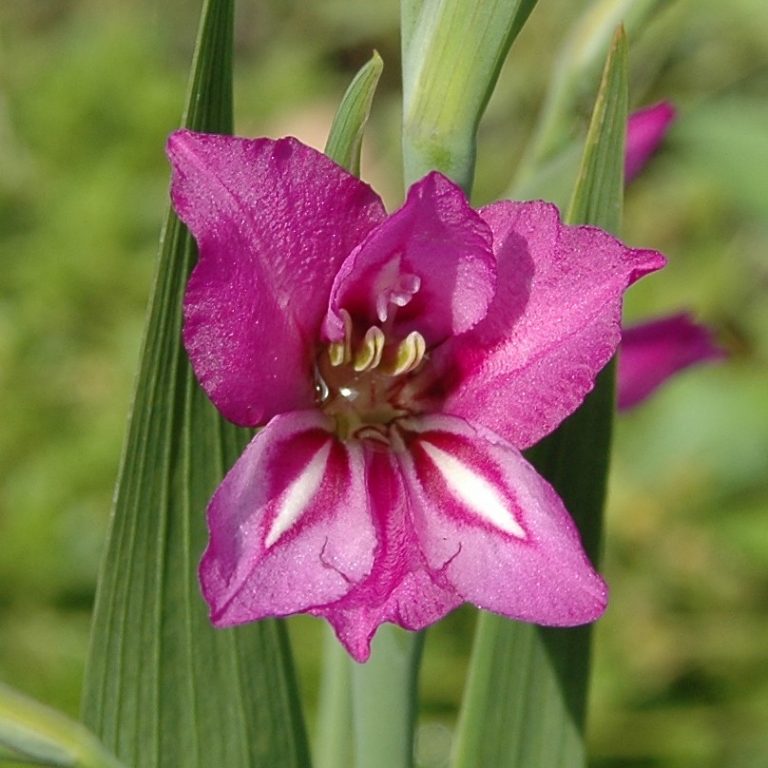
The majority of the peony plants are herbs of 0.5 to 1.5 meters (1.6 to 4.9 ft) height, but others grow up to trees of 1.5 to 3 meters (4.9 to 9.8 ft) in height. They have multiple, big broad and rounded leaves, often sweet smelling. Peony flowers are yellow or red to white in color, seen in the beginning of summer and towards the end of spring.
How to cultivate Domestically

Photo by: Diego Delso
Preparation of planting
All the varieties of peonies come out in the fall as:
- Bare-root plants.
- Sometimes from the nursery bud vase.
Peonies prefer partial or full sun during the day. Heat of summer is not an issue for the plants; nevertheless, they never last for long in dry and hot spring season. In such circumstances, select a place exposed only to the morning sun.
Planting
- Plant peonies in fertile, moist and humus-rich soil. Plant them deep in the soil and never allow the soil to water-log.
- Peonies prefer complete sun, though half a day’s sun is tolerable, they flower best where it is sunny.
- Choose a sunny area and dig a moderate-sized hole, approximately 2’ deep and 2’ wide, in a quick drained soil. In case the soil is very sandy or weighty, make it rich with compost.
- Supplement the soil with 1 cup of bone meal and Pack the soil firmly.
- Place the roots 2 inches beneath the soil in firm soil in such a way that the eyes look upwards.
(In the Southern states, look for early blooming species, plant them in approximately 1 inch deep in shady places)
- When filling the hole, take care not to bury the roots deeper than 2 inches.
Placement and Watering

Photo by: Jebulon
Plant the peonies prior to the first hard frost. Peonies planted in spring do not bloom well; botanists say that they bloom a year later than those planted in the fall.
The growing peonies need only limited water. They say these plants never like their roots wet. All the more, at the time of their first season, the roots do not develop in full, still you should provide them with constant watering, In summer, water thoroughly.
Flowering Period
Peonies bloom for 4 to 5 weeks. The early blooming types begin in May; those blooming in mid season, begin at the beginning of June and Peonies that bloom later blossom towards the end of June.
After Bloom Care
Take away the faded flowers immediately, cutting or picking them just beneath the base of the flower. This process is called deadheading; This is done to restrain the progress of seed growth. During seed formation, the plants absorb the food reserve and in the coming year they produce smaller flowers.
As Cut Flowers

Photo by: Diego Delso
Peonies are the glamour of the landscape of your garden. They are graceful when kept as cut flowers. Peony flowers are cut from your garden and decorated in buckets or vases. Once the peony flowers are cut from the garden, more flowers will grow in its place. You should cut the peony flowers only in the morning. Cut them only about 1/3 from the base, for ensuring regrowth.
Peony FAQs
Why is it called a peony?
It is named after Paeon, a student of Asclepius, the Greek god of healing. In the myth Zeus turned Paeon into a flower to save him from his teacher’s jealous anger.
Where do peonies grow wild?
Peonies are native to Asia, western North America and southern Europe. Scientists count somewhere between 25 and 40 species.
When do peonies bloom?
Peonies bloom in late spring and early summer. Early types start in May, and later ones flower at the end of June. Each bloom lasts for about 4 to 5 weeks.
When should you plant peonies?
Plant them in the fall, before the first hard frost. Peonies planted in spring bloom about a year later. Plant the roots 2 inches below the soil with the buds (eyes) facing up.
How tall are peonies?
Most peonies are herbs 0.5 to 1.5 metres tall. Some are tree peonies that grow 1.5 to 3 metres.

Randi Jones is the owner and founder of the Nature Gift Store, an online retailer specializing in nature-themed gifts, educational science projects, live animal nature kits and real butterfly artwork. A biology graduate who fell in love with insects, she founded the company in 2001 to make active learning about nature fun, accessible and engaging for children and adults. Her store offers real butterfly frames, home and garden decor and educational live animal kits, including ant farms, worm farms, tadpoles, ladybugs and hermit crabs, and she runs a bug museum in Washington featuring live animals like Eddie the Iguana alongside other reptiles and insects.