Argan Oil
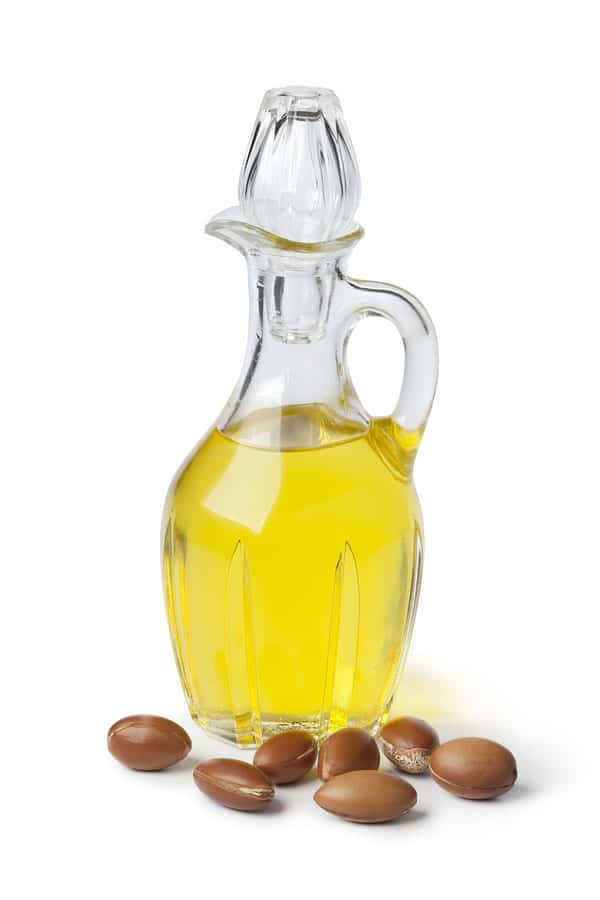
Argan oil is a plant oil made from the kernels inside the fruit of the argan tree, whose scientific name is Argania spinosa. The tree grows naturally in southwestern Morocco, where people have cooked with argan oil for centuries. Moroccans dip bread in it at breakfast and drizzle it over couscous and other dishes. Today argan oil is also very popular in hair and skin products, where it is used to make hair shiny and soft and to moisturize dry skin.
Argan tree Quick Facts
| Common name | Argan tree |
| Scientific name | Sideroxylon spinosum (formerly Argania spinosa) |
| Kingdom | Plantae |
| Phylum | Tracheophyta |
| Class | Magnoliopsida |
| Order | Ericales |
| Family | Sapotaceae |
| Genus | Sideroxylon |
| Conservation status | Vulnerable |
| Type | Drought-tough tree grown for its oil |
| Habitat | Many soils; needs water when young |
| Native range | Morocco, near the Atlas Mountains |
| Lifespan | About 200 years |
| Edible parts | Kernels, pressed into argan oil |
| Special feature | Goats climb it; oil used in cooking and cosmetics |
History
People in Morocco have been making argan oil for hundreds of years, and it was traded to other lands long ago. Over time, many argan trees were cut down for firewood and farmland, and overgrazing by animals made the problem worse. Today argan forests grow mainly in southwestern Morocco, between the Atlantic coast and the Atlas Mountains, and there are far fewer trees than there once were. To protect them, UNESCO named an area of about 25,000 square kilometers the Arganeraie Biosphere Reserve in 1998. Argan trees are tough and drought-tolerant, and some are thought to live for about 200 years.
Anatomy
The argan tree is a small, thorny evergreen tree that usually grows about 8 to 10 meters (26 to 33 feet) tall. It has a twisted, gnarled trunk, a wide crown and small, leathery leaves. Its roots grow very deep to reach water in the dry ground. The tree produces small yellow-green flowers and oval fruits about the size of a large olive. Inside each fruit is a very hard nut that holds one to three oil-rich kernels.
Habitat
Argan trees grow naturally in the dry, semi-desert lands of southwestern Morocco, especially in the Souss Valley, and there is also a small population in western Algeria. They are well suited to hot summers, poor soil and very little rain. The trees help hold the soil in place and slow the spread of the desert. Because argan oil has become so valuable, Morocco has started programs to protect the forests and plant new trees.
Soil
Argan trees can grow in many types of soil, including poor, stony and sandy ground, as long as it drains well. In the wild, their deep roots help protect the soil from wind and erosion. Young trees need regular watering while their roots get established, but older trees can survive long dry spells. Young trees also need protection from grazing animals, because goats love to climb argan trees and munch on their leaves and fruit.
Planting
The Argan plants are adaptable to many kinds of soils and conditions. They also get adapted to moderate droughts. While we plant the tree we have to dig a hole that is sufficient for the roots to spread properly and keep the tree fed with water resources. We have to plant them in areas where the soil is good and there is no attack of pests.
Temperature
Argan trees love heat and can survive very hot summers, with temperatures above 45 °C (113 °F). They are also very good at coping with drought. However, they do not like hard frosts, so they grow best in warm, dry places. The oil itself should be stored somewhere cool and dark, because heat and light make it go bad more quickly.
Care
Acne and the marks that are created by them are a matter of concern for all the people who suffer from acne, and get frustrated with the discomfort. People have traditionally used Argan oil on skin marks left by acne.
Uses
The argan tree is useful in many ways. Its oil is used for cooking, for making a sweet spread called amlou with almonds and honey, and in many hair and skin products. Goats and other animals feed on its leaves and fruit, and in some parts of Morocco goats famously climb right up into the branches. The tree’s hard wood has also been used for fuel and building.
Disease
Some people use Argan oil traditionally for heart health, but it is not a proven cure or preventive for any disease.
Argan tree FAQs
Where does the argan tree grow?
The argan tree comes from Morocco. It grows in small areas of the country and near the Atlas Mountains.
How long do argan trees live?
Argan trees can live to about 200 years. They can survive for so long because they cope well with drought.
What is argan oil made from?
Argan oil is pressed from the kernels of the argan tree. In Morocco it is used for cooking, such as dipping bread at breakfast and in couscous, and it is also used in hair and skin products.
Why are argan trees in danger?
Argan trees have been cut down for fuel and eaten down by grazing animals, including goats that climb the trees. The number of trees halved in about 50 years.
How is Morocco protecting argan trees?
UNESCO set aside about 25,000 square kilometres between the Atlantic and the Atlas Mountains for argan trees. Morocco is also planning to grow more of them.

Randi Jones is the owner and founder of the Nature Gift Store, an online retailer specializing in nature-themed gifts, educational science projects, live animal nature kits and real butterfly artwork. A biology graduate who fell in love with insects, she founded the company in 2001 to make active learning about nature fun, accessible and engaging for children and adults. Her store offers real butterfly frames, home and garden decor and educational live animal kits, including ant farms, worm farms, tadpoles, ladybugs and hermit crabs, and she runs a bug museum in Washington featuring live animals like Eddie the Iguana alongside other reptiles and insects.