Koi Fish
Scientific Classification
| Kingdom: | Animalia |
| Phylum: | Chordata |
| Class: | Actinopterygii |
| Order: | Cypriniformes |
| Family: | Cyprinidae |
| Genus: | Cyprinus |
| Species: | C. Carpio |
| Subspecies: | C. Haematopterus |
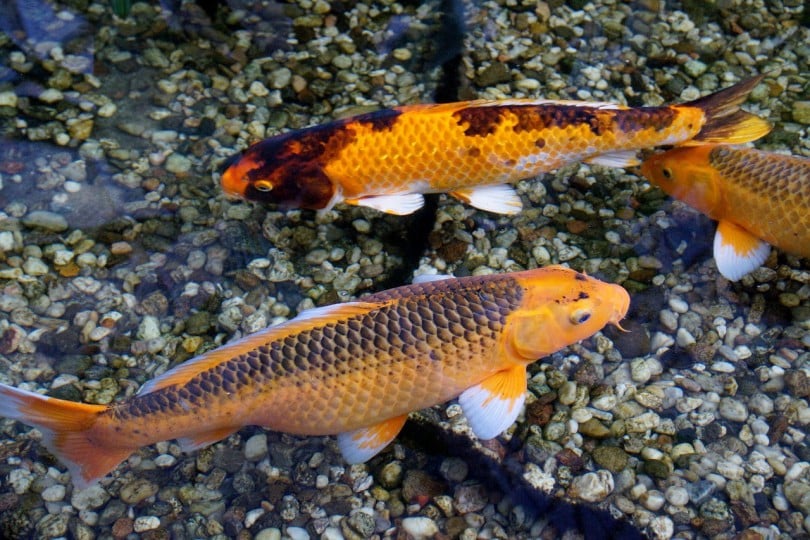
Koi fish, also known as Nishikigoi is a group of ornamental fish that belongs to the Cyprinidae family. It is basically a type of domesticated carp fish that is grown in outdoor ponds or garden tanks for decorative purposes. The wide variety of coloration, scale, and pattern differentiate the various species present in the group from one another. The Koi fish group displays an array of colors like white, red, black, blue, cream, and yellow.
History
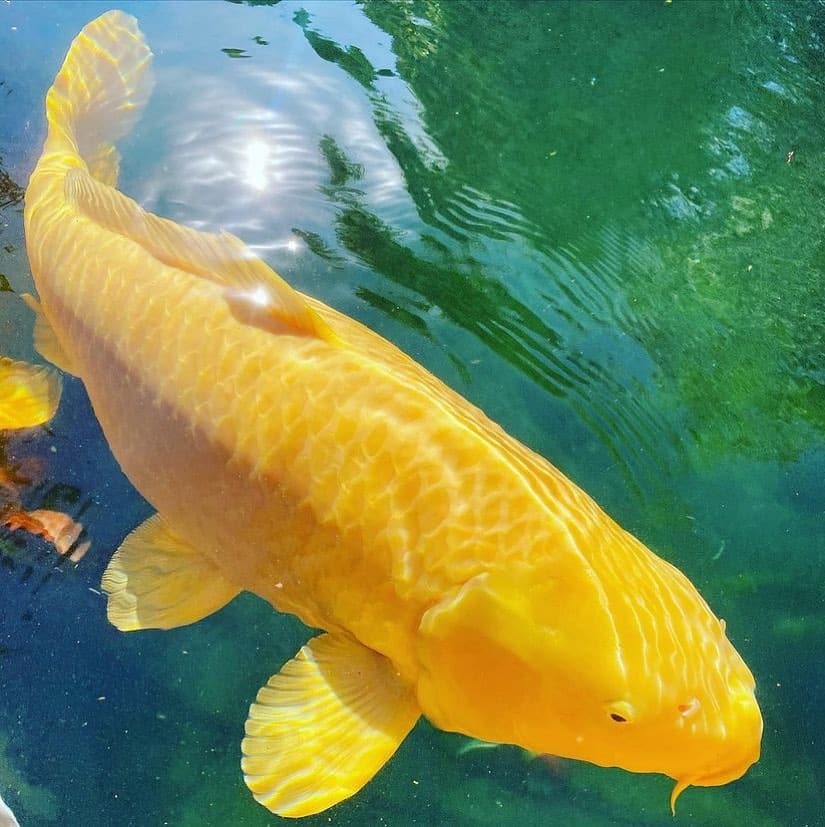
This Carp fish group consists of many species; most of them have originated from Asia and Central Europe. The common carp was bred in the ancient times in China that dates back to the 5th century BC. But at that time, it was mainly grown as a source of food. By 1820, the Carp fish was bred for its attractive color. In the beginning of the 20th century, many species were popular for their wide variety of colors, but till 1914, people were not aware of the variety of Koi fish colors. This fact was known when, the Niigata Koi fish was exhibited in different colors at the Tokyo annual exposition. Since then, the Koi fish became popular among the pet fish lovers.
Description
The Koi fish is generally large, that can attain at least a 3 inch of body length. The size varies depending on the living conditions, the temperature; food and water conditions play a vital role in the growth of these fish. They can be found in different colors, and also display many spots over their body. The Japanese people consider these fish as a symbol of love, prosperity, wealth, career and good fortune. These fish look similar to the goldfish, but can be distinguished by the barbells present on the upper lips. They are prone to sunburn; hence it is difficult for them to inhabit a water body that does not provide enough shade from the sun. They are basically omnivores in nature. They have a life expectancy of 25 to 30 years, but if kept under healthy conditions, they can also live for more than 100 years.
Reproduction
The Koi fish will sexually mature only when it attains a size of 3 inches. Before spawning, the male induces the female Koi by nudging with his head and fins. These fish, indulge in spawning during the early summer, and the preferable temperature of the water is around 63 degree F. The female Koi will lay a vast number of eggs on the plant surface or in the pond’s bottom. These eggs are fertilized by one, or more male Kois. Though they can produce more than thousands of eggs in a single spawning, only half of them usually fertilize. Out of this only a small number of fry survives; the remaining is consumed by their predators. Very few out of the grown fry possess the beautiful features of their parents.
Types
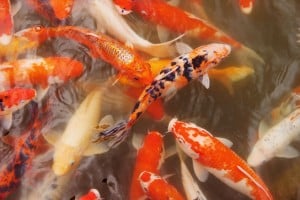
Kujaku High Quality Koi
This fish is considered to be very attractive due to its design resembling the feathers of a peacock. The caring level required for this fish is easy, and it has to be placed in a 1000 gallon fish tank that has fine gravels and hardy plants. It attains a maximum size of 3 inches.
Black Koi
This fish was developed in Malaysia, China, Indonesia and Japan. It is predominantly black in color, and grows up to 36 inches in body length. It requires a 1000 gallon fish tank with hardy plants surrounded by large rocks.
Platinum Ogon High Quality Koi
This fish is easy to breed. It is an imported species from Asia that has a striking white colored body with a silver luster. It is said to have an appearance like a ghost. It also prefers a 1000 gallon tank with sufficient gravel substrate. The water temperature preferred by this fish is between 36 and 90 degrees.
Tri-Colored Koi
This amazing fish, imported from the Malaysian regions has a unique body color pattern. As the name suggests the body color is filled with 3 colors namely, red, black and white, in a classic pattern. They prefer a temperature between 36 to 90 degrees and, a pH level between 6.8 and 7.2.
The other types of Koi fish are-:
Doitsu High Quality Koi, Japan Strain
- Assorted Koi – Imported (Malaysia)
- Shusui High Quality Koi, Japan Strain
- Yamabuki Ogon High Quality Koi, Japan Strain and many more
Koi Fish in Aquariums
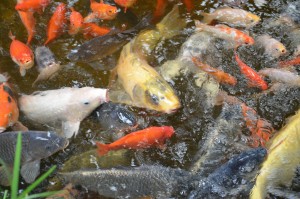
Food
Like other fish, Koi fish should also be fed only 3 times a day, each feeding should last for maximum 5 minutes. Always feed from the same spot, so that when they see you in the same spot, they will learn that they are going to be fed. In this way, you can also train them to eat from your hands. Over feeding can cause harm to their health. They are omnivores in nature; hence they eat both the plants and animals. Provide them with a nutritious pellet diet, which consists of all the nutrients essential for their healthy growth. Supplemented diet can also be provided for introducing different food tastes. Other than that, the prescribed foods are wheat germ, brown bread, lettuce, squash, fruits, vegetables, plankton and shrimp. The quantity and the frequency of these high protein and fatty foods depend on the level of temperature. If the temperature is high, the fish are supposed to be provided high protein food, whereas if the temperature is less than 50 degree F, there is no need to feed this fish.
Water
The water quality is the main aspect of the health of any fish. You should regularly test the water to confirm the levels of salinity and minerals required for the healthy growth of a Koi fish. The pH level should be between 6.5 and 9. The water temperature preferable for this kind of fish is between 34 and 90 degree F. Always make sure, the oxygen content in the water has been at least 5.0mg/liter. The amount of ammonia, nitrates and nitrites should be very low or they may turn the water highly toxic.
Tank
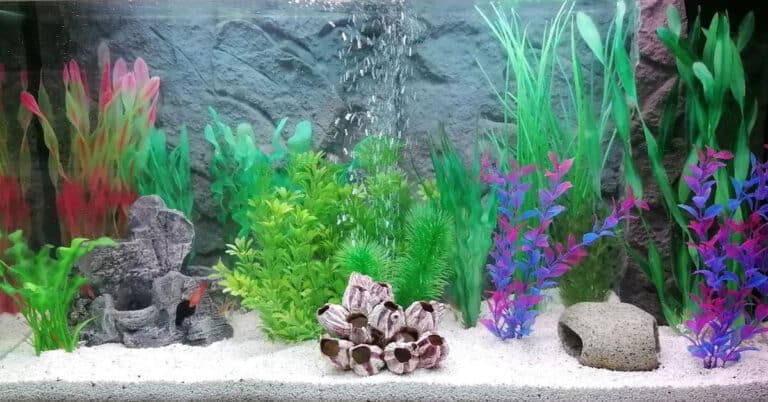
The Koi fish prefers a large fish aquarium that has a size of minimum 1000 gallons. The tank should not be overcrowded by other fish. The exact space required is 1 cubic feet/ per inch of length of the Koi fish. The bottom of the tank should be filled up to 2 inches with rock pieces or small or big gravel. You should also install a carbon filter suitable for this large aquarium. When this fish is kept indoors, the tank should have a heater to regulate the perfect temperature for this type of fish. The tank should also have a light inside the tank, as these fish require lighting for 12 hours a day. Do not forget to place a lid cover on top of the aquarium to prevent the Koi fish from jumping out.
Having discovered a fondness for insects while pursuing her degree in Biology, Randi Jones was quite bugged to know that people usually dismissed these little creatures as “creepy-crawlies”.