Bloodfin Tetra
Scientific Classification
| Kingdom: | Animalia |
| Phylum: | Chordata |
| Class: | Actinopterygii |
| Order: | Characiformes |
| Family: | Characidae |
| Subfamily: | Aphyocharacinae |
| Genus: | Aphyocharax |
| Species: | A. Anisitsi |
| Binomial name: | Aphyocharax Anisitsi |
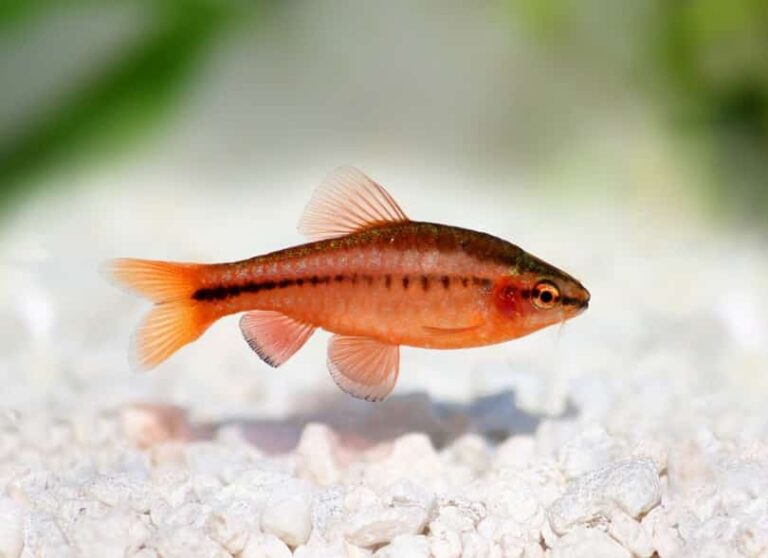
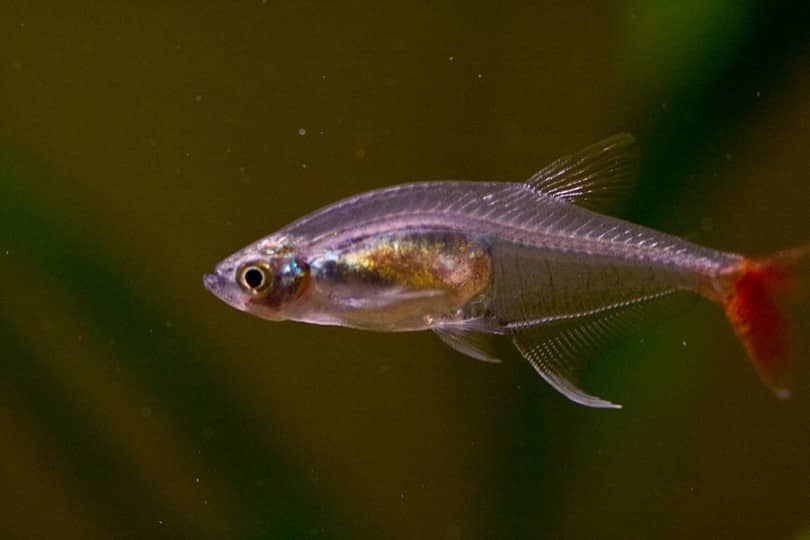
The blood fin tetra, scientifically named Aaphyocharax Anisits, hails from the basin of the Parana River in South America. The blood fin tetra is comparatively a big tetra; it grows as long as 5.5 cm. The prominent characteristic of the blood fin is the blood-red color of its tail, anal, dorsal, and adipose fins, whereas its body color is silver.
Habitat and range
The blood fin tetra, a variety of Benthopelagic Freshwater Fish (Wikipedia-“that float in the water column”), is endemic to the Rio Parana basin of South America. Rio Parana extends from Brazil by way of Argentina, prior to draining into the Atlantic Ocean. This inhabitation is subtropic.
Description
The blood fin tetra is a slimmer variety of tetra. Its standard size is below 2 ¼ in. (5.5 cm.), with a standard life of 5 to 8 years. However, in a well cared for situation, they can live up to 10 years. The body color of the blood fin tetra varies from a beige-orange to silver color, with occasional highlights of neon flashes. Its anal fin and the tail have a characteristic brilliant red color
Growing at Home
Breeding
The blood fin tetra is a productive variety; it doubles itself within 15 months in undomesticated situation. In custody, breeding the blood fin tetra is not an issue.
The blood fin tetra spawns impulsively and never waits for any motivational drive from the aquarist. In nature, they discharge the eggs on plants having broad leaves. In the absence of these plants, they deposit the eggs on the glass of the aquarium. The eggs do not stick.
While spawning, the blood fin tetra jumps out of the water and the eggs get released from it. During a single spawn, the eggs produced by a female amounts to 300 or 500.
Tank
The blood fin tetra makes no great demands as far as the tank is concerned. However, since they are very good swimmers, you would do well to provide a tank of 15 gallons with a length of at least 20 inches. Apart from this, provide a firm lid, since the blood fin tetra is expert in leaps, when they get an opportunity.
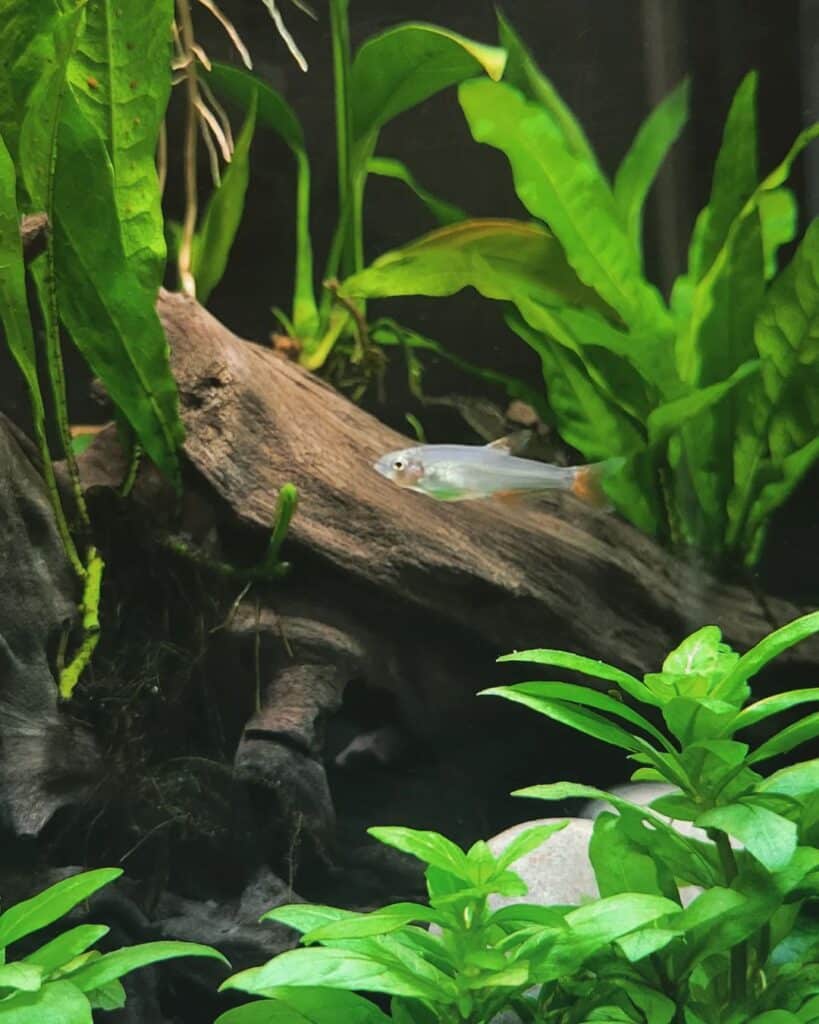
The blood fin tetras love camouflaging between plants, they are also fond of dark colored gravel. The ideal tank for this fish, is a “biotype” one
Water Condition
Looking after the blood fin tetra is easy. However, similar to other fish, frequent replacement of water is important. The other factors regarding the water quality are, a pH of 6 to 8, dGh of 2 to 30 and water temperature of 18 to 28oC (64.5 to 82.5 F). Maintain a gradual variation of the temperature, between these limits. Because the blood fins tetra tolerates temperatures, you can generally see them in aquariums without heating provision.
Nutrition
Blood fin tetras are omnivores. In the wild, they eat worms, crustaceans and insects. Give them a variety of food in the aquarium comprising of plants and vegetables and also carnivorous food. This variety loves flake feed and a good variety of tropical feed, which is a preferred as a suitable staple diet. In place of flake food, give them feed like fresh or live freeze-dry or frozen items.
Bloodfin Tetra Setup:
An aquarium of minimum size 60 cm (24 in.), would be ideal. While setting up your aquarium, do your best to simulate its natural environment, by providing plenty of plants. In case you lack experience in planting in the aquarium, place strong plants such as Java fern. This grows well in the absence of lighting arrangements; a normal light will suffice. Besides, prevents algae from growing in excess, because the algae compete with them for nutrients.
Having discovered a fondness for insects while pursuing her degree in Biology, Randi Jones was quite bugged to know that people usually dismissed these little creatures as “creepy-crawlies”.