5 Oldest Animal Pictures in the World – Their History & Significance
Taking pictures of pets isn’t something new for animal enthusiasts. They do this every day in order to capture their pets’ special moments and development. Therefore, today you can find animal pictures everywhere on social media and they’re almost as common as human photographs.
But did you know that people took photos of their animals back in the 1840s and 1850s as well? In fact, history saved just a few significant photos of animals that prove animal photography existed centuries ago. While nowadays we have the opportunity to use photo editing tools that allow you to deblur image, improve clarity, and improve details, photographers in the early days had to rely on their skills. That’s why these photos lack focus and aren’t as clear as modern ones.
Let’s take a look at the 5 oldest animal pictures and see what animal photography looked like centuries ago.
Oldest Animal Pictures In The World
1. A Thirsty Kitty
Believe it or not, much of the traffic on the internet is driven by cats. Pet owners usually don’t find this fact really surprising. But if you do, you should know that, according to the New York Times, 15% of the internet content is related to cats.
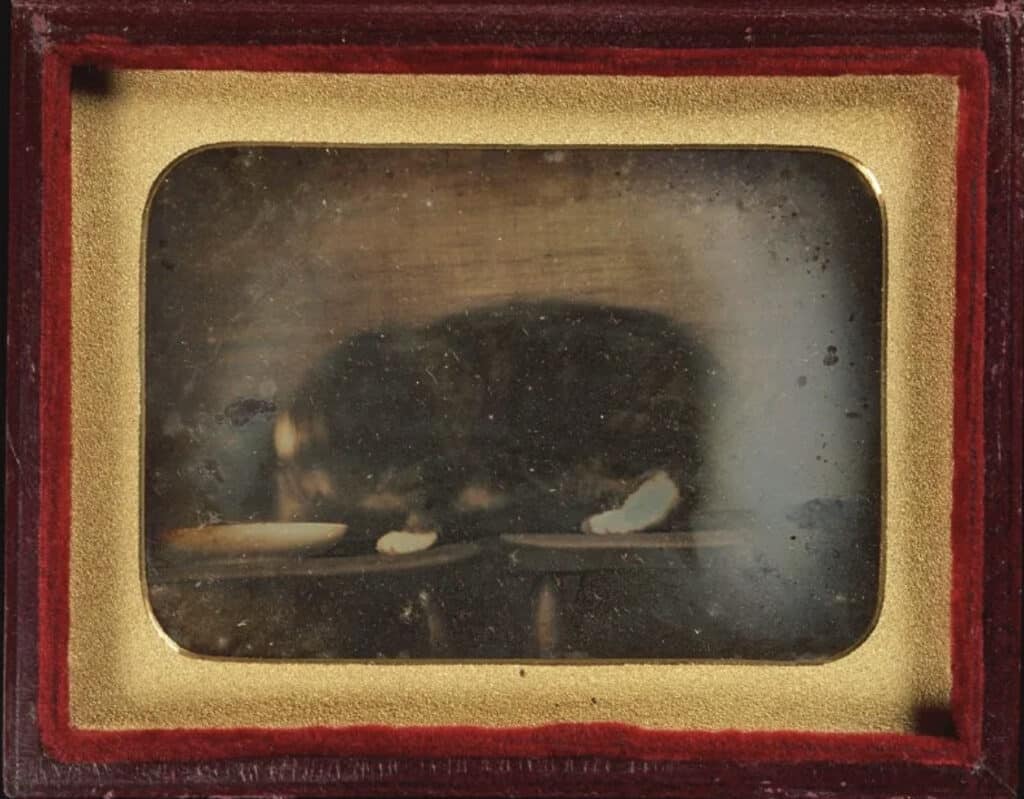
Interestingly, taking pictures of cats might have been common back in the 19th century as well. The proof is ‘A Thirsty Kitty’ — the earliest photograph of a cat. Even though the exact date of this photograph as well as its author are unknown, experts assume that it was created between 1840 and 1860 years. In the photograph, a cat is staring at the camera and looking thirsty. Currently, this old animal picture is saved in the digital collection of Harvard University.
2. A Man with an Elephant
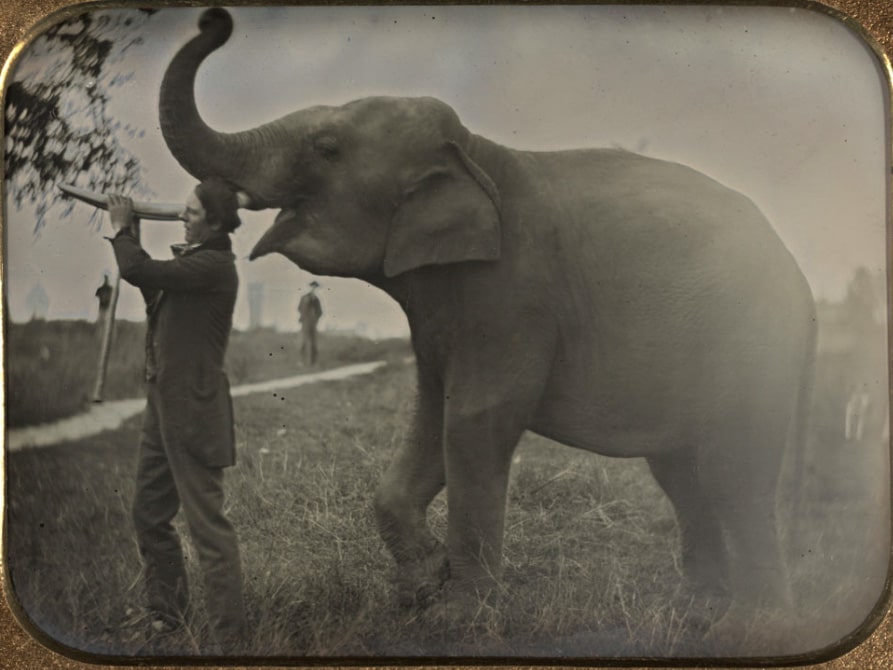
Unlike ‘A Thirsty Kitty,’ the author of our second oldest animal picture, ‘A Man with an Elephant,’ is known and quite famous. This picture was created by an American photographer, Thomas Martin Easterly, in 1850. He was the first person in the world to ever capture an Asian elephant in a photograph and that’s exactly what makes this picture so unique.
“A Man with an Elephant” is a daguerreotype, which means it’s produced on a silver-covered copper plate. These days, the picture can be found in Kansas City, Missouri, in the Nelson-Atkins Museum of Art.
3. The Poodle With a Bow and a Panting Pointer
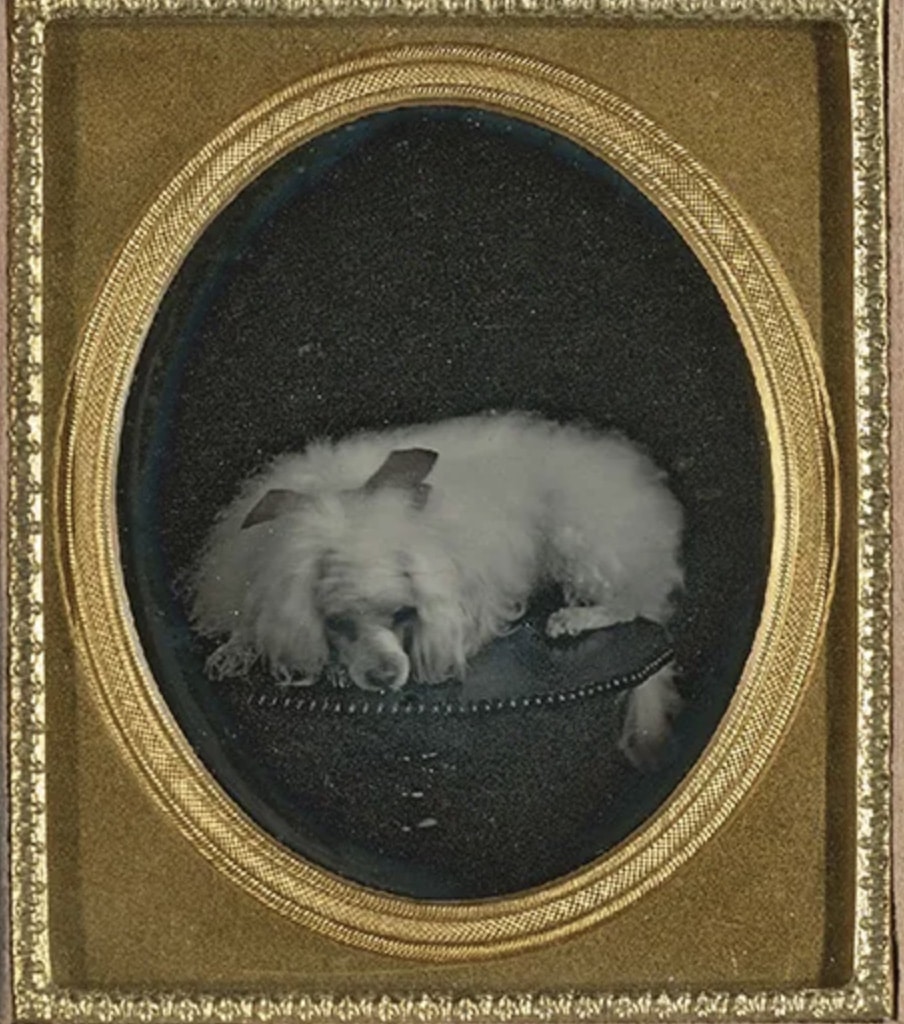
This one might be more interesting for dog owners who frequently capture their beloved animals in different poses. Currently, you may even consider yourself a dog photographer but the first photo of a dog dates back to the 1850s. We don’t know the name of the author again, as well as the details about the dog. We can only assume that the dog seems calm and doesn’t mind being captured.
The photograph is called ‘The Poodle With a Bow and a Panting Pointer’. Currently, it’s a part of the Metropolitan Museum of Art in New York. Similar to ‘A Man with an Elephant’, it’s a daguerreotype. Some people think that the author of this photo is a French photographer, Louis-Auguste Bisson, who became famous after creating a photograph of Chopin. ‘The Poodle With a Bow and a Panting Pointer’ was sold for $8,125 in 2009.
4. Nile Crocodile
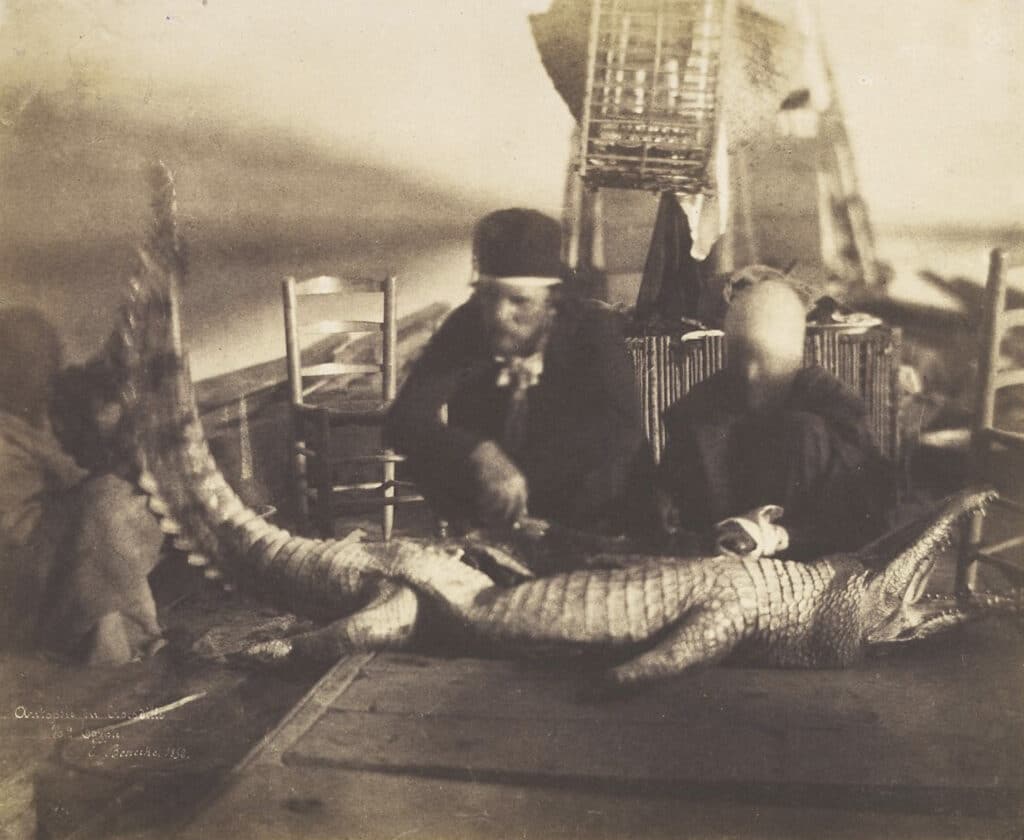
Even though picturing animals in the 19th century was rare, it’s still pretty easy to imagine how people took photos of their favorite house pets. But the same can’t be said about wild, scary animals like crocodiles. Nevertheless, some photographs were courageous enough to capture even a crocodile.
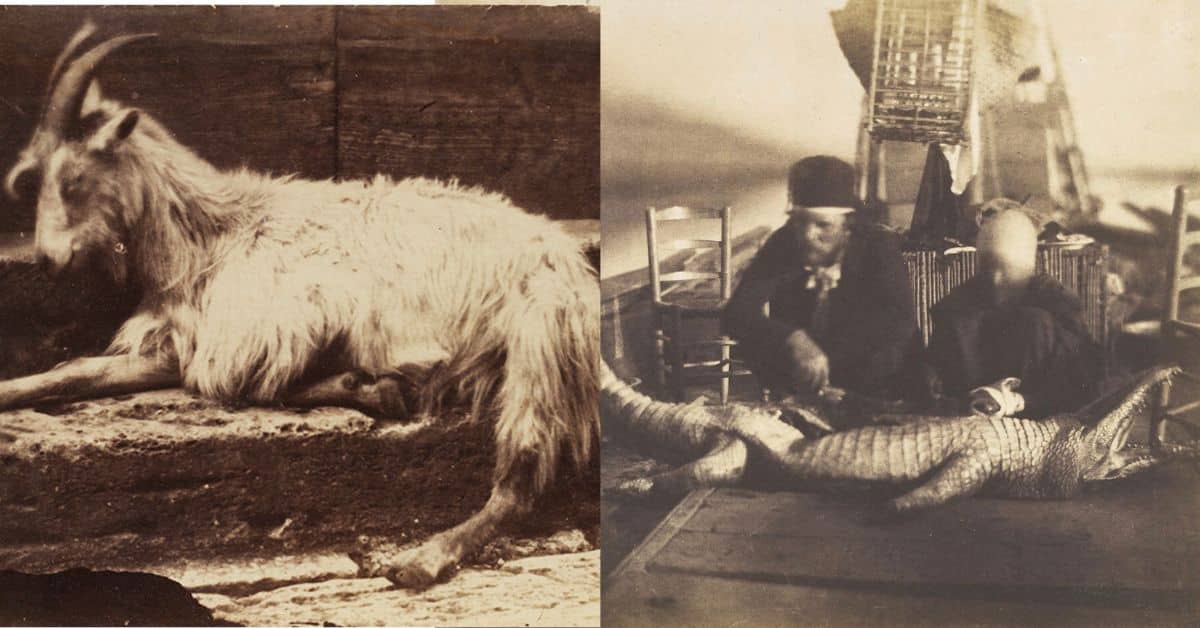
But in the case of ‘Nile Crocodile’, the animal wasn’t alive anymore. This photo was taken by Ernest Benecke and it represents a dead crocodile in the Nile in Egypt. Ernest Benecke was a German explorer who became famous for his photographs in Egypt and Nubia. This particular one, ‘Nile Crocodile’ was taken in 1852. In 2019 the picture was added to the collection of Louvre Abu Dhabi.
5. Reclining Goat
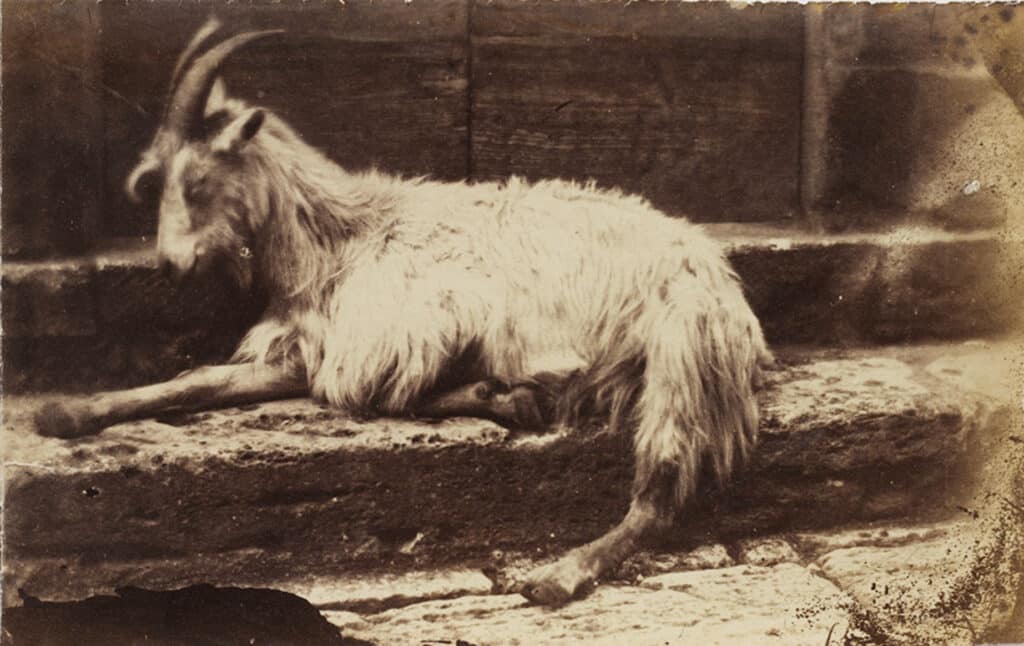
The final picture is called ‘Reclining Goat’ and was created by Italian photographer Giacomo Caneva. He was an artist and a photographer who became famous for his pictures of Rome. The goat in this picture was also captured in Rome. It’s an albumen print from a collodion negative.
Caneva’s pictures, in general, stand out with attention to illumination. You can also notice outstanding lighting effects on ‘Reclining Goat’ as well.
Bottom Line
As you can see, capturing animals, both pets and wild reptiles, wasn’t uncommon for 19th-century photographers. These 5 pictures keep inspiring the viewers each time they look at them. While these oldest animal pictures are indeed impressive, we have to admit that animal photography has significantly evolved afterward, and there are not many things that modern, high-resolution animal pictures share with these historical artifacts. However, we can’t deny that they continue to remain a source of inspiration for modern photographers and animal lovers.

Nato is a content writer and researcher with a background in psychology who’s eager to explore the wonders of nature. As a travel enthusiast and animal lover, she hopes to inspire others to discover and cherish the beauty and importance of the natural world.