Blind Snake
Scientific Classification
| Kingdom: | Animalia |
| Phylum: | Chordata |
| Subphylum: | Vertebrata |
| Class: | Reptilia |
| Order: | Squamata |
| Suborder: | Serpentes |
| Family: | Typhlopidae |
| Genus: | Ramphotyphlops |
| Species: | R. braminus |
| Binomial name: | Ramphotyphlops braminus |
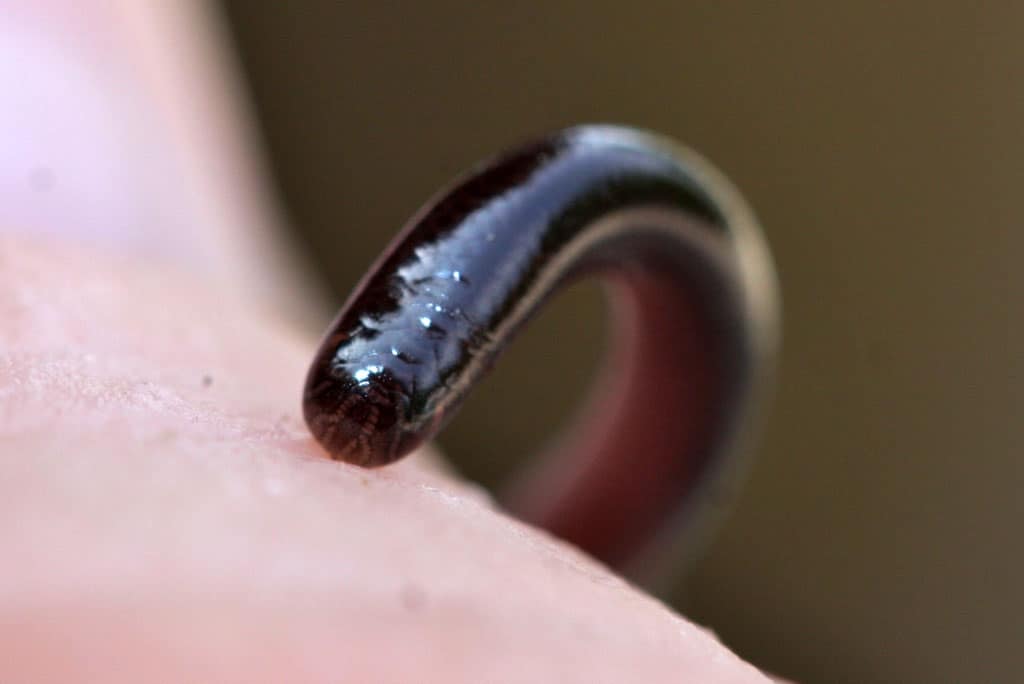
The species of the snake Ramphotyphlops Braminus are harmless blind snakes found mainly in African and Asian continents. These snake species have been introduced to several parts of the world. These snakes are fossorial, meaning that they spend most of their life underground. It is very easy to mistake them for earthworms. The Latinized name takes after Brahmins, the Hindu high castes. There are no known subspecies. These subterranean snakes are unisexual. No males of the species have been discovered till now. These could very well be the smallest snakes in the world. They rarely grow more than 20 centimeters long.
Anatomy
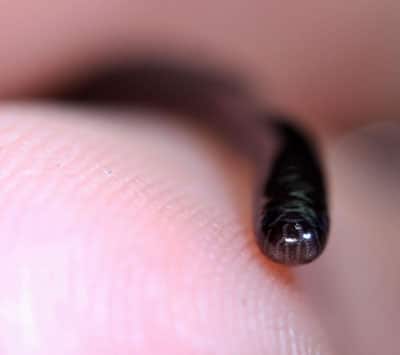
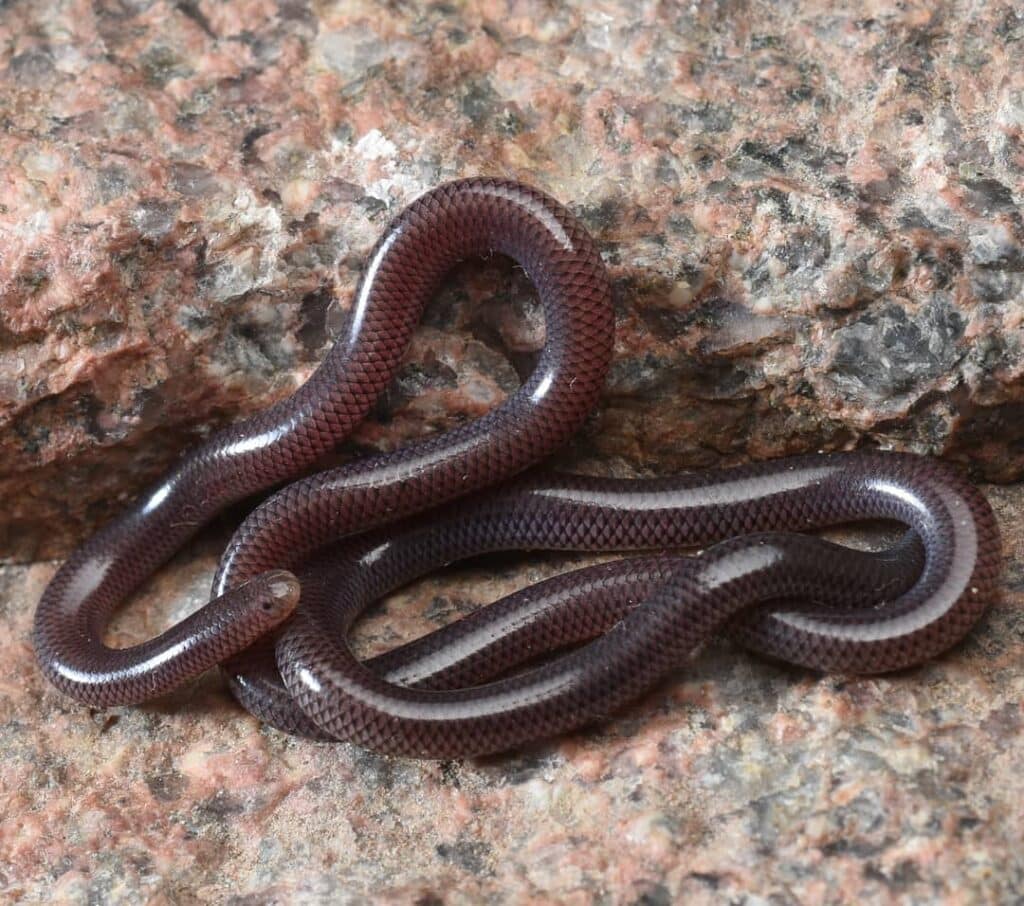
The adult snakes are very small and very thin. The length ranges from 2.5 to 6.5 inches. You cannot easily differentiate the head of the blind snake from its tail. There is no narrow neck. The eyes are rudimentary, and look very much like a pair of dots beneath the scales of the head. There is a tiny, pointed spur at the tip of the tail. The scales of the head are small and very much like the ones on the body. You can see twenty rows of dorsal scales on the body. The adult snakes have varied colors ranging from purple, charcoal gray to shining silver-gray. Juveniles are of the same color as the adults.
Translucent scales cover the minute eyes with the result that the snake is almost blind. While the eyes are not capable of forming images, they can still register. We can see them both in Agricultural as well as urban areas. They live underground, occupying the nests of ants and termites. We can also come across them under humus in the forests, moist leaves and logs.
Habitat
Blind snakes are native to Africa and Asia. As an introduced species, we can see them in many parts of the world. We can also find them in the Americas and Australia. You can see them throughout Florida. At the same time, you can see them in dry jungle and urban gardens. Humidity and temperature determine the distribution and survival of the species.
As a Pet
Breeding
The species are parthenogenic (unisexual). Not a single male has been collected. They lay eggs or give birth. They produce around eight offspring at a time and they are all females. Being an all female species, the eggs do undergo fertilization by a male sperm. One individual can thus create a population.
Housing
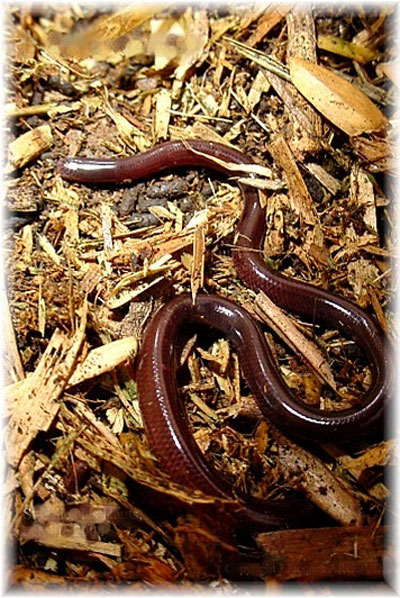
A large jar with many layers of soil, gravel, mulch and wood chips, with water filled to about half of the gravel layer, will provide the habitat for the blind snake. You can keep the soil damp. Try to keep the soil dry area on the surface.
You can set up a small temperature gradient by placing an electric bulb on one side of the jar. They live mostly underground, but they may need to bask occasionally You can keep the room temperature around 70 to 80 degree F. You can cut a hole in the jar lid and cover it with a metal screen. You can use a small lid for a water bowl
Food
You can feed your blind snake pet with a diet of eggs and larvae and pupae of ants and termites.
Handling
While handling them, do so gently with both your hands.
Having discovered a fondness for insects while pursuing her degree in Biology, Randi Jones was quite bugged to know that people usually dismissed these little creatures as “creepy-crawlies”.